





A thing of the past: Check row planters
Learn more about planting corn in checkrows.

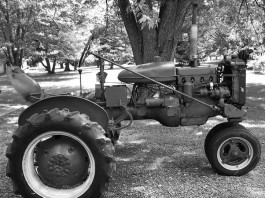
Gibson tractors were important for a while
In 1933, Harry Gibson started the Gibson Manufacturing Co. in Seattle, Washington, as a heavy machine shop.

Who invented the motorcycle? Well, let’s see…
After supper on a recent hot Saturday night, I was sitting on my front porch nursing a cold glass of Pinot Grigio and watching...
Early U.S. tractor history: The story begins in Iowa in 1892
A book titled Fordson, Farmall, and Poppin’ Johnny, written in 1987 by Robert C. Williams, tells the history of the tractor beginning with John Froelich’s 1892 contraption, generally credited with being the first gasoline engine powered traction engine, up through the 1980s.

Allis Chalmers’ roots stretch to 1847
Allis-Chalmers (the name wasn't adopted until 1901) was an old company when tractors came along, having begun in 1847 as Decker & Seville to manufacture buhr mills in Milwaukee.

Earliest steam engines used to pump water
Learn more about the Newcomen engines, called "Fire Engines," which were used to pump water from British mines.
Imagine: McCormick-Deere instead of McCormick-Deering
When the farm implement giant, International Harvester Company, was formed in 1902 by the merger of the McCormick, Deering, Milwaukee, Plano and Champion harvester lines, it immediately gave the new firm about 90 percent of the binder and 80 percent of the mower production in the U.S.

How Ford developed the Fordson tractor
In his column this week, Sam Moore details Henry Ford's early years and the conception and development of the Fordson tractor.

Dear I.H., ‘we can’t be without our tractor’
In 1919, International Harvester Company published 48 letters from satisfied operators describing how they used their tractors and how reliable they were.

Barbed wire’s history entangled in war
Probably the first patent for a form of barbed wire was issued to Leonce Grassin-Baledans in 1860 in France during World War I.