





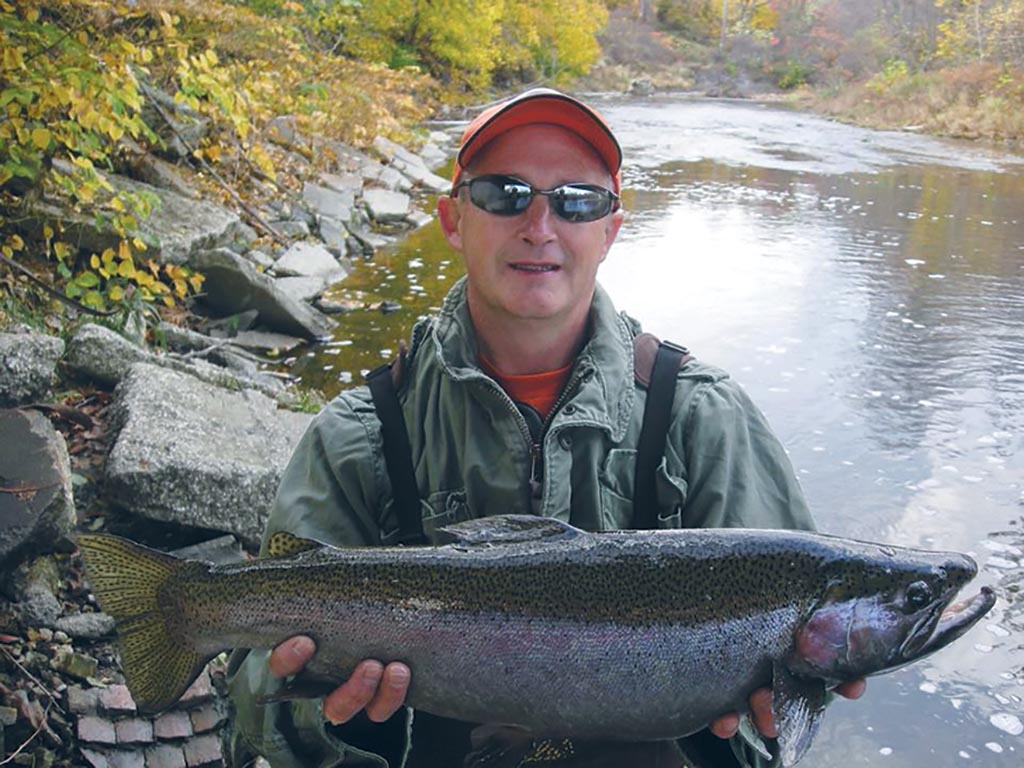
The Division of Wildlife and ultimately all Ohioans — especially sportsmen and women — have enjoyed hundreds of wildlife management success stories. There’s the recovery of the once extirpated white-tailed deer, bald eagles, river otters and steelhead trout. There are also the successful additions of Sunday hunting, new and expanding wildlife areas, reservoirs, boat ramps, dove hunting, H2Ohio wetland projects and more.
Each of these stories has its own unique history of concept, development and implementation. These weren’t as easily accomplished as one might think, with failures and political impacts sometimes dictating how the final outcomes were reached. Some of these endeavors ultimately proved unsuccessful and were discontinued.
Steelhead
The steelhead trout program in Lake Erie and its tributaries could have been one of those stories. Years of work to establish a steelhead fishery in the Vermillion, Rocky and Chagrin Rivers resulted in limited returns of adult fish to those streams — even though over a quarter of a million young rainbow trout, originating from Ohio’s London Fish Hatchery, were stocked each year.
The habitat, flows, forage and angler interest were there, but the vast majority of the fish that made it out to Lake Erie never returned. Those London-strain rainbows stocked annually in many Ohio inland lakes were effectively providing excellent put-and-take fisheries, but weren’t as successful in the division’s Great Lakes program. The Lake Erie steelhead program was on life support.
The ultimate reasons for the success of Ohio’s steelhead fishery are due to the efforts by Division Fishery Biologist Phil Hillman and others, who orchestrated a program that cooperated with the State of Michigan in obtaining Little Manistee River Strain Trout.
Using these imported rainbows and the development of stocking regimes that maximized upon imprinting these new arrivals to their home streams resulted in an aquatic home run. The program was so successful that additional streams are being stocked, and Castalia Fish Hatchery has become a mainstay in producing trout to add to this growing fishery.
Ring-necked pheasant
On the terrestrial side of game management, there’s one non-native bird that turned resident, became legendary, has a national habitat organization named after it, and is still the most popular game bird in the United States. We’re of course referring to the gaudy ring-necked pheasant. Unfortunately, the bird has fallen on hard times. First introduced in Ohio in 1896, it was well established by the 1920s. The population boomed through the 1940s, with an estimated population of 5 million birds in the state.
Wildly popular with sportsmen, its population began declining rapidly. Changing farming practices had shifted to large grain fields, a reduction in livestock and pastures and curtailed hay production, which drastically reduced the habitat the ring-necked called home. Their population plummeted like an anchor in calm water. Midwest conservation agencies, including Ohio’s Division of Wildlife, began looking for that “magic bullet” that might return the pheasant numbers back to what they once were.
Wildlife biologists in these middle states were searching for a solution. They couldn’t fight the farmer’s bottom line — they were just working to make a living in a changing global economy. Then came an idea: Why not try the Sichuan pheasant? At the time, I remember thinking that this sounded like something I’d order in an Asian restaurant.
The Sichuan pheasant (Phasianus colchicus strauchi) is a subspecies of the ring-necked pheasant (Phasianus colchicus); it looks like its cousin but without the white neck-ring. Early studies indicated that the Sichuan might thrive in woody cover. Since Ohio enjoys an abundance of this particular habitat, the Sichuan offered hope for a game bird boost.
With fingers crossed, the Ohio Division of Wildfire released over 2,000 Sichuan pheasants and 208 ring-necked pheasants in central Ohio in April 1993 to 1996. This was done while other states were attempting similar strategies.
Unfortunately, nesting habitat proved to be similar between the two subspecies and that was the major fact that was missing: the grasslands once found in those pastures and hay fields. The Sichuan may have liked to hang out and roost in woodlands, but not for nesting.
Statistically, survival and nesting success were not different between these subspecies. Population surveys suggested that a self-sustaining Sichuan pheasant population was not established.
The Conservation Reserve Program, H2Ohio wetland restorations and habitat enhancement programs with the sportsmen organization Pheasants Forever are currently the efforts that do the best job at improving wild pheasant populations. The Sichuan introduction program’s goose was cooked.
A powerful tool
While the division struck out with the Sichuan program, and the steelhead was close to being abandoned except for the home run hit by the fisheries folks, stocking species can be a powerful fish and wildlife tool.
In theory, a successful stocking program results in a thriving, self-sustaining population. Some of Ohio’s best examples include the Eastern wild turkey, white-tailed deer and river otter. There is a caveat to any stocking program: It does little good if it’s haphazard, is done without surveying its progress, is not safeguarded or is done in an area that does not have the habitat to support the introduction.
Of those conditions, habitat plays the primary role — one that conservation agencies were learning to exploit. During the Dust Bowl years of the 1930s, soil and wind erosion and its control were national issues.
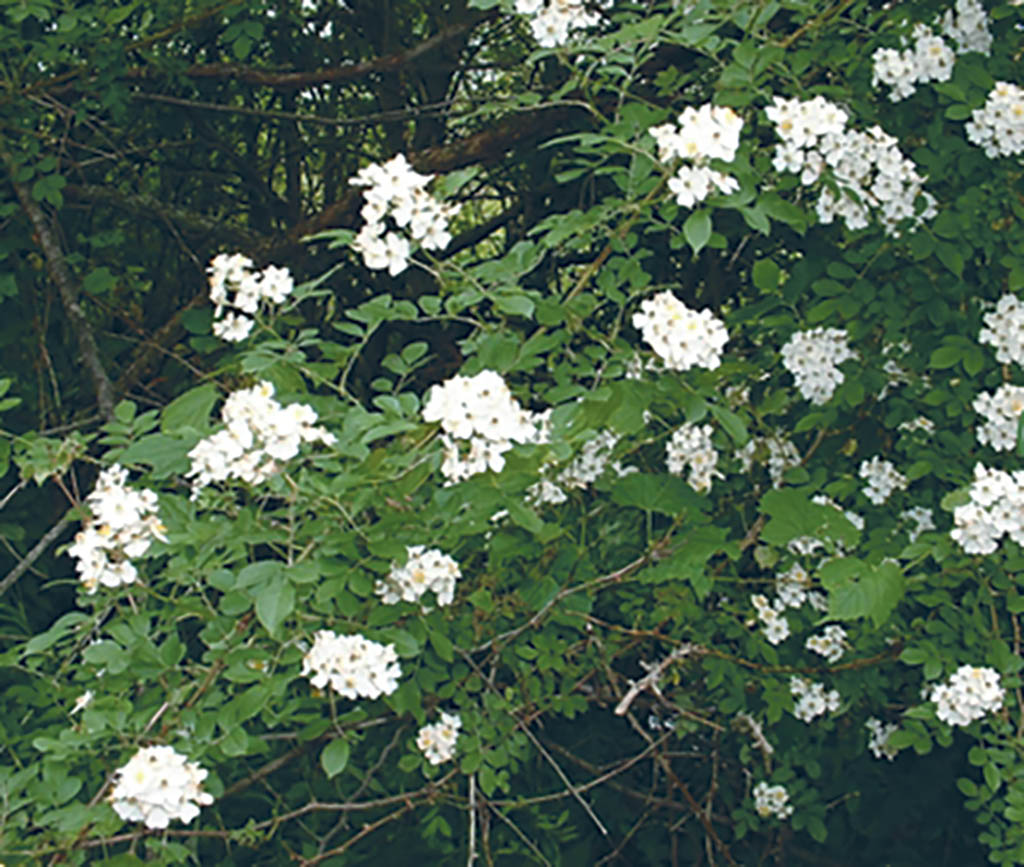
The U.S. Soil Conservation Service recommended the use of multiflora rose (Rosa multiflora) as a soil conservation measure. It was able to form natural hedges to border grazing land — sort of a fenceless fence offering excellent soil protection and wildlife habitat.
State Conservation Departments, including Ohio, promoted the multiflora idea as a perfect match for improving an area for rabbits, quail and pheasants. Its use and planting were often reported in the popular Ohio Conservation Bulletin, which urged landowners to consider the plant for inclusion in a wildlife-friendly landscape.
The introduction of multiflora rose resulted in a flourishing, spreading and self-sustaining population. Many wildlife employees planted rows of the quickly-growing plant on wildlife areas, and it soon proved its value to wildlife.
However, it ended up being a far cry from a success story.
Birds loved the edible rose hip fruits, which was a good thing, but as anyone who owns a dog knows, “What goes in, must come out.” Birds helped spread the plant to whatever areas they enjoyed a good perch.
Multiflora rose began invading pastures, edges of woodlots and any odd areas that birds roosted. Recognizing the mistake, those wildlife employees who happily planted the multiflora plants were now out with tractors and saws pulling them out — I’m sure with some very descriptive terms for the thick, thorny plants and for those who came up with the idea.
Multiflora rose still exists in all 88 counties, and it continues to benefit cottontails and song birds — though now the most prosperous beneficiaries are the herbicide companies.
Another misstep
After the multiflora plant-and-pull program, someone out there in the wildlife management community probably just shook their head and said, “I’m not going to do that again.”
Someone should have listened to that person. Winston Churchill popularized the expression, “Those who fail to learn from history are doomed to repeat it.” Enter autumn olive, a deciduous shrub native to Asia. It was introduced in 1830 to the United States as an ornamental plant that could provide habitat and food to wildlife. During the 1950s, it was adopted by the Soil Conservation Service for erosion control.
The plant’s ability to tolerate low pH and to fix nitrogen back into the soil allowed it to flourish in reclaimed mine lands prevalent in southeast Ohio. Some wildlife area technicians were tasked to plant autumn olive in old strip-mined zones that were now under the Division of Wildlife’s ownership.
Once thought of as the best way to control erosion and provide wildlife habitat, it’s now a major hassle. The plant’s positive attributes are quickly outweighed by its rapid and uncontrollable spread across forest edges, roadsides, meadows and grasslands where it displaces native plants.
Intensive mechanical and chemical measures are necessary to control autumn olive, and it has now landed on the invasive species list.
While some well-intended introductions have had negative impacts, there is no crystal ball that helps predict the future. The multiflora rose and autumn olive taught wildlife managers a lot about the introduction of plant species. Today, native plants are the most heralded addition to wildlife habitat and anything else is on the “go slow” to-do list.
Of course, wildlife agencies have more to worry about than their own occasional missteps. Unintentional introductions have had major impacts on Ohio’s environment: zebra mussels, Asian carp, emerald ash borers, white perch gobies, kudzu, phragmites and the lanternfly, just to name a few. They can arrive as ornamental plants, hitchhikers in a ship’s ballast, a small colony of insects in a shipping pallet or an unwanted pet released to the wild.
“An ounce of prevention is worth a pound of cure,” wrote Benjamin Franklin. Something as simple as pouring your minnow bucket on the ground instead of dumping them in the lake or emptying your bilge and cleaning vegetation off a boat trailer can stop the transfer of species from one lake to another.
Scientifically researched introductions can benefit Ohioans immeasurably, but poorly conceived or accidental introductions can end in detrimental results — just ask those guys who got to pull the autumn olive and multiflora rose.
“The greatest thing that science teaches you is the law of unintended consequences.”
— Ann Druyan






How about the Snowshoe hare up here in Ashtabula Geauga and Trumbull county’s we had our cottontail rabbit season cut in half and had to be worried about shooting a hare that hadn’t turned white yet.
The lack of snow for a few weeks meant the hawks ate expensive rabbits
Thanks, Jim, for some good insights here.
Does ODNR have “ordinary people” inputting on selections of animals or plants that they consider introducing in the wild?
Might be a good idea to have a farmer, rancher, or logger like the typical Ohio John or Jane Doe sound off about a proposal before it’s implemented.
Can’t tell you how HUGE those multiflora rose bushes get here on the hills of Ashland County. Only way that I’ve taken out some whoppers is by backing up the tractor on them with a PTO linked to a huge brush hog—raising the brush hog and then slowly lowering it with those blades a spinning. It shreds it, but then you’ve got to ‘police up’ those nasty huge thorns that got spit out.