



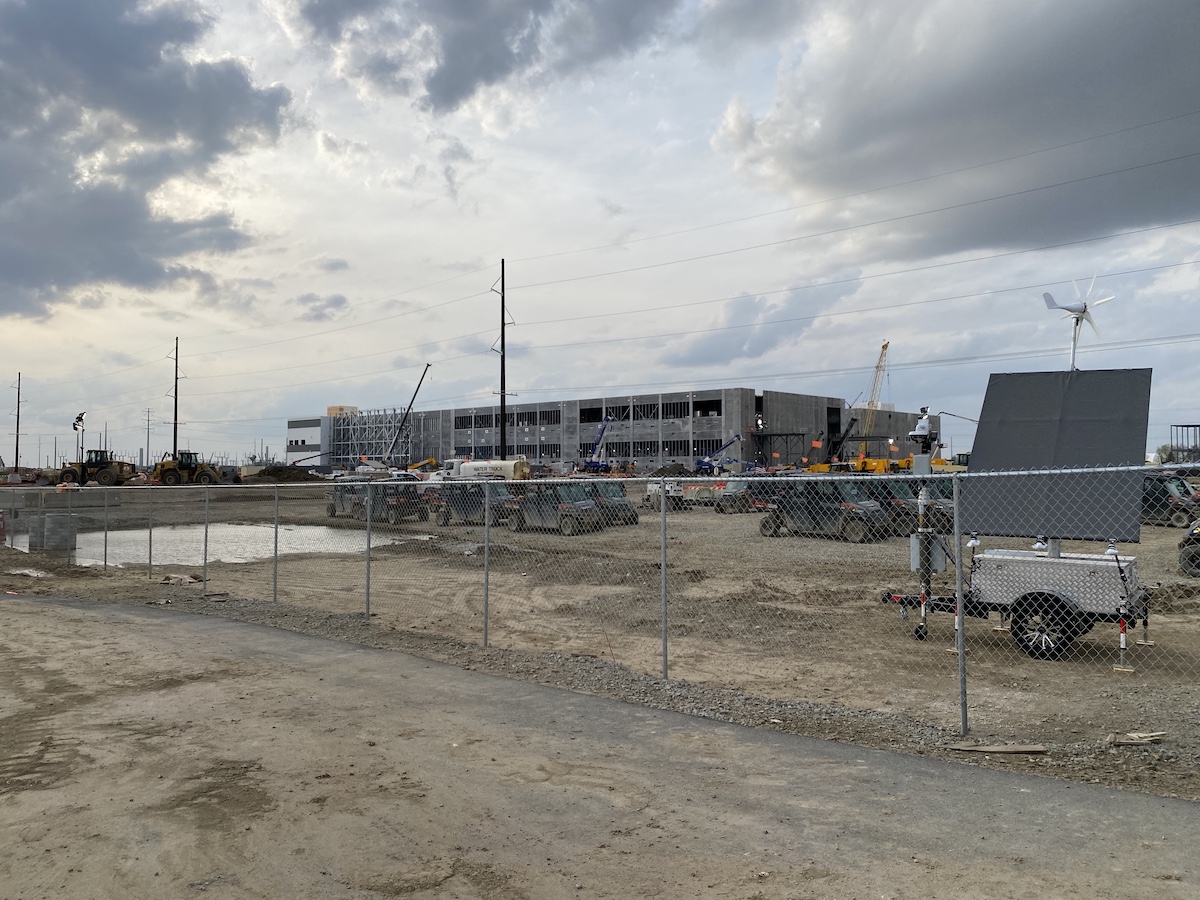
SALEM, Ohio — Disaffected residents of Conneaut are fighting to keep data centers out of the small northeast Ohio town.
Trouble is, no one seems to know for sure if a data center is coming to Conneaut. The city council has not voted on allowing one of the hulking server farms in the town of roughly 12,300 people, and no such vote is currently scheduled.
Why they think there’s a data center
But residents said in recent city council meetings that data center developers offered them eye-popping sums for their land, and Conneaut’s council rejected a data center moratorium that came up for a vote last month.
Husband and wife Victoria and Jonathan Dampf, for example, told the city council last month that a developer offered them $2 million for their property, according to the minutes of an Aug. 10 meeting. The couple could not be reached for comment.
The developer M2 Development Solutions began studying the feasibility of a data center at the Conneaut East Industrial Park last year, according to the Star Beacon. An M2 spokesperson did not respond to a request for comment.
“We know there has been one in the works,” said Joel Specht, who lives in Conneaut and collected signatures to put a data center moratorium on the November ballot.
The ballot measure applies to centers that need more than 25 megawatts of power.
The facilities are an especially touchy subject in rural Ohio. Residents of villages and farming towns worry about creeping industrialization robbing communities of their small-town nature.
“My concerns are related to the big picture,” said Julia Barton, who operates an organic farm in Conneaut and has aired concerns in city council meetings.
While her apprehensions include heavy water use and excessive noise, she also worries that developers will exploit the community and change its rural character.
“Things like agri-tourism, fishing, canoeing and hiking make this a really special place to live,” she said. “This kind of development is really shortsighted and has the potential to be a detriment to the things that sustain us.”
Palpable uncertainty
Rumors abound that developers are scouting potential sites in and around Conneaut, which sits on the banks of Lake Erie in Ashtabula County and is roughly an hour’s drive from Cleveland, and offering to buy farmland.
“Conneaut is a small town, so the rumblings are going around,” Specht said.
The uncertainty is understandable. Developers are notorious for using non-disclosure agreements to keep their plans under wraps. Residents of a rural Louisiana community only learned about a planned data center earlier this year during a public vote on a zoning change because elected officials signed NDAs with the developer, according to NPR.
In recent city council meetings, residents of Conneaut have referenced articles about developers using NDAs to express concerns about transparency.
Getting the moratorium
The ambiguity is one of the reasons a small group of people in the northern Ohio town put the data center moratorium on the ballot. Residents like Specht also held demonstrations and spoke out at town hall meetings, admonishing local officials not to bring a massive warehouse-like structure to their agrarian community.
He sees the moratorium as a way to stop any proposed data center before the process reaches the point of no return.
“If there were contracts and signatures, it would be much harder to fight this,” Specht said. “We’re catching it beforehand.”
Their concerns echo those of a broader movement opposing the facilities. They worry about noise, higher utility bills, the loss of farmland and the limited number of permanent jobs.
Specht called data centers an “extractionary force.”
“They’re taking our resources,” he said. “And if something like this comes in (and is built on farmland) that will never be converted back to farmland again.”
There is some evidence that data centers contribute to higher utility bills and noise pollution. The industry has argued that the server farms create no more noise or pollution than any other industrial facility.
JoAnne Seavey, who runs a Conneaut corn and soybean farm, stressed that she is not against progress, but would oppose any development built over productive farmland.
“We don’t want an amusement park there either,” she said.
The city manager and members of Conneaut’s city council did not respond to requests for comment.
Not everyone thinks data centers in Conneaut are a bad idea. While the majority of comments at recent council meetings were in opposition to the facilities, at least one resident highlighted potential benefits.
Tim Krause told the council he was grateful they did not approve the moratorium that came up for a vote last month because he worried it would signal to other industries that development was not welcome in the northeast Ohio town, according to the minutes of an Aug. 24 city council meeting.
Krause told the council he is in favor of anything that builds the region’s economy and creates jobs for future generations.