
The following is an excerpt from my book, “Accidental Rancher,” and documents my introduction to a western Dakota tradition: Lefse making…
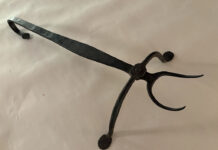
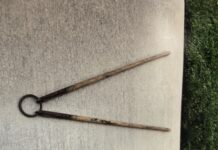
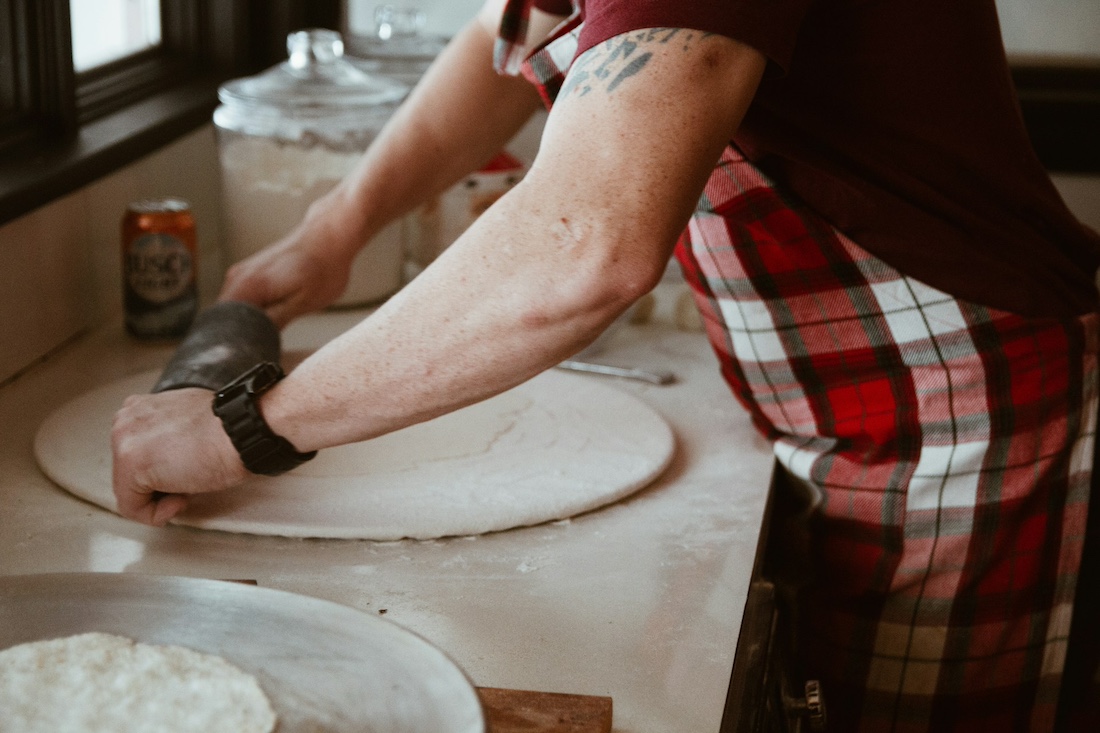
Roll the pale dough out slowly, without pushing too hard, or the dough will cling to the rolling pin and pull apart. When you are done rolling, take your long wooden turning stick and ease it under the dough’s thin edge with a gentle sawing motion. Once you slide the stick halfway, slip it back out and start again from the other side of the circle. After you’ve successfully loosened all the flattened dough from the board, gently lift the circle up with the stick and roll it onto the hissing heat of the silver griddle. Wait just a minute to lift the circle up, then flip. Congratulations, you are making lefse!
Growing up in Minnesota, lefse was something I’d heard about, but as my heritage isn’t Scandinavian, it wasn’t part of my family’s culinary traditions. In fact, I didn’t get my first taste of lefse until I arrived in South Dakota. Around here, there are women who still make it just like their grandmas did, so you can find it on the holiday tables of ranches all over this part of the country.
Let me briefly digress. For a time, the man of the ranch worked at a guest ranch that hosted mainly European visitors, so he had many brushes with Italian cuisine. In addition to the aforementioned pasta, there was a particular dish he kept hearing them lavish with praise — polenta.
“It is the best! The BEST’’ the Italian visitors would rave. “You HAVE to try it!”
Polenta is a creamy porridge made with ground corn. It has a soothing texture, but it is not particularly flavorful on its own. Suffice it to say, when the man of the ranch finally tasted polenta, he couldn’t help wondering: “This was what all the fuss was about?”
I’ll admit I felt the same way about lefse the first time I tried it. And the second. But, when I had the opportunity to get together with a group of women to make lefse I jumped at the chance, because good food isn’t only about flavor.
See, the man of the ranch is not a polenta lover, but he has very fond memories of stuffing himself silly on his Grandma Myrtle’s lefse. To an adult eater like me, lefse tastes just fine — but without a beloved grandma’s special technique and the warm twinkle of a Christmas tree as a backdrop, it just doesn’t have the same magic.
The first few years Myrtle’s parents lived in South Dakota crops were plentiful but that didn’t last. Severe droughts swept across the plains and drove nearly all the early homesteaders away. Myrtle’s family stuck it out, though. During the lean years, the supper table might not have held much more than thin bread made with mealy potatoes. It wasn’t the food of celebration, but of salvation.
By the time Myrtle was a grandma, those times were the distant past, and by all accounts, she wasn’t a woman who liked to dwell on what was over and done. Still, when Myrtle made lefse, she probably didn’t think of a Christmastime feast, but her mother’s sweet face, rosy from standing over the fire, flipping the brown-flecked rounds, then piling them on the family table. It was literally the bread of life — and that is something worth celebrating…
I wrote that essay back in 2015. This year, the organization I founded, the Kithship Collective, invited three ladies to the school to teach the kids in grades 6-12 how to make lefse. I hoped it would be a good experience for them, but I think the individual who benefited most was I.
Watching the women and the kids work together was such a joy — it reminded me how lucky we are to have each other.
My wish for 2026: May we have more chances to cook and laugh with one another, and may we share the fruits of our labor and the warmth of our hearths!