




SALEM, Ohio — Slow internet is a common issue for rural communities and businesses across Ohio. Janet Butler, owner of Union Stock Yards in Hillsboro, Ohio, can attest to this.
For the past 57 years, Butler and her husband, Bill, have run their livestock market using the internet from their home over the hill or have conducted business the old-fashioned way, by hand.
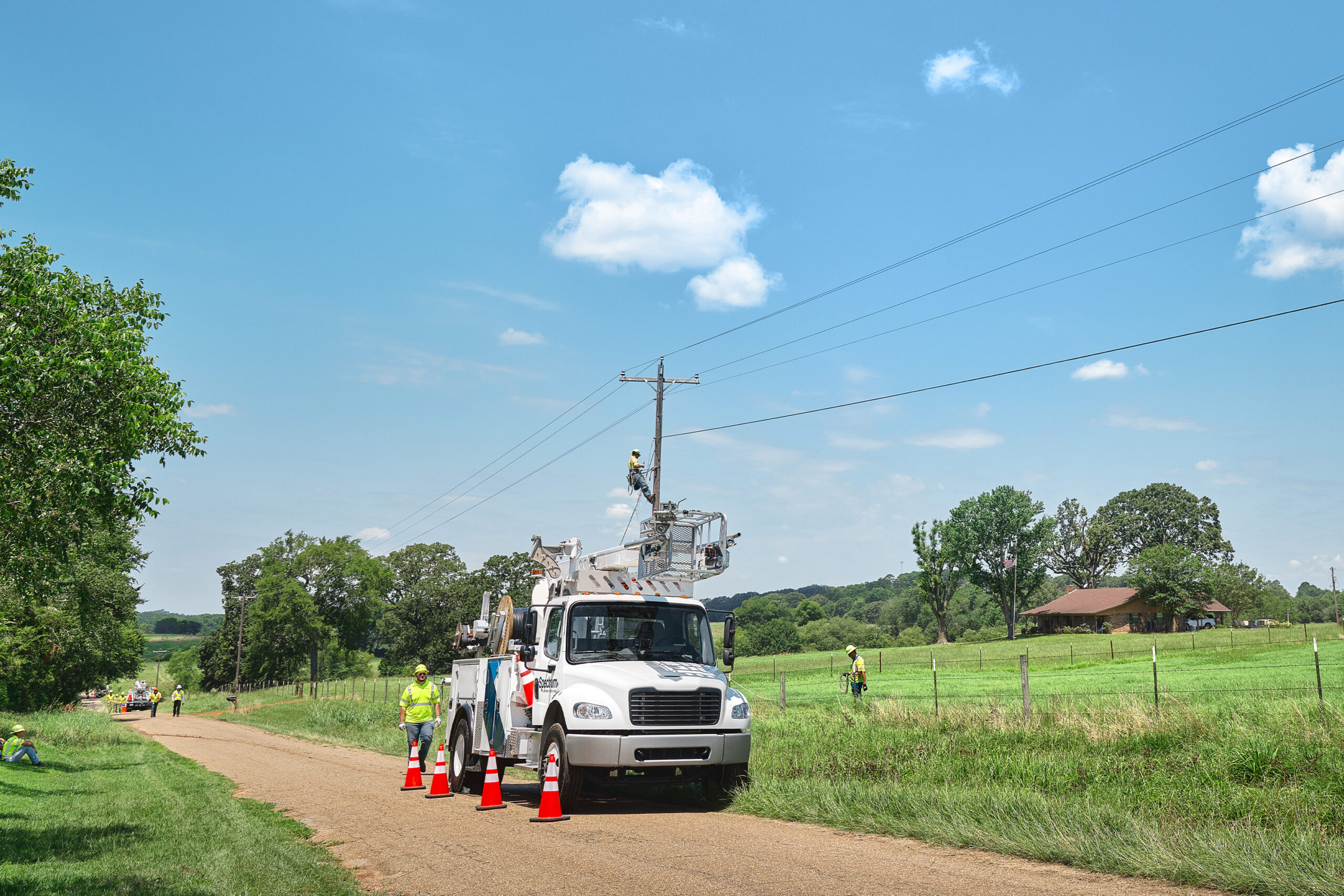
But now, thanks to the state of Ohio’s broadband expansion efforts and Spectrum’s Rural Construction Initiative, Butler and others in her community are getting access to high-speed internet while saving money.
The high-speed internet gives customers easier access to our all our information, said Butler. “We didn’t have any internet here; it’s brought the country to the city.”
So far, the company has provided broadband internet access to 40 counties across Ohio.
“High speed broadband really makes a difference, from people working in schooling to people that are running businesses like farmers and agriculture, where they have to not only be able to sell and market, but also to plan around their business,” said Jesse Femyer, area vice president for field operations in Central Ohio at Spectrum.
Ohio’s broadband expansion efforts
Much of rural America consists of old phone systems that are low-speed internet, leaving communities without a reliable connection.
While low-speed internet can transmit pictures and documents, it can’t download large amounts of data or stream services “that we all depend on every single day,” Femyer said.
In particular, farmers depend on combines and other equipment containing precision technology that relies heavily on data — something only high-speed broadband internet can provide.
“Traditionally, rural communities have been left behind because they are so far away and hard to reach. It’s very expensive and very challenging to run lines out into the rural communities,” said Femyer.
In 2019, over 300,000 households, equating to roughly 1 million Ohioans, did not have access to broadband (high-speed) internet, according to the Gov. Mike DeWine.
To combat this, DeWine released the Ohio Broadband Strategy, later creating the BroadbandOhio Office in 2020 that would help pass Ohio House Bill 2.
The bill, passed in 2021, created the Ohio Residential Broadband Expansion Program, a grant program to address the “high cost of expanding service in parts of Ohio,” according to the DeWine administration.
In 2022, the program awarded 11 internet providers with $232 million to expand high-speed internet to 43,000 households in 31 counties.
Spectrum
Spectrum was one of these award recipients, launching its Rural Construction Initiative that same year, extending broadband internet from the city and suburbs into rural America.
The multi-year initiative is funded through Spectrum’s own investments and various federal and state funding, including the Ohio Residential Broadband Expansion Program and the Federal Communications Commission Rural Digital Opportunity Fund grant program.
Femyer says that Spectrum is focusing on communities previously identified as “underserved” for broadband internet by the FCC.
So far, the company has provided broadband internet to counties in southeastern and western Ohio, including Highland, Hocking, Perry, Muskingum, Morgan, Coshocton, Clark, Clinton, Meigs, Washington, Fayette and Greene counties.
Femyer says the initiative has created new jobs in the region as the company builds fiber transport and distribution lines, and needs people to maintain these new systems locally.
“In rural America, it’s very challenging, you’re kind of over the river and through the woods, so to speak, and you’re going up mountainsides sometimes and back down to serve a community that’s kind of tucked away,” said Femyer. “It takes a lot of planning to go into and to be able to serve that for the long term.”
In 2025, Spectrum employed 6,500 people in Ohio. That same year, the utility company expanded to an additional 87,000 homes and businesses, 36,000 of which were in rural communities, according to Femyer.
Rural businesses
Janet Butler, 82, and her husband, Bill, who turns 90 in July, have run their livestock sale barn for over five decades, auctioning off cattle, hogs, sheep, goats and lambs by using wireless internet from their home a field over.
“We had no access with a strong internet,” said Janet Butler, whose business is located less than a mile outside the city of Hillsboro.
“It (was) pretty weak,” she said. “There was nobody who had internet service two miles down this road, and, so when it came through, it was a blessing to a lot of people,” said Butler.
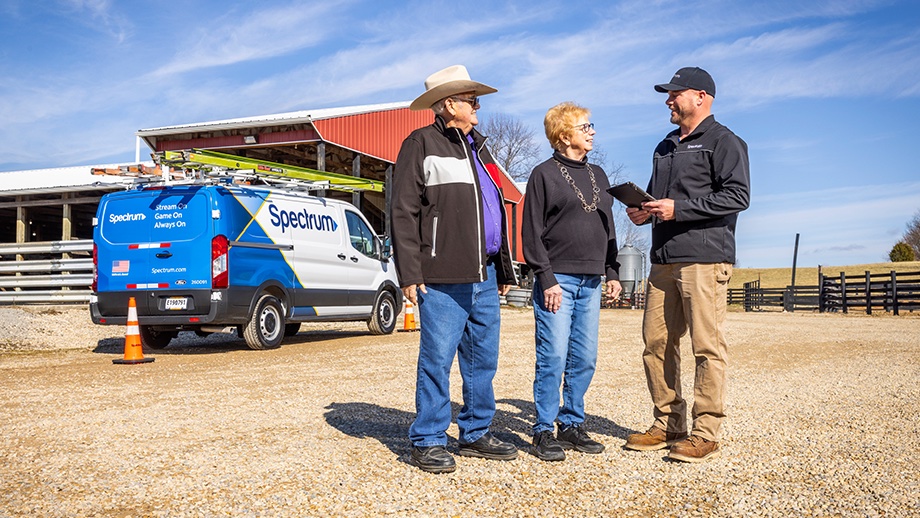
Rich Stewart, owner of Bee Wild Honey Farm in Leesburg, Ohio, had a similar experience before switching to Spectrum. Stewart has sold honey and bee products for 15 years, managing 200 to 300 hives in rural Ohio.
Before he got broadband internet, he tried multiple satellites through various companies, including a satellite dish on his barn. But the internet was often slow, and adverse weather conditions would completely wipe out his connection.
Roughly two years ago, he able to get high-speed internet through Spectrum’s Rural Broadband Expansion Initiative. The switch has helped him both personally and professionally.
He specifically uses his broadband internet to conduct research for his bee hives, staying up to date on the latest management practices and genetics and connecting with other beekeepers.
“Now, we got lines there running down the road. We got pretty reliable internet service for anything from research to watching TV with the family at night,” said Stewart.
Union Stock Yards has also seen benefits from Spectrum’s broadband internet.
Since the business switched, its computer and phone systems are operating more efficiently, and Union Stock Yards has invested in three TV’s, two that display sales and one that showcases advertisements for local businesses — something that wasn’t possible with their slow internet before.
“90% of our business is done by internet or mouth-to-mouth by people talking, and a lot of them talk because they can read online now what they used to have to call and find out,” Butler said.
The switch has also allowed them to save money. Prior to Spectrum, the Butlers were paying for their home internet and a separate internet service provider specifically for their auction computer at the sale barn; now, they are just paying for one.
“You have to save a little bit on everything you can in order to be able to run your business,” Butler said
(Liz Partsch can be reached at epartsch@farmanddairy.com or 330-337-3419.)