




OK, so the last few columns have dealt with how the early settlers worked with a variety of dairy products and equipment. This will be the last of those, so smile and say cheeeeese.
If you were an early Ohio country farmer, odds were that you had a cow from which to get milk for the needs of the family. What you did not have was refrigeration to keep that milk cold, other than placing it in a stoneware crock immersed in a running spring.
The trouble was that many springs dried up during the summer months or froze during the winter when there was no forage for cows anyhow. So the question was, how does one extend their supply of milk through the cold weather months? And the answer was to make cheese out of it.
Employing techniques learned in their European homelands, many settlers were able to successfully enter the cheesemaking business. And even today, several generations later, some of those same families are still operating successful cheese houses, though having substantially broadened their marketing range through modern refrigerated transport.
The old-fashioned way of making cheese was absolutely an art form, and while its techniques varied from one family to the next (just like apple butter), some parts of the process were somewhat standardized.
How to
Most farmers started with about five gallons of raw whole milk, which was heated to 85 degrees. At that point, rennet was stirred into the warm milk. The rennet was obtained from stomachs and bladders of butchered calves, which the pioneers used for storing liquids.
Rennet is a complex set of enzymes that causes milk to curdle. Its primary enzyme, chymosin, causes the milk proteins to clump together, turning liquid milk into solid curds, which separate from the watery whey. Without rennet, the coagulation needed for most hard or aged cheese would not happen.
After the rennet had been stirred in, the milk was covered with a piece of cheesecloth and left to stand for about 90 minutes. This allowed the curd to coalesce. After this happened, the curd was cut into one-inch cubes, covered again, and left to stand for another hour-and-a-half, allowing time for the whey to rise above the curd. The whey was then drained off to be fed to the pigs.
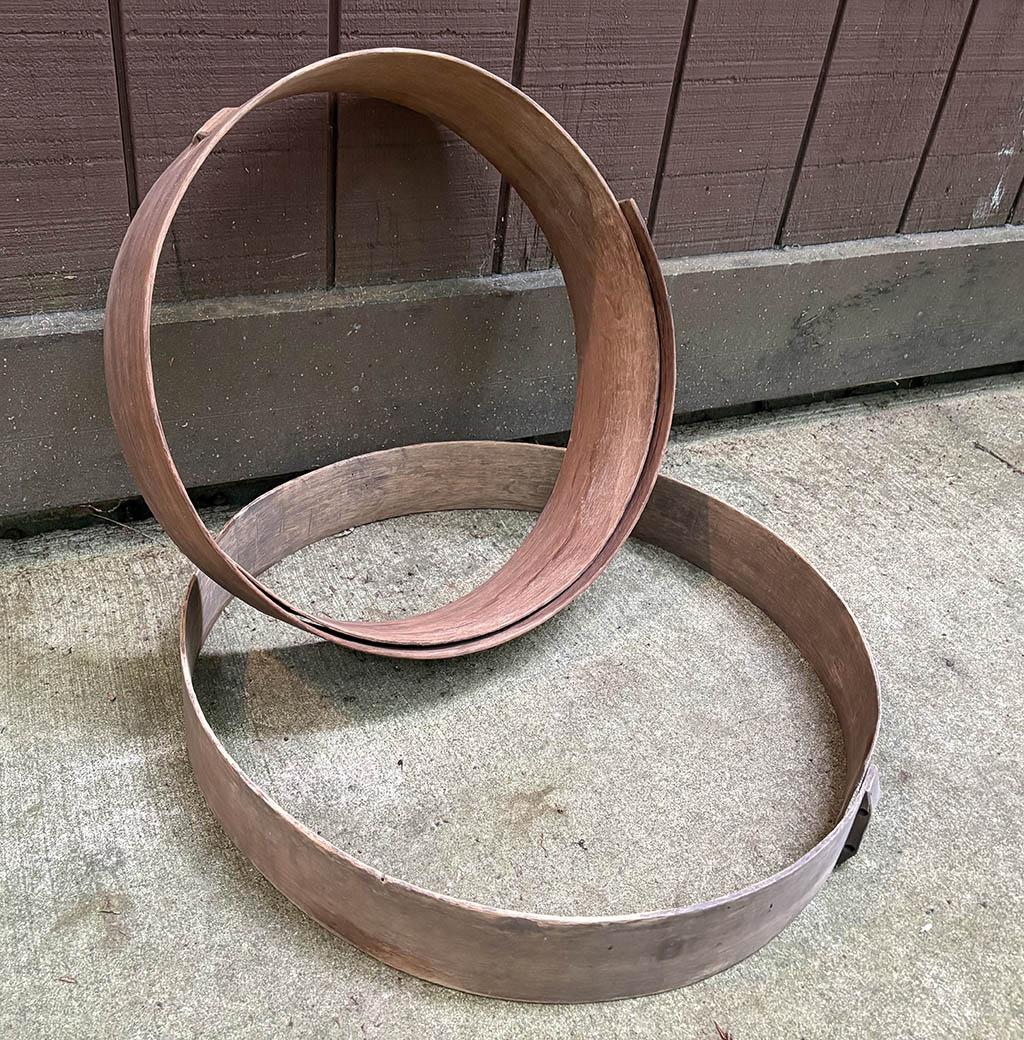
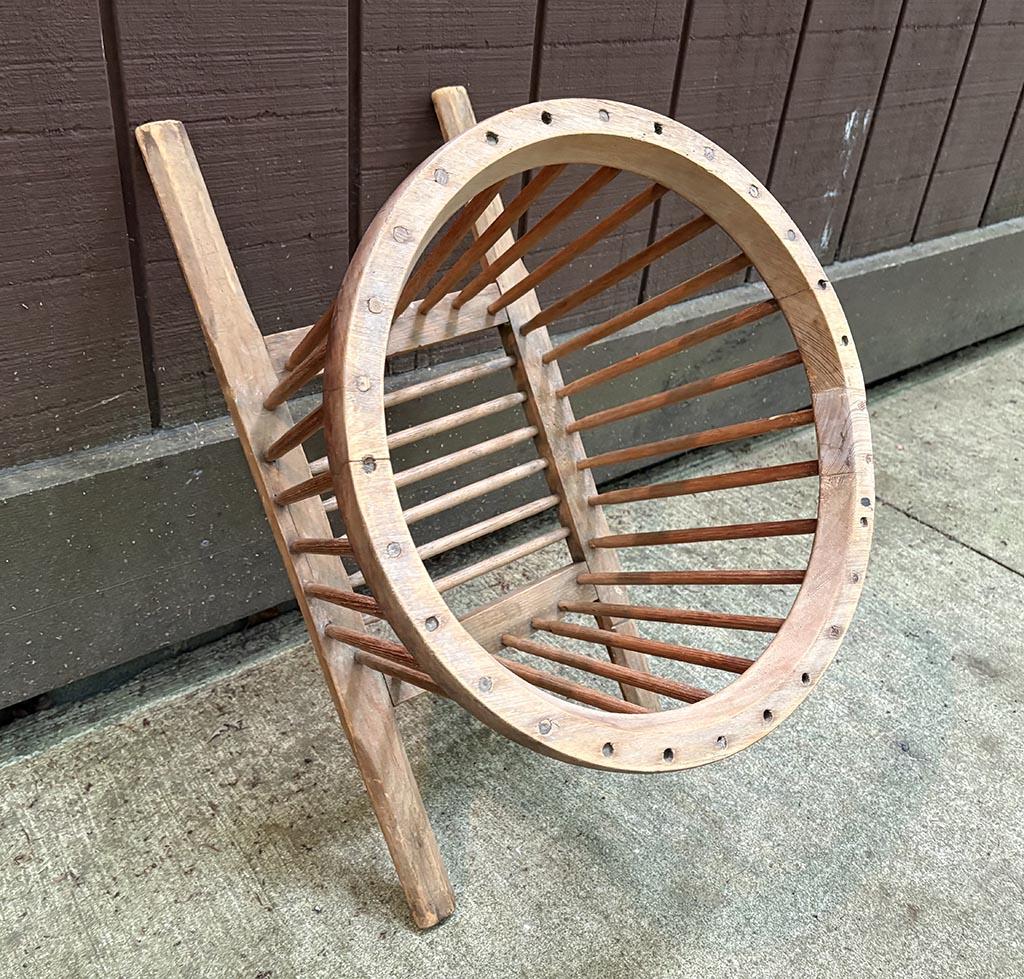
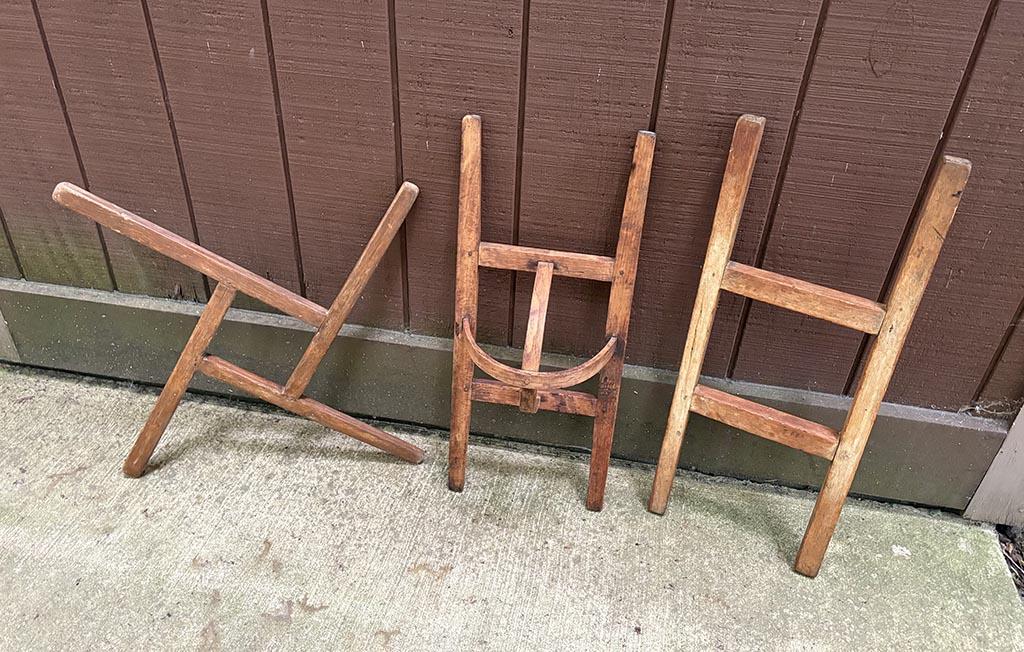
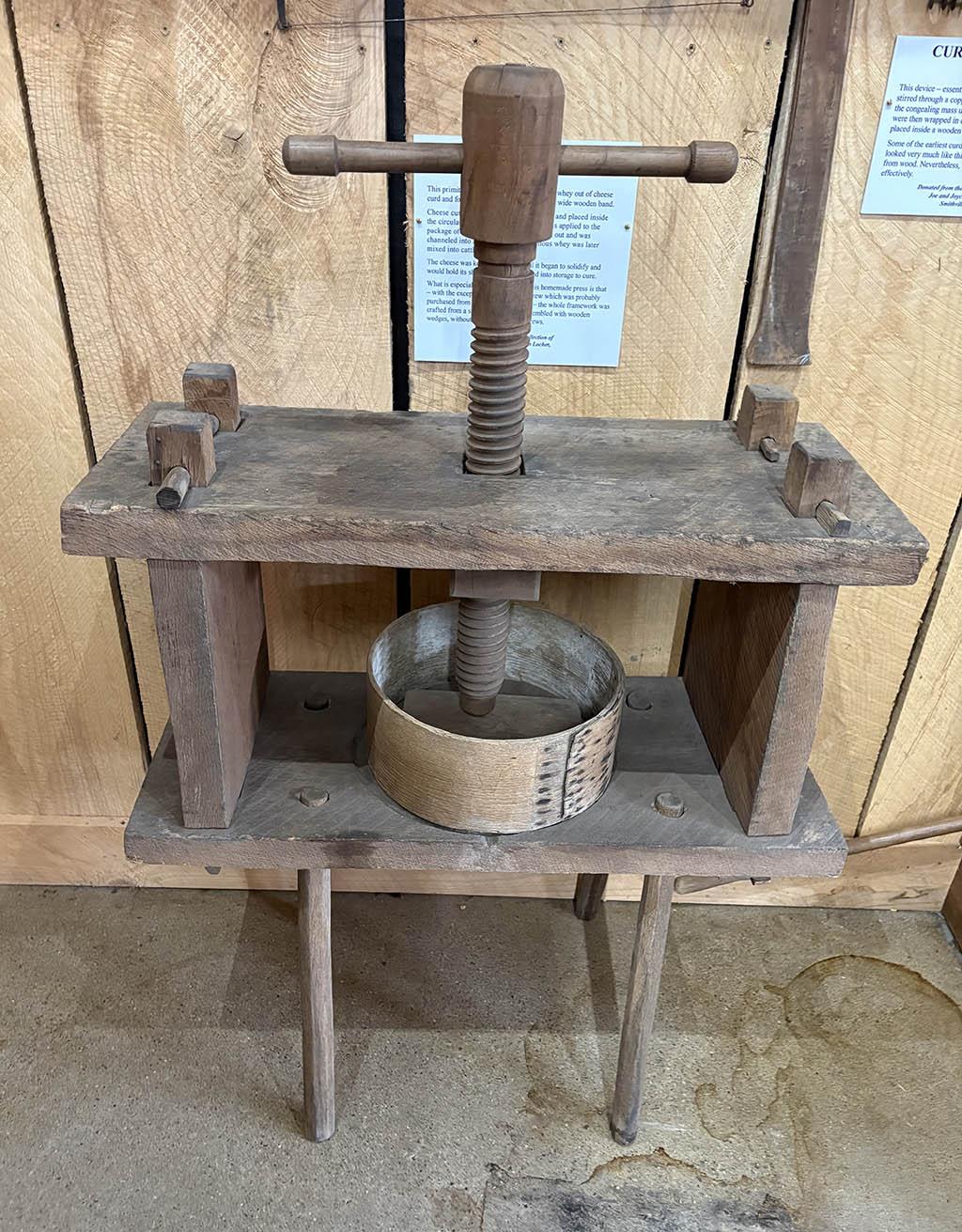
The curds were then wrapped in cheesecloth and placed in a cheese drainer or on a cheese ladder for final draining. Next they were placed into a circular wooden form, salted, and a round disc of wood (the follower) that tightly fit the circular form was placed on top. A wooden press (this can be a lever-type or screw-type) was used to apply pressure on the follower and the cheese underneath it. Over the next few days, as the cheese settled, the press continued to be periodically tightened until all the whey was squeezed out.
At this point, the follower and wooden form were removed, and the cheese was again salted before being wrapped in paper to be aged for at least 60 days to kill any bacteria. Cheese can be aged longer than 60 days, but the longer it ages and the drier it gets, the sharper the taste. That is why cheesemakers must have a good working knowledge of how long any particular type of cheese must age to ensure the best possible taste.