




PITTSBURGH — For more than a century, the Allegheny, Monongahela and Ohio rivers were the cradle of Pittsburgh industry and, in many ways, the American economy. Long before railroads, they were the only continental highway to the interior of the country.
As cities industrialized in the late 19th and early 20th centuries, enterprising engineers laid out combined sewer systems that funneled household and industrial waste straight to neighboring rivers. It was a novel if naive design later reinforced by mid‑century faith that bigger pipes and pumps could manage whatever cities sent their way.
“The thought was dilution was the solution,” said Douglas Jackson, director of maintenance and operations at regional sewer and wastewater treatment authority ALCOSAN. “And the rivers and the streams and nature can handle the rest.”
In Pittsburgh, that ethos was tested from the start: steep hillsides, rail lines and only a sliver of buildable riverfront left planners room for just one regional treatment plant, rather than the multiple smaller plants other cities built. Pittsburgh would have a single facility that, by design, had to make the whole system work.
For years, residents never had the chance to separate the waterways from that industrial history, to see them as anything more than working rivers; certainly not the kind of places to seek out serenity or a different view of the city beneath its bridges and towers.
Soon, though, the health of the rivers was no longer an abstract concern but something boaters, anglers and residents could see and smell on bad days. Today, one compromise of sewer systems of the era keeps reasserting itself: combined sewer overflows, or CSOs, that dump polluted stormwater and sewage into the rivers whenever heavy rain overwhelms the pipes.
The problem is not unique to Pittsburgh: Dozens of other major industrial cities in the United States employed a similar design and now rely on the same shortsighted infrastructure, from the Northeast to the Great Lakes and Pacific Northwest. For Pittsburgh, federal rules on CSOs adopted in the 1990s and a legal agreement, or consent decree, spelled out how the Steel City must fix the problem it faces. Together, they have pushed ALCOSAN into a long‑term, multi‑billion‑dollar overhaul of the system to cut those overflows dramatically.
That work has meant noticeably clearer water, with more fish and more people willing to paddle down the rivers — all signs, authority officials point out, that they are rebounding, even as pollution problems remain.
Pardon our mess
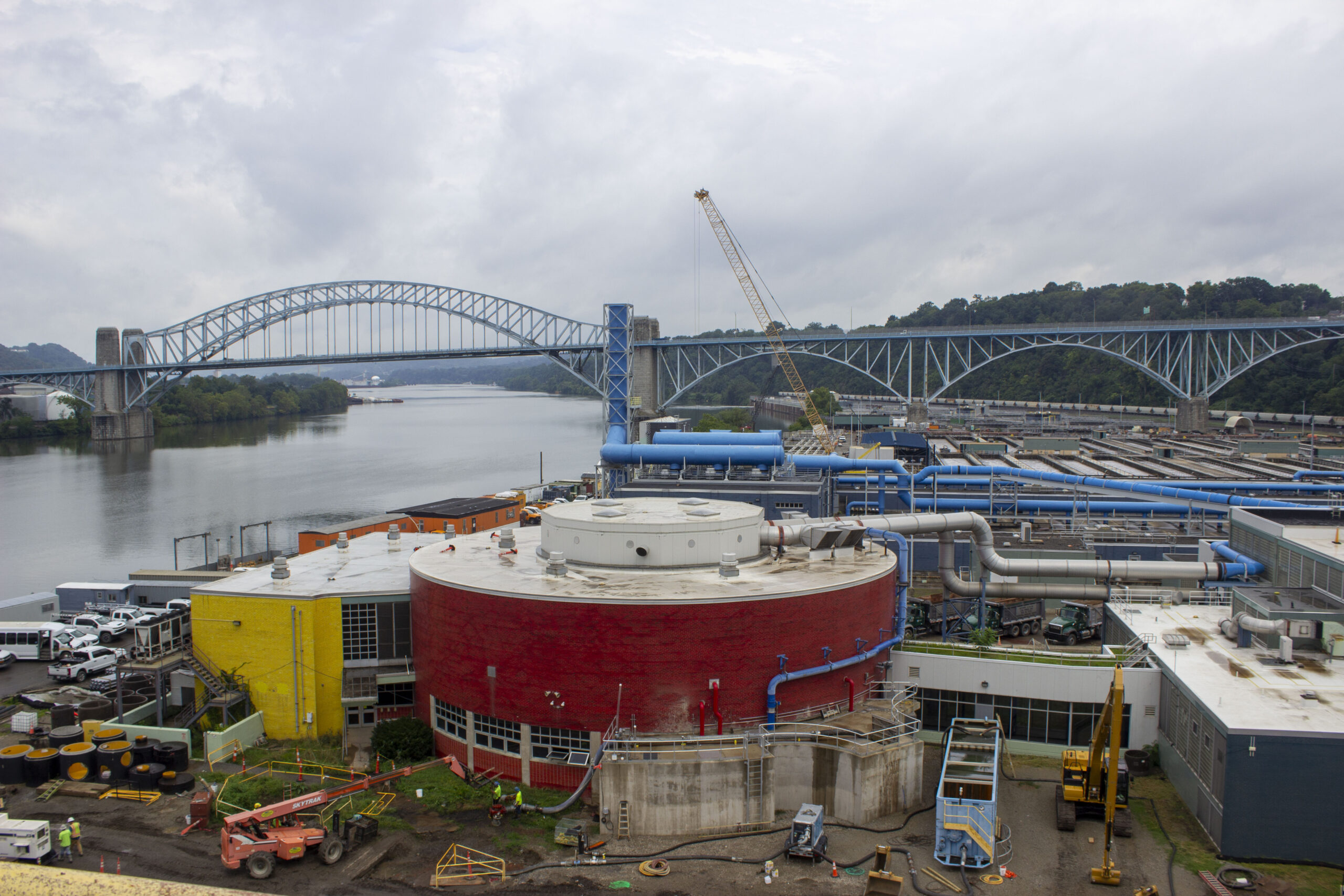
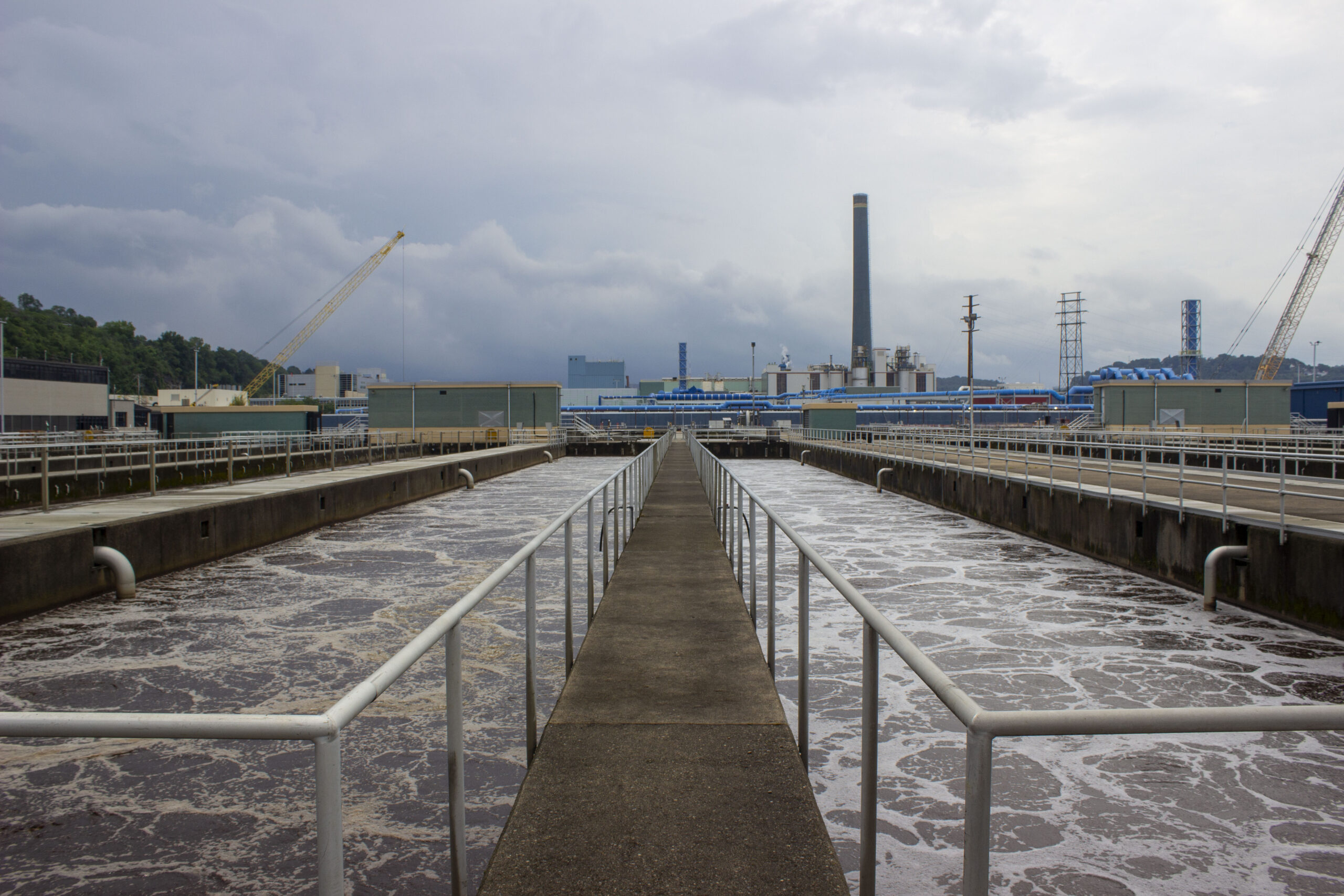
Behind the scenes in ALCOSAN’s plant on the Ohio River’s north shore, tanks, tunnels and treatment basins are designed to hold stormwater long enough to treat it before release. Roughly $750 million in recent upgrades have added new equipment to screen out trash and debris and increased how much flow the plant can handle during storms. The authority is enlarging the plant and building deep storage tunnels along the rivers to reduce the number and volume of raw overflows during big storms.
Yet ALCOSAN still estimates about 2.7 billion gallons of overflow could spill into the region’s waterways in a typical year after the plant is upgraded; the current consent order gives the region until 2036 to reach even that level of control.
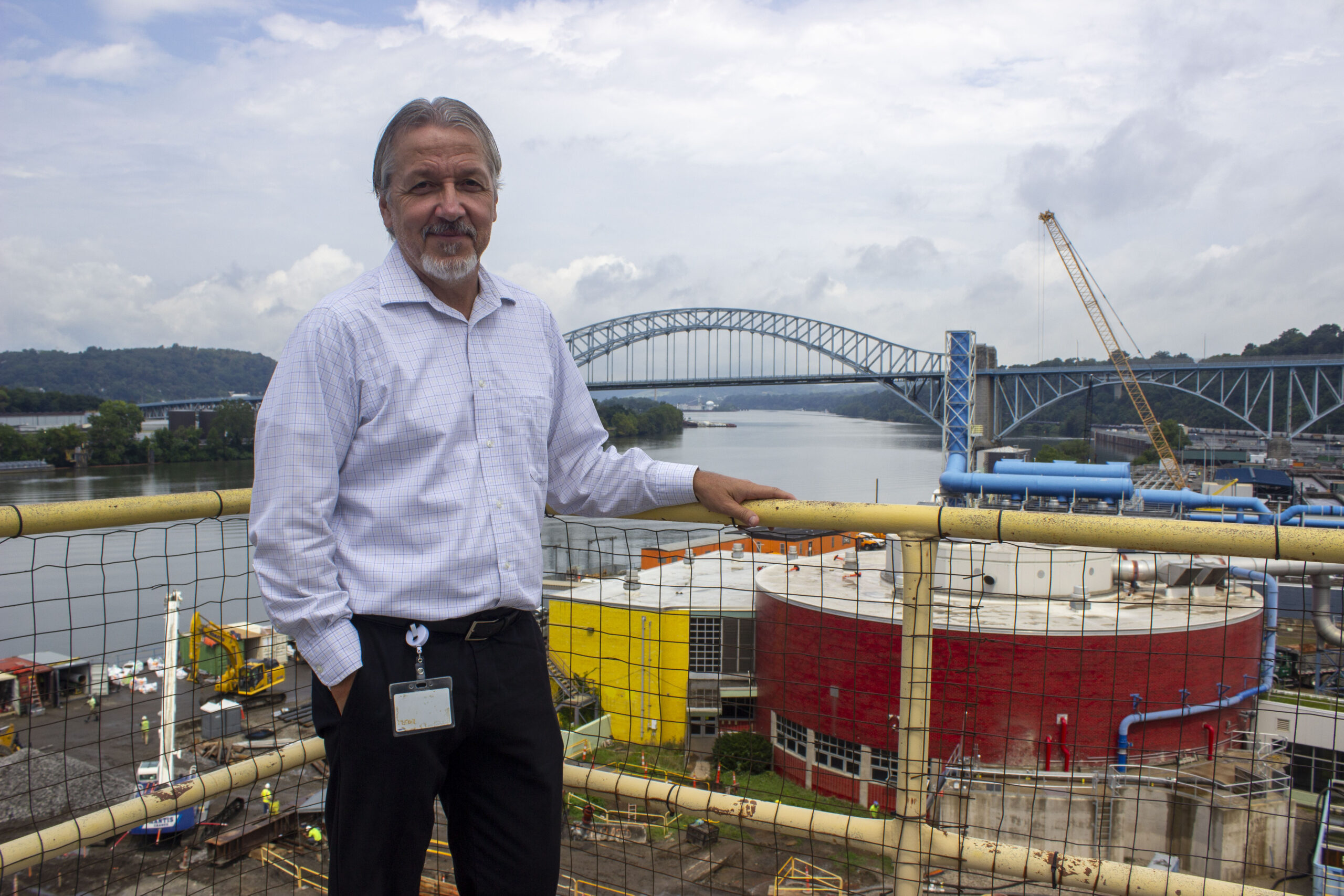
Farm and Dairy was shown around the facility in August. From the roof of the main building, the Ohio River is visible beyond freight tracks and yellow cranes looming over new concrete foundations. On this 59‑acre site, nearly all of Allegheny County’s wastewater is collected and treated before it rejoins the Ohio River.
Jackson said he likes to start visitors with a bird’s eye view. He pointed to the red‑brick pump station, a 1959 landmark that still serves as the plant’s beating heart. Wastewater from across the region first drops into a deep underground wet well there, 40 feet wide and 100 feet deep, fed by a 10 1⁄2‑foot‑diameter sewer line, before it is pumped into the treatment system. That station alone will eventually be able to push up to 480 million gallons of wastewater a day through the plant, up from roughly 295 million gallons now. The added capacity will be enough to handle far bigger storms than the plant could manage in the past. The original designers piped in that capacity during the 1940s and ‘50s, Jackson said, but the treatment side of the plant had to be expanded to match it.
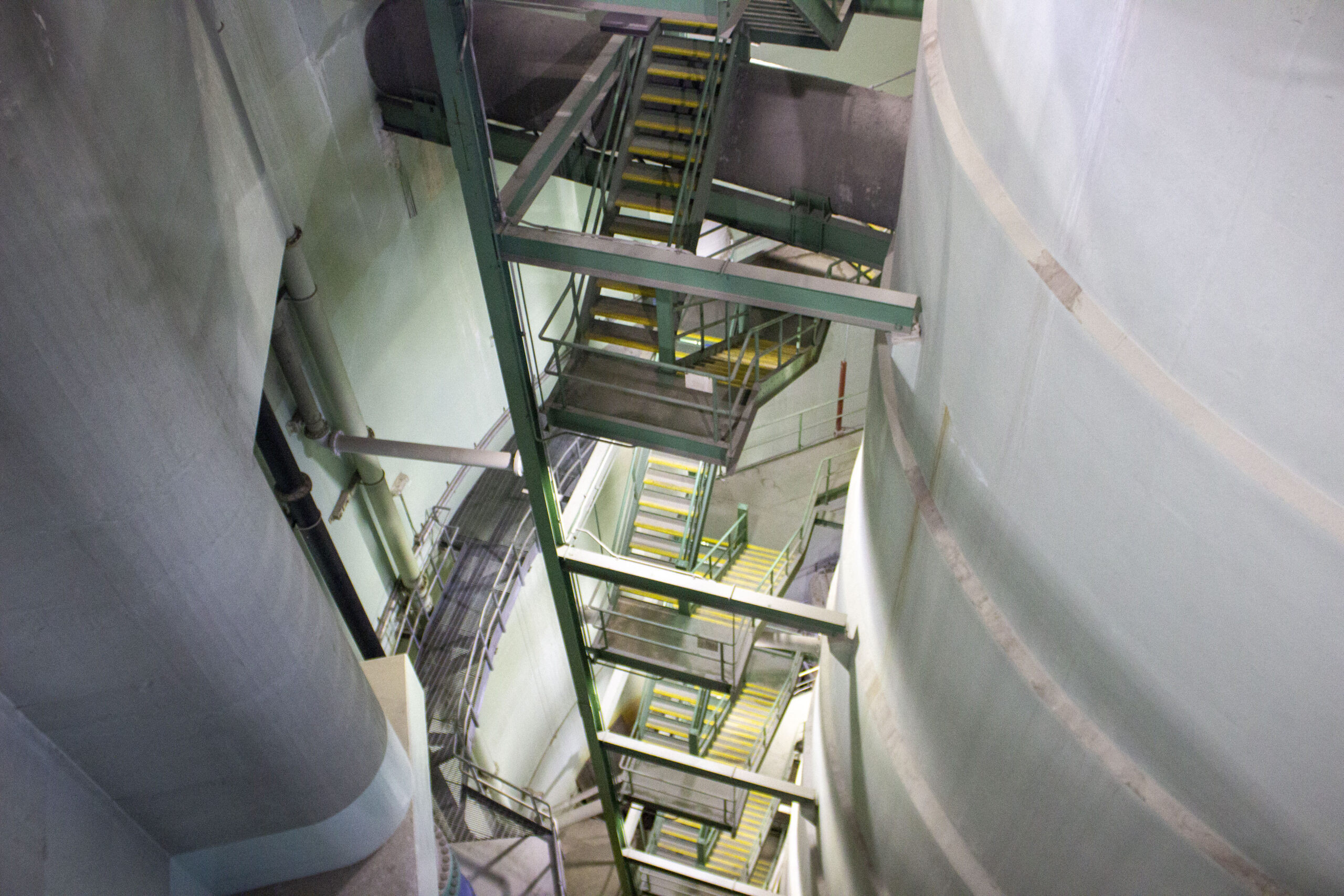
Nearby, a new $380 million pump station is being built around a second wet well to capture more sewage‑laden stormwater. It will connect to a new five‑mile, 18‑foot‑wide tunnel under the Ohio River, the first leg of a three‑tunnel system designed to hold back that excess flow during heavy rains. Now, when the system hits capacity, overflow points tucked below riverfront parks and in neighborhoods release a cocktail of sewage and stormwater. Once the tunnels are completed, much more of that swill can be stored underground and pumped back to the plant for treatment.
The rivers are indelibly tied to the people of Pittsburgh. In the headworks building, Jackson stood beside a long concrete trough feeding a moving belt where steel rakes drag garbage up out of the wastewater before it can reach the river. Crews have found everything from toys and bottles to tires, a distressing amount of mushy plastic bags and, occasionally, live catfish and cash.
“Finding money here is always interesting. You’ll get a couple $100 bills every once in a while,” he said, noting that he’s not tempted to pocket it.
From there, the flow moves into the main treatment process. In long, open basins, billions of microorganisms churn in a bubbling mix, feeding on human waste. After flowing through clarifier tanks, the water is chlorinated, dechlorinated and aerated before being returned to the river. It’s startlingly clear compared to where it began.
“An awful lot of pollution has been removed out of there,” Jackson said, even if it is “certainly not drinking water quality.” That job falls to separate utilities along the Ohio that draw and treat river water for taps and faucets.
Jackson doesn’t pretend the plant is a panacea. He said the authority never expected to eliminate sewer overflows entirely under this round of construction; the consent order focuses on reducing CSO events, not eliminating their occurrence outright. At least not without future rounds of investment and policy.
Even so, he argues, what happens here matters far beyond Pittsburgh.
“We acknowledge that our discharge and the pollution that we’re putting into the river does have an impact on many along the whole Ohio,” Jackson said.
Thinking back to the early days, before the plant made any difference, he sees signs that the river is starting to recover.
“Somehow Mother Nature found a way to make it all kind of work, and now the region has freshwater mussels,” he said. “It’s a very forgiving river.”
“Complex problem”
Heather Hulton VanTassel is less willing to accept that. She is a conservation biologist by training and executive director of Three Rivers Waterkeeper, a nonprofit watchdog group that monitors pollution, tests river water and presses regulators to enforce clean water laws. She looks at the same system and sees a “really complex problem that requires a complex solution.”
In her view, ALCOSAN’s tunnel and plant expansion are necessary but not sufficient. The consent order will still allow billions of gallons of overflows in a typical year, even after the upgrades are finished. It is, she acknowledged, an improvement.
“But it’s only going to reduce, but not eliminate [the problem], particularly in the face of climate change.”
That’s because heavier, more frequent rainstorms mean pipes and tunnels will be under more duress, she argued, so simply sizing up gray infrastructure may not keep pace.
Where officials talk about what’s technically and financially achievable, Hulton VanTassel talks about what she believes the rivers ultimately need.
“I think we should focus on working towards eliminating combined sewage overflows, not just reducing them,” she said. That, in her mind, means going far beyond deep tunnels, uncovering buried urban streams and letting them run above ground again so they can spread out, soak into soil and act more like natural floodplains instead of shunting water straight into pipes.
“We need to separate the systems wherever we can, so that way, we never have sewage and stormwater mixing. So if there are overflows, it’s stormwater only and not sewage. We need to daylight streams and slow water down wherever possible, and we need to reduce impermeable surfaces wherever we can.”
Paired with wetlands and other green infrastructure, corralling that runoff at the surface can lessen the pressure on ALCOSAN’s tunnels and tanks. She also worries about who pays for all this. Ratepayers are funding upgrades that still won’t stop every overflow, she noted, even though those discharges are technically violations of the Clean Water Act. Residents already pay to have the water treated; now, on top of their taxes, their sewer bills are rising again to fix problems rooted in decisions made generations ago.
“They’re being required to pay for this fix, and maybe they don’t feel it is their responsibility to pay for [it],” she said. “And they’re also paying for something that isn’t going to completely solve the problem, either.” Between higher utility bills, taxes and other costs, “it feels burdensome on the community.”
“It’s come a long way”
Yet Hulton VanTassel’s ultimate goal is complementary to Jackson’s: Rivers that people can safely access, fish and paddle in. Alongside ALCOSAN’s own testing and public alerts, her organization’s weekly E. coli sampling is another way they try to close the gap between the unknown and what boaters like Luke Borowy, director of Paddlesport at Venture Outdoors, experience on the water.
In the early 2000s, Venture Outdoors opened the rivers to Pittsburghers in a new way, seeing in recreation a path toward both personal connection and environmental recovery.
“The idea was that if people got to spend time out in nature and knew how to recreate, [and could] borrow the gear to go do so… they might actually take better care of the environment that they were recreating in,” he said.
From a kayak, that perspective is earned quickly.
“It’s just this really peaceful, calm environment that just runs right through the city,” Borowy said.
He has seen the signs of change that plant operators and watchdogs talk about from shore. Heavy downpours still sweep in mud, trash and even full‑sized tree trunks, turning the river high and murky after storms. But Borowy said the long‑term trend is hard to miss. He points upstream, to the Allegheny River Islands, where environmental groups have tracked the return of those freshwater mussels that were once wiped out by pollution. For him, those quiet changes on the riverbed matter as much as the new infrastructure on the shore.
“You know, urban waterways still have their challenges,” Borowy said, adding that it has taken years of work by agencies, nonprofits and volunteers to turn the city’s ecosystem around. “But it’s come a long way from where it used to be even 20 years ago.”




