



SALEM, Ohio — Pennsylvania needs more time to get data center development right, according to the Pennsylvania Farm Bureau, which called for a moratorium on data centers in a policy paper released earlier this month.
Written by Andy Bater, state board director of the Pennsylvania Farm Bureau, the paper states that Pennsylvania lawmakers should enact a temporary pause on data center development to research the impacts of these facilities on communities, establish resources for small communities being eyed for development and better protect farmland from the harmful impacts of development.
There are currently 25 confirmed data center projects going through the permitting process in Pennsylvania, according to the Department of Environmental Protection’s data center permit tracker, but there are more than 40 proposed projects.
Bater spent time in rural communities in Luzerne, Fayette and Union counties in Pennsylvania, talking to farmers who have been impacted by infrastructure for data centers.
At the same time, Bater says the country “needs data centers” for artificial intelligence, scientific research, healthcare and national security, which makes legislation important.
“The benefits of data center construction can be substantial, but so can the consequences, and those benefits and burdens often fall on different people and communities,” said Bater, a switchgrass grower from Centre County.
Data centers and farms
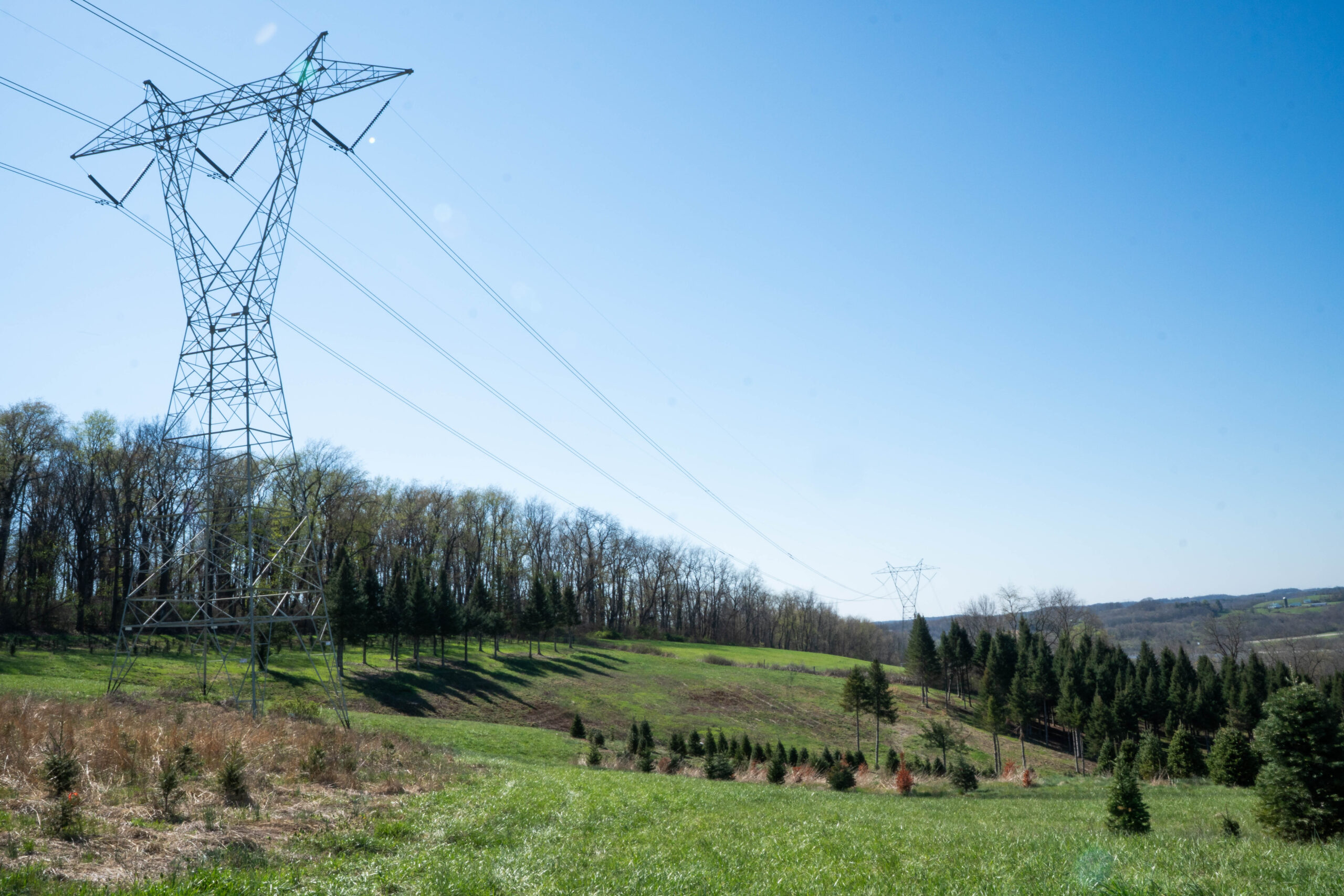
According to Bater, decisions made over data centers don’t just impact those who live near one, but properties in its path. With data centers come a host of infrastructure to power them, including transmission lines, power plants and advanced cooling systems.
“The agricultural impact of a data center cannot be measured simply by the acreage occupied by the facility,” Bater said.
“Policy should evaluate agricultural impacts farm by farm rather than assume that successful coexistence in one setting establishes that impacts elsewhere will be insignificant.”
He specifically addresses the impact transmission lines have on farmland and the use of eminent domain; this past year, Pennsylvania and West Virginia have seen an increase in transmission line proposals to power data centers.
Construction on farmland can lead to compact productive soil, alter surface or subsurface drainage and damage conservation improvements. Towers, access roads and rights-of-way can also interfere with conservation systems like contour farming, strip cropping and grassed waterways. Meanwhile, overhead conductors and towers can restrict aerial agricultural operations, and permanent structures can create obstacles for farm machinery.
Bater adds that the use of eminent domain for such projects should be updated, noting Pennsylvania Senate Bill 225, introduced by Cris Dush, which would provide compensation for business and farm operations that lose value from land that is seized for development.
Water and noise impacts were also discussed in the report as a reason for further study on data centers.
“Cattle can exhibit behavioral and physiological responses to noise, including avoidance behavior, increased movement, elevated heart rate and other indicators of stress,” Bater said.
Support needed
Small, rural communities face the biggest challenge when it comes to data center development, says Bater.
That’s because many rural communities operate with small staff, part-time solicitors and volunteers, making creating legislation a lengthy and challenging process. Oftentimes, city council members are also impacted farmers and landowners, which could create personal or financial interests requiring legal counsel or recusal from a vote.
The Pennsylvania Farm Bureau is calling for a temporary moratorium on data centers to study impacts on farmland and rural communities.“A small municipality can therefore lose some of its most knowledgeable agricultural voices precisely when that knowledge is most needed,” Bater said.
“Small communities should not have to develop complex data center policy for the first time while simultaneously responding to a major development proposal already before them.”
While Bater notes the progress the state has made in regulating data centers, including Pennsylvania Gov. Josh Shapiro’s GRID standards and PUC’s large load tariff, he believes a temporary moratorium on data centers is necessary to address their full impact.
“My recommendation was not a conclusion that data centers are unnecessary or inherently undesirable (but) that Pennsylvania would benefit from time to develop a more coherent framework before development and its associated infrastructure become substantially more difficult to redirect.
The full 23-page policy paper is available here.
(Liz Partsch can be reached at epartsch@farmanddairy.com or 330-337-3419.)