

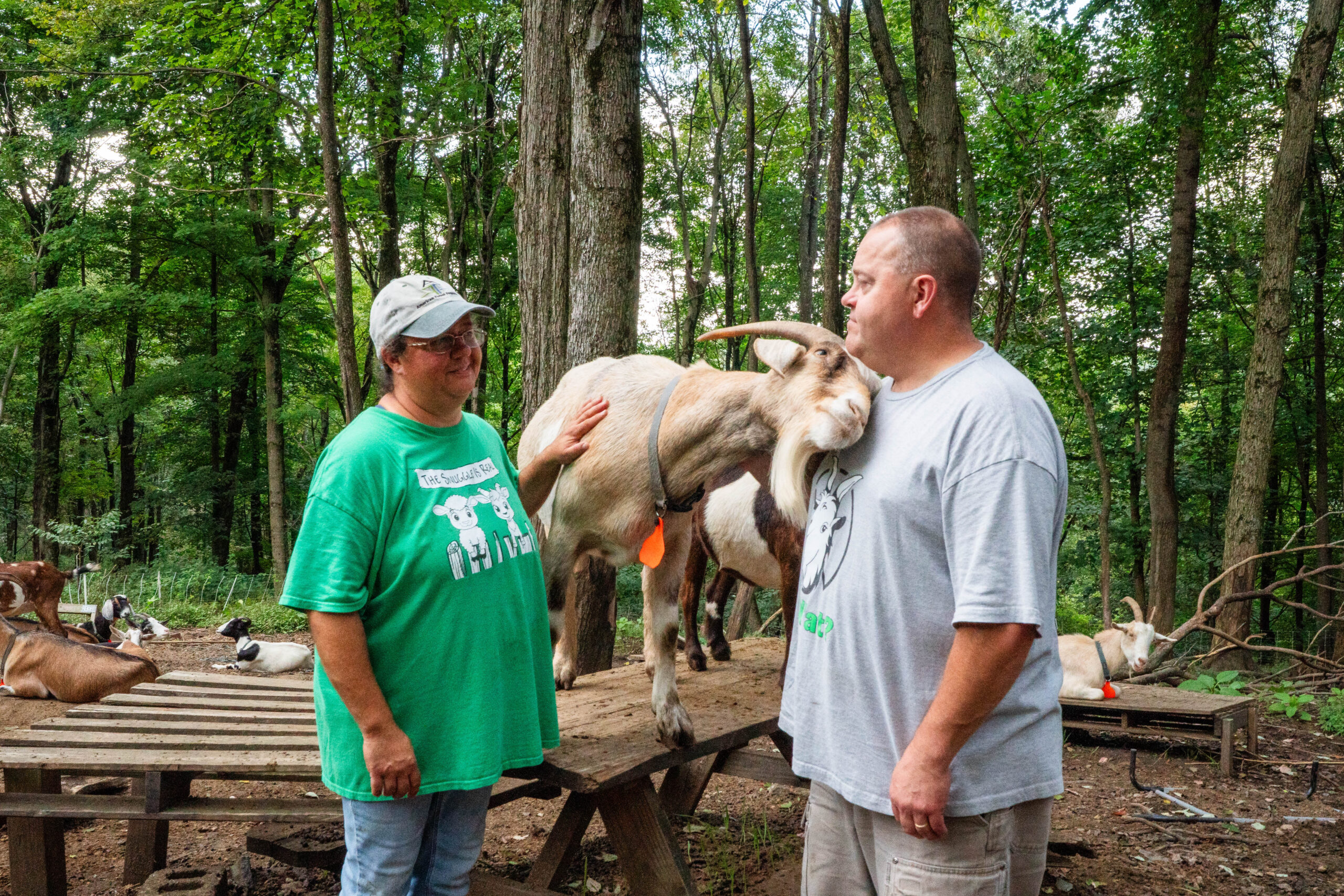
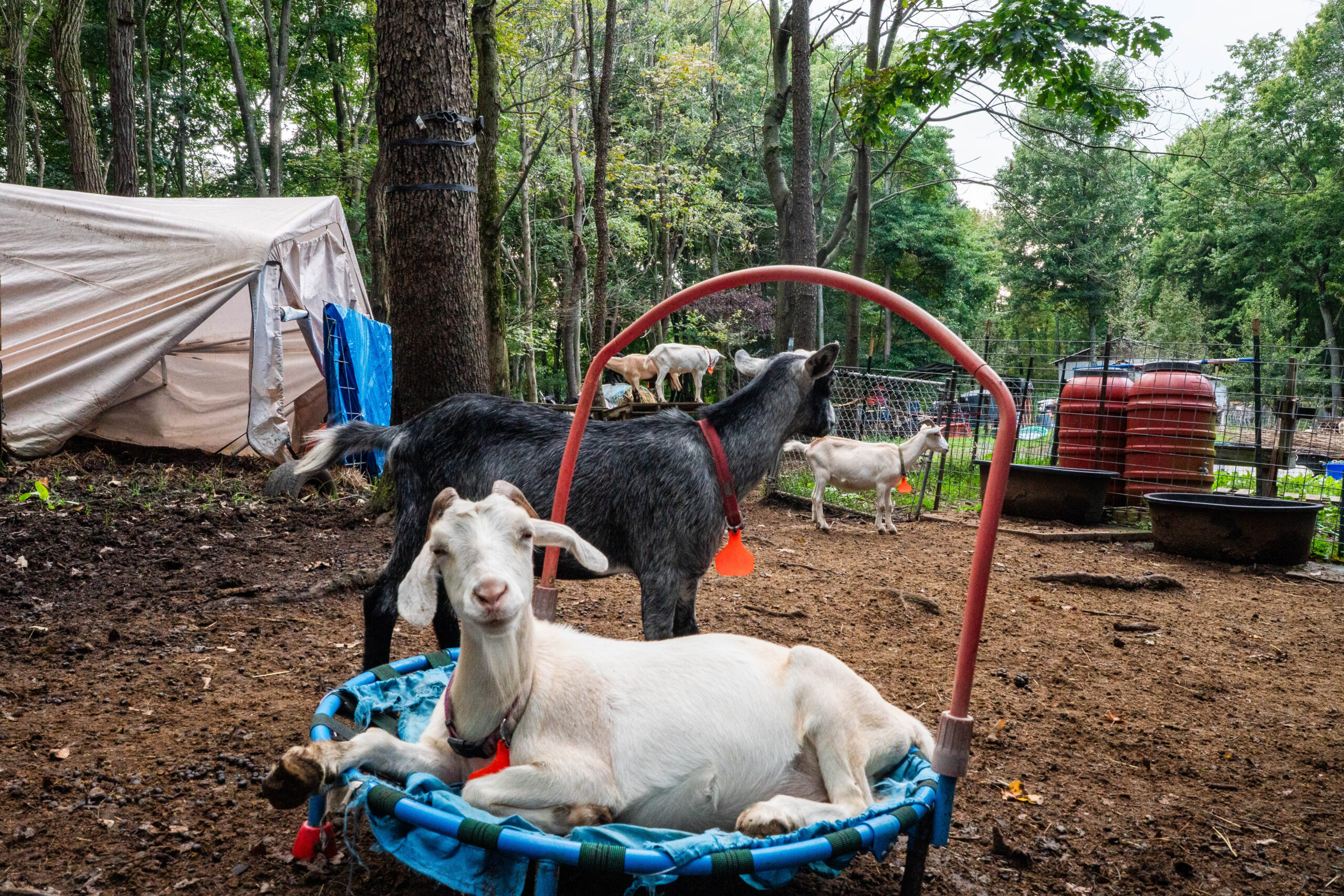
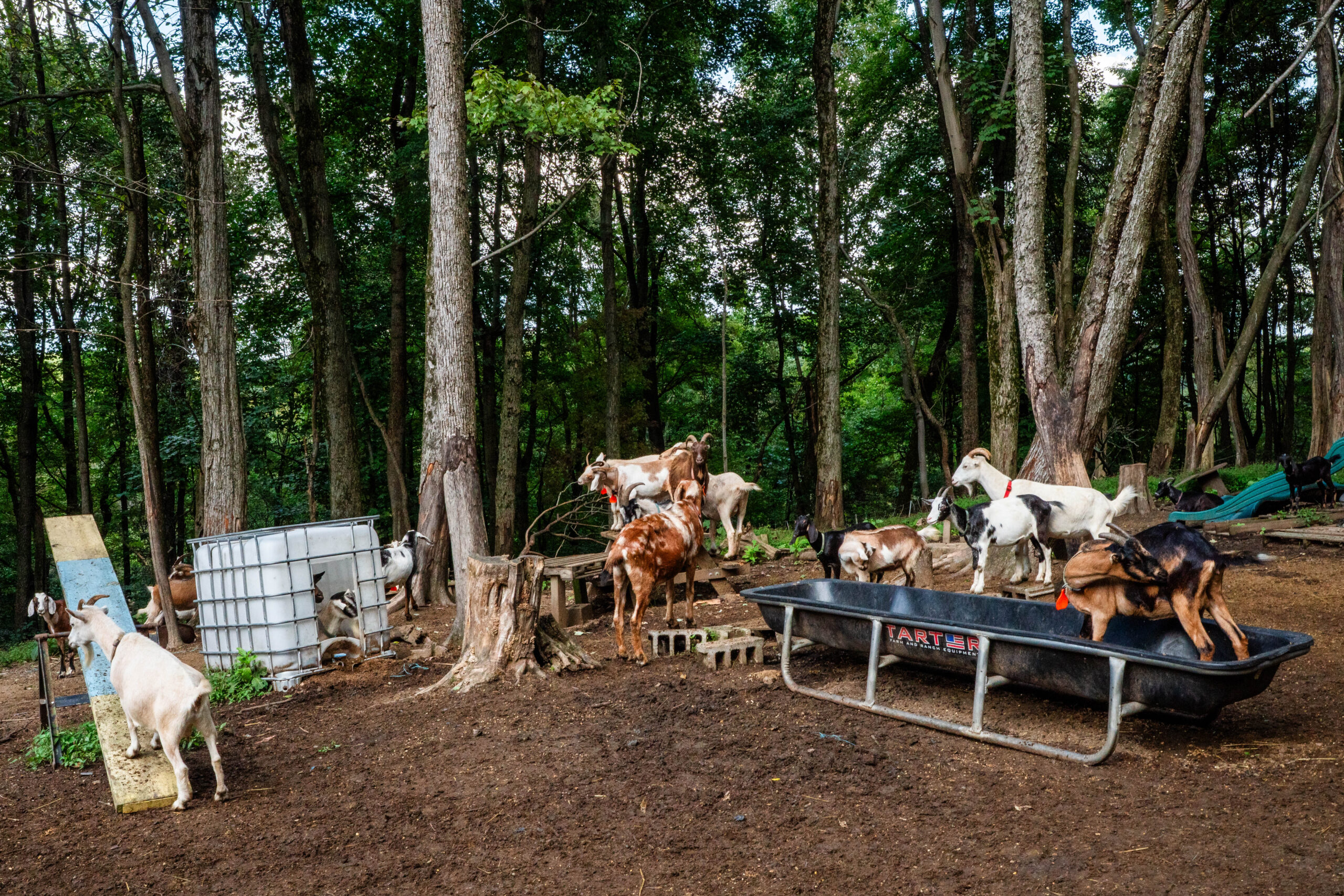
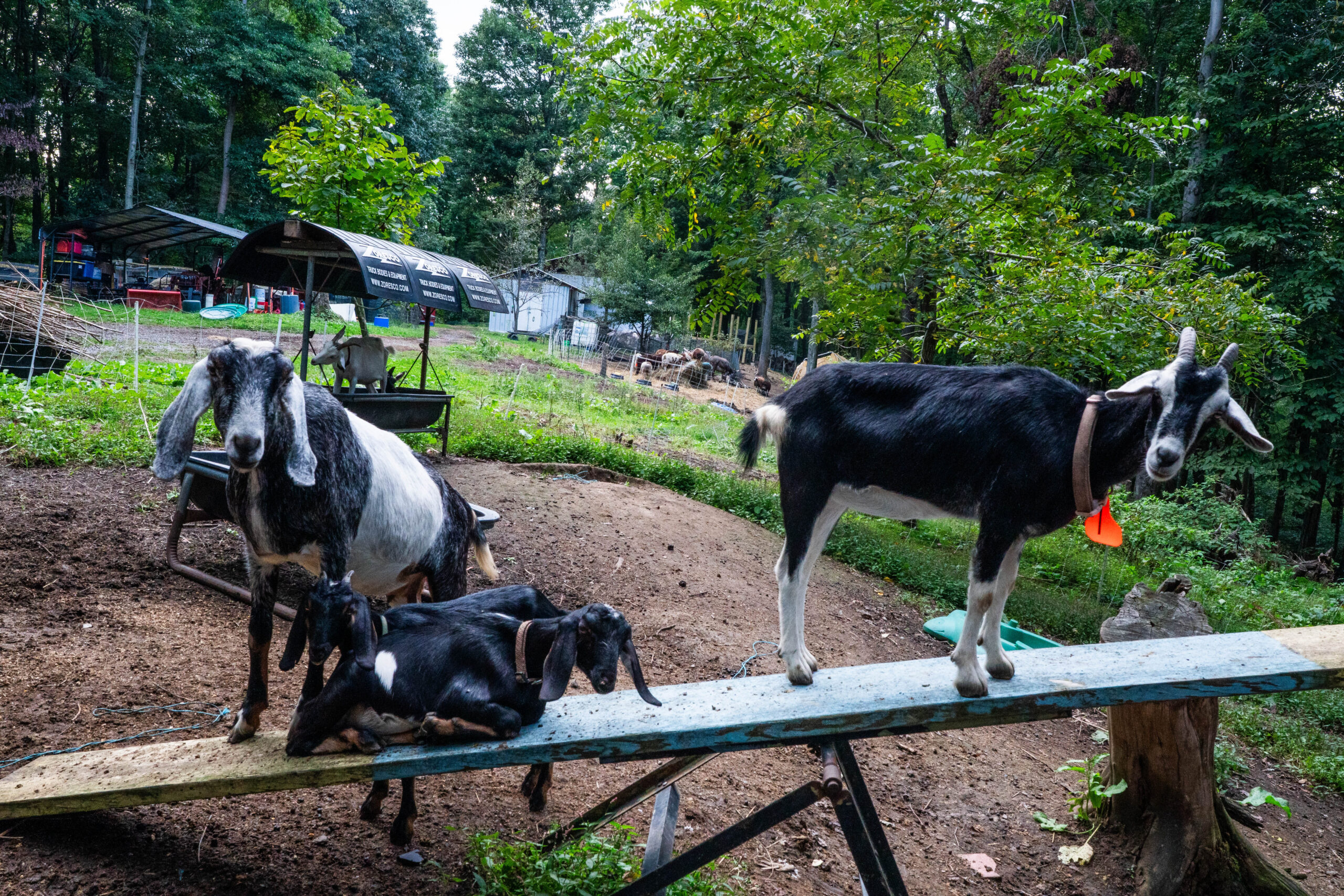
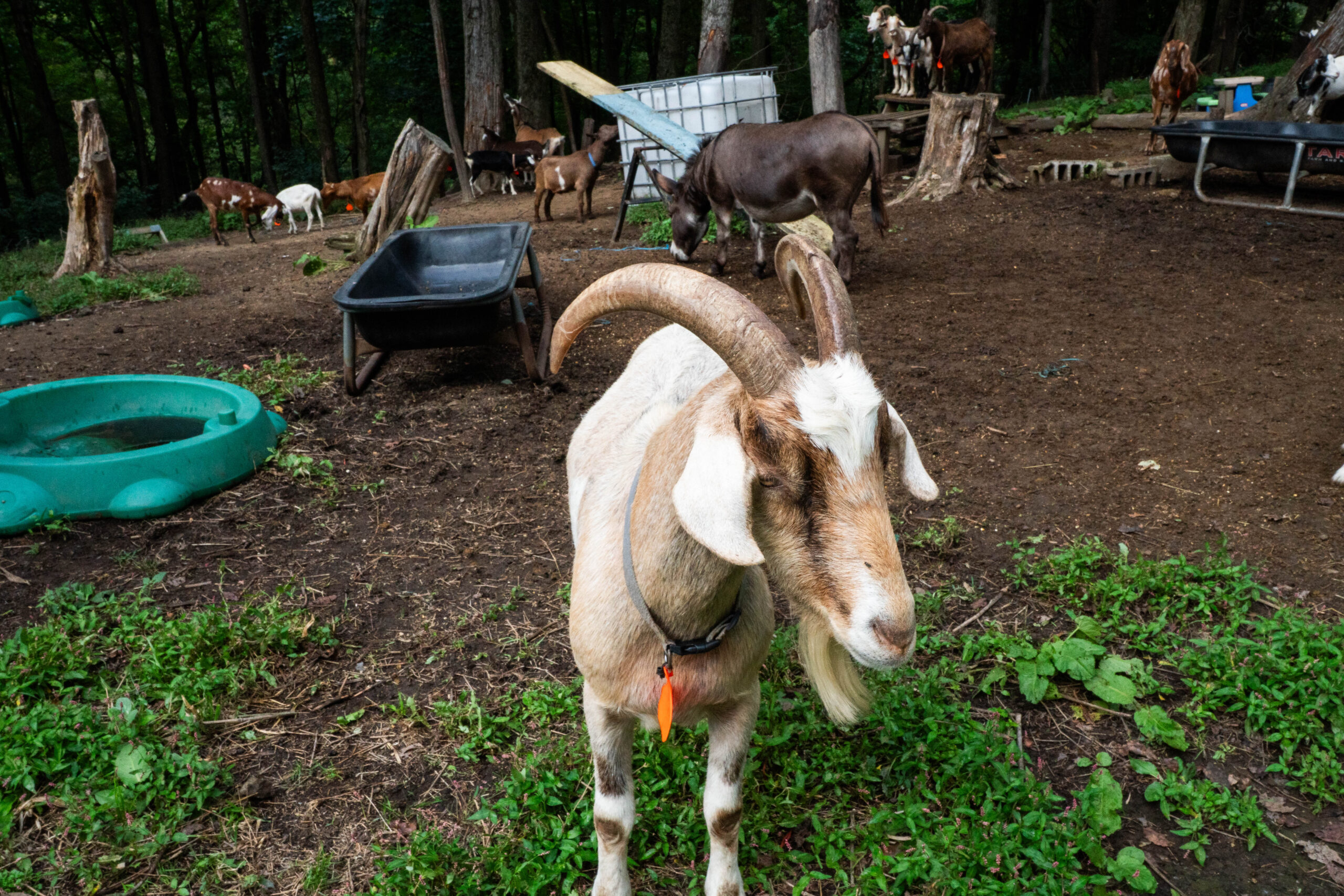
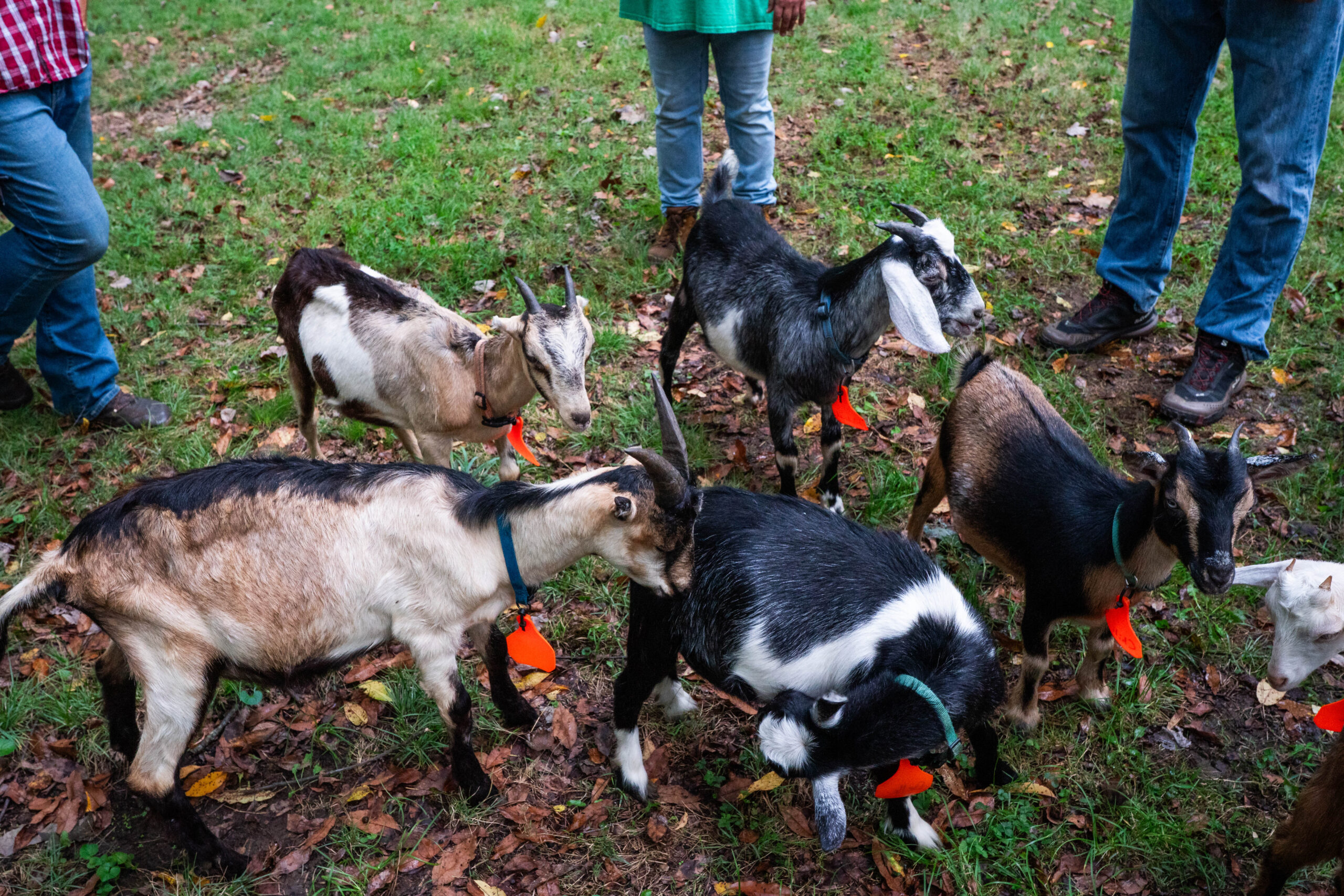
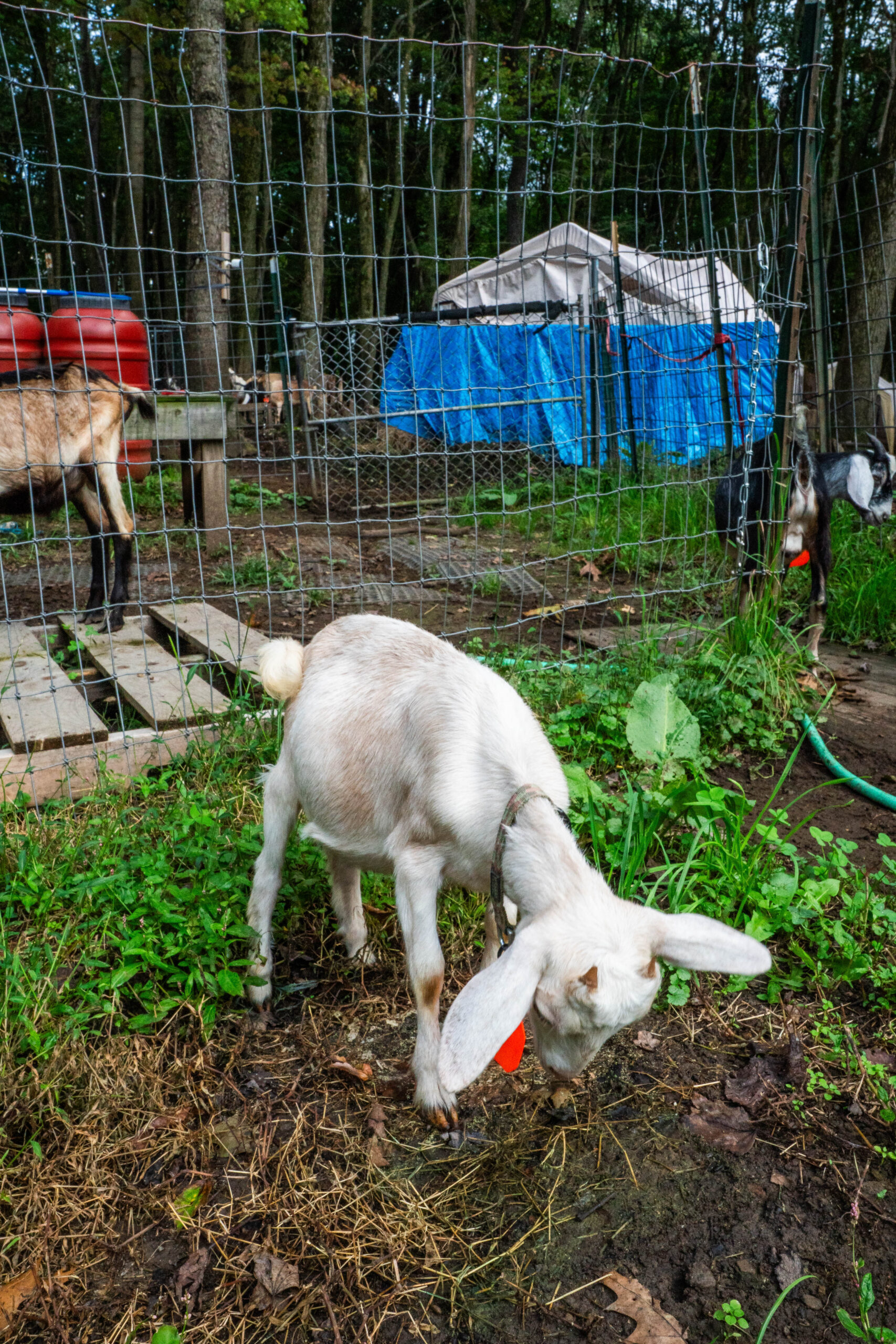
CLINTON, Pa. — Tucked in the woods beside a busy country road, goats lounge on any surface they can find: a teeter-totter, a swingset, a slide, tires, tables, a trampoline.
At Capricious LLC, these hard workers get a respite on their own playground. The goat farm, located in Clinton, Beaver County, Pennsylvania, specializes in brush clean-up and party entertainment.
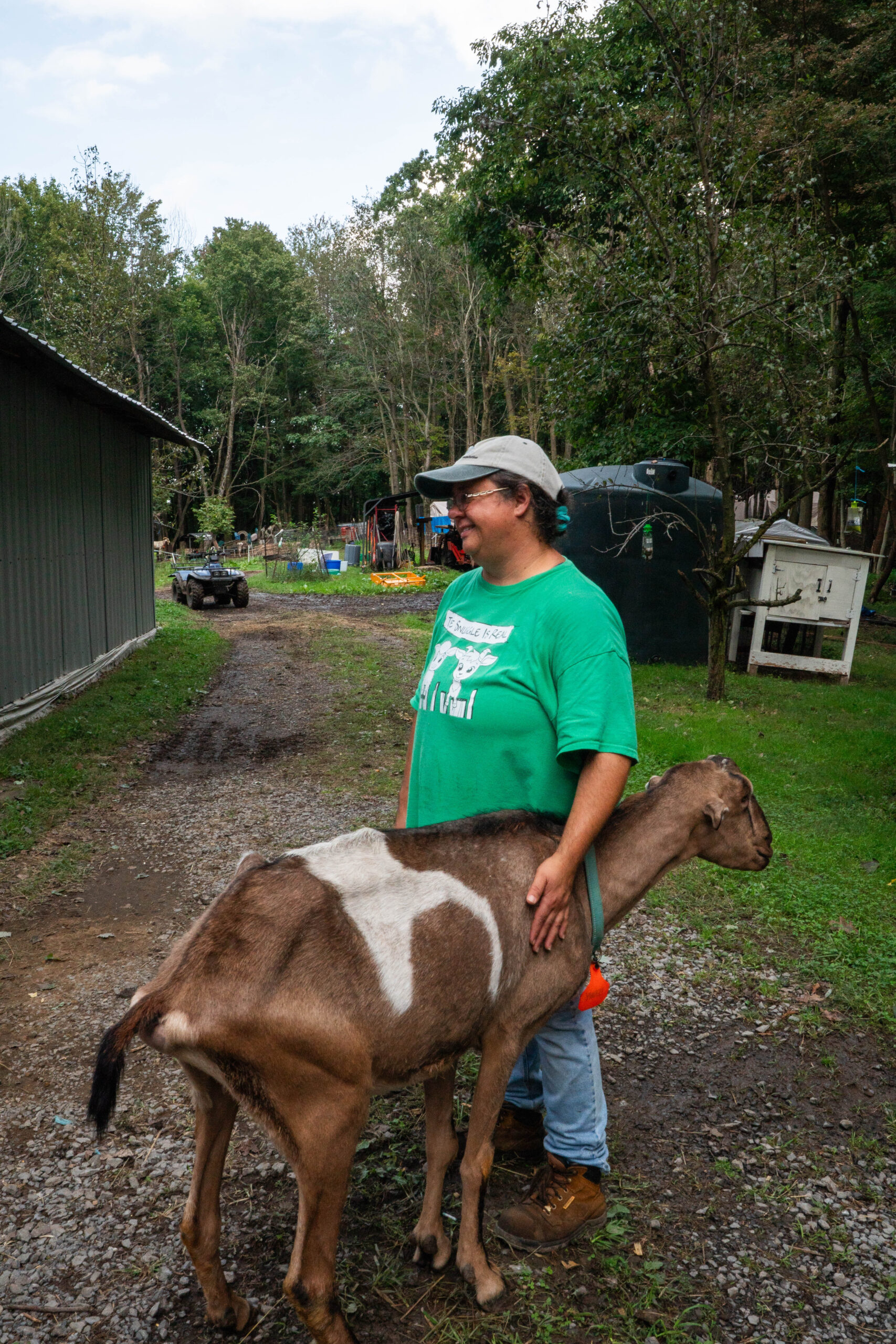
Every summer, groups of Monica Shields’ goats clean up overgrowth in residential and municipal properties — something she calls an “accidental business.”
“We were really just getting goats to address our own needs here,” Shields said. “I was initially thinking, well, if they earn something, then they help to offset their feed cost over the winter, and that’s good enough. But it grew faster than we anticipated.”
What started as a few jobs during the COVID-19 pandemic has now grown into a fully booked brush cleaning schedule until next summer. Shields has also been able to capitalize on her farms’ wooded areas, participating in the Family Forest Carbon Program.
A necessary change
Shields’ first taste of agriculture was at the University of Maryland, working on the campus farm and managing the equestrian program from 1994 to 1996.
She eventually finished her undergraduate degree in organizational communication and leadership at Duquesne University in 2000 before earning a master’s degree in leadership and a master’s degree in adult education at Indiana University of Pennsylvania.
Shields went on to teach at Duquesne University for 15 years until a driving accident altered the course of her life. While she was working toward her doctorate degree in 2014, a young driver who was on her phone hit her car.
Shields suffered a traumatic brain injury that altered her vision; when reading for long periods of time, her vision would split, causing her to see double.
“I couldn’t read or work at the same level anymore. My students were turning in about 900 pages worth of work a week,” she said.
“I needed something different to do.” Four years later, she acquired her family’s roughly 62-acre property in southern Beaver County, a property that has been in her family since 1908.
A new journey
In 2018, Shields inherited “dirt and trees.” The only structure on the property was a shed her dad built. Looking to clean up the property, a forester advised her to clean up the brush, as species like red maple would replace more desirable hardwood species like oak and hickory.
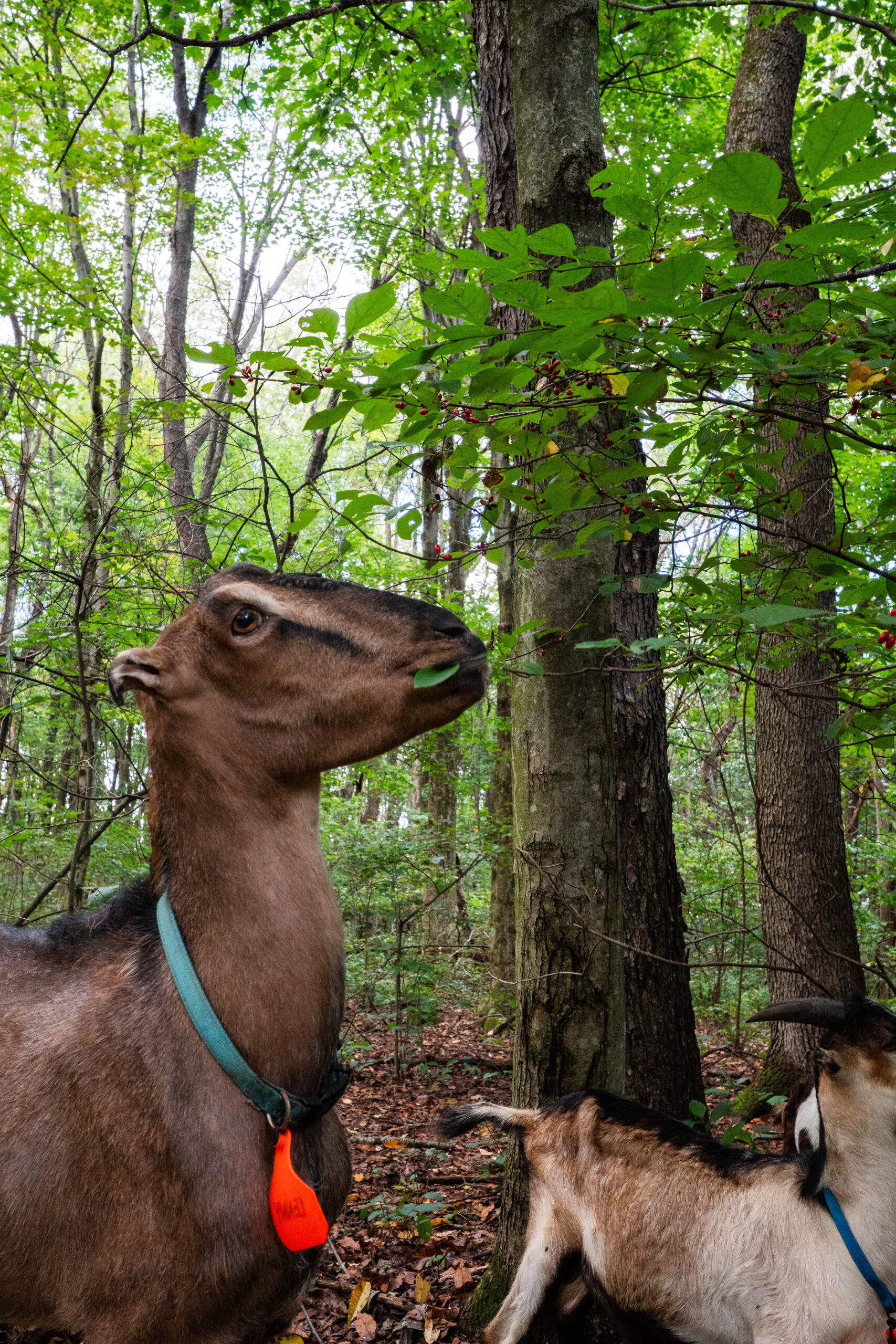
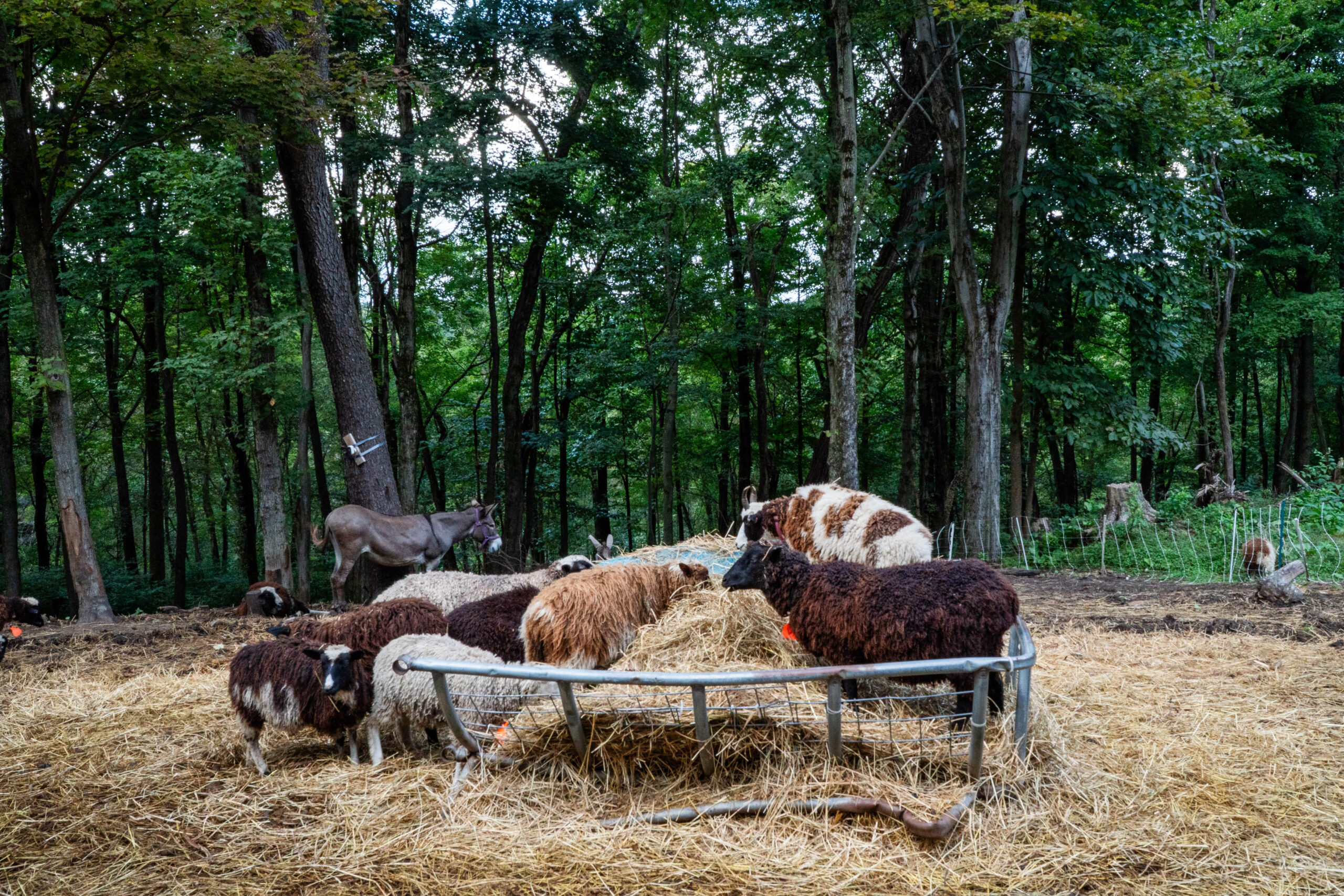
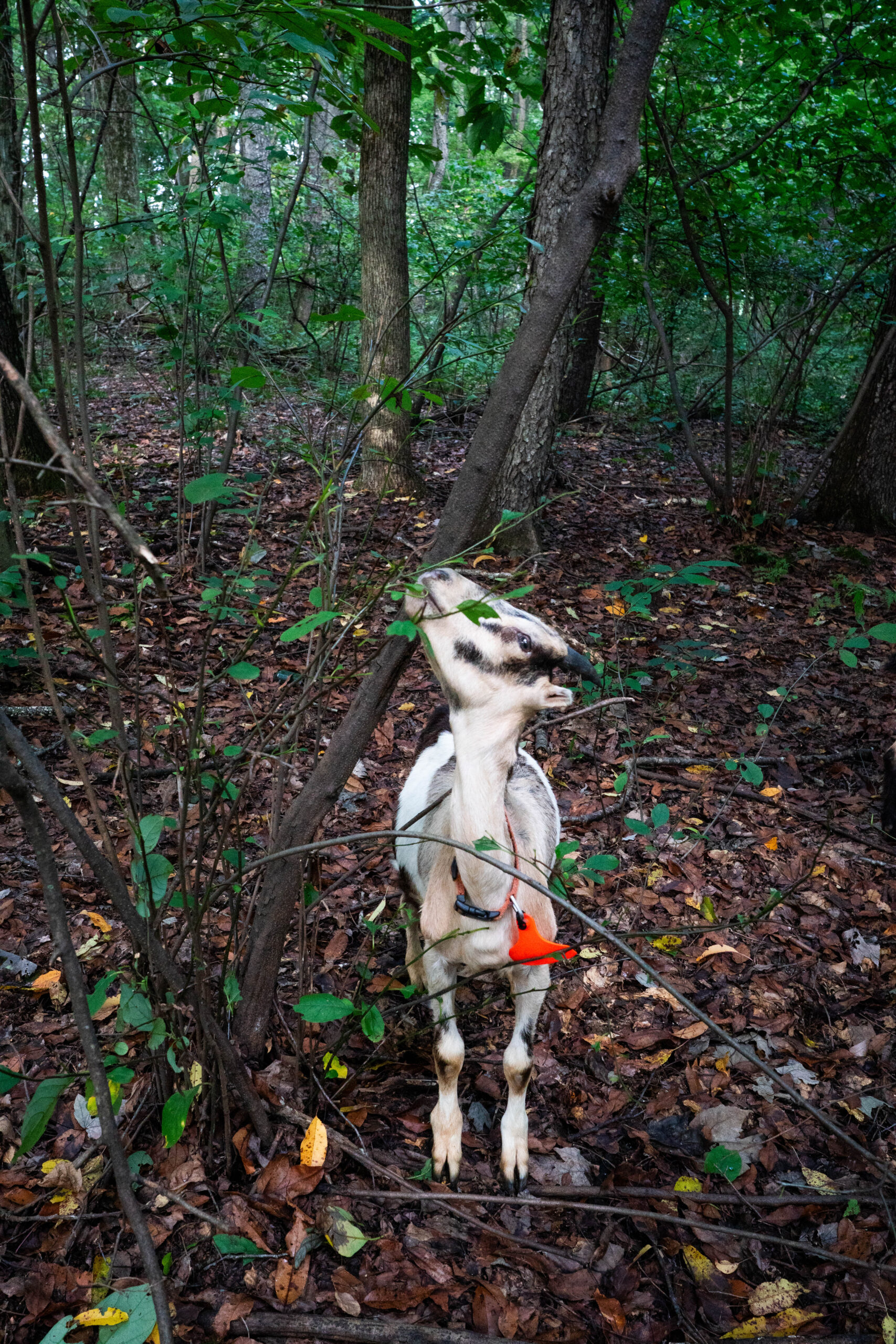
Shields employed goats to clean up her property in 2020; goats eat woody brush, weeds and vines. At first, she envisioned owning only 10 goats. But soon after she got them, other people in the area were interested in employing the goats for their own backyards.
“If I have a need for goats, maybe others do too,” Shields said. She runs Capricious LLC with her husband Tim, an Army veteran, and her son.
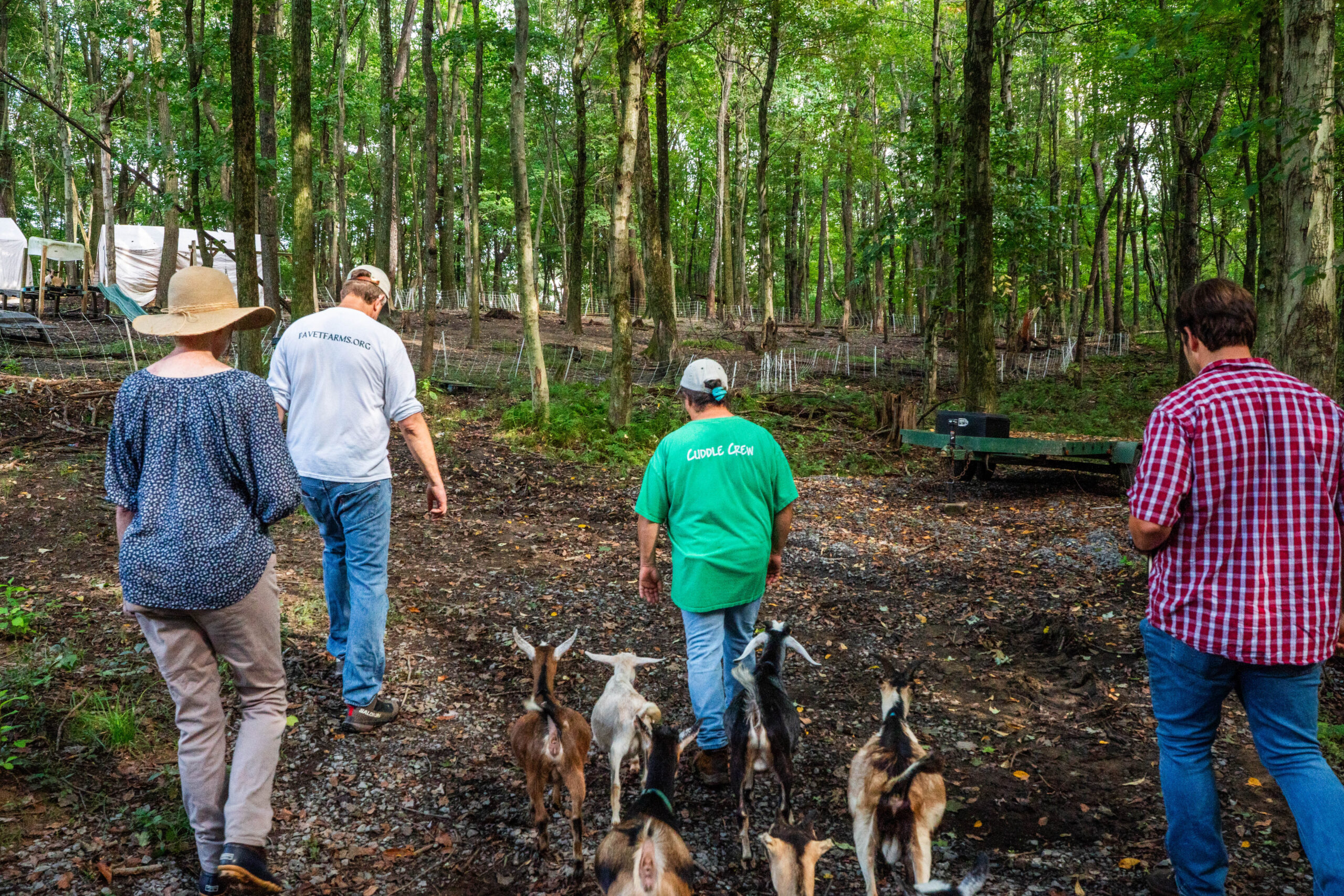
She soon advanced to having three groups of working goats — six to 12 in each group.
“Most of them are rescues, or someone’s life situation changed. They were someone’s family pets, or a 4-H project that didn’t make weight,” Shields said.
There are 13 breeds of goats on the farm; Shields says dairy crosses are much better brush cleaners than meat breeds. That’s because the meat breeds pack on more muscle, overheating faster and, in turn, eating slower.
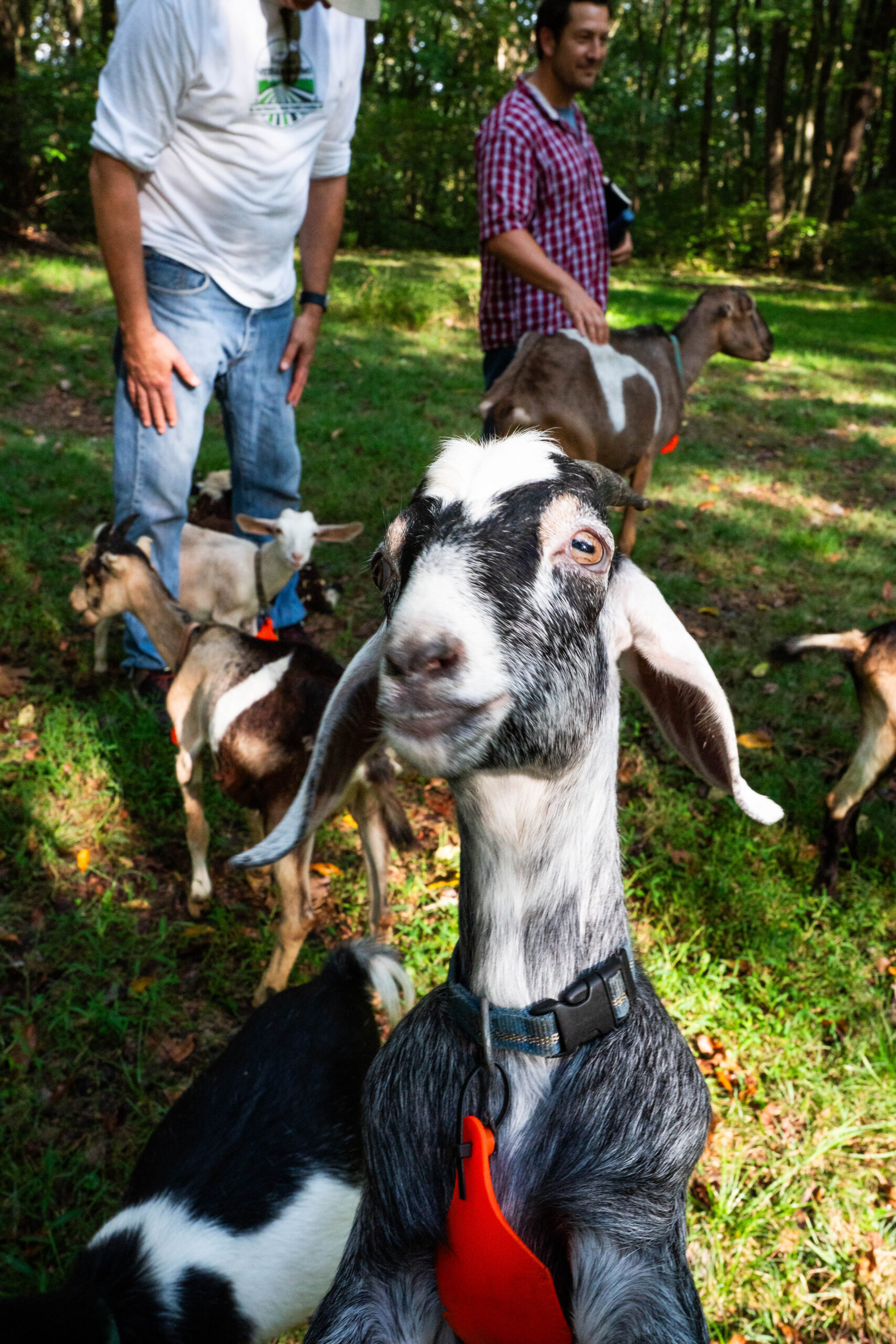
To train the goats, Shields will take them on hikes throughout the property and get them used to commands. Each goat knows and responds to their name.
Today, Capricious LLC employs 115 goats and eight groups of brush workers, in addition to raising chickens and sheep on the farm.
The goats clean up brush in residential neighborhoods and municipal areas serving communities across western Pennsylvania and bordering Ohio counties.
The brush cleaners
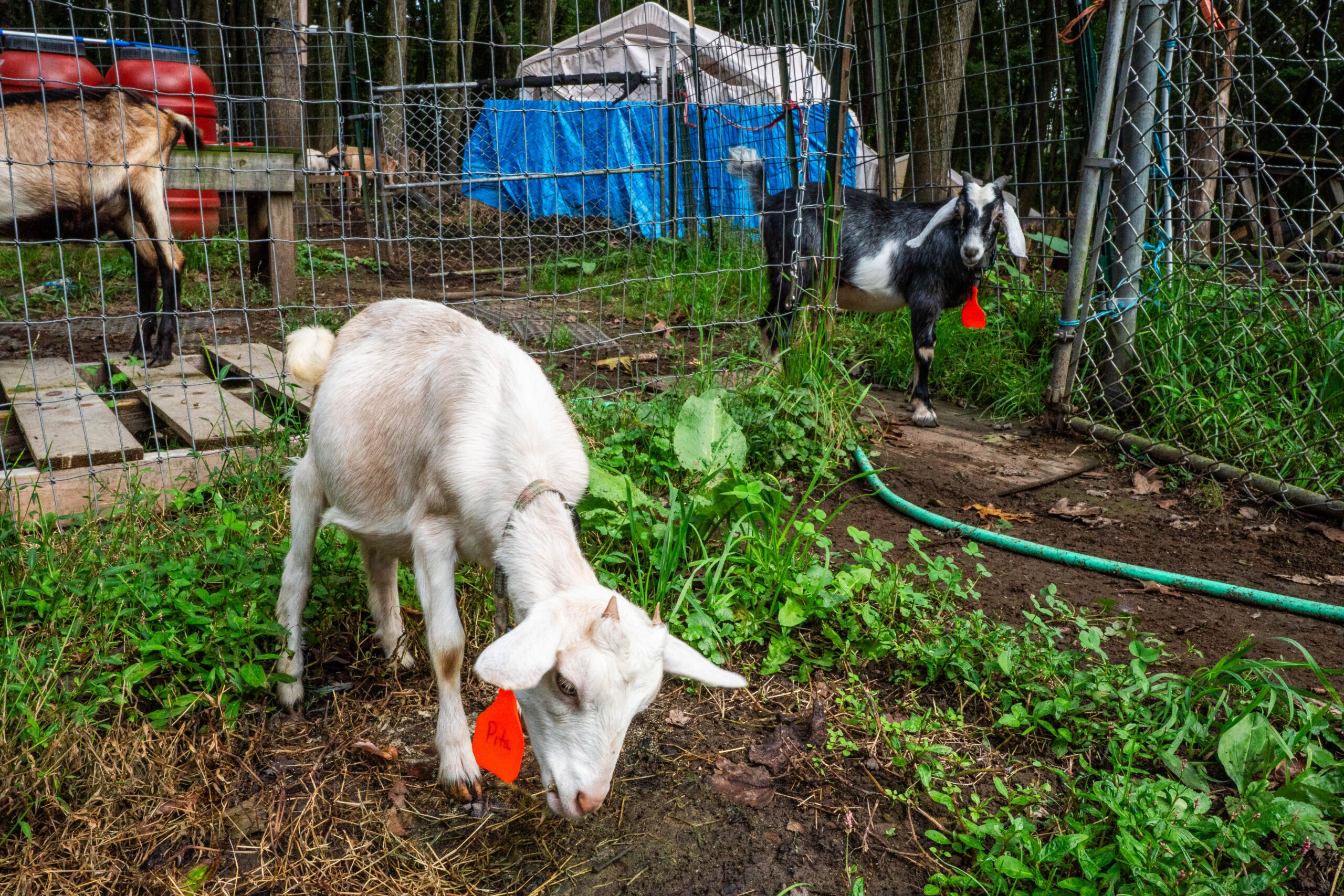
The goats conduct brush work from May to October, sometimes working on a large-acreage property for an entire summer. In particular, the goats are useful for eating invasive species like Japanese knotweed and multiflora rose, as well as poison ivy.
At each site, Shields uses four rolls of solar-powered electric shock fence to enclose the goats in their workspace. She also provides a water trough, hay and a mineral mixture to supplement any nutrients they aren’t getting from the brush.
“We’re low on a lot of minerals in our vegetation: selenium, copper, so we send a mineral mix out with them everywhere they go,” Shields said.
In times of inclement weather, Shields has a pop-up shelter for the goats. One time, she didn’t get there fast enough, and the goats took fate into their own hands, taking shelter underneath someone’s porch.
In between properties, the goats get a few days’ respite back at the farm on their personal playground.
“The playground keeps them in place,” Shields said. Otherwise, they may jump the fence in search of something to do.
But the brushwork business hasn’t been without its challenges. Shields had to start using cameras at jobs in municipal areas after accidents where two goats were killed.
Other facets of the business have required adjustment, including scaling back on the number of social events Capricious LLC does in a week.
At the farm, baby goats are used for special events, including birthday and graduation parties, story hour at the library, nursing home visits, goat yoga and even prom.
Alternate sources of income
Shields quit her full-time job earlier this year, and while the business is paying the bills, she has been able to use her property to make additional income.
This includes participating in the Family Forest Carbon Program. Shields rents out her property to the organization for 20 years. Every five years, the organization assesses the trees on the property, looking out for diseases and identifying what’s been cut down.
Shields receives money from the organization in exchange for promising not to clear-cut the property; however, she notes she can still use the trees for firewood.
“What I like (the most) is that I have someone to ask questions of that knows my forest because they’ve all come out and walked it multiple times,” Shields said about participating in the program.
She also has a hunting lease on her property and is working on future plans for her sheep’s wool and to turn part of the property into a camping site — the site is near the popular Key Bank Pavilion concert venue in Burgettstown, Pennsylvania.
As she looks to the future, Shields can’t help but recognize what brought her to this new journey in the first place: the goats.
“I adore the animals. I know not everybody is a goat person. They can be very mischievous, and a challenge at times,” Shields said.
“(But I love) getting to see other people interact with them. They’re not just living furniture; I think that we have so many people that are disconnected from farms that they don’t realize that they do have personalities and that they have attachment to people and to others in their herd. It’s fun to watch (people) learn about them,” she said.
For more information on Capricious LLC, visit https://www.capriciousgoats.com/.
(Liz Partsch can be reached at epartsch@farmanddairy.com or 330-337-3419.)





Thank you, Liz! What a great story! WINNING!
I love this article! The photo of a goat head bumping one of the owners shows the love between them.
The owners’ faces are priceless.Goats are so incredible animals,it can be hard to think of them as livestock.
I like how the owners help unwanted adoptive goats “earn”their keep.What a win for all,
and a great educator in keeping weeds under control without the use of pesticides.
Great article.Thank you!