



As Jake discovered, it’s not just about the crops—it’s about the people. He highlights the incredible impact of smallholder farmers and the cooperative systems that power Kenya’s economy.
In my college agriculture classes, I often left lectures frustrated. Many courses focused on what I initially thought were obscure topics in international agriculture and development—subjects I hadn’t chosen, but that were embedded into my curriculum.
In crops class, we studied legumes from around the world, whether they were grown in the United States or not. In trade policy, we learned how Europe’s climate is better suited to wheat, and why U.S. wheat production has declined. In environmental law, we traced the history of global climate treaties.
I entered school with questions about commercial row cropping, only to be pulled into lessons about how food systems operate across the world. It took time to realize that the goal of most courses wasn’t just to serve my local community—it was to teach us how to feed the world.
For years, I’ve heard the question: How are we going to feed the largest population in the world? I believe I have some answers from the field, drawn from a recent trip to the continent with the fastest-rising population.
By 2050, Africa’s population is projected to reach 2.5 billion people. The mission to feed a hungry continent hangs like a long-anticipated raincloud. Population growth is hard to see with the naked eye, and hunger often remains invisible no matter where you go.
During my trip to Kenya with fellow agriculture journalists, I met scientists who not only recognized the challenge, but also carried visions—and sometimes solutions.
“We’re seeing rising demand for animal products—meat, milk, eggs—as well as cereals,” said Kenyan Agriculture and Livestock Research Organization Senior Scientist David Mbugua. The continent will need an estimated 100 million additional tons of cereals and faces a 20% increase in per-capita demand for animal products.
I found myself asking what our role should be in global food security, and what knowledge from the United States is truly transferable. While the U.S. struggles more with food distribution than production, future diets may begin with a look at American consumption.
The U.S. averages 271 pounds of meat consumed per person per year, compared with nearly 37 pounds per person per year across Africa, according to the National Institutes of Health. Economists have long known that rising incomes push diets toward animal protein—a marker of greater disposable wealth.
With meat consumption rising, a global debate has emerged over whether Africa’s future diets will mirror this shift—balancing environmental impacts and production needs with the dense nutrition animal protein provides.
Yet during my two weeks in Kenya, I saw a country already investing in a broad protein portfolio: fish, legumes, insects, dairy, goats and cattle. It’s a fight to feed, and I believe they are well on their way to winning.
Cattle efficiency
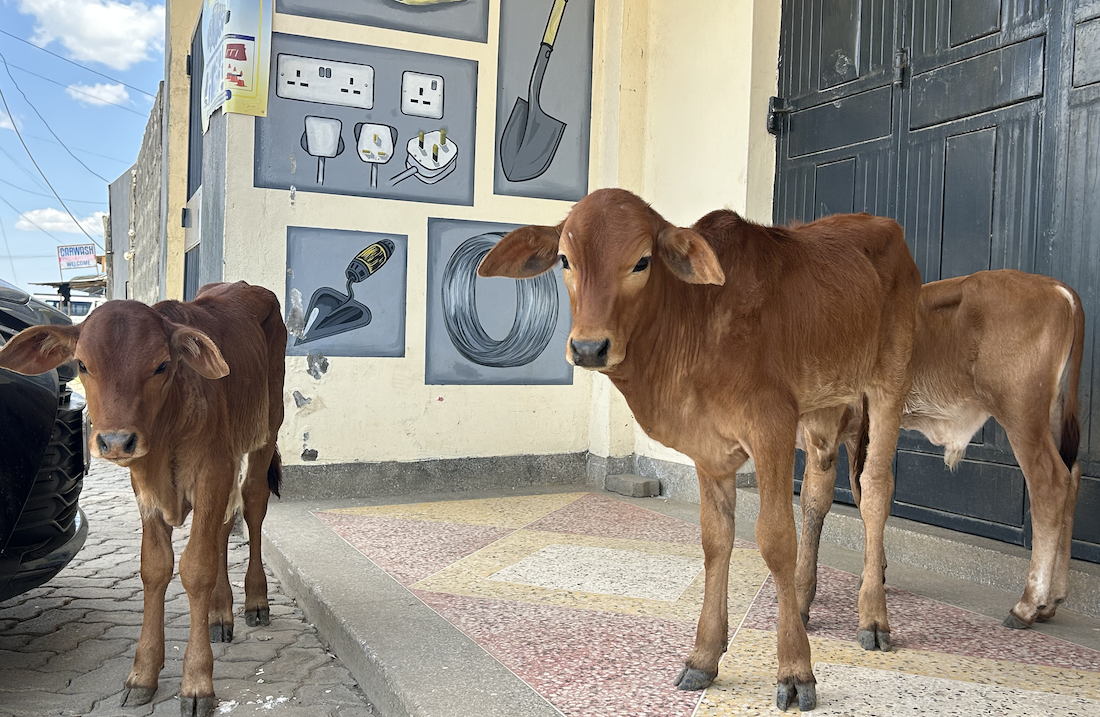
A defining sight in Kenyan agriculture is the roaming cattle that move along roadsides and across open fields. This management system, pastoral grazing, is widespread. Individuals or families lead herds of three to 50 cattle wherever fodder can be found. When it’s time for market, the entire herd migrates; there are no fences and few boundaries.
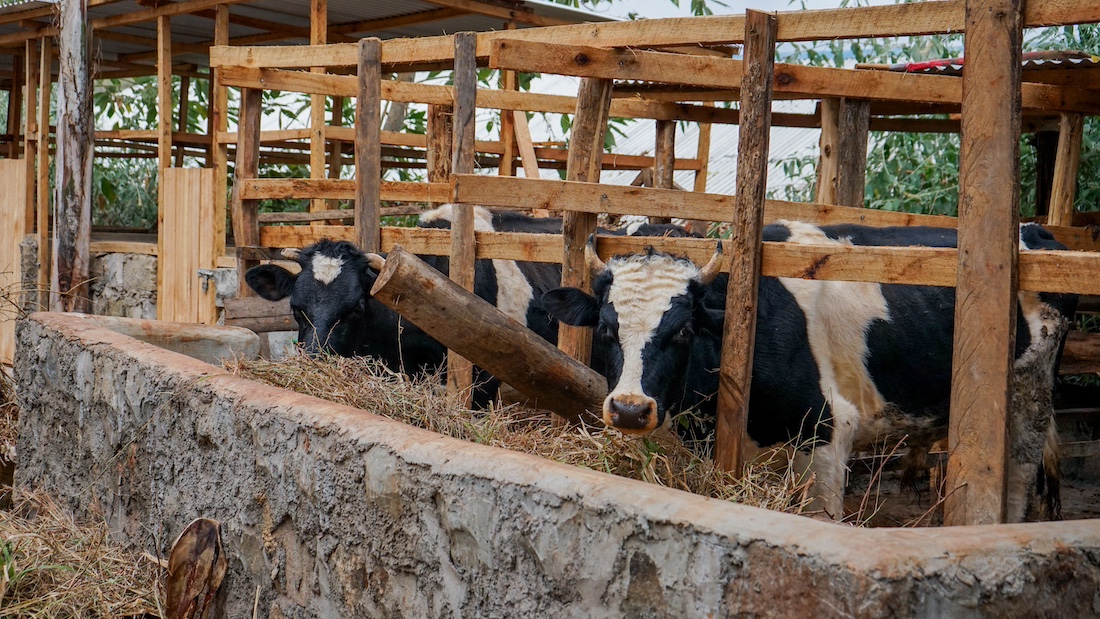
For many smallholders, managing one or two hectares means keeping just a few dairy cows. Three hours north of Nairobi, I visited the Kenyan Agriculture and Livestock Research Organization’s dairy research site, climbing nearly 1,000 feet in elevation and passing cows lining the roadside, udders full.
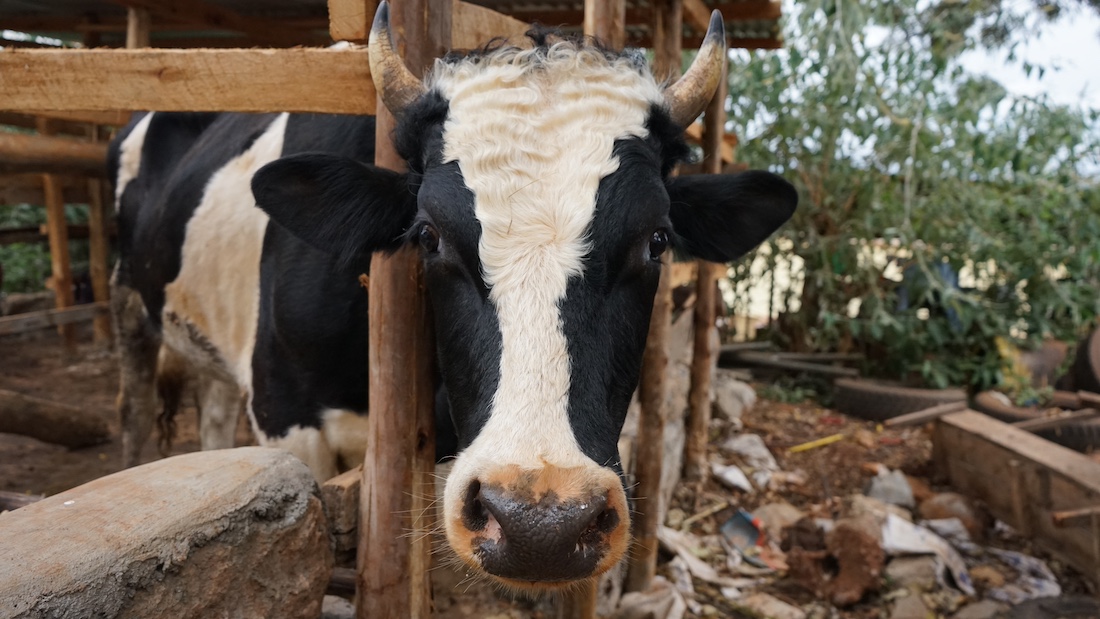
At the research center, two dominant breeds—Holstein-Friesians and Sahiwal—form the foundation of Kenya’s dairy sector. The researchers hope to raise national productivity by improving genetics and nutrition. Average yields sit at about 2 gallons per cow per day; the highest they see in the region is 3 gallons, and their hope is to reach almost 8 gallons, comparable to North America.
“With the right genetics and nutrition, four or five milking cows can support a family economy very well,” Mbugua said. Kenya currently produces 1.4 billion gallons of milk per year. The national goal is 3.3 billion gallons by 2030.
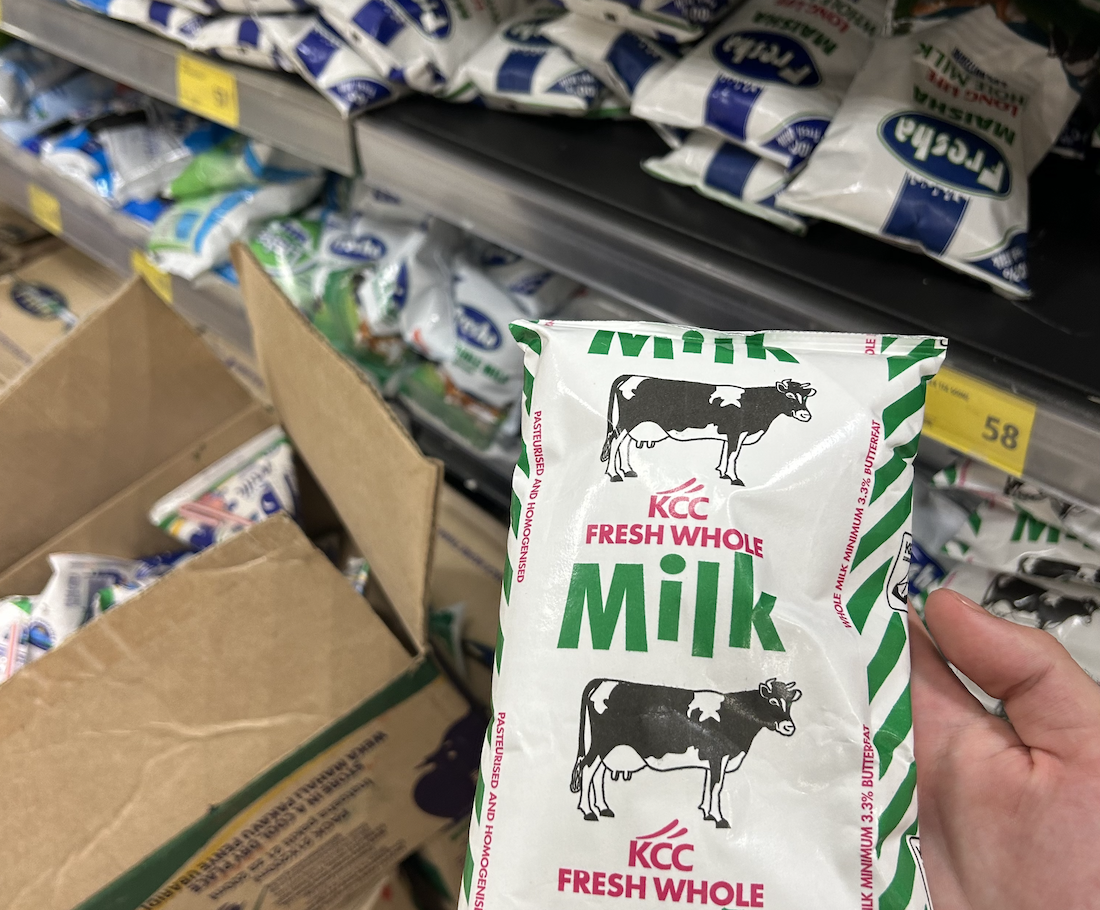
The collective output of thousands of small producers keeps Kenyan grocery coolers stocked with the country’s signature bagged milk. No single farm in Kenya manages more than 100 head of cows.
KALRO functions like a nationwide Extension service, with a registry reaching nearly seven million farmers. Kenya clearly has the manpower for dairy production; the major obstacle is feed, with an annual deficit of 30 million metric tons of dry matter.
Roughage grasses and silage are not produced enough commercially, due to the majority of production never entering the formal marketplace, leaving huge gaps in market access, leaving high feed costs. Researchers are focusing on improving forage crops like Napier grass as one solution. With better feed and breeding, milk yields could rise dramatically. Countries like Uganda, known in Africa for their dairy production, ship both dairy products and quality feed to Kenya to fill the gap.
Chicken republic
Poultry is Africa’s fastest-growing and most accessible protein. Across East Africa, restaurant menus increasingly resemble their U.S. counterparts, with fried chicken restaurants like KFC on every corner.
“Sixty percent of Kenyan households depend on chickens for income, food security or employment,” said Dr. Ann Wachira, KALRO’s chief poultry scientist. She calls chickens a “live mobile bank.”
Yet demand for poultry continues to outpace supply. “We want to turn Kenya into a chicken republic,” Wachira said.
The most widely adopted technologies in the region are new livestock breeds and improved crop varieties, not necessarily machinery that reduces labor. “It’s one thing to get state-of-the-art technologies,” Mbugua said, “but if it doesn’t transform people’s lives, then it becomes useless.”
That philosophy guided KALRO’s release of three new indigenous chicken breeds—KC1, KC2, and KC3—designed around community preferences for size, color, and growth rate for eggs.
Typical village hens lay 80-100 eggs annually; the new breeds lay 220-240. To date, KALRO has distributed five million chicks to more than 200,000 households.
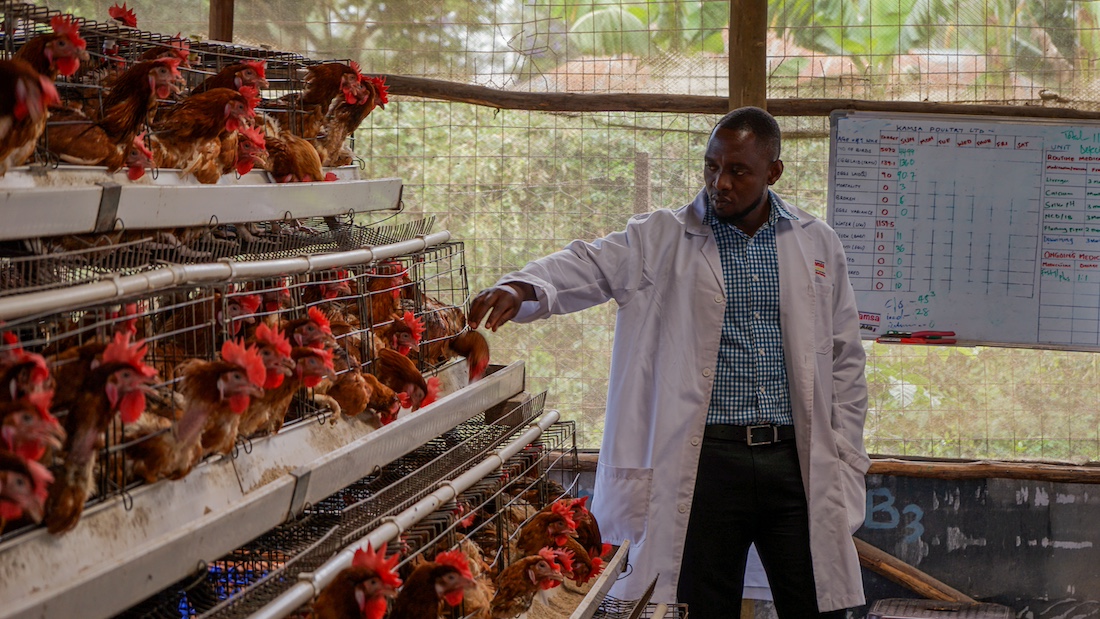
Steve Sande is a poultry farmer at Kamsa Limited in West Kenya and believes the opportunity is also in eggs. I found Sande’s operation on Facebook, sent an introduction message and hours later were touring his farm.
“Hunger and malnutrition is caused by eating an unbalanced diet. And I have noticed the most missing part of the diet is proteins,” he said.
He focuses on making it profitable, so it can grow and continue to feed. “I realized the gaps in the industry…people focus on production and forget about the business side of it,” he said.
Sande’s operation is on his mother’s former homestead, with three production barns with a total of 15,000 layers. He believes there is opportunity in livestock like chickens because of their simple cage systems that can often be automated with few employees.
For sectors like crop farming, “it doesn’t interest me much,” he said. “In the country, it is mainly dependent on rainfall, which is unreliable, and you don’t have much control over that.”
More alternatives
Plant protein already plays a central role; legumes make up roughly half of the traditional diet—the same legumes I can tell you about thanks to my internationally focused crops class in college.
Investments in soy, pulses and oilseed crops continue to increase—not to replace meat, but to supply feed, stabilize prices and expand nutrition options. So do soldier fly larvae for animal protein, and operations are growing fish inland and offshore in controlled settings.
Still, some food-systems analysts argue that for Africa to meet its rising protein demand, reductions must come from the world’s highest-consuming region: North America.
They suggest that feeding a hungry continent means shifts from other parts of the world. But with the less-than-lucky alternative protein market in the U.S., Kenyans and Americans share a rare sentiment—a polite but unmistakable “no thank you” to any imposed dietary change from meat.
Such market power will send food-system planners back to the table to grow Africa’s wide portfolio of proteins, urgently.