Friends were telling me about their planned summer vacation and how much they were looking forward to the adventure. I couldn’t help but notice a happy urgency in their voice.
Their kids, who are young adults, are leaving home permanently. Two have completed their studies, have good jobs and are planning weddings. The other is well on the way to finishing college and beginning his own life. This was their last vacation with “their kids.” Their nest definitely has a lot fewer dirty feathers lying on the floors.
I’m certain that this sounds pretty familiar to anyone who has watched their own burgeoning adults leave home and start their own lives, now splitting their time and their holidays between their extended families. It’s a reminder that life changes.
I can imagine you asking, “So, Jim, what does this have to do with the great outdoors?”
Well, I’m glad you asked.
Life indeed does change. For sportsmen (and women), these transformations occur slowly through the years. We’re sometimes struck with a peculiar sense of urgency about the passing of those sands down the funnel of time, of things that are now more relegated to life’s rearview mirror rather than its windshield.
Just as most of you, when I left home and jumped into the daily grind of supporting myself, my expendable income was modest. I’d been taught to understand that I needed to live within my means, which meant that excessive spending wasn’t wise — especially if I enjoyed the little things like eating and living under a roof. That meant recycling became a worthwhile hobby, and that the day’s loose change landed in a jar. Any extra overtime felt like a gift. Those would become my mad-money reservoirs, earmarked for wants rather than needs. That meager thriftiness helped me obtain my first good shotgun and a couple decent fly rods.
First good shotgun. That vintage Browning Superposed spent a lot of time covering southern Ohio forests in Morgan, Athens and Columbiana counties, searching for grouse. It also took my first Canada goose at Killdeer Plains Wildlife Area when there was still a one-goose limit, and it was with me when my springer, Shadow, danced with his nose in the air as hundreds of swans flew under snow-heavy clouds, as flakes as big as golf balls were driven into our faces, and together, we stared skyward.
After years of it doing its job of accompanying a young man through an abundance of memories, learned authors of books and magazines convinced me it was too heavy, the gauge too large, and that I could make a better choice. Raiding my savings jar, the Browning was traded away.
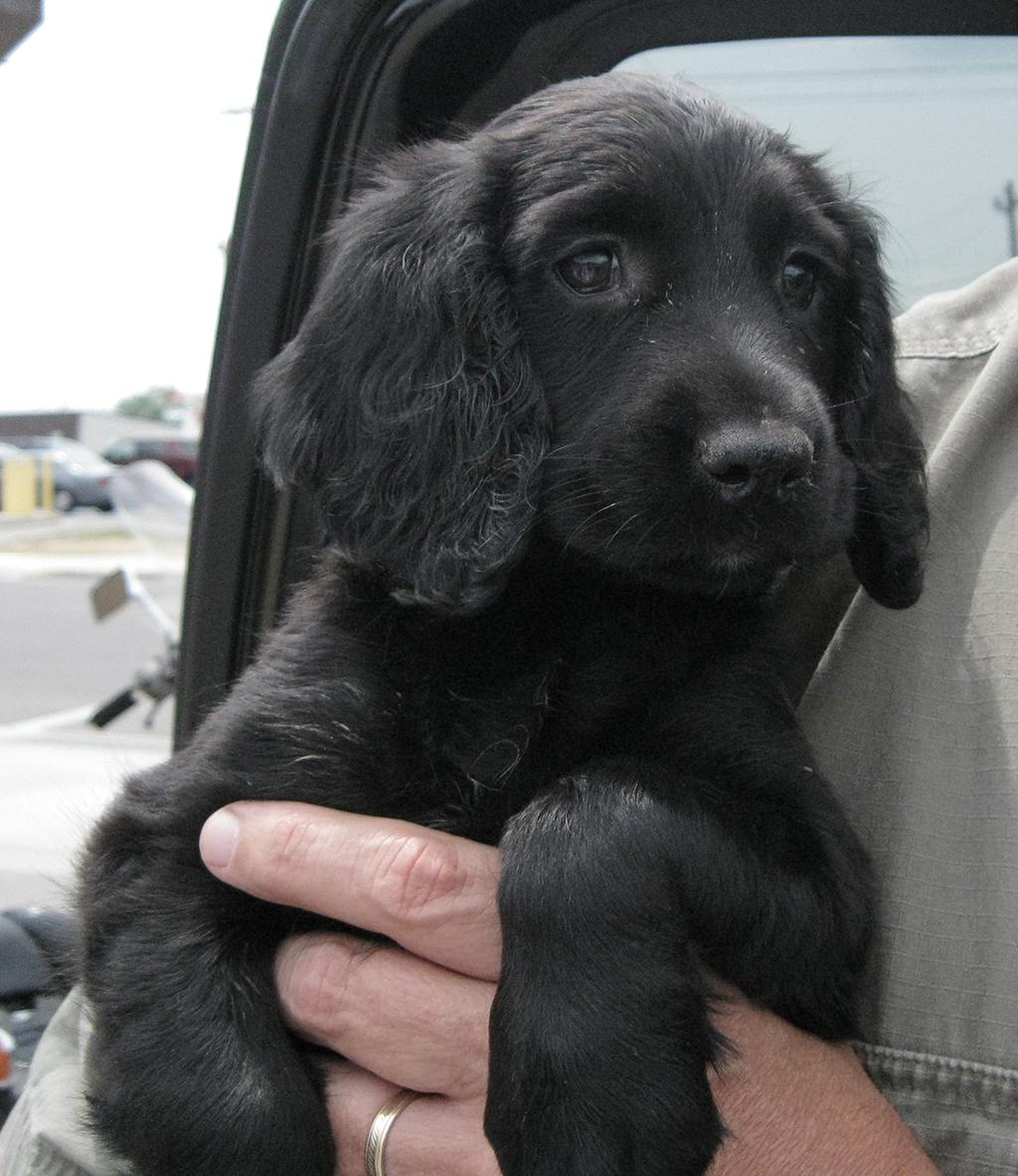
Faithful companions. Then there was this bouncing cocker puppy that would explore every shrub for the telltale sniff of a passing rabbit or pheasant. Its whirling egg-beater tail appeared to be ready to lift her into the sky like a black, furry helicopter.
In less time than I can imagine, Briar reached 15 years, and her graying muzzle and bad hips dampened a heart that still wanted to beat like its younger self. Her abrupt and unplanned departure broke a piece from my own heart — a heart that already suffers its fair share of cracks. Try as I may, I can’t remember our last hunt together.
Shadow and Briar were of differently similar personalities. That may sound contradictory, but if you’ve lived with many dogs, you probably get it. While they never crossed paths, they made a good argument for reincarnation. Neither would tolerate a crate while traveling in my truck, demanding that they take the seat beside me — a protective blanket draped underneath.
After a day of hunting, they were nearly always soaked. If it wasn’t the rain, dew or snow, then it was the fault of a stream, pond or puddle. No pleading command would stop them from a good wade, swim or wallow. At least they forced me to clean my truck’s interior now and then.
Fly fishing. I once had an older friend who’d taught me something about the finer points of fly casting – that long casts weren’t nearly as important as an accurate short cast. That one decent fly rod and some practice beats an armory of the best rods that are stored in a closet. That a dry fly you tied yourself on a snowy winter evening could transform spring’s smallest trout into a trophy — and that a strike on that drifting dry could be as exciting as a first kiss.
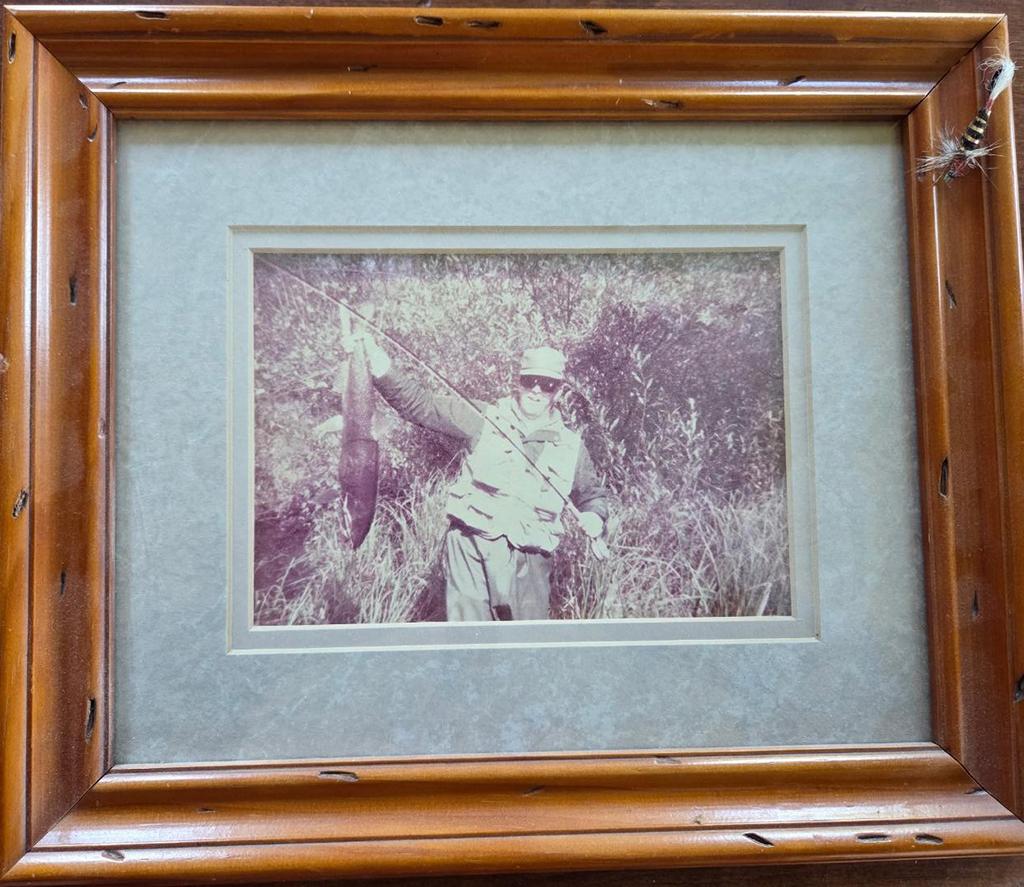
He steered me into purchasing two fly rods. I still consider one as the best smallmouth rod I own, an Orvis All-Rounder. He’d also recommended an Orvis 9X9; a longish 9-foot, 9-weight rod built to handle bass, steelhead and some light salmon work. I just couldn’t afford two rods.
A couple of weeks later, I found that I’d been enrolled in a rod-building class that he was helping to teach. The class was free (I later found out he’d covered my enrollment), so I managed to scrounge enough from my money jar to buy the 9X9’s unfinished blank, cork for the handle and fittings. Later that fall, I caught my first king salmon on that rod while using a comet fly that I’d tied.
A change in my job and location wedged a lot of years between our last conversation. One day, I happened upon his phone number stored in an old fly-tying book and gave him a call. His wife had to give me the news that his health had forced his move to assisted living, and that he was no longer taking calls or visitors.
I still have that fly rod, and it’s now approaching a half-century old. The latest prolific writings about fly fishing advise that there are better choices, improved manufacturing breakthroughs and materials, and that it’s time for it to be replaced. I know better now — there’s not another rod in the world that’s better than the 9X9, so I think I’ll just hang onto it. The Browning taught me that lesson.
Life changes. I’m reluctant to return to many of the streams and hunting fields of my past. I tried that once, and found that a subdivision now stood where I once doubled on pheasants with Shadow. Seeing that hurt me like I’d lost him twice, but thankfully, my memory still sees him clearly as he leapt into the air, nearly bagging one bird without a shot, the Browning cracking twice, slapping my shoulder like an old friend.
There’s also a spot along a creek my father had dubbed “Excrement Crick,” though to my knowledge, dad never said the word “excrement” in his life. While I’ve considered trying, I’ll never go back to that spot. I prefer to remember it with my dad and little brother sharing stories and baiting hooks during happy times that didn’t quite last as long as I’d imagined they would — I was still not aware of time’s speedy progress. I don’t want that memory to be lessened by changes that have undoubtedly come.
Today, I’m visiting some streams for the first time, and others that I’ve walked before. In those more familiar spots, I noticed that the trees are taller, the banks brushier and that my hands are not quite as steady while trying to knot a dry fly onto my tippet. When this frustration happens, it causes a strange feeling of urgency in the pit of my stomach. Life changes.
People come and go in our lives; some become friends, some remain as acquaintances. We learn from them, and they from us. Dogs come to our homes for all too brief visits, leaving a shattering lesson that hearts don’t beat eternally, their memories invoking a solemn prayer that the rainbow bridge exists. We buy inanimate objects that spring to life in our hands, earning a special place in the snapshots of our memories.
My experience with wet dogs and dry flies offers me a certainty that while life changes, it remains very much the same. Thankfully, God never whispers that “this is your last trout” or that “this is the last flush,” and we can live with the hope of another day. It would be wise for newcomers to the fields and streams to heed that warning — there’s no guaranteed timetable for last shots or last fish.
One day, that gently worn 9X9 will be in another’s hands. I hope that it will still see a largemouth explode on the surface, slurping in an over-sized dry, and that those new hands understand the old rod’s true value.
“There are many good fishermen and some great ones. But there is only one you.”
— Ernest Hemingway
(Jim Abrams was raised in rural Columbiana County, earning a wildlife management degree from Hocking College. He spent nearly 36 years with the Department of Natural Resources, most of which was as a wildlife officer. He enjoys hunting, fly fishing, training his dogs, managing his property for wildlife and spending time with his wife Colleen. He can be reached at P.O. Box 413, Mount Blanchard, OH 45867-0413 or via e-mail at jimsfieldnotes@aol.com.)