





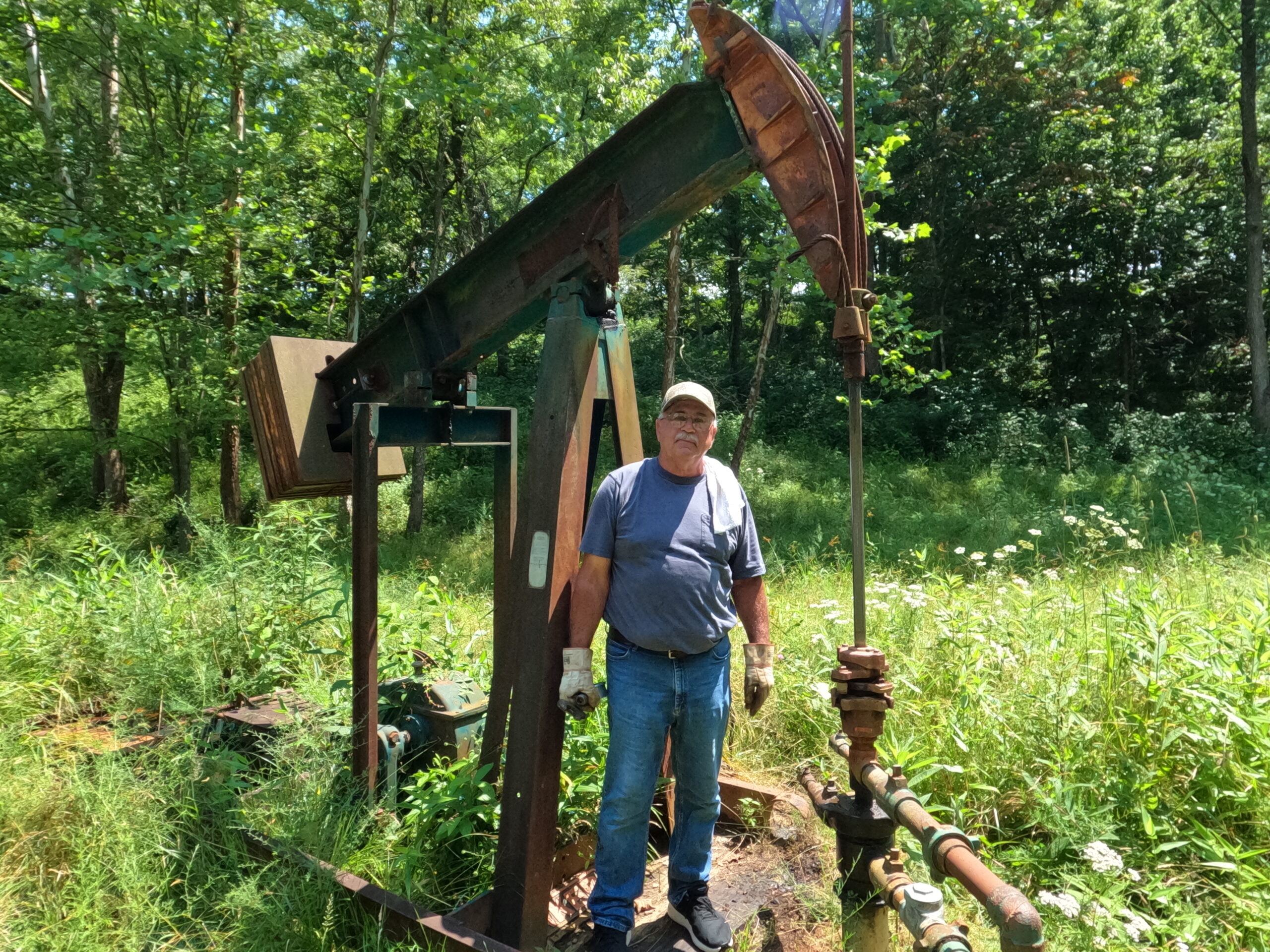
SALEM, Ohio — Four class II injection wells in Washington County, Ohio, were recently shut down due to migration of brine waste, according to the Ohio Department of Natural Resources Division of Oil and Gas Resource Management.
The Redbird No. 4 and No. 5 wells, owned by Redbird Development LLC, the American Growers No. 1 well, owned by DeepRock Disposal Solutions, and the Nichols No. 1-A well, owned by Select Water Solutions LLC, voluntarily ceased operations on July 1 and 2 after ODNR identified impacts to nearby oil and gas wells.
The agency and injection wells owners are currently working on a plan to address the issue, according to an ODNR spokesperson.
There are 17 active class II injection wells in Washington County (including the four shut down), according to the agency. In 2023 and 2024, Washington County accepted 11.9 million barrels of oil and gas wastewater, most of which came from out of state.
Brine migration from injection wells has been occurring for years in Washington County, starting back in 2019 when owners Bob Wilson and Bob Lane found their gas wells flooded with brine waste — a byproduct of unconventional oil and gas drilling.
An ODNR investigation in 2019 found brine waste had migrated up to five miles away into 28 production wells.
After one year of operation, the Redbird #4, one of the Class II injection wells, shut down in July, leaked 4.2 million gallons of brine waste into these wells.
Since then, numerous well owners have had their wells impacted by brine waste. According to Wilson, who owns Wilson Energy, two more of his wells were flooded with brine five to six weeks ago. Out of his 171 wells, 50 of them are flooded with this waste.
“I’ve been living in hell for seven years,” Wilson said at a press conference held by Buckeye Environmental Network on July 7. “I get up and go to work every day and lose money.”
Lane and Wilson filed a lawsuit against several injection well companies in 2019, including Deeprock Disposal Solutions’ former CEO Brian Chavez, now an Ohio state senator and chair of the state’s energy committee; DeepRock operates several injection wells in southeast Ohio.
The case is yet to be heard by the Ohio Supreme Court.
According to Geologist David Jeffrey, of Marietta College, the deep rock formations in southern Ohio are unsuitable for the injection of waste. That’s because these formations have low porosity and permeability, and are already storing naturally occurring salt water
“The problem is there’s no room for these fluids down in that layer,” Jeffrey said at the Buckeye Environmental Network press conference. “(So), (the waste) is gonna try and find the easiest way out.”
Jeffrey echoed community concerns of brine migrating into the City of Marietta’s aquifer in a few years’ time; the aquifer sits roughly two miles away from injection wells.
So far, no nearby private water wells have been impacted by brine waste, according to independent studies by ODNR.
The agency said it is currently working on securing a third-party consultant to conduct a study of private water wells near the impacted production wells in Washington County.
(Liz Partsch can be reached at epartsch@farmanddairy.com or 330-337-3419.)





How many studies will it take to get action to STOP the importing of waste water from injection wells and dumping it into Washington County? There are already state laws being ignored. There have already been studies done. I believe what we need to do is to stop electing self-serving individuals into public office.
Although I agree completely with you, if that were to happen, there will be darn few filled positions!