


While researching the history of Ohio’s Division of Wildlife, I asked several current and retired wildlife professionals to reflect on some of the work they had helped accomplish during their careers.
I wanted more than dates, statistics and official reports. I wanted to capture something of the people behind those accomplishments and give them an opportunity to tell their stories in their own words.
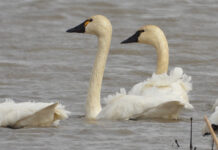
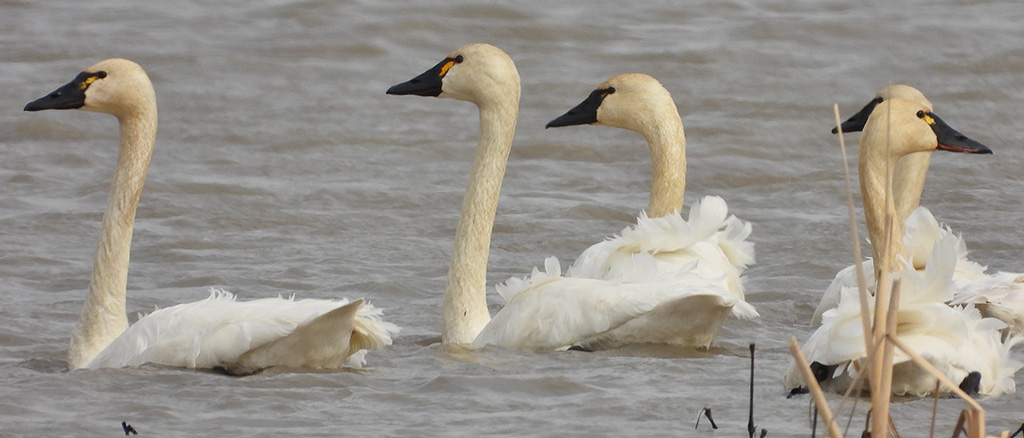
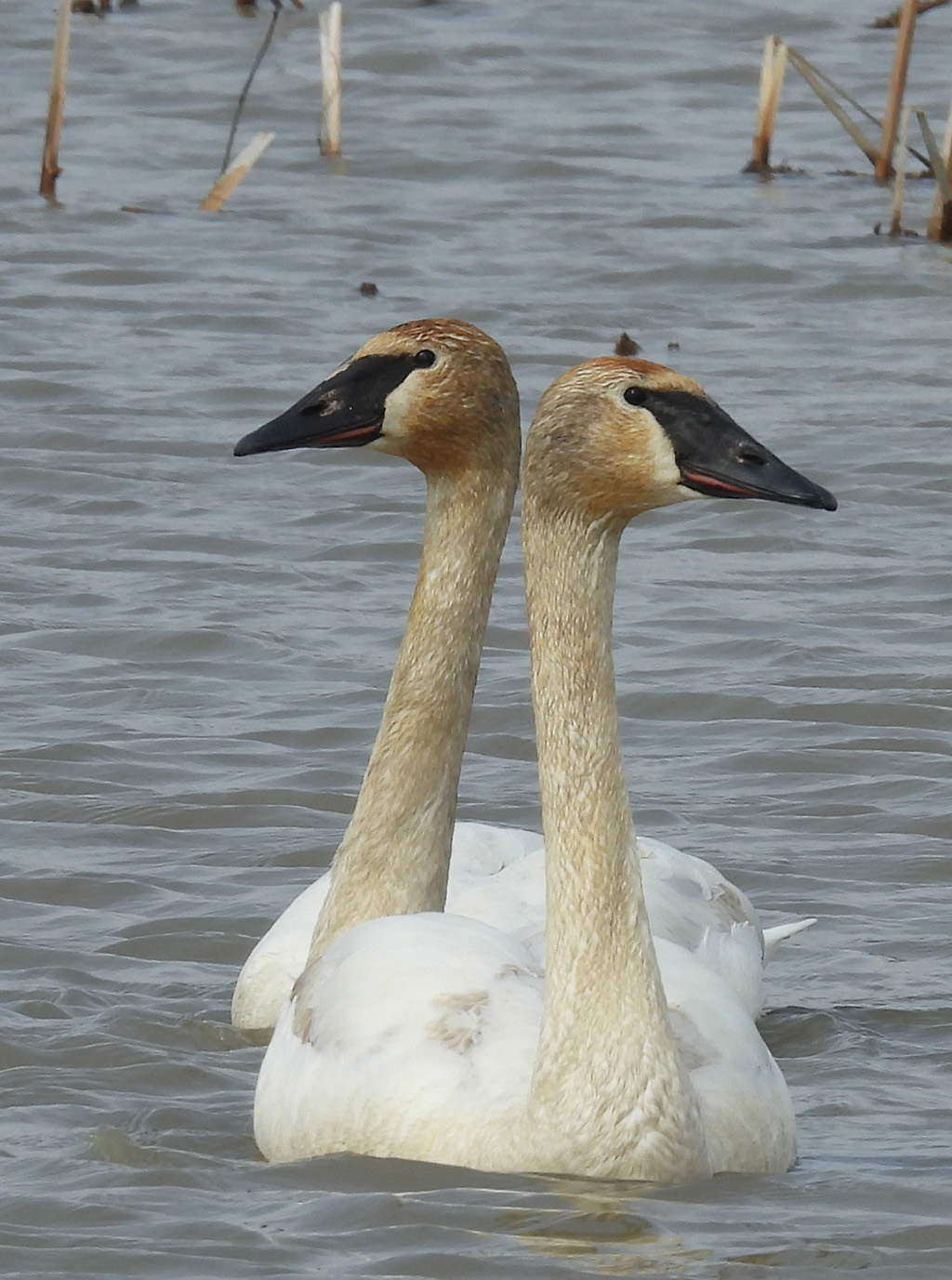
Dave Sherman shared his recollections of a restoration project that helped return trumpeter swans to Ohio’s wetlands.
To some, those magnificent white birds may seem to have magically appeared on our marshes and lakes. But Dave knows better. He was one of the people who helped put them there.
Here is his story:
The trumpeter swan reintroduction program was already underway when I joined the Division of Wildlife in 1997. Gildo Tori, Steve Barry, Mark Shieldcastle and Mark Witt were instrumental in getting it started.
Steve and Mark Shieldcastle traveled to Alaska to collect eggs from trumpeter swan nests. The eggs were transported to the Cleveland Zoo, where they were hatched and the young swans raised until they were about two months old. They were then transferred to The Wilds, where they remained until they were two years old.
During their captivity, Mark Witt and I would drive to The Wilds twice a year to clip the swans’ wings so they couldn’t fly away. Clipping their wings was easy. Catching them was another matter.
I would ride in the bow of a 14-foot boat while Mark operated it from the stern. Although the swans couldn’t fly, they could move surprisingly fast across the water. Mark would maneuver alongside one and I’d try to scoop it up with a large landing net.
Sometimes the swans would dive, and we could watch them “flying” underwater. That was pretty cool.
We usually arrived around 8 a.m. By noon, we’d finished processing the swans — which conveniently left us an hour to catch a lot of bass in the swan pen.
Once the birds reached 2 years of age, we’d catch them again, place them in transport crates and drive them to prospective release sites.
On one occasion, we were transporting a dozen trumpeters to Mosquito Creek Wildlife Area. It was so hot that we stopped at a gas station and bought a dozen bags of ice.
We placed the bags in the crates so the swans could stand on them and cool their feet, which act much like radiators to help regulate body temperature. There was, however, a drawback.
Swans confined in crates are messy birds. There’s a considerable amount of swan manure involved. Add several bags of melting ice, and you’ve got an even bigger mess.
Hosing off the birds before their public release became one additional step in the process.
Unfortunately, the early releases suffered higher-than-anticipated mortality, including collisions with power lines. Population models suggested the entire reintroduction effort might fail unless we released more birds.
So Division pilot Joe Barber and I flew to Wisconsin and Michigan to pick up additional young swans, which were brought back to Ohio and released.
Every released swan carried a numbered neck collar and leg band so we could identify individual birds. Once the population began reproducing in the wild, we wanted to mark the Ohio-hatched youngsters as well.
That presented another challenge.
We tried walk-in traps without much success. Boats worked somewhat better, but the swans frequently escaped into the cattails. So we tried something different. We started catching them with a net gun fired from a helicopter.
Joe Barber was our pilot. Mark Witt operated the net gun. Chris Dwyer and I were the designated “muggers” — the guys who climbed out of the helicopter to retrieve the birds.
After Mark fired the net, Joe would hover over the water while one of us stepped out to collect the swan.
We always hoped Joe wasn’t hovering over one of the deeper spots in the marsh.
Naturally, safety was a major concern. We particularly wanted to make certain Mark didn’t fall out of the helicopter or accidentally fire the net gun into the rotor blades.
Neither ever happened. Before attempting to capture swans, we practiced on an elusive office chair being pulled across a parking lot. Surprisingly, the chair escaped the first couple of attempts. But Mark and Joe quickly learned to work together, and before long, they were capturing that chair every time.
There were other lessons to learn. The helicopter had to maintain forward movement when Mark fired so the rotor wash wouldn’t interfere with the net. And when a shot missed, finding a 12-by-12-foot orange net in a marsh wasn’t nearly as easy as you might imagine.
From the air, one clump of cattails looks pretty much like a thousand others.
We finally devised a system of dropping a large fishing bobber with a weight attached near the missing net. That little trick saved us from losing quite a few nets.
Not that Mark missed very often.
By 2012, Ohio’s trumpeter swan population had grown enough that the species’ status was changed from endangered to threatened. In 2014, Laura Kearns took responsibility for the program, and under her watch the population soared — pun intended.
From the initial release of 15 swans in 1996, Ohio’s population grew to more than 700 birds, including over 100 breeding pairs in 24 counties by the 2021 breeding season.
As trumpeter populations expanded across the Midwest, researchers wanted to learn more about their movements and genetics.
During 2020 and 2021, Laura and other wildlife staff helped with a University of Minnesota study. Twenty Ohio swans were fitted with GPS transmitter collars that used cellular networks to report their movements.
And Laura discovered that catching swans could still be tricky. This time, crews used boats and a specially fitted shepherd’s crook to snag the birds. Once captured, the swans stopped swimming and could be lifted aboard with little difficulty. Within minutes, each bird could be measured, fitted with a transmitter collar and have a blood sample collected for genetic testing.
For such large and powerful birds, trumpeter swans are amazingly docile once captured.
We’ve come a long way from collecting eggs in Alaska and clipping wings at The Wilds. Our equipment has changed, too, from plastic neck collars and leg bands to GPS transmitters communicating through cell towers.
But the objective has remained the same: to learn enough about these magnificent birds to give them a chance to once again become a permanent part of Ohio’s wetlands.
And judging by the sound of trumpets now carrying across Ohio’s marshes, I’d say they’ve taken advantage of that chance.
Dave’s story is a reminder that conservation successes seldom happen by themselves. Behind those big white birds gliding across an Ohio marsh are people whose names most of us will never know, along with years of hard work, ingenuity, occasional frustration and, apparently, a few battles with an office chair.
The swans may get the applause, but it’s worth remembering the people who helped bring them home.