



JEFFERSON, Ohio — While the winds of change have reshaped communities across the map over the years, this northeast Ohio village with a little over 3,000 residents has stood its ground and held onto much of its identity and charm. The striking 1850 Ashtabula County courthouse, all red brick with Italianate flourishes, presides over the heart of town, and across the street, a quaint 1950s diner hums with regulars gathering for familiar favorites.
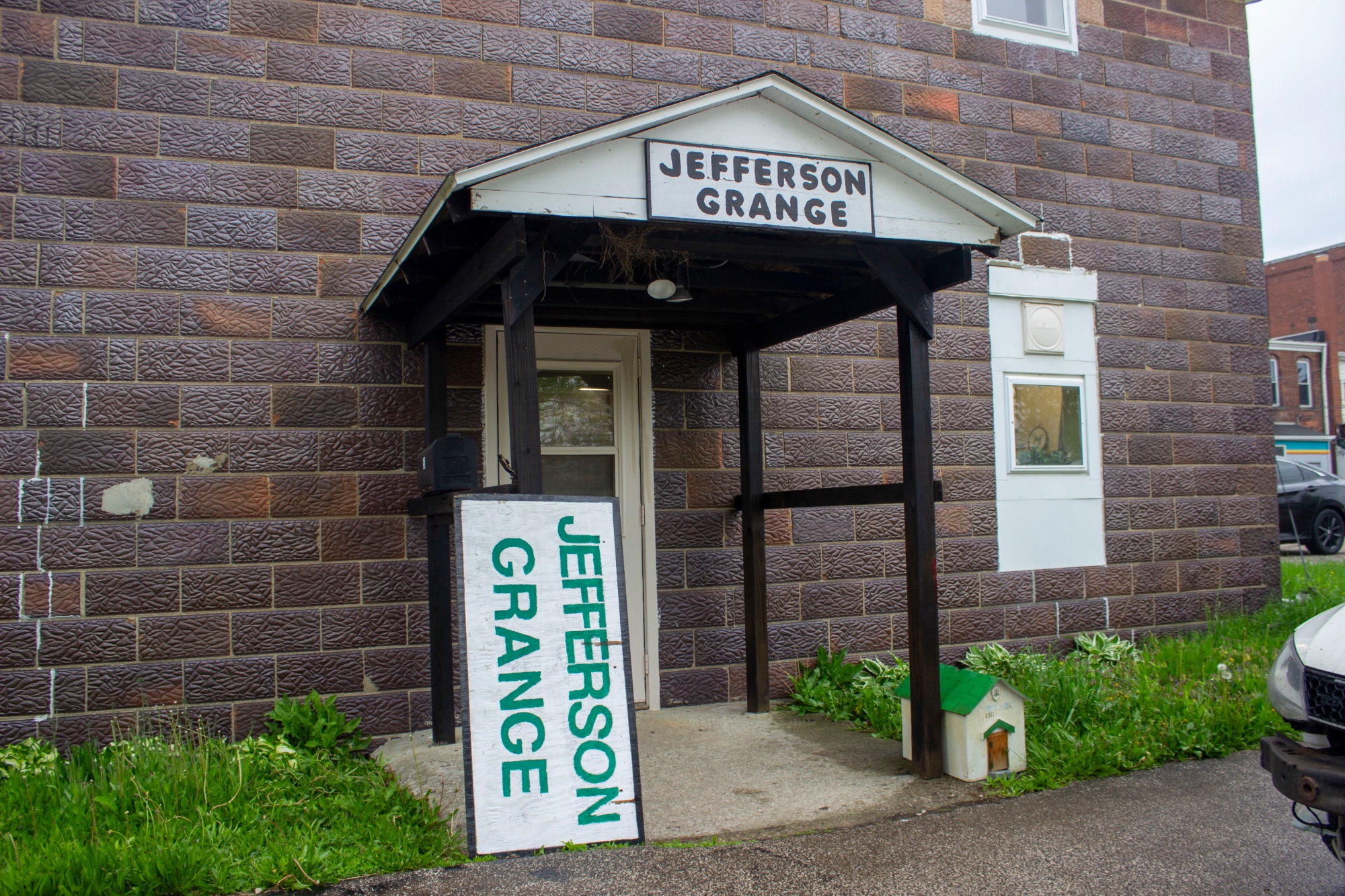
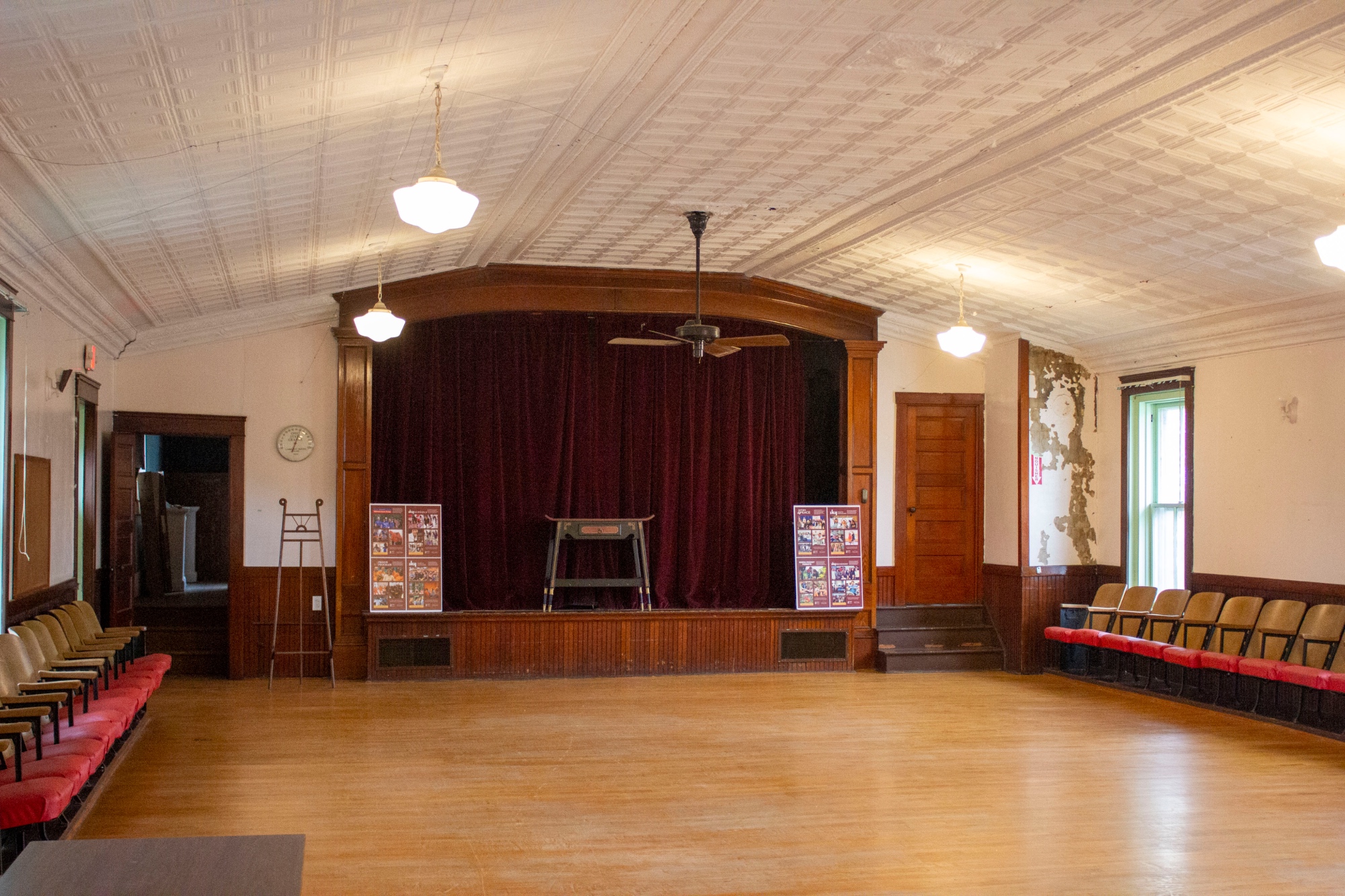
But one of Jefferson’s oldest and most democratic institutions is crumbling behind a row of shops just off the main boulevard: the Grange. Behind its weathered exterior of grime-streaked blocks is an expansive hall with a raised stage and once‑ornate pressed‑tin ceiling tiles overhead, their luster dulled by coats of white paint, along with spaces for junior and youth Grange activities amid shelves upon shelves of old artifacts.
But after a century of work spent helping neighbors, the building is now hobbled by its drafty, turn-of-the-century windows (the aforementioned winds blow through the cracks) and shifting brickwork that is beginning to threaten the foundation, along with burst pipes and spent mechanicals that together endanger its future. All told, the cost just to secure the building’s structural integrity is estimated at $150,000.
Now, a handful of members are campaigning to save both the building and the cooperative tradition it pioneered that they say is still worth holding on to.
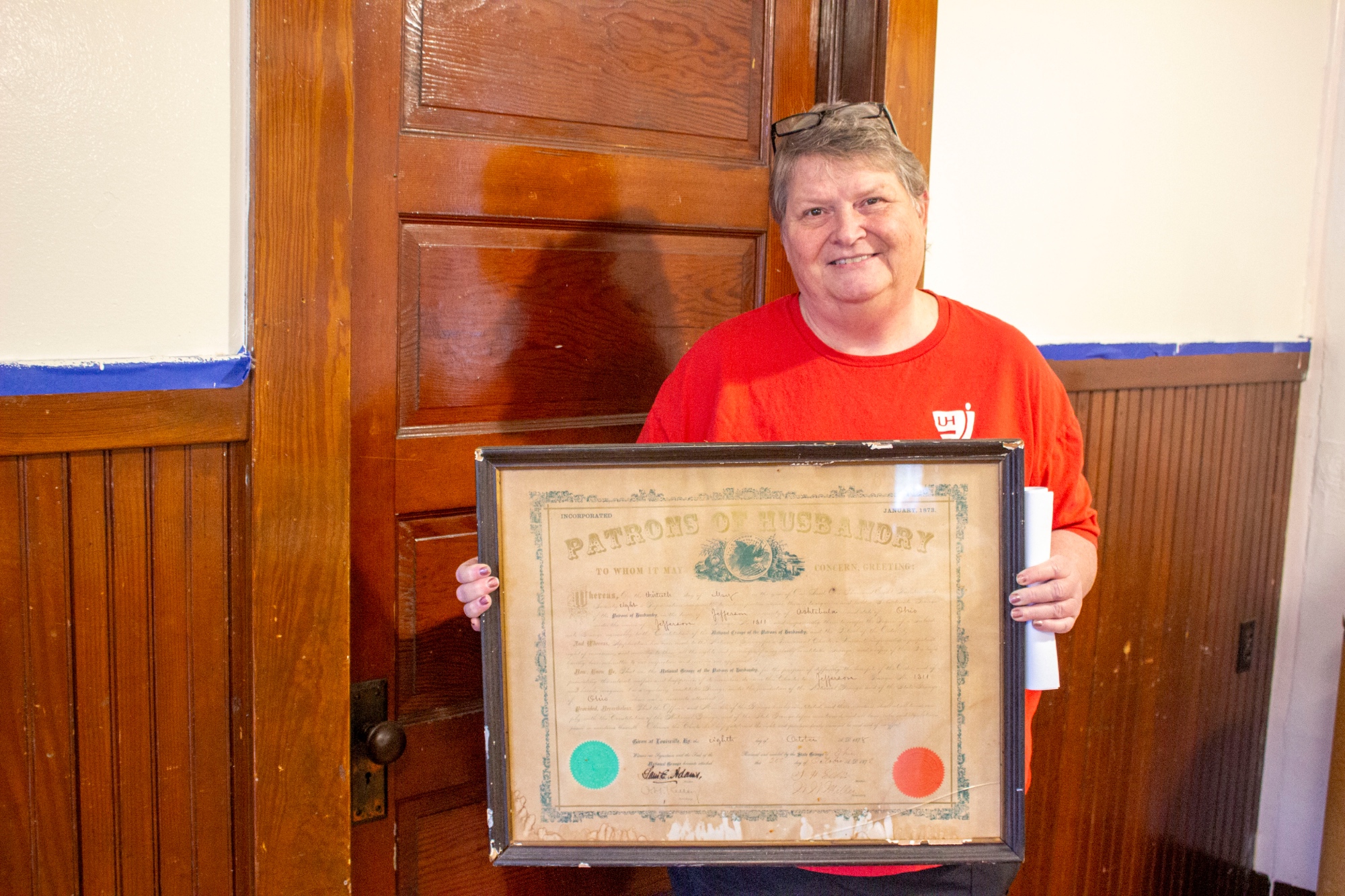
“We need to get this building back. It’s a hidden gem. It really is,” Theresa Hass, master of Jefferson Grange, told a Farm and Dairy reporter.
Even in its current state of disrepair, visitors, she said, are surprised to find not just a rundown meeting place but a local outpost of the nation’s oldest agricultural advocacy group, one that from its earliest days gave women an equal vote and welcomed teenagers as young as 14 as full members in the work of democracy.
“They said they drove by it many times. They knew it was always standing here, and they’re like, ‘I never knew what was inside.’ I said, ‘Well, we’re gonna let people know now. We’re gonna let the secret out and we’re gonna share it,” Hass said.
“How it should be”
The Grange is a nonpartisan farm and community organization that arose in the wake of the Civil War to help farmers band together against railroads and grain elevators that were gouging them on shipping and storage costs. Eventually, it blossomed into a bottom‑up movement that endures today.
Members join a local “subordinate” hall like Jefferson No. 1311, which was chartered in 1873, where they learn how to draft resolutions that can move local concerns up through the county, state and national Granges; from there, those resolutions might find their way to statehouses or even the halls of Congress.
In Ohio, Grange members have recently thrown their support behind measures such as requiring defibrillators in schools and public buildings, and they’ve pressed for better staffing of Coast Guard stations in Lake Erie harbors like Conneaut, Ashtabula and Geneva. That same impulse has long played out inside Jefferson’s circa‑1906 hall, where for years square dances, farm forums, youth programs and charity have been the means through which ordinary residents find one another and begin to understand they have a voice.
“So many times, the public doesn’t realize they have a say, or they don’t know where to go, right?” Hass said. For them, the Grange beckons.
There are about 1,400 local Grange halls and 140,000 members nationwide. Starting in 2022, the National Grange posted its first net membership gain in nearly 70 years. Hass noted that because members act as sincere, neutral advocates for local citizens, they’ve earned trust from lawmakers on both sides who are more willing to meet with them and listen to their concerns. “And that’s how it should be. It shouldn’t be a screaming match,” she said.
Today, the Jefferson building is still a base for members who turn raffles, breakfasts and other fundraisers into direct community aid, from raising money to purchase gas and grocery cards for cancer patients to preparing hot breakfasts for 4‑H kids during fair week. Locally, members hope to revive regular “farm forums” in the hall to help small landowners learn how to use one‑ to five‑acre plots for things like gardens and direct sales to farmers’ markets, restaurants and groceries. They track service work in a thick book filled with photos and thank‑you notes: a pancake breakfast that raised $2,000 after a 2024 fire at Comp Dairy Farm; quilts of valor made for veterans; stacks of dictionaries delivered to third‑graders in Jefferson and Rock Creek. The old hall remains the physical and symbolic home of the Grange’s values in town. But time is bearing down hard on the old place.
“Saving ourselves”
Outside, years of freeze-thaw cycles have chewed away at the mortar, and on one wall in particular, the bricks have begun a slow retreat from where they belong.
“If we don’t address the outside with the cement and get these bricks more stable, we’re going to lose our foundation and we’re going to lose the building,” Hass said. It’s an easy place to become attached to — just ask Hass, who originally came on board by offering to help the aging volunteers and got “hooked right away.” As she walked around the building, pointing out problem areas, she stopped by the front entrance, where she’d recently taken down an old bird’s nest in the eaves of the covered entryway, only to find it rebuilt in the same spot.
“You know I pulled down that bird nest, and that little sucker brought it back,” Hass said with a laugh. “They even want to stay as members.”
Many of the original windows will also have to be replaced, a project Hass estimates will set them back at least $1,000 per unit for all 36. Inside, a bathroom is out of operation thanks to pipes that burst in uninsulated walls during cold weather, and one section of the roof will need to be replaced imminently.
The furnace “is kind of on the old side,” Hass said. “It’s still holding its own, but I think that there are ones out there that are more fuel efficient.” An upgraded system could bring heating costs down and free more money for community work.
“We’re going to have to start thinking about saving ourselves first,” Hass said. “We can’t help the community until we bring this building back to life.”
That effort has already begun. To pay for repairs, Jefferson Grange has been experimenting with new events. The Grange’s first, hard-won reverse raffle raised about $10,000 after food costs. The money will help pay for bathroom repairs and new flooring in a former furnace room that’s being converted into usable space.
They’re now planning a bigger event called Adventures in Toyland for Nov. 28 at a local venue, a free-to-enter Christmas-season festival with toy vendors, breakfast, a $1,500 Lego grand prize and live reindeer for kids to meet and name. Hass said the event will be open to the public and that organizers are recruiting toy vendors of all kinds for the Christmas-season show, hoping sales and raffle proceeds will help support the Grange’s repair fund.
Even as they raise money, members are trying to keep the hall accessible as an affordable venue. While other places quoted one Grange member as much as $12,000 to host a wedding and routinely charge hundreds or thousands of dollars for parties and receptions, Jefferson Grange typically asks only for a $100 security deposit, refunded if the renter cleans up, and suggests a modest donation in place of steep rental fees.
“We’re hearing all these venues charging, you know, $400 or $500 just for a birthday party,” Hass said. “Right now, young parents, they can’t afford $500, $600 to host a party.”
Things worth doing
For longtime member Helen Hayes, who has been in the Grange for roughly 60 years, working her way up through local, county, state and national degrees, the hall represents continuity and inclusion.
“Being part of something is worthwhile,” she said. “Anybody can join. We are non-discriminatory, non-denominational, non-partisan and open to anybody.”
That philosophy, she notes, is not new. From the very beginning, a woman sat among the Grange’s original organizers. “That’s not like some organizations that exclude them and they have to start their own separate lodge or whatever. Women have always been included in the Grange.”
Hayes recalls that while people often join organizations “just for the fun of it,” when she was growing up in the Grange, it meant much more and demanded deeper involvement.
“You were part of your local community. We served the community and did numerous service projects to help those in need. We had dances, dinners, games and there was a bowling league. A lot of the Granges would put a team in. And we had probably 12 to 16 teams; only Grange members could join it. And we had a softball league that played softball in the summer.” That mix of fun and service, she said, defined what the organization was for her generation.
“I think that that’s part of what the Grange was when we were growing up. And I think that’s what we’re trying to get back to.”
Some of that continuity shows up in how the Grange still makes decisions, with routine business handled by a simple “sign of the order” hand vote and bigger questions decided by the old ballot boxes used to tally marbles that tie today’s meetings back to its 19th‑century origins.
“Those have been part of the Grange since it was organized back in 1867, when the bylaws and degree work rituals were written,” Hayes said. “Voting like that has not changed, so we keep some of the traditions and some of the groundwork still with us.”
It’s not just veterans who value that sense of continuity. Newer member Jim Pierce, who spends part of his time in Jefferson with his wife, who works there, and part of it back in Pennsylvania running their 10‑acre micro farm, was spending part of his morning pitching in at the hall before driving back to his home. He sees the special blend of tradition and service as the Grange’s real draw.
“I think the Grange to me represents an element of lost Americana — [a] traditional rural community service type of organization,” he said. “I found that compelling and interesting.”
Asked what he’d tell someone on the fence about joining, he answered: “If you’re looking to do something useful, get you out of the house, something good for your community, come on down. It’s not gonna be easy, but some things are worth doing.”
For more information about the Jefferson Grange and upcoming events, visit Facebook. For questions or to request a tour of the building, call 440-994-9548 or 440-563-8754.