



By Amanda Butterfield
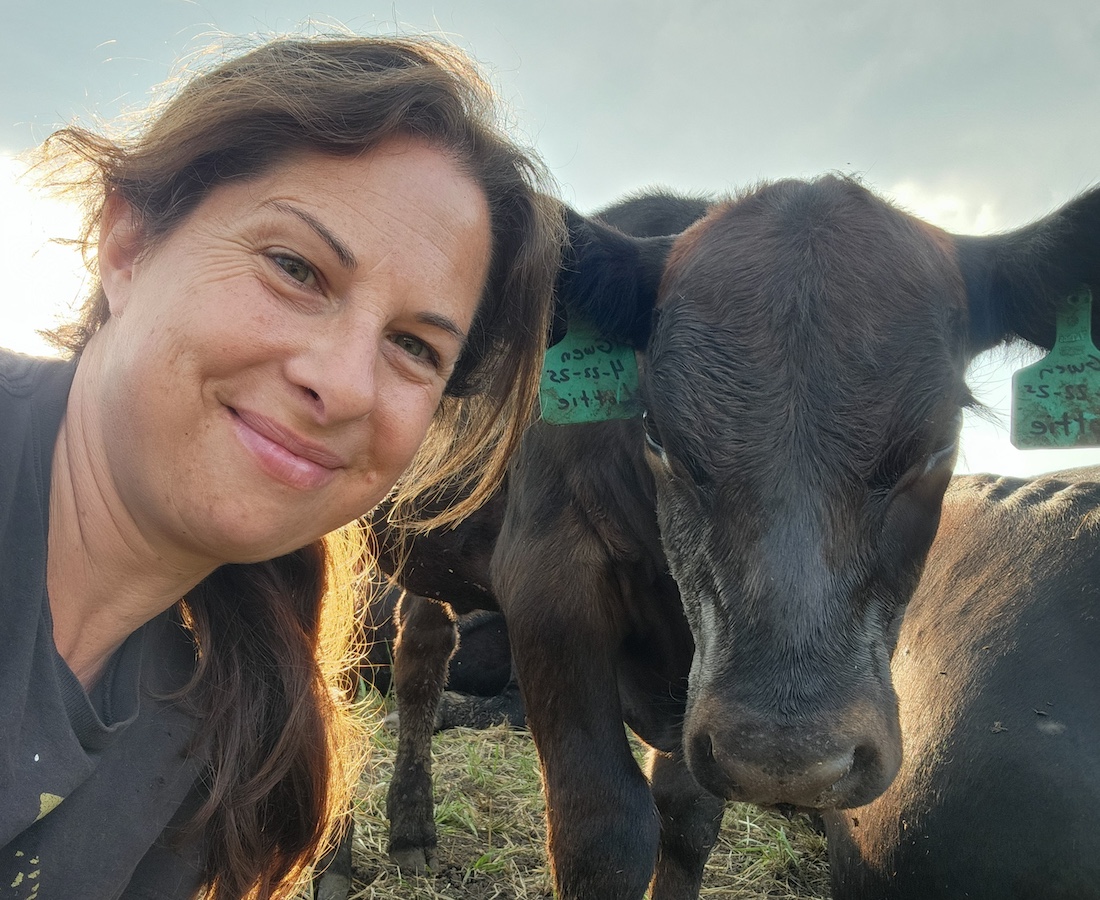
My name is Amanda Butterfield and together with my husband, I run a beef cattle operation in Meyersdale, Pennsylvania — a 180-acre cow-calf operation in the Laurel Mountains of Somerset County.
It’s no secret that times are hard for farmers right now. Much attention has been given as of late to the mounting crisis producers across the country are facing: rising input costs, volatile commodity markets, and now the disruptions rippling out from the war in Iran, which has sent fertilizer prices soaring just as spring planting gets underway. I’m grateful for the spotlight being given to these challenges that threaten the lives and livelihoods of the hardworking men and women who produce our nation’s food, fuel and fiber.
For family farms like ours, operating on razor-thin margins magnified by higher costs and increasingly destructive weather, you are always looking for tools you know will make a difference. That’s where conservation programs administered by USDA’s Natural Resources Conservation Service come in. These are voluntary, locally led programs, like the Environmental Quality Incentives Program and Conservation Stewardship Program, that help farmers invest in practices that improve soil health, reduce input costs, and make their operations more resilient. They are not handouts. They are smart, proven investments that pay dividends for the farmer, the land and the public.
We are first-generation farmers who built our operation on land that was strip-mined for coal in the 1970s and left with roughly two inches of topsoil. When we arrived seven years ago, we set out to rehabilitate this ground: seeding native grasses and legumes, implementing intensive rotational grazing, and rebuilding the soil from decades of neglect. My husband likes to say we’re not cattle farmers. We’re grass farmers. The cows just harvest the grass. But rebuilding soil is a slow, arduous process. Agronomists have told us that even doing everything right, we might gain a quarter to a half inch of topsoil in a decade. The commitment is generational.
We didn’t do it alone. Thanks to EQIP and CSP cost-share contracts, we installed water lines throughout our farm, put in fencing, and implemented seeding practices to convert former row crop ground to grass. Without that partnership, we calculated it would have taken nearly 20 years of small, incremental changes to build what we put in place in a single year. And it wasn’t just the funding. A local NRCS agent showed us what was possible. He told us exactly what we needed to do. We looked at him funny, tried it, and the results proved him right: healthier soil, better grazing capacity, and a farm that’s more resilient to the drought years and the wet years.
That is why what’s happening to NRCS right now should alarm every farmer in this country. According to a report by USDA’s own Office of the Inspector General, NRCS has lost 22% of its workforce. Offices across the country have been shuttered. The engineers, soil scientists, and field planners — highly trained public servants who help farmers design and implement conservation practices — are disappearing. That’s not all. In its proposed Fiscal Year 2027 budget for NRCS, USDA would cut Conservation Technical Assistance from $850 million in 2026 to a request of $111.4 million in 2027 — a reduction of $738.5 million. Per the budget document, the proposed budget would also lead to significant staff reductions for NRCS state offices, including in Pennsylvania, which would go from 43 full-time employees administering conservation technical assistance to just 6, if the cuts are realized. And this comes on top of programs that were already badly oversubscribed: in fiscal year 2024, USDA was unable to fund nearly two-thirds of conservation applications it received. The demand is there. The capacity to meet it is not.
I’ve seen the toll firsthand. When we renewed our conservation contract last year, our local NRCS manager was handling everything herself. Her staff had taken buyouts, found other jobs, or were too uncertain about their futures to keep going. My neighbors are experiencing delays. And it’s not the fault of the staff who remain. They’re giving everything they have. There’s simply no one left to share the load.
It’s worth mentioning that right now regenerative agriculture is growing in popularity among the public. Farmers want to be able to utilize these innovative practices that improve soil health, among other benefits. However, this is not realistic without support. It’s not scalable without the staff and programs that make such practices accessible.
Conservation programs are one of the few proven tools we have to lower costs, build resilience to extreme weather, and stay productive — exactly the kind of response this moment demands. When NRCS can’t deliver them because it’s lost a quarter of its people, farmers carry the risk alone.
If we want a resilient food system in this country — one that can withstand the kind of compounding crises we’re living through right now — we have to invest in the people and programs that make it possible, starting with boots on the ground, out here where the work gets done. Congress must fully fund these programs, restore NRCS staffing, and pass a Farm Bill that gives farmers the tools and the certainty we need. The future of our farms, our food supply, and our rural communities depends on it.
(Amanda Butterfield is a first-generation beef cattle farmer from Meyersdale, Pa.)