



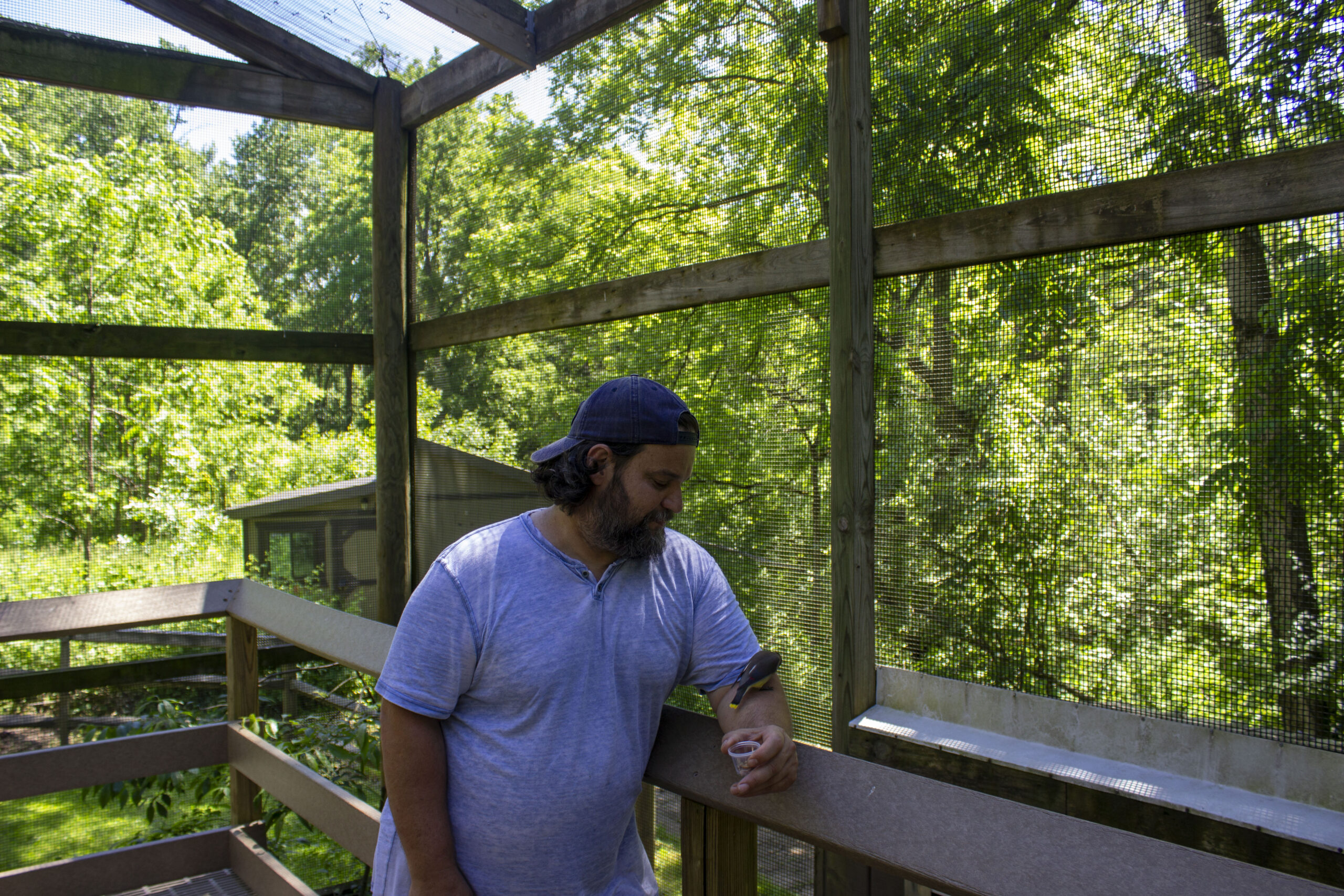
MANSFIELD, Ohio — Most farmers have enough to do without needing to worry about pests, too. Julie Schwartz, executive director of the Ohio Bird Sanctuary, thinks that’s work best left to a farmhand of the feathered variety.
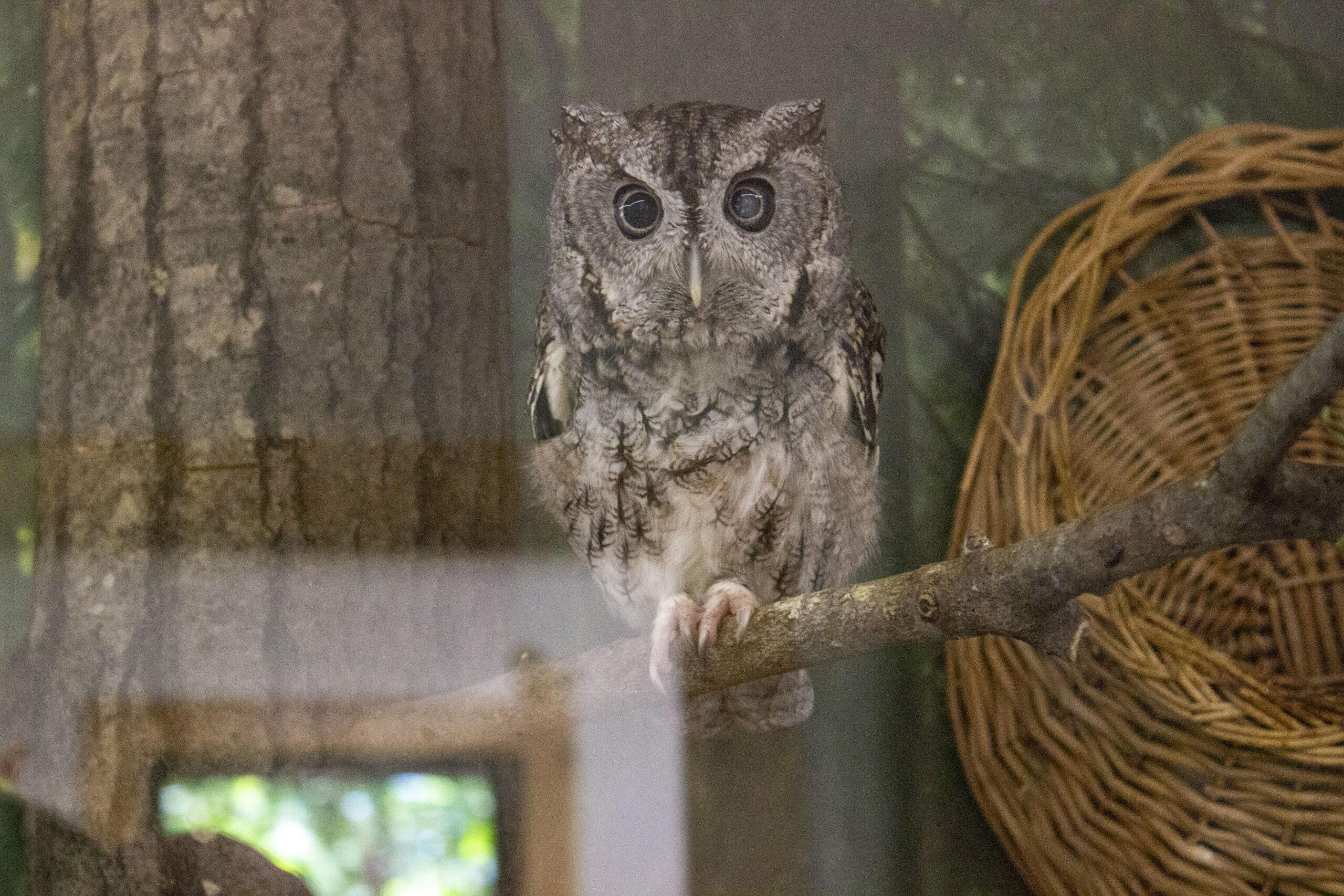
The sanctuary’s philosophy is straightforward: care for birds and connect people to them, and both wildlife and communities come out ahead. In their education programs, the star attractions — from tiny screech‑owls and talkative crows to 25‑year‑old bald eagles and peregrine falcons that can dive at 270 miles an hour — help Schwartz and her staff demonstrate that when people learn to share the landscape with birds, they become better stewards of a healthier, more resilient natural world.
On the farm, instead of reaching for rodenticides, install a nesting box and let a barn owl patrol your property. It’ll eat hundreds of rodents a year, protecting grain, feed, crops and your bottom line.
“I think it kind of goes hand in hand. The farmers can benefit the birds… but the birds can definitely benefit the farmers,” she said.
In Ohio and beyond, birds are finally getting their due, recognized as essential contributors to the rural economy, a role scientists started quantifying more than a century ago. In farm country, many species earn their keep by eating insects and pests that damage crops and boosting yields in ways that can substitute for some chemical pest control. Conservation programs that protect grasslands and other habitats help keep those bird populations healthy.
At the same time, bird‑watching has never been a bigger pastime, with millions of Americans traveling, dining and staying in local lodging to see migrating and nesting birds. Nearly 100 million Americans went birding in 2022, spending about $108 billion on trips and equipment according to the U.S. Fish and Wildlife Service. That’s about six times more than the total revenue generated by the NFL in the same year, Chen-Ti Chen, an assistant professor in Ohio State’s Department of Agricultural, Environmental, and Development Economics, noted during a June 3 webinar.
Taken together, the everyday work of birds, and the efforts to conserve them, adds up to real value for farms and rural communities.
Friend or foe.
For as long as anyone can remember, dogs have held the comfortable title of man’s best friend, but a century ago, federal researchers were making a case for birds, at least as working partners in the farm business. Scientists were trying to tally their value to crops in dollars and cents.
In 1885, Congress created the Section of Economic Ornithology within the U.S. Department of Agriculture to study whether hundreds of common wild bird species helped or hurt crops by dissecting their stomachs and tallying up insects versus grain. To get enough specimens, the agency even ran newspaper ads asking people to keep the legs and breast of any birds they were eating for dinner and mail in the rest. By 1912, they had examined more than 60,000 birds from over 4,400 species, conducting one of the first large-scale assessments of how birds affect agriculture. The verdict was clear: on balance, most of the birds turned out to be allies for farmers, eating more crop-damaging insects than grain.
But that early work eventually faded with the rise of cheaper synthetic pesticides, as farmers sought better living through chemicals and the birds left their posts.
Today, researchers like Chen are picking up the thread with modern data and methods. In one ongoing study, he said during the webinar, his team pairs commercial plot‑level corn yield trials with billions of bird sightings from the eBird citizen‑science project.
The result: in fields planted with conventional corn, a 10% increase in insect‑eating birds around a plot is linked to roughly a 7% bump in yield — that’s about 4 to 14 extra bushels per acre, translating to roughly $63 an acre in their sample.
In that light, the long decline of bird numbers becomes more than a sentimental concern; it’s an economic one, too. Since the 1970s, North America has lost almost 3 billion birds, about 30% of its total population, with grassland species in the Midwest and Great Plains hit especially hard.
Even in fields planted with insect‑resistant corn, birds still matter in the bigger picture as pests evolve resistance and as farmers look for pest control that doesn’t depend only on genetics and chemicals. Chen’s second study examines whether the federal Conservation Reserve Program — which pays farmers to retire sensitive acres from row‑crop production and plant them in perennial grasses or trees — can play a role in that effort. Early results suggest that CRP acres do bring back grassland birds during the breeding season, and smartly targeting where those acres go could more than double the bird gains for the same money.
Good all around.
Back at the bird sanctuary in Mansfield, Schwartz makes her case in plain terms: sharing space with birds can be both good stewardship and good business.
“A barn owl can eat up to six rodents a day, and then if a barn owl has a nest and they have babies, those babies can each eat up to one rodent a day,” she said. “These are mice that are not getting into your grain, they’re not getting into your feed for your animals, they’re not eating through things, making a mess,” she said.
It’s not just them. American kestrels — small falcons — earn their keep on the farm by eating insects. Nesting around barns and farm buildings, they knock back mosquitoes and other small pests that bother livestock and can damage crops, easing at least some of the day‑to‑day bug pressure on farmers.
But it’s a two-way street. The same barn owls and kestrels that patrol for pests also depend on working land.
“Both of these birds thrive off of grasslands and open prairies,” Schwartz said.
However, Ohio today is mostly a patchwork of cities, forests and farms, with very little native prairie left. In the absence of true grasslands, working farms have become the closest substitute for the habitat these birds need. And when they find it, they thrive. Ohio Division of Wildlife data identify Holmes and Wayne counties, the heart of Ohio’s Amish farm country, as the state’s main barn owl stronghold. There, a mix of pastures, hayfields and old farm buildings, along with a nest‑box program, has helped the owls rebound from the brink while playing a major role in keeping rodent numbers in check.
Matthew Shumar, program coordinator of the Ohio Bird Conservation Initiative, looks at the relationship between birds and working lands from, well, a bird’s eye view, mapping what it means for whole regions in terms of counties, states and how to bring more feathered friends to the farm belt.
When asked how much grassland birds help or hurt farm operations, he didn’t offer an easy response.
“It’s a tricky question that doesn’t necessarily have a straight answer,” he said.
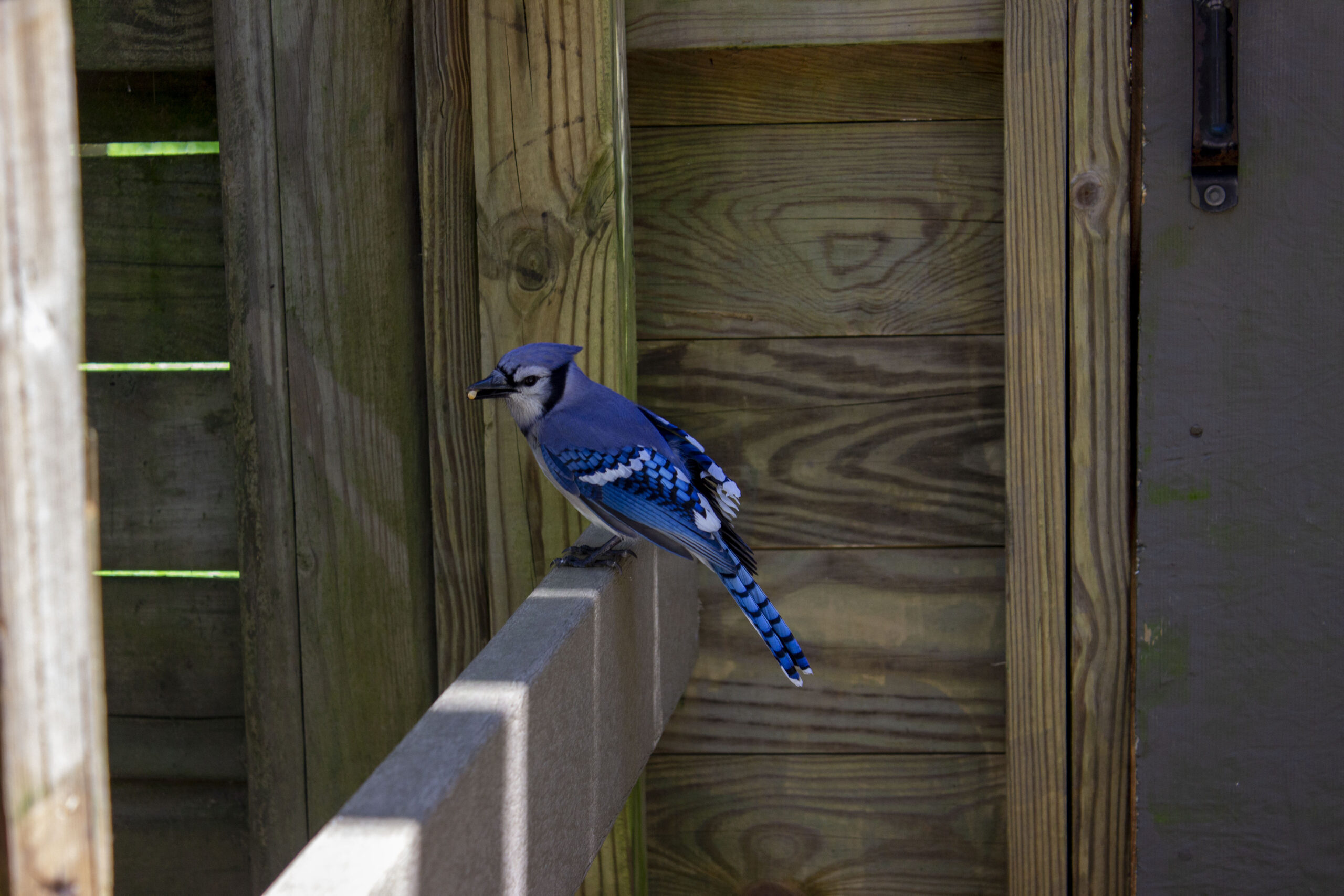
As the Midwest has shifted toward more industrialized forms of large‑scale agriculture, Shumar said, birds in those landscapes “are potentially creating some more issues at times,” like blackbirds or blue jays eating grains. But in more natural, mixed landscapes or on smaller farms, he said, there’s much more room for birds to help.
By weaving patches of habitat into fields and leaving some ground specifically for birds, farmers can turn them into allies in pest control so the birds end up competing with the insects that damage crops, not with the crops themselves.
The main driver of grassland bird declines in Ohio, Shumar said, is not complicated: the habitat they depend on is disappearing beneath them. Smaller, mixed farms have largely given way to big, single‑crop operations, with fields often plowed right up to the road and almost no weedy or fallow edges left over for wildlife.
On top of that, he said, the way chemicals are deployed on fields matters. Heavy pesticide use in western Ohio and Indiana has wiped out many native insects, and when the insects go, insect‑eating birds do too, especially species that catch bugs in flight like nightjars — including common nighthawk and eastern whip‑poor‑will — and flycatchers.
Those concerns helped spur a new landowner guide that Shumar co‑authored with state and federal biologists in March, explaining how to manage open lands as grassland bird habitat year‑round. The guide outlines why less than 1% of Ohio’s original grasslands remain, which species are in trouble — from bobolinks and Henslow’s sparrows to northern bobwhite — and how practices like prescribed burning, grazing, mowing and programs such as the Conservation Reserve Program can help working farms double as wildlife habitat.
For Shumar, the stakes are practical as much as they are ecological. Taking birds out of the landscape, he said, leaves farmers facing far worse pest problems, and “it becomes much more difficult to maintain healthy crop production if you don’t have a functioning ecological system there.”
“When you explicitly include them in the plans, they can become part of the solution and not just part of a problem,” he said.
Looking to birds.
In that sense, said Christopher Lituma, an associate professor of wildlife and fisheries resources at West Virginia University, birds are more than a part of the scenery in farm country.
“These birds are a bit of a canary in our global coal mine, right?” he said. “When the bird populations, the insect populations, the other organisms on this planet are not doing well, it should be an enormous bellwether for how we should expect things to be going for us on this planet.”
Lituma has spent much of his career studying how birds and cattle can share the same ground. As a coauthor on several studies from Kentucky and Tennessee, he’s looked at native warm‑season grass fields that are in real production, such as grazed pasture, hay, seed and biofuel, and how grassland birds use them. More recent work has tested grazing systems like rotational and patch‑burn grazing on native grasses across multiple Mid‑South research sites, exploring how pastures can be kept productive for livestock while still functioning as habitat for grassland birds.
To Lituma, the paradigm shift now facing agriculture is about moving away from the old mindset that humans are supposed to bend nature entirely to their will, and toward working within ecological limits instead, treating birds and habitat as long‑term partners in keeping land productive.
“We are inexorably linked to this planet. We have not colonized space yet, so everything we need has to come from here, where we are,” he said. “And as we begin to continue to change these and the environments around us, we should be looking to birds to say, ‘Okay, we want healthy and the right species of birds around us as indicators that the whole system is working well.’”





Great read, Paul, Bet it took a lot of work–it shows! THANKS!
Yessir–birds on our 160 acres really do help our farm.