




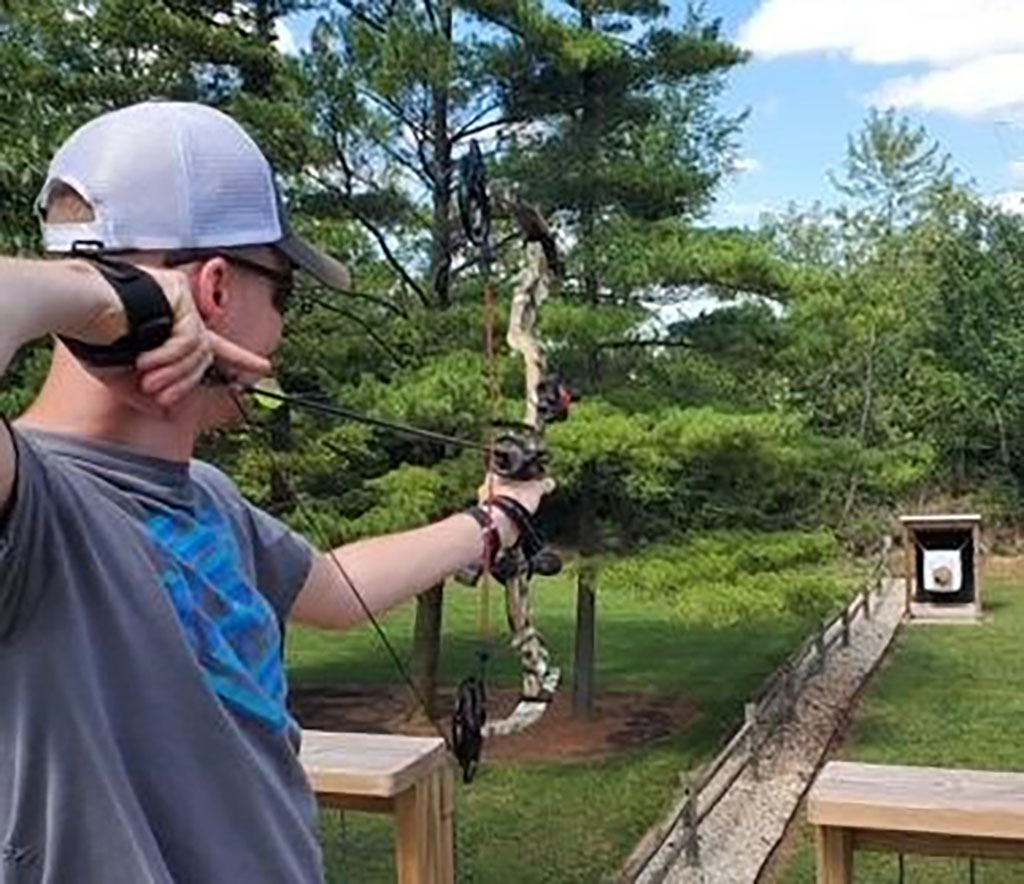
As a member of an outdoor writers’ organization, I receive the occasional email thread concerning hunting and fishing news as well as opinions regarding everything from equipment to other writer’s columns.
One recently popped up regarding an article written by Dave Hurteau in which he posed this question, “Should you buy a new bow this season?” That was enough of a spark to light a debate involving as much reminiscing as it did opinion.
Evolution of the bow
Hunting bows have changed dramatically from when I knocked my first arrow. In those days, the average hunter was likely using a recurve bow marketed by Bear, Pearson, Herter’s, Browning, Shakespeare, Damon Howatt or Wing. There were exceptions, like my friend Byron Dray’s Howard Hill longbow, but the majority of archers likely carried one of those seven into the deer woods.
Things began to change in the 1960s when Holless Wilbur Allen, an engineer from Missouri, developed the first “compounding” bow. Using a system of pulleys and cables, he created a better means of transferring the energy of the bow more efficiently.
The result was a faster moving arrow carrying greater force while flattening out the arching path of its flight. A bonus of the design was that the pulley system redistributed the force required to pull the bow string back. This meant that less strength was required to pull and hold the compound bow string back allowing for more precise aiming and delivery of the arrow to the target.
Though the design of the compound was more complex, its mechanical advantages over the popular recurve bows were obvious.
It wasn’t long before another engineer, Tom Jennings from Wisconsin, patented a compound bow incorporating his own improvement on the cable and pulley system. His design further enhanced the advantages of Allen’s work, making the bow even more efficient — a design that would later be incorporated in to the commercial Jennings Bow line which became popular with both hunters and competitive archers.
Recognizing this groundbreaking technology as a wave that would soon envelope the world of archery, other engineers, designers and bow builders were putting long hours into their versions of compound creations.
The trusted and prolific Bear bow business was one of the earliest to put a compound within reach of the average hunter, releasing the “Alaskan” in 1975 and the “Whitetail Hunter” in 1976. Many more companies would follow during the ensuing years, and today, the compound bow is the predominant “long bow” found in the hunting field.
Growing population
While bows were evolving, so was Ohio’s whitetail herd. In 1973, the best guesstimate of the state’s deer population was about 43,000. Killing a doe wasn’t allowed except for archers, and the limit was one deer per year, though in a few counties you were able to take two.
By the early 1980s, all of that was changing. Ohio’s deer numbers were rising rapidly and the wildlife management plan that protected antlerless deer was relaxed. Limits were increased, and the archery season became more popular than ever before.
Eventually, crossbows were added to the permissible archery gear and handguns, rifled shotguns and straight-wall cartridge rifles were added to the once shotgun-only gun season. Eighteenth- and 19th-century style muzzle loading rifles even saw innovative improvements with the addition of inline designs.
Ohio deer hunting now offers some of the most diverse opportunities in the eastern U.S., and the number of deer in Ohio is over 20 times more than that 1973 estimate.
Today, while numerous archery season hunters have gravitated toward the easier-to-use crossbow for their hunting tool of choice, many still reach for the impressively capable compound bows that crowd the shelves of sporting goods dealers.
Each year, manufacturers announce improvements which promise better handling and performance. A lot of those changes involve ergonomics and improved materials, since most of the enhancements concerning pulleys and cam devices appear to have reached something of a design zenith.
Archery companies are concentrating much of their time with improving handling characteristics, “bow tuning” items, sights, tweaking arrow designs, and offering other archery swag for their bows.
Can’t buy effort
So, back to that question, “Should you buy a new bow this season?” First, let me state the obvious: Owning the best bow in the world does not make you a better hunter any more than owning a Corvette makes you a Formula One prodigy.
Being a good and ethical hunter takes time, effort and practice. If you’re not willing to do those things, buying a new bow is a waste of money. If you are the type that reaches for your bow for a few practice arrows several times each week, you scout the area you hunt, you keep your arrows and knives sharp and your wits sharper — go ahead.
If upgrading your compound bow is something you’d enjoy, then I guess it’s time for that new bow — you just don’t need it to go hunting.
If you don’t believe me, just ask one of those archers dragging their buck out of the woods while their old recurve is strung around a shoulder. Good hunters tend to be successful whether they upgrade their gear or not.
As one well-experienced hunter once told me, “The best bowhunters have worn out more boots than bow strings.”
You can learn more about getting started in the sport of archery by visiting ohiodnr.gov/discover-and-learn/education-training/hunter-education/getting-started-archery.
“It matters little how much equipment we use; it matters much that we be masters of all we do use.”
— Sam Abell