




Sooner or later, the original queen you started with is going away. The queen may have swarmed, got injured by you by mistake or killed by the workers for poor performance, or you split the queen out in a Nuc and sold her. Whichever it may be, you need a new queen.
If you did a walkaway split and put your queen in a nuc and sold it, you have a few options. You must leave eggs or young brood (larvae) in your remaining hive for your bees to draw out and make a new queen cell. They will choose the best larvae to make a new queen and will construct multiple queen cells. They will start this process immediately and, within 24 hours, if you look into your hive, you will see the start of the new queen cells. The bees can and will create as many as 10-15 new queen cells to ensure the best queen for their hive. The average I would estimate is five to seven, but I have seen as many as 30 in one hive!
Many times the cells are not just on one frame but can be scattered over multiple frames in the hive. If everything goes smoothly, the first queen to emerge will quickly go to her sister’s cells and kill them, stinging them while still in their cells. Most of the queens on the same frame are in close proximity to each other and will emerge within minutes of each other. The fastest and best fighter will inherit the hive.
However, there will be times when a virgin will issue a small swarm and take some workers with her and leave another virgin behind in the hive. I don’t understand the mechanics that trigger this phenomenon, but it does happen. I have caught small swarms that have had up to six virgins in one swarm. Some people call this a cast swarm from multiple virgins emerging. Always have extra queen cages on hand when you’re going to the bee yard.
For this reason, if I am inspecting a hive seven or eight days after the split, I will harvest or kill all but two to three of the best cells to leave in the hive. I don’t want to risk leaving only one cell, and my reasoning is too many cells may issue a swarm or the ensuing melee battle royale may just leave a weaker queen after the best one wears herself out after multiple fights and then loses to the runt that was hiding in the corner or on another frame. This obviously has no scientific basis, just my thoughts on the process.
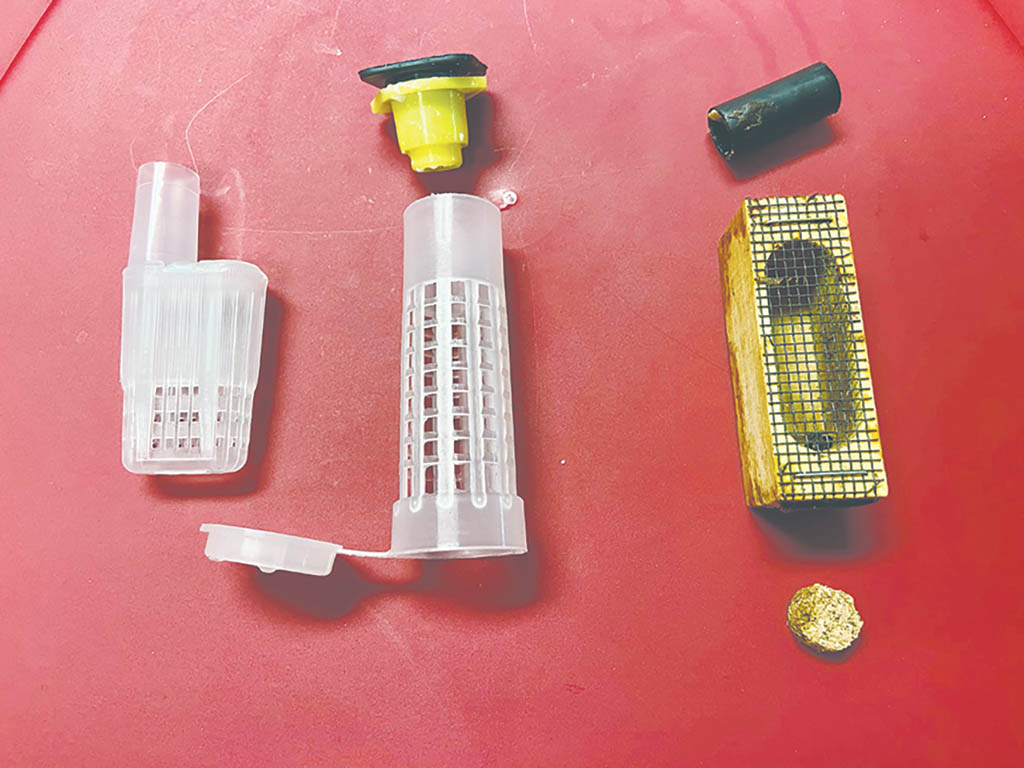
Queen cages
There are many different types of cages sold on the market to cage your queen. This is to introduce your queen to the hive and allow the other bees to recognize her pheromones and to accept her as their new queen. A virgin from the same hive does not have to be caged, but if you harvest those cells or catch those virgins, they need to be caged when introducing her to a new hive or split.
There are many variations of cages, as there are beekeepers’ opinions on how long to cage the queen before it is released. There are also many factors that will influence the higher rate of acceptance to the new virgin queen. How long has the hive been queenless? Is there any open brood still available in the hive? Are there any other queen cells, obvious or hidden, in the hive? Does the hive have laying workers? Does the hive have a strong population of young bees? You will get as many opinions on this subject as you can find on YouTube videos.
My method is to leave the queen in the cage for a minimum of three to five days. If she just emerged, she wouldn’t be ready to leave the hive anyway in that normal time frame, and she will get stronger by the attention of the bees checking her out and feeding her through the cage. When I go in to release the queen, I look at all the frames and remove any queen cells that the bees may have started if their in there. I don’t want the workers to kill the new virgin by favoring their own.
After I remove all the cells, I spray the bees with a sugar solution mixed up in a spray bottle with a few drops of spearmint or peppermint essential oils. I do this for two reasons: to get the bees preoccupied by grooming themselves of the sugar water and taking their mind off the newly released queen. I give the queen a spritz also as she will not fly but will walk out of the cage and down the frame as the other bees groom her and lick off the sugar. I will then typically wait another four to five days to look for the virgin and see if she is mated. If I can’t find the virgin, I will introduce another caged queen as insurance and reinspect a second time four to five days later. By this time, the original queen should be laying eggs and brood and, if not, I will release the second queen.
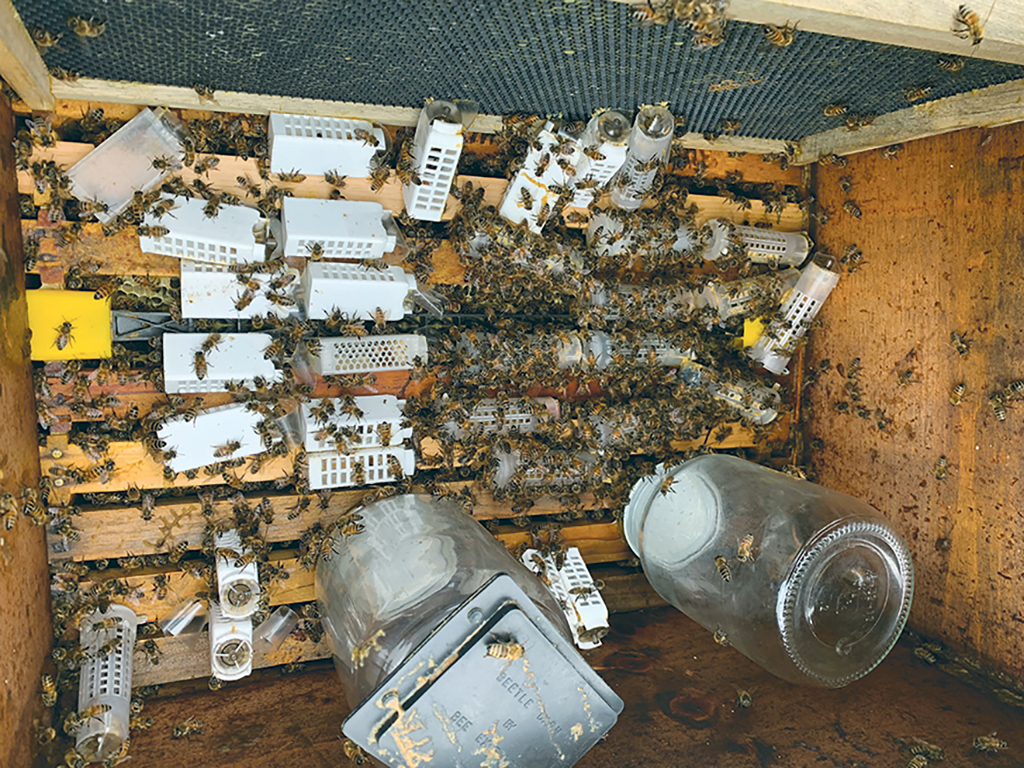
Candy sticks
There is an easier way to introduce a queen. Again, depending on many factors known and not known to man of what’s going on in the dynamics of the individual hive rely on your acceptance rates. You may have done everything right and the virgin was accepted. Gold star! But guess what? On her return flight after mating, she got hit by a truck or was hijacked by a hungry swallow or dragonfly. Caged queen number two is in the bullpen, warming up for her chance to take the mound.
Candy stick cages have a plastic tube filled with soft or hard fondant. The bees can eat through the softer fondant in a day or two and take three to four days for the brick hard candy. You won’t have to go back four days later to release the queen and get the workers rattled by releasing the queen.
I have done both and, again, each has a success rate based on many factors, but the key to getting virgins accepted is, in my opinion, not to wait too long for a follow-up inspection. If you wait past the time all the brood has emerged and it is still queenless, you will have a greater chance of developing laying workers. If you have a second hive and are still unsure if you have a virgin queen in there, place a frame of open brood in the hive and reinspect in two to three days to see if they started drawing cells. This is 100% a method that will stave off laying workers and ensure your hive is on the way to becoming queenright.