




SALEM, Ohio — Well, at least the city hasn’t gone to the dogs.
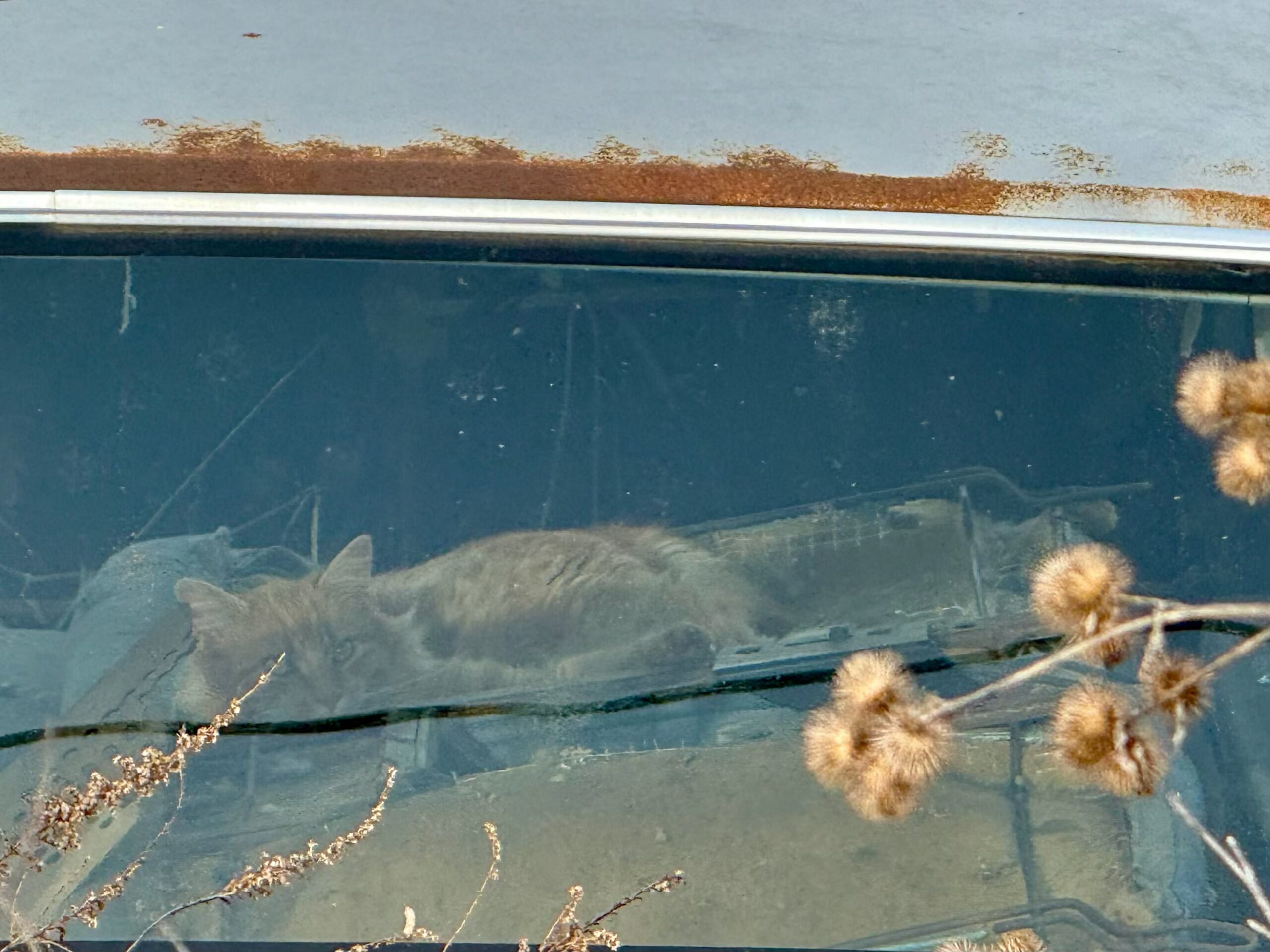
It seems that here in Salem, this historic place in northeast Ohio with an industrious past has, at least for a population of feral cats, become the capital of the world. That’s why there are so many of them in Centennial Park. Now they’ve radiated out across town to alleyways behind local watering holes and restaurants, arriving in back yards and on doorsteps, with the problem growing more and more widespread.
But Brenda Austin, project coordinator for Salem’s pilot Trap, Neuter and Return program, or TNR, is nearly finished evicting one pesky cat colony from downtown. All she needs now are a few farmers willing to put the remaining feral felines to work — these cats are top talent, after all, as far as hunting varmints is concerned.
Heavy lift
Last September, after hearing from Austin about the scope of her work and funding challenges — TNR is sustained by private donations — the Salem City Council approved a $2,000 reimbursement for TNR veterinary expenses and $1,000 in seed money to kick off a small fundraising effort. The money came from an $8,000 line item intended for animal control that had gone unused and would otherwise return to the general fund.
Mayor Cyndi Baronzzi Dickey spoke effusively about the program at the council’s Sept. 16 meeting, where Austin outlined just how much she does, from trapping to fostering to attending to injured kittens and providing emergency euthanasia to especially sick or hurt animals.
“You can tell that there’s a big need here,” Baronzzi Dickey told the council. “I would really love if you would support us giving a donation to the TNR program.”
For her part, Austin said she is driven by a sense of duty to the animals.
“When somebody sees a dog running, they automatically think,’ somebody lost their dog,’ right?” She said. “When it’s a cat, it’s like, ‘Oh, there’s another cat.’ Like, people just figure it’s a stray cat, somebody abandoned it, whatever. And so they’re like second-class citizens, really.”
She said people fail to realize that their numbers, significant and growing, are often highest in residential areas where people are feeding the cats without getting them spayed or neutered, leading them to reproduce uncontrollably. By Austin’s estimates, there could be a thousand cats in the city that need to be fixed.
“I’m not perfect. I don’t always make the right decision, but I do the best I can to do what’s in the best interest of those cats.”
A second chance
Right now, there is one situation testing her resolve. Austin and other volunteers are trying to remedy the problem of a local business that has been feeding feral cats for years, allowing their numbers to steadily multiply. Through repeated trapping efforts, most of the cats have been spayed or neutered, but about 10 still remain at large.
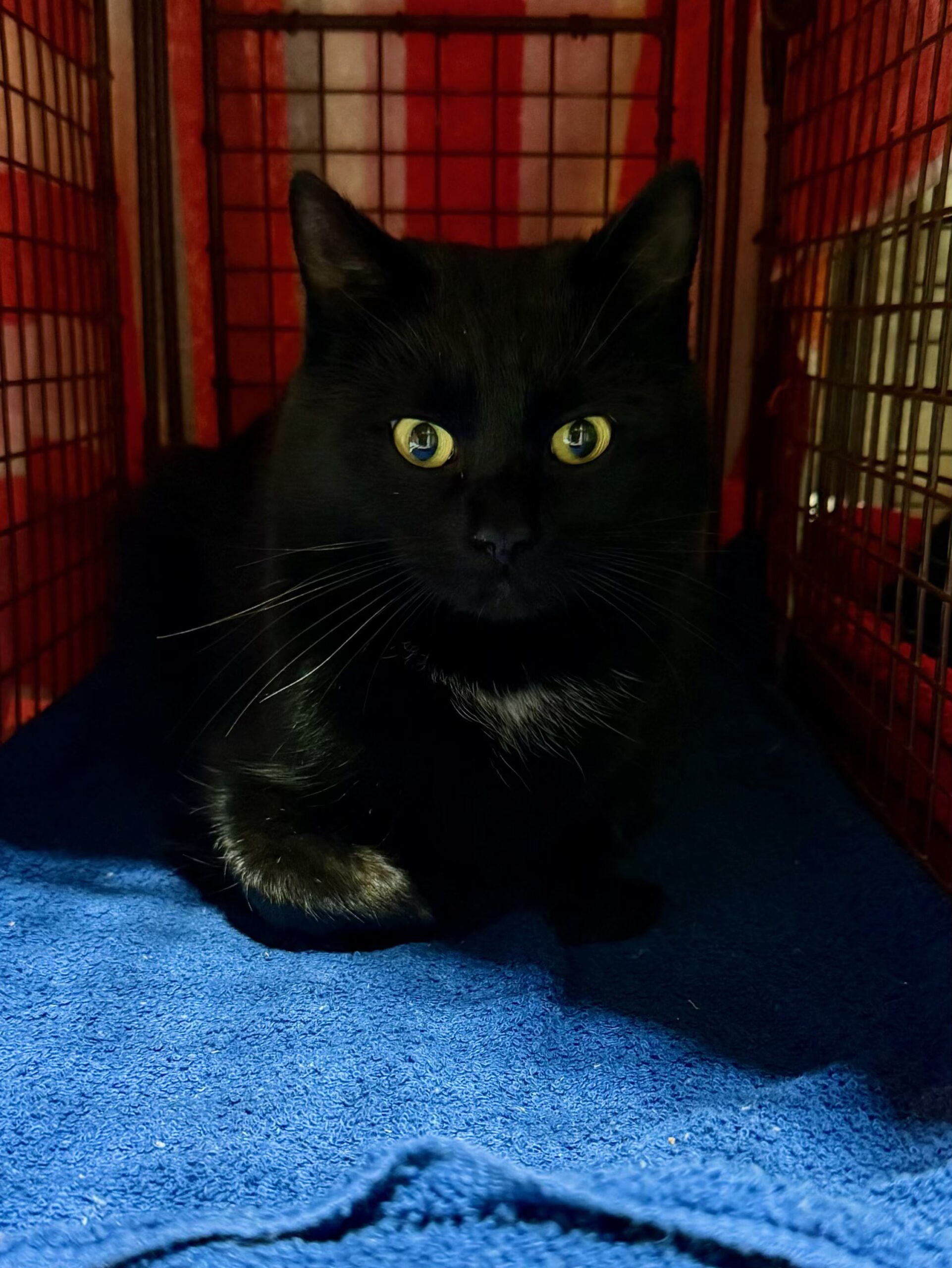
The complication, Austin said, is that the business does not want the cats returned after they are fixed. That has left the TNR team scrambling for alternatives, hoping to place the animals somewhere they can live safely without contributing further to the problem — ideally in pairs, where they would have a better chance of thriving. They could make a couple of great barn cats after a while for a farmer willing to give shelter to animals that need a little patience, but most of all a second chance.
One way or another, they’ll have to go. Austin wants them to be rehomed so they can have a better life.
“They just live in fear. They’re not enjoying being a cat. This gives them the opportunity to finally enjoy just being a cat,” she said.
For her, both the scale of the city’s feral cat problem and the limits of what a small group of volunteers can handle on their own are pretty clear.
“It’s not the cats’ fault. None of this is these cats’ fault. Some people failed them, obviously,” she said.
Since the city approved the TNR program, it was placed under the Health Department for official oversight, where donations and support for Austin can be received. Much of that support so far has come quietly and from the grassroots.
The program has benefited from private donations, including a $1,000 contribution from a city council candidate and funds from an anonymous donor deposited directly into the program’s veterinary clinic account. A friend of Austin’s also donated $500 specifically so additional traps could be purchased, allowing more cats to be safely captured and transported for surgery.
Even so, the financial reality remains daunting. The $2,000 approved by council, Austin said, is enough to cover roughly 40 cats, a small dent in the number of unaltered cats Austin suspects swell within the city limits. Much of the burden falls on Austin personally. She routinely pays out of pocket for gas to make two-hour round trips to clinics and for veterinary care for sick or injured foster kittens, expenses that cannot be covered by TNR funds, which are restricted to trapping, neutering and returning cats.
Transportation remains one of the program’s biggest obstacles. Austin said finding someone willing to donate a reliable working van would be a game-changer, sparing her from having to haul traps and cats in her personal vehicle and allowing her to take on larger trapping projects more efficiently.
Another challenge is the program’s lack of official nonprofit status. Without 501(c)(3) designation, some potential donors are unable to contribute because they require tax-deductible giving. While being housed under the Health Department lends the program legitimacy, Austin said formal nonprofit status could open the door to larger grants and sustained funding.
Despite the hurdles, Austin remains determined.
“I just want to fix the cats,” she said.
To support the program, visit online. Those interested in adopting these cats as barn cats can call or text Brenda Austin, Salem TNR Project Coordinator, at 234-567-7858.





I was glad to see this article in the F&Dairy.In my teens,I worked for a veterinarian in Pennsylvania.
My first love was horses,followed by dogs,but never cats.Little did I know that observing cats in different situations,
and the random kitten or cat that “just showed up”on my doorstep then,would lead me to a lifelong
admiration of the domestic feline,the cat.By the time I left that veterinary practice,
the love of horses and dogs was replaced with a sincere respect and love for all things feline.
How did that happen? Knowledge by observing a misunderstood animal that is labeled many things.
Those who do not wish to know a cat’s behavior would do well
to leave ownership (can you even can call it that?) to those who take that knowledge into consideration.
Unlike a dog that is loyal to an uncaring or even a cruel owner,a cat will not stay in an environment
where it is neglected,abused or ignored.They find another home.I have seen this happen repeatedly throughout my lifetime.
Stepping in to help feral cats is a thankless job.Like children born into difficult circumstances,
these felines did not ask to be born,but here they are,relying on humans for food and maybe,
a little companionship as a bonus.May all who read this article continue spaying,neutering,
and supporting those hard working ones who put ferals first,and not last in their lives.
Feral cats,with patience as key,and food,will replace your time spent with maybe the best cat you have ever
had the pleasure of “owning”! (In memory of MonkeyFace, a feral.)Thank you.