




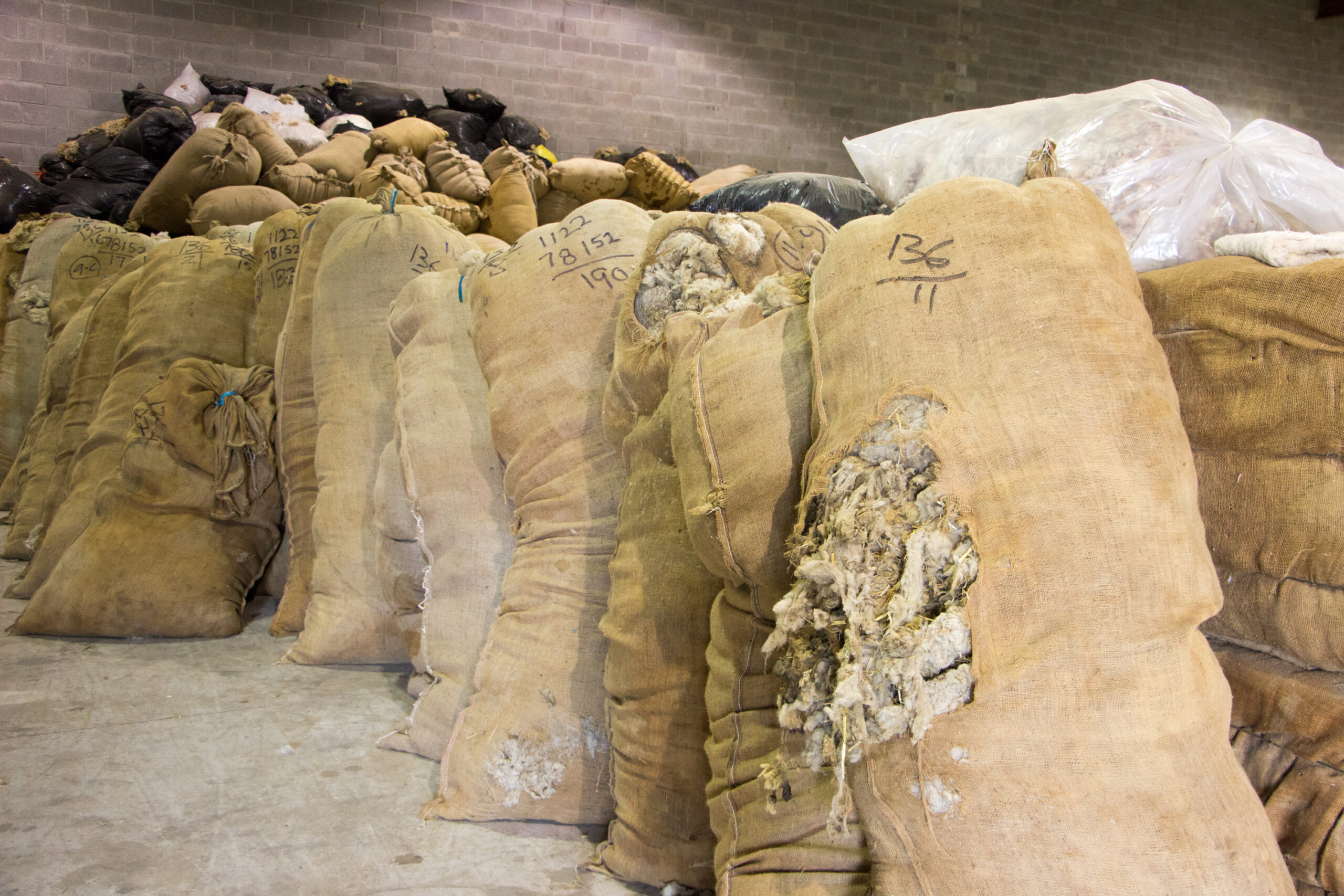
SALEM, Ohio — After a five-year hiatus, the Western Pennsylvania Cooperative Sheep and Wool Growers Association is bringing back its Wool Pool on June 5 from 9 a.m. to 4 p.m. and June 6 from 8 a.m. to 2 p.m. at the Lawrence County Fairgrounds, 464 Midway Road, New Castle, Pennsylvania.
This year, the buyer for the wool will be Keese International, based in Texas.
Typically, the cooperative gets two or three bidders, said Ken Scott, director and past president of the Western Pennsylvania Cooperative and Wool Growers Association, but this year, Keese was the only bidder.
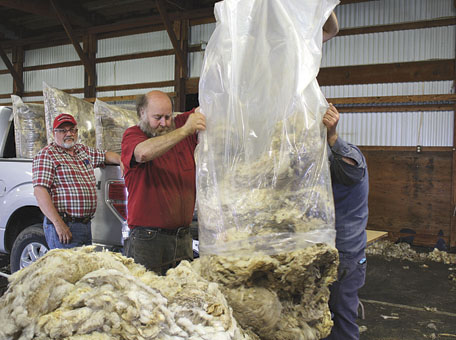
The cooperative’s last wool pool was in 2021.
“We have had no bid for the wool. Nobody wanted the wool until this year, and even now it’s minimal,” Scott said.
In recent years, a “glut of overseas wool,” the popularity of polyester clothing and a halt in the processing of wool during the COVID-19 pandemic have stifled the wool industry.
Historically, a lot of the cooperative’s sales are from wool in U.S. military uniforms, but wool is now being replaced with more synthetic materials, said Kaley Walden, secretary and treasurer of the Western Pennsylvania Cooperative Sheep and Wool Growers Association.
Large-scale wool buyers are also becoming few and far between: in 2023, one of the country’s biggest wool buyers, the Mid-States Wool Growers Cooperative, based in Canal Winchester, Ohio, closed its doors.
The wool pool is possible this year due to processors being up and running again, and a stockpile of wool from other countries like New Zealand and Australia finally used up, according to Scott and Walden.
Scott adds that the cooperative is constantly looking for new markets. He says that there are a few places buying wool in small amounts and for fertilizer pellets, but the wool pool is a producer’s best option.
“There’s just not a tremendous amount of market support elsewhere,” he said.
While there’s not much individuals can do to support the wool industry, Walden encourages everyone to be consumer-conscious.
“Even just simple support like making sure that you are buying local (helps). If you’re buying something, buy wool,” she said.
Wool pool details
The wool will be sold at the following prices per pound: 3/8 and 1/4 staple, $.33; 3/8 and 1/4 clothing, $.25; low 1/4, $.25; common/braid, $.15; 1/2 staple, $.75; fine staple, $1; fine and 1/2 clothing, $.50; light vegetable matter, $.30; heavy vegetable matter, $.20 and natural colored, $.15.
The prices per pound are comparable to the last wool pool, but a few cents higher in some categories, Scott said.
Producers will not be paid the day of the pool, but should see a paycheck up to 90 days from the event; checks will be mailed. Scott said Keese International is a first-time buyer for the cooperative, and the cooperative only received enough advanced pay to cover the cost of running the pool and paying for labor.
A maximum of 15 cents per pound will be deducted to pay for pooling/marketing expenses, baler upkeep/repairs, bale covers cost and operation for the cooperative.
No hair or hair-cross wool will be accepted, and it must be kept separate from all other wool.
All wool should be untied, and fleeces should be packed in boxes, plastic garbage or leaf bags, film plastic bags or burlap wool bags. Plastic garage bags/leaf bags should be left untied and have holes in them to prevent condensation.
Producers should not use plastic feed bags, as any wool in these bags will be sold as heavy vegetable matter; the plastic is a major contaminant for the wool industry, according to the cooperative.
Wool from white-faced sheep should be kept separate from black-faced wool; natural color wool should be kept separate from all other wool, as well. This will help the pooling process and may increase the value of wool clips.
All wool should be delivered in good condition: dry, clean and untied. Fleeces that have burrs, manure locks and excessive chaff or hay will be graded as heavy vegetable or refused.
There will likely be a higher amount of vegetable and heavy vegetable matter wool this year due to an excess amount of stored wool from previous years. Wet wool will be refused.
All producers are encouraged to pool their wool. The cooperative is looking for volunteers to help get the pool “started back up after so many years off,” according to a press release.
Additionally, there is a wool deficiency payment of $0.35 per pound available to producers for their 2026 wool through their local U.S. Department of Agriculture Farm Service Agency office.
There is also a payment available on unshorn lambs.
Producers must be signed up at their local FSA office before selling the wool/lambs to get the payment. Interested parties should call their local office to receive a form.
(Liz Partsch can be reached at epartsch@farmanddairy.com or 330-337-3419.)