



It seems that each year brings new weeds to our fields, so one of the most important parts of a grazing operation is weed management. It is essential to be out scouting for weed issues, as problematic, fast-growing weeds can greatly reduce the quality of your grazing land quickly. In fact, now is a great time to scout your fields for weed issues as you are out cutting and baling hay.
One of the greatest weapons to use for weed management is herbicides. They can be very effective at controlling problem weeds, and even more so when used in conjunction with mechanical weed control options, but only when used properly.
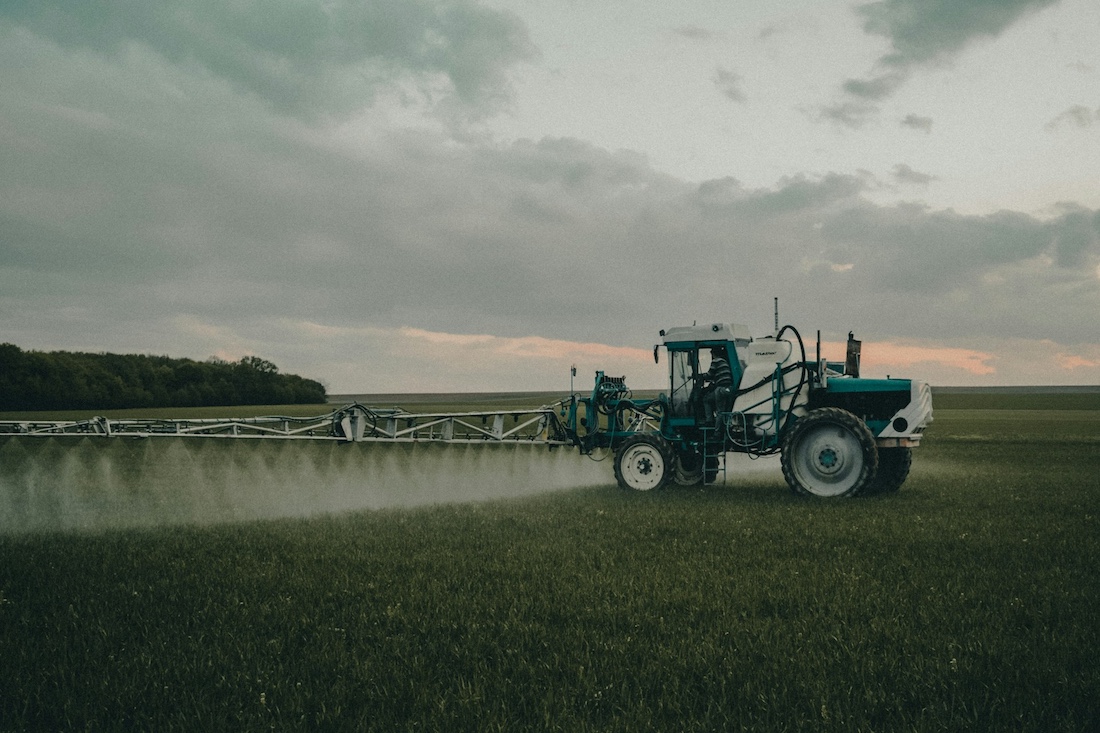
As someone who has been teaching pesticide safety for several years now, I would argue that the most important step of chemical application is sprayer calibration. However, I know from talking with farmers that this step is not done often, if at all.
Importance of calibration
Sprayer calibration is a crucial step to ensure a few things: 1. Your sprayer is in working order and functioning properly. 2. You are not putting too much chemical into the environment, causing non-target damage and possibly applying over the labeled rate. 3. You are not putting too little chemical into the environment and wasting your time and money by making an application that won’t properly control your target weeds.
Essentially, sprayer calibration is a way to ensure you are working efficiently, which is especially important as profit margins continue to become smaller over time.
How to
Sometimes farmers avoid sprayer calibration because it seems like a complicated, time-consuming task with too much math involved. I am here to assure you that it doesn’t have to be any of those things. Sprayer calibration can be done in just a few easy steps using the 1/128th method of calibration and will certainly be worth the effort.
This calibration method uses an easy conversion between ounces and gallons by reducing your math by calculating output on a 1/128th fraction of an acre. With 128 being the number of ounces in a gallon, it makes it simple to scale up our math from ounces to gallons.
The method is simple.
- Map out a swath for your sprayer that is 340 square feet. Here is a simple formula to determine this swath: 340/nozzle spacing (in feet) = distance to travel.
- Using a set speed, measure how long it takes your tractor to travel that distance and note the RPM and gear setting.
- Using the same RPM and gear, collect the spray output from your nozzle in a measurable container for the same amount of time it took you to travel in step 2. Do this step for each nozzle. (This can be done with just water to ensure safety but is more accurate with spray solution and may be required by some labels.)
- Take an average of all nozzle outputs.
- The average nozzle output can be scaled up to equal gallons per acre. For example, if your nozzles are putting out an average of 20 ounces, that means each nozzle will be putting out 20 gallons per acre.
If any individual nozzles are more than 10% higher or lower than the average, this is your signal to clean or replace those nozzles. Be sure to follow all label instructions during sprayer calibration, especially PPE requirements.
Calibration should certainly be done at the start of each season and repeated throughout the season if any parts are replaced.
Resources
If you would like to read a more in-depth guide to the 1/128th calibration method, visit ohioline.osu.edu/factsheet/fabe-520 to read a factsheet written by Erdal Ozkan, a professor in Ohio State’s Department of Food, Agricultural and Biological Engineering.