



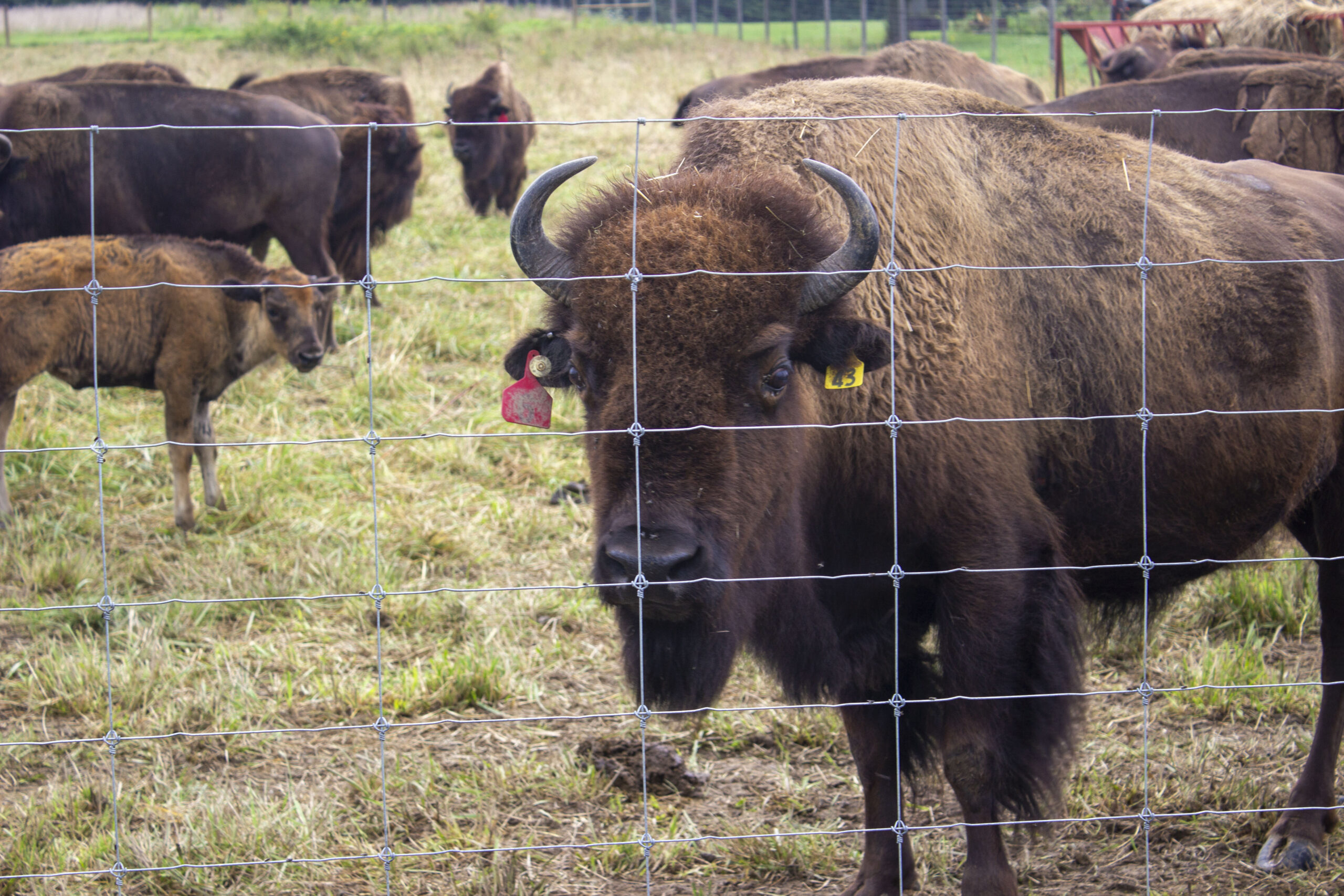
COLUMBIANA, Ohio — When Nick George and his wife, Kristin, were at last ready to start a livestock operation of their own, they knew they didn’t want to raise more of the same beef cattle already common in the area.
Nick had wanted to work with livestock since he was a kid, but it wasn’t until a seminar took him to a Texas bison ranch that he realized which kind.
“I got to spend the week watching them, and they were kind of fascinating to me,” he said in an interview on his 130‑acre farm, Coyote Run Ranch, where miniature donkeys, chickens, horses and cattle dogs join a breeding herd of nearly 70 bison now grazing in carefully rotated pastures that used to be cornfields. Their meat, he notes, is among the leanest and most nutrient‑dense available — it behaves like venison. Sales draw a steady stream of repeat customers from across the region.
“Most of the time, when we hit a new market, the first couple times we’re there, people don’t really buy anything,” Nick said. “They inquire, and that’s when we start talking to them about the health benefits and how they’re raised.”
Bison meat, while more expensive than beef, earns high marks for quality. The U.S. Department of Agriculture does not allow bison to be raised using growth hormones. According to the trade organization National Bison Association, rancher members follow a code of ethics that bars routine antibiotic use and crossbreeding with cattle, and the naturally raised animals produce a red meat that’s lower in fat and cholesterol than beef, chicken and even salmon, yet higher in protein, iron and vitamin B‑12.
Next month, on Sept. 11 and 12, the Georges will welcome seasoned producers and curious newcomers alike to the ranch for the association’s Eastern Regional Bison Conference, giving attendees a chance to see the animals and the work of raising them responsibly up close.
“So many people helped us get started, and we would not have been able to do it properly without all the help that we got,” Nick said. “It’s the right thing to do to return the favor to somebody else.”
Sessions will cover business planning, insurance and drought management, grazing and forage, body‑condition scoring and a herd tour, plus bison meals and time to talk with producers. The registration deadline is Aug. 28. More details are available online.
Home on the range
By the turn of the last century, commercial hide hunters and recreational sportsmen had pushed American bison to the edge of extinction; the few left were the last gasps of herds that were once tens of millions strong. The U.S. Army, for its part, set out to finish the job, deliberately targeting the remaining animals in an extermination campaign meant to destroy a vital food source for Plains Indians and drive them from lands coveted for white settlement.
After the Native population was forced onto reservations, some of the land they had been ejected from — about 2.2 million acres in Wyoming — was designated as “a public park or pleasuring-ground for the benefit and enjoyment of the people” according to an act of Congress in 1872. That created the world’s first national park at Yellowstone, where a remnant population of bison were left to roam.
Today, the Georges see their herd as one small contribution they hope will help reverse the bison’s decline, part of an effort to rebuild the population through careful, ethical breeding and hands-on stewardship. They fit right in: Ohio once had its own wild bison; the state’s tallgrass prairies were home to the animals until the last of them here were shot and killed in Lawrence County in 1803, according to the Ohio History Connection.
On their property, the Georges have planted grasses, installed water lines and now manage their herd in a series of four‑acre paddocks behind heavy‑duty fencing, rotating the animals in a grazing system designed to let each section of pasture rest for about a week. They also grow their own hay to ensure high‑quality forage in winter and work with the U.S. Department of Agriculture’s Natural Resources Conservation Service and the Eastern Ohio Grazing Council to refine their grazing plans, cut down on nutrient runoff and improve water, soil and wildlife habitat on the farm.
The bison here are doing well. The Georges’ breeding cows weigh in at roughly 1,100 pounds, and their biggest bulls, Randy and Stanley, are closer to a ton apiece. Despite their bulk, the animals can sprint at around 35 to 40 miles per hour and are agile enough to clear obstacles as tall as five feet, a combination of power and speed that has driven the couple to invest heavily in stout perimeter fencing and proper handling facilities to keep both the bison and their neighbors safe.
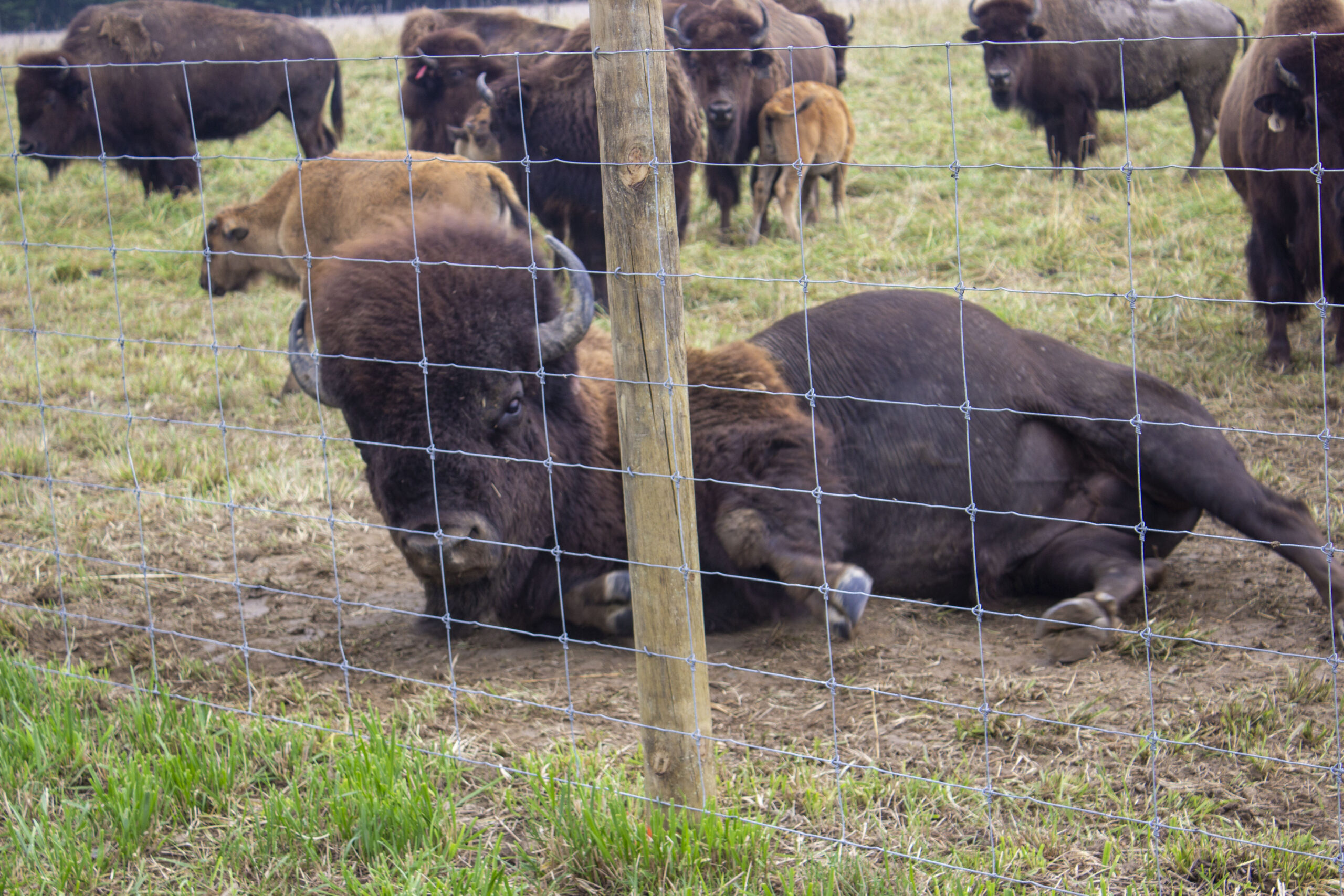
Nick said the biggest mistake new bison owners make is underestimating the power and temperament of the animals and trying to manage them like conventional cattle.
“They can throw a 200-pound person around like a rag doll,” he said.
Even with their numbers diminished, the animals still manage to make headlines. Yes, the Georges have watched the viral video from last month back in Yellowstone, when a 65-year-old man from Washington state, Carl McDaniel, was thrown 8 feet into the air by a charging bison that had wandered into a campsite. McDaniel suffered a shattered femur that broke in four places, among other injuries.
Nick said the Yellowstone bison had been doing exactly what his own bulls do when they roll, or “wallow,” in the dirt, when a white pickup drove past and honked, startling the animal.
“That’s when he got up. And I don’t know that that person meant to cause any harm, but like, that’s all it took. Just a little agitation.”
The Georges hope would‑be ranchers learn the hardest lessons at the upcoming conference before they become clickbait or the latest victims of nature’s fury.
Giving back
The raw power of the bison is only part of their story. The animals are woven into the country’s heritage, and they exist as a living link to American Indian nations whose survival and ceremonies depended on them. Today, the bison endure as a reminder of how close keystone species can come to being lost forever and how much work it takes to bring them back.
What drew the Georges in, and what they hope conference visitors will see, is the animals’ presence as they bide their time grazing and milling around. They have sharp personalities: the “red dog” calves that start out a copper color before turning dark by fall have mischievous spirits. They’re apt to sneak out through gaps in the fence for unsanctioned walkabouts through the countryside. The adolescents will try their best to sport their awkward, scraggly coats before eventually shedding them. The whole herd “will run and play and run and run and run” in a good snowstorm, as Kristin put it.
“You just want to pet the babies,” even though, as she quickly noted, you definitely should not. “Mama doesn’t want you to do that.”
The conference is designed for people at all stages, from those longtime producers to people who are, as the Georges once were, starting with nothing more than vacant land and a host of questions. Kristin said the agenda is built to balance classroom‑style talks with hands‑on time in the pasture where attendees can see the animals and the grass for themselves and put a practical spin on what they’ve just heard.
“It’s going to be just packed with information,” she said.
NRCS staff are scheduled to speak about pasture health, forage and different types of grasses, while Nick plans to walk attendees through the nuts and bolts of setting up a bison operation. He’ll cover fencing and water systems and the rest of the infrastructure needed, as well as what kind of financial return those investments might realistically produce.
“We do love it. I mean, having any kind of livestock, in my opinion, is something you really do have to love. Because it’s a lot,” Kristin said.
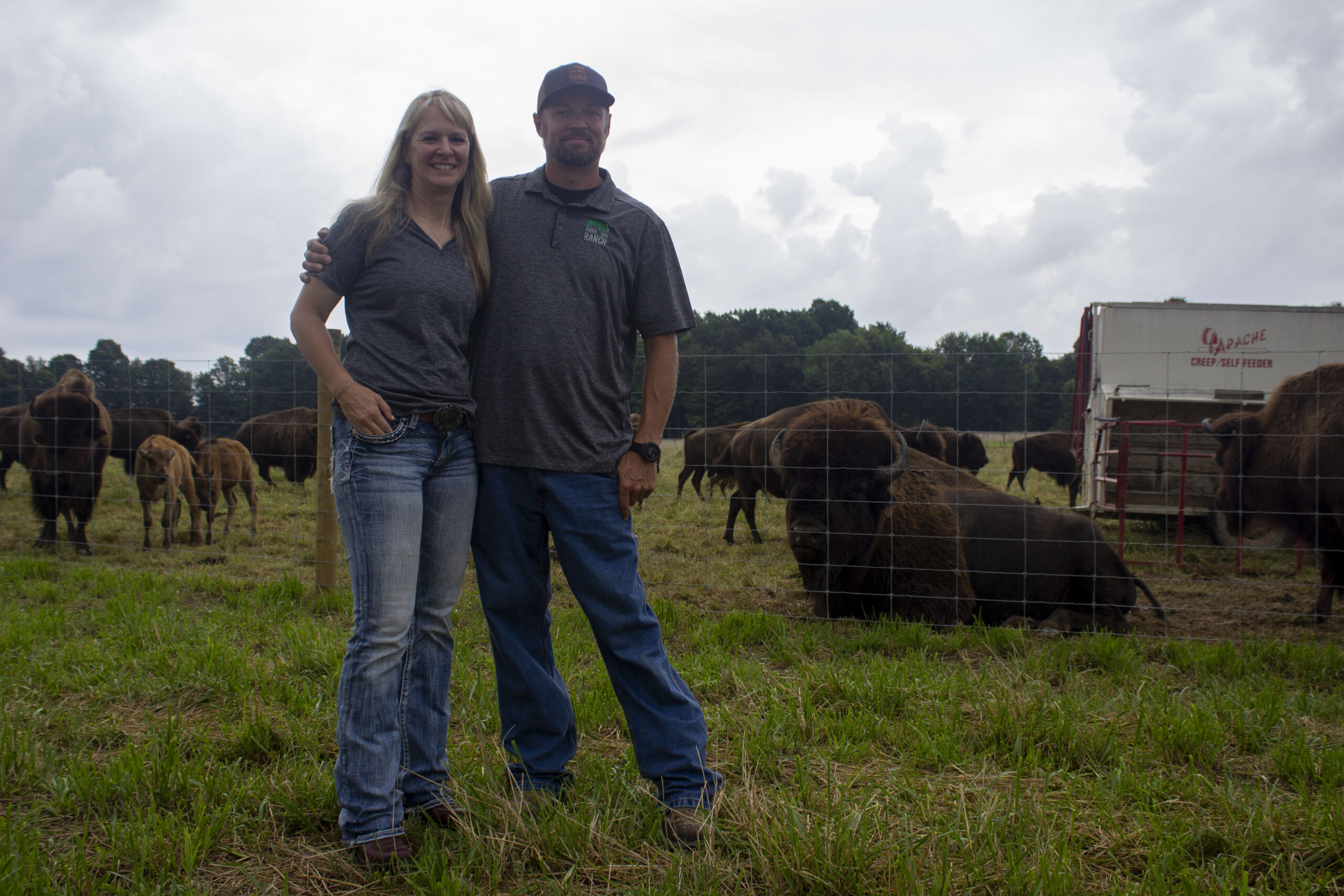
For the Georges, the weekend is also about giving back to an industry that helped them avoid costly mistakes when they were just dreaming.
“We joined the National Bison Association and the Eastern Bison Association almost immediately when we started researching, and they started giving us a ton of information on what not to do,” Nick said.
He added that it’s good to have friends.
“A lot of times, you don’t know what you don’t know until you find out you don’t know it. If you think something’s wrong or you need help with something, who do you call? If you don’t network with some people and make some friends, you have nobody to call.”
The Georges no longer feel like the outsiders they once were at their first out‑of‑state conference, but they say they still consider themselves students as much as hosts. Kristin said this year’s event will highlight how they got started, the projects they’re still working on and the challenges they’re facing as a relatively new operation.
“We’re really kind of putting ourselves out there to help everyone else learn, too, and for us to learn. I mean, we still have a lot to learn. We’re hoping to gain a lot of knowledge from a lot of the people that are coming, too,” she said.




