

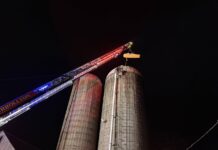

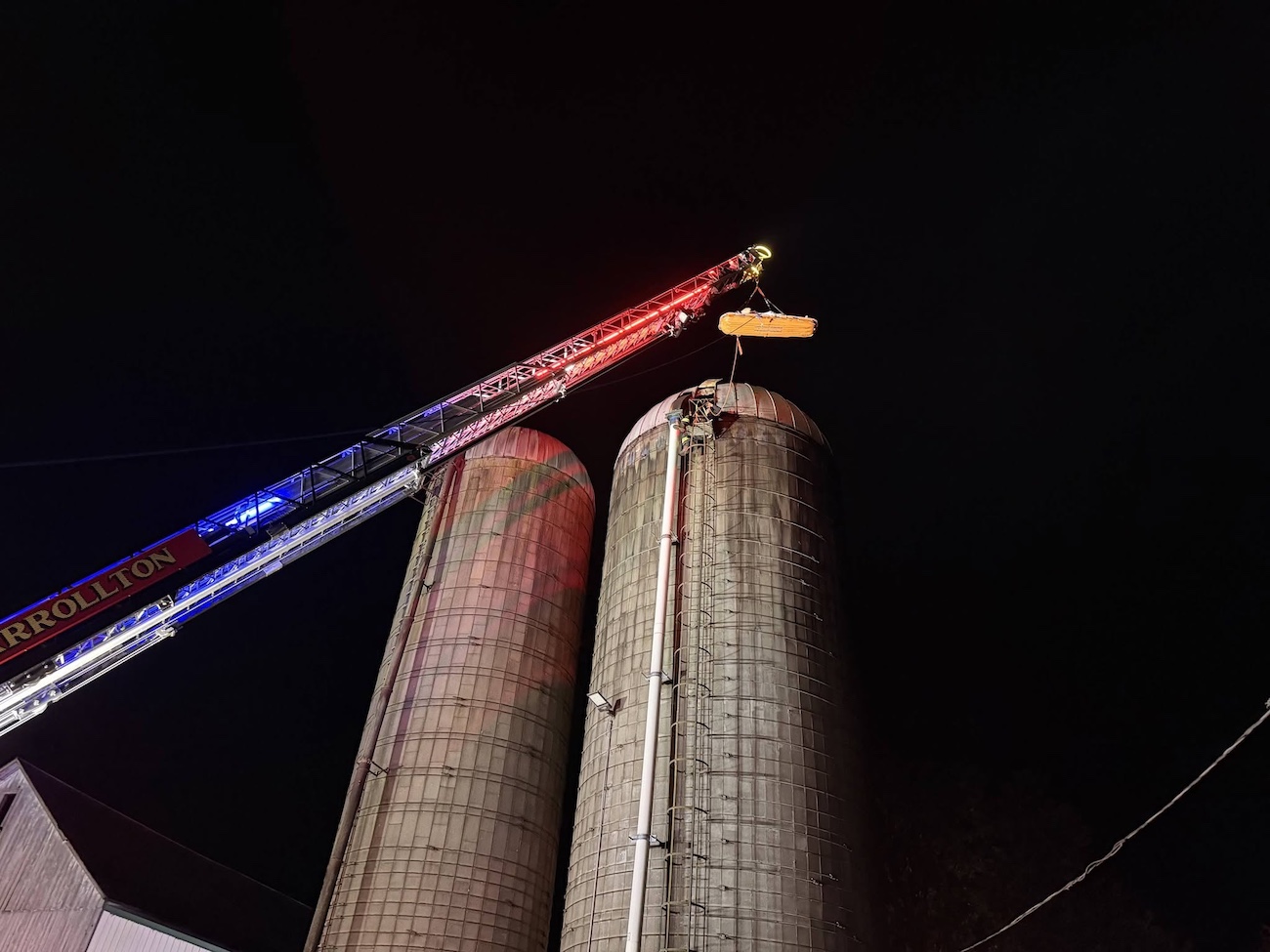
ROSE TOWNSHIP, Ohio — A farm worker at a Carroll County farm became caught in an auger atop a silo the evening of Oct. 11, suffering a serious injury to his leg and prompting a coordinated rescue by multiple fire and emergency crews.
An auger’s rotating screw can catch clothing or a worker’s body in an instant, turning a routine task into a life-threatening emergency. The Occupational Safety and Health Administration has documented fatalities, amputations and other serious injuries involving augers.
But thanks to the efforts of first responders, the worker survived.
A Carroll County Sheriff’s Office deputy was among the first to arrive at the farm in Rose Township. He climbed the silo’s exterior access ladder and found another worker already there, trying to control the first man’s bleeding with a tourniquet. The deputy applied two more to staunch the bleeding while responders worked out how to get the injured man down.
Sheriff Calvin Graham said officers typically carry tourniquets in case they or their partner are injured on duty.
“His training jumped in, and he did a good job,” he said. “It sounds like the gentleman’s going to recover fully and not lose his leg or anything, from what I’ve been told.”
Responders from Mohawk Valley Joint Fire District, Magnolia Volunteer Fire Department and Carrollton Fire Department’s Ladder 1 soon joined the rescue. Canton Fire Department’s Technical Rescue Team assisted with ropes and rigging, while EMS personnel waited below to receive the worker. But things were complicated on the ground, too. Great Trail Fire District helped establish a landing zone for STAT MedEvac. The helicopter landed, but conditions changed, and it could no longer fly the worker to the hospital. The man had to be transported by ambulance to an Akron trauma center instead.
The Carrollton Fire Department’s initial post about the incident drew 4,600 likes and a wide-ranging response. Readers offered prayers for the worker, shared their own experiences with farm accidents and praised the rescuers’ quick action. Some commenters described surviving auger or silo-related accidents; others pointed to the value of training, aerial equipment and the volunteers who leave their jobs and families to answer emergency calls.
“Always have a safety plan”
For Deputy State Fire Marshal Richard Sluder, the complexity of the rescue is familiar, though he was not at the scene. In 36 years in Ohio’s fire service, much of it in rural areas, he has seen how agricultural emergencies can quickly become difficult to manage. A silo may be hard to reach with rescue equipment, the machinery involved can be hazardous, and rural departments may have limited personnel available.
“Silos are often built in areas where you can’t get equipment to them,” Sluder said. He also described the challenges posed by equipment on farms, including older machinery. “A lot of it’s older equipment that sometimes hasn’t been inspected or doesn’t get inspected because of agricultural exemptions.”
Getting help to an incident can take time, too. Farmers may work alone and be unable to call for assistance after an accident, Sluder said. Rural farms are often covered by volunteer departments, and a rescue may require crews from multiple communities to bring the necessary people and equipment.
The scene itself can bring another complication: neighbors eager to help. Their experience with farm equipment can be useful, Sluder said, but responders still need room to work and must keep the scene organized.
“You often get a lot of help that’s beneficial, and you also get a lot of help that is not beneficial,” he said. Managing access, crowds and emotions becomes part of the work as professional responders carry out the rescue.
The equipment and the structure can make these incidents especially dangerous. Sluder said grain must be removed evenly from a storage structure; taking it out unevenly can cause the structure to collapse. An auger injury can also involve more than a cut or blunt-force trauma.
“Not only do you have a traumatic injury from a cut or a blunt force trauma, but you also have a stretching and pulling injury. Which is a unique type of trauma to a human body, and so you have to know how to mitigate all of those things,” he said, describing the additional forces that can affect someone caught in the machinery. In those cases, he said, getting a patient to a trauma center quickly is critical.
Sluder said training helps crews prepare for the technical demands of silo and grain-bin rescues. He also urged farmers to make safety steps part of the work routine, beginning with ensuring machinery is powered down before anyone works near its moving parts.
“We always say that you know, use the lockout/tagout whenever you’re working on a piece of equipment,” he said. “Make sure things are depowered before you’re going to go and maneuver around the mechanical portion of the device.”
Some farm work requires entering storage structures, Sluder acknowledged, making it important to plan for emergencies before they happen. He recommended that workers make sure someone knows what they are doing and where they are, so help can be sent if they do not check in.
“Always have a safety plan. Always have somebody who knows what you’re doing, so that they know where to look for you or know how to monitor for your safety,” he said.