

Tag: grazing

Pasture review: Your end-of-growing-season evaluation
As the growing season ends, Ohio State's Jordan Penrose says you should evaluate how your pastures, hay fields and grazing rotations held up against extreme weather. Review forage performance, identify drowned-out or overgrazed paddocks, and plan ahead for frost seeding and management decisions for next year.

Follow these essential fall steps for healthy spring pastures
Preparing pastures in the fall is critical for cool-season forage survival. OSU Extension outlines key management practices—from soil testing and fertilizer to weed control and proper grazing height—to protect plant roots and ensure strong pasture regrowth next spring.
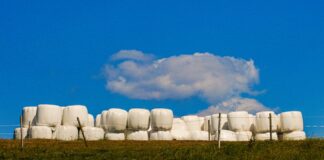
To cut or not to cut: Weighing the risks of making...
Facing a delayed hay harvest? Ohio State University Extension educator Allen Gahler weighs the risks of late-season alfalfa cutting, offers advice on making balage over dry hay, and outlines crucial moisture monitoring steps to prevent spontaneous combustion and hay fires.

Cleaning up after the waters recede — who is responsible?
After heavy flooding, farmers face the task of clearing debris. Noble SWCD's Kirstin Roman talks about who is responsible for cleanup, key safety checks before turning livestock into pastures, and proper regulations for clearing stream log jams to protect your land and animals.

Pasture management after storms
Heavy summer storms and flooding can quickly ruin pastures and endanger livestock. Ohio State University Extension Educator Sandra D. Trushel shares key steps for storm recovery, including removing stock from saturated soils, clearing hazardous debris, preventing foot rot, and testing pasture recovery.
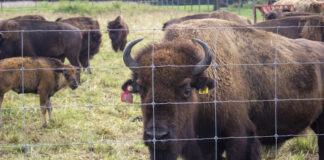
Columbiana County ranch to host bison conference
Coyote Run Ranch in Columbiana County is helping revive the American bison population. Owners Nick and Kristin George are set to host the Eastern Regional Bison Conference in September to educate ranchers on ethical breeding, pasture management and safe livestock handling

Stock density vs. stocking rate: What’s the difference?
What is the difference between stock density and stocking rate? Ohio State University Extension Educator Josh Winters breaks down these essential grazing management concepts, explains how to calculate animal units, and shows how a grazing stick helps measure dry matter for optimal pasture output.
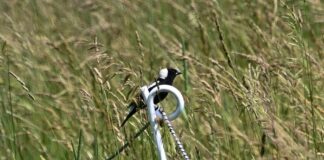
How an Ohio farmer delayed hay harvest to save nesting bobolinks
After learning that early hay harvest destroys bobolink nests, Jefferson County farmer Adam Costarella delayed cutting until July. By adjusting his grazing and haymaking schedule, he helped restore habitat for these long-distance migratory birds on his eastern Ohio farm.
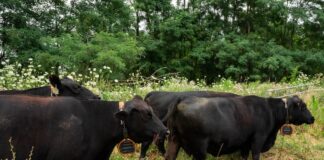
Could a GPS collar replace a roll of wire? Exploring remote...
Remote grazing technologies like virtual fencing and GPS livestock tracking offer potential labor savings and better pasture management. Learn the key benefits, costs, and connectivity challenges producers must consider before adopting precision livestock tools on their farm from Ohio State Extension's Heather Neikirk.
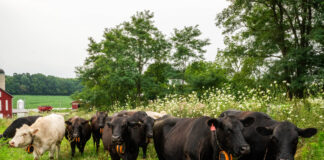
Virtual fencing expands opportunities for western Pa. beef farm
Pennsylvania's Kolehmainen Cattle Company is using GPS collars and virtual fencing to streamline rotational grazing across 800 acres. Discover how smart technology saves time, opens up cover crops for grazing, and advances farm conservation in Enon Valley.