




MCCONNELSVILLE, Ohio — How does that old saying go? The best-laid plans of mice and men and fair boards often go awry?
That’s one way to sum up the trouble this year at the Morgan County Fair, held Sept. 8 to 12.
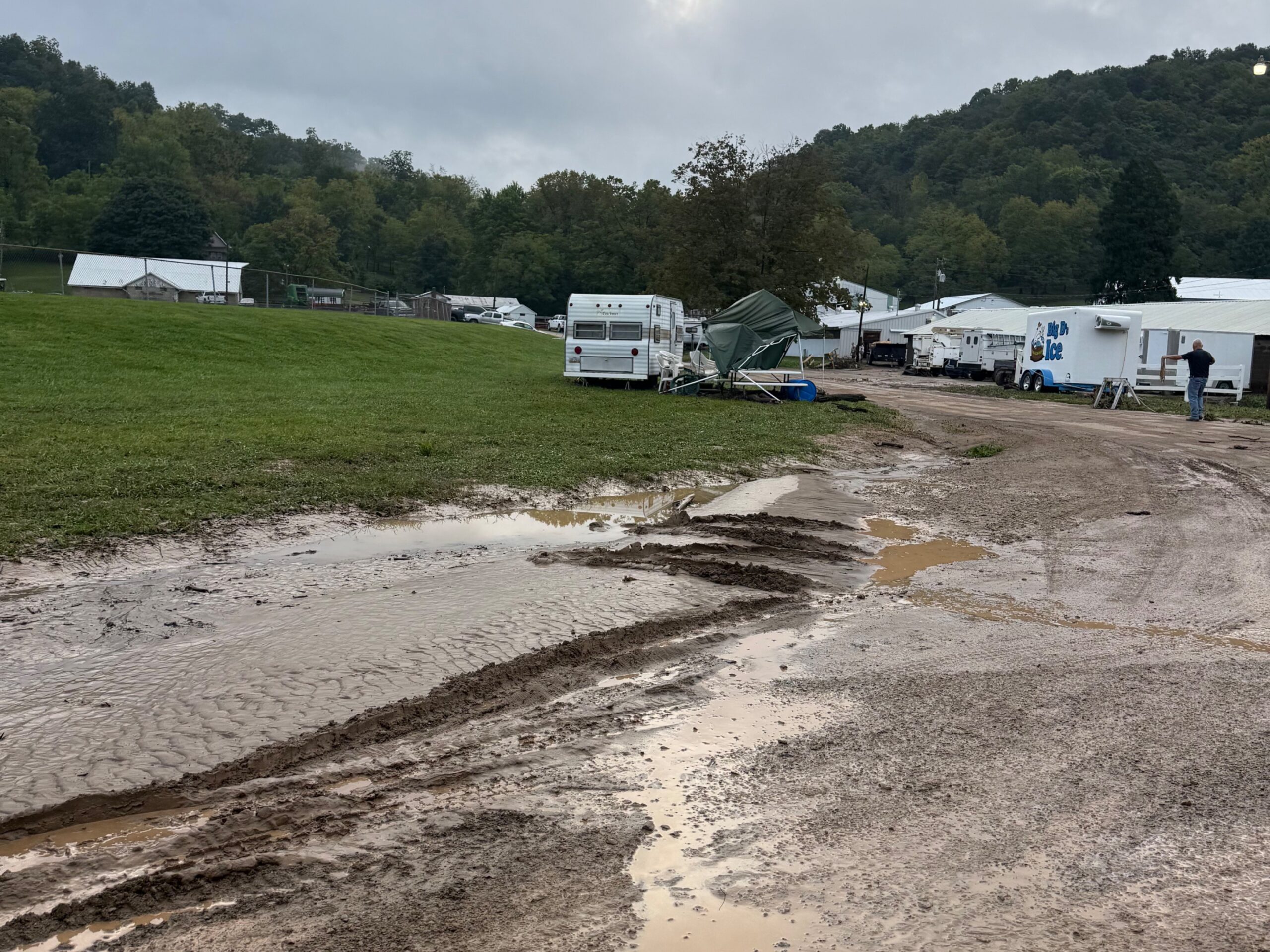
On the second night of the festivities, the National Weather Service in Charleston, West Virginia, issued a flash flood warning for northern Morgan County. By morning, the agency had extended it, reporting that 2.5 to 4 inches of rain had fallen and that flooding impacts would continue even with no additional rain expected. A local emergency declaration was later made by McConnelsville Mayor John Finley.
Garth Ruff, president of the fair board, said the heaviest downpour lasted from about 10 p.m. to 12:30 a.m., sending organizers scrambling to protect campers and livestock.
A creek that runs directly into the Muskingum River splits the fairgrounds in half. It crested its banks during the storm. The Merchant’s Building took on water, and the entertainment stage and several vehicles were affected. One camper trailer was knocked off its jacks. Firefighters helped evacuate people from as many as eight others, and officials sent more campers home for the night. The rising water also threatened the poultry barn.
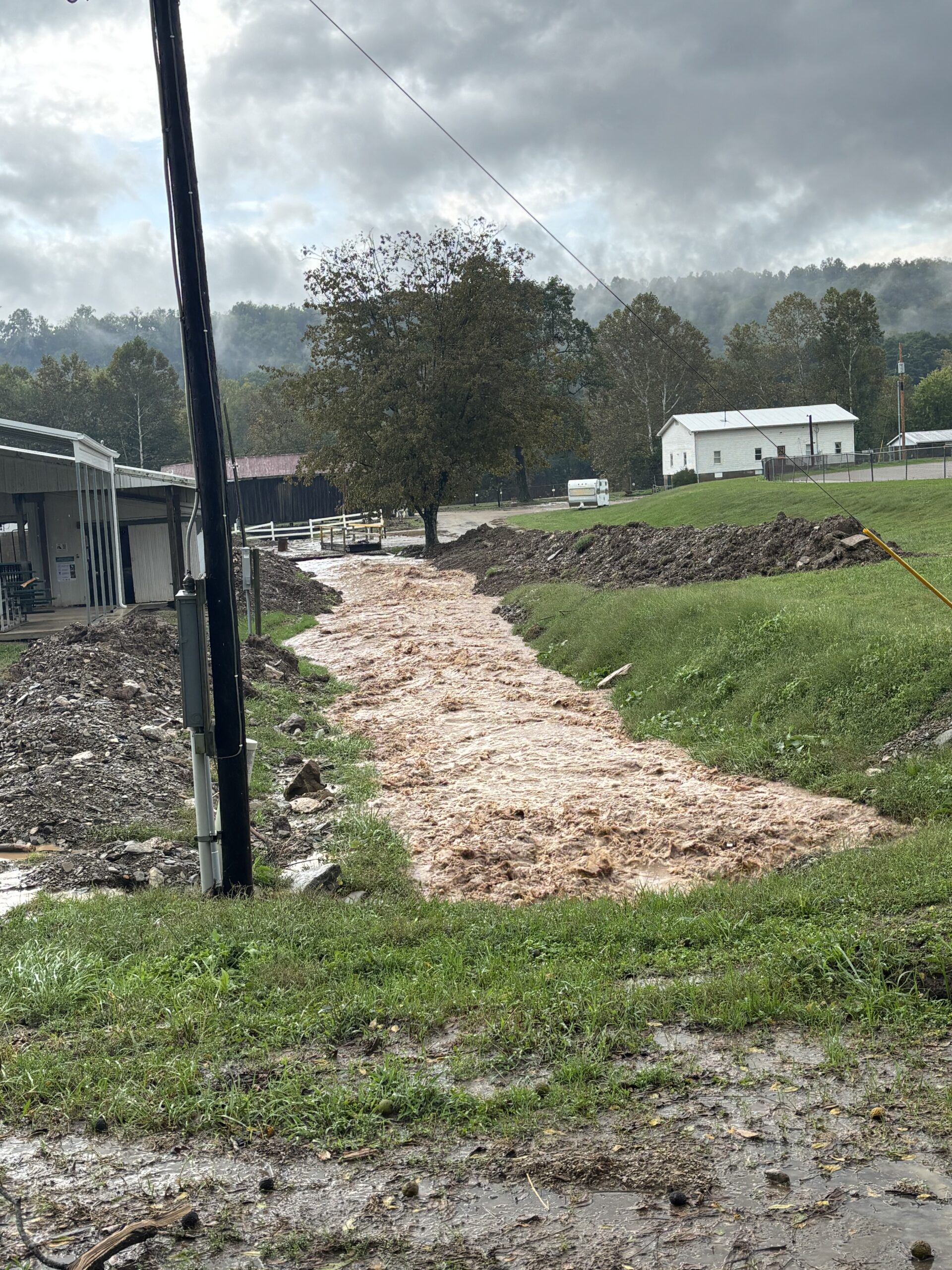
“Of all things that we actually had to pull out of the building on the side closest to the creek, we had to get about 50 ducks out of there as the water was coming up,” he said. “We were in knee-high water trying to get ducks out of cages. It was quite the experience.”
It was a similar story at county fairs across the Midwest and Appalachia this summer. In August, severe storms forced the Champaign County Fair in Ohio to close for a day, damaging tents and taking down trees. In West Virginia, a week of flooding and tornado warnings disrupted the Mason County Fair, leaving behind plenty of mud. And in Pennsylvania, the Centre County Grange Fair canceled its parade after coordinating with the National Weather Service and Centre County Emergency Management over the threat of severe thunderstorms. According to the National Oceanic and Atmospheric Administration, Indiana and Ohio received their highest August precipitation on record this year, about twice their average totals. Neighboring states, including West Virginia, received more than 50% above their average monthly totals.
Priorities
Morgan County fair board members and 4-H families helped clear and clean the fairgrounds as best they could. But the rain-soaked grounds left no solid place to park trucks and trailers, forcing the fair to cancel its remaining grandstand events and a night of music. The show went on for the junior fair program, though.
Ruff said the fair board considered the emergency management director’s recommendation to cancel all activities, but keeping the junior fair going was a priority.
“We didn’t feel that we could do that, you know, with our junior fair program,” he said. “We were still able to have our junior fair shows. We had a really good junior fair sale… We were able to do that.”
With the remaining grandstand events canceled, the amusement ride company was sent home by Sept. 10, and admission was made free for the rest of the fair. In addition to the junior fair shows carrying on, the sale and harness racing were able to continue, too. Most food vendors stayed open.
But the weather disruption bore a financial cost. Ruff estimated the fair lost close to $100,000 in revenue, including roughly $65,000 to $70,000 in admissions it never collected, amidst expenses already incurred for the week.
The fair had two strong days before the flooding, he said, and organizers hoped to recoup some entertainment revenue by rescheduling a demolition derby and autocross to Oct. 9 and 10.
“If the weather cooperates, I think it’ll be a pretty good weekend,” he said.
Fortunately, it was, for the most part, though Oct. 10 saw cooler temperatures and some light rain here and there.
The response to the weather from fair board members, exhibitors and 4-H families helped keep the fair going, Ruff said.
“What happened there after the flood was, I think one of our directors called it inspiring, as far as people coming together to make things work.”
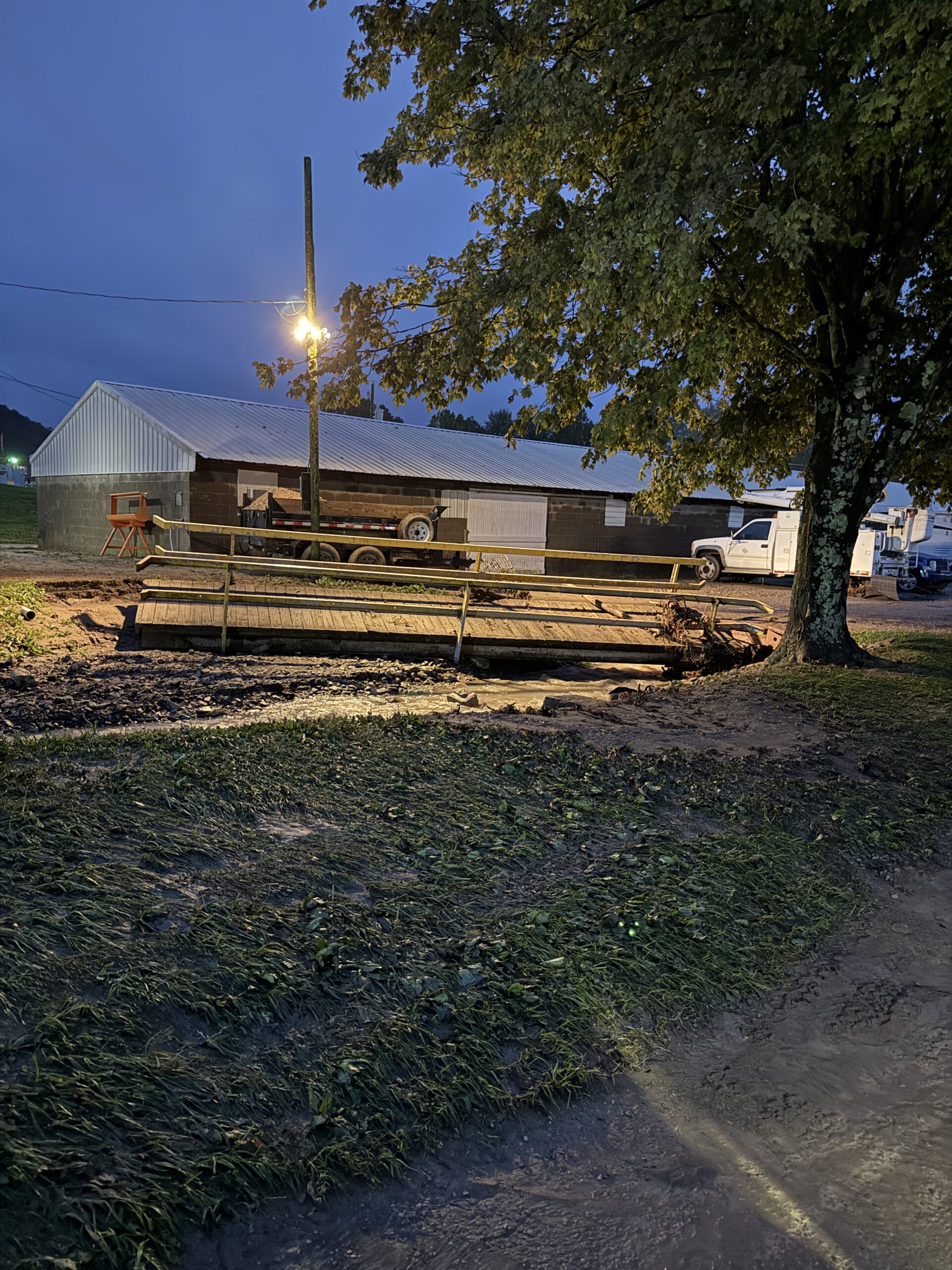
The flooding has also prompted renewed discussion about how to reduce future risk from the creek, including whether to change culverts or relocate buildings that flood frequently. Ruff said the fair board was looking ahead to the Morgan County Fair’s 175th anniversary next year, hoping to return “as good, if not better, than ever.”
“The worst weather year”
Howard Call, executive director of the Ohio Fair Managers Association and Ohio Fairs Hall of Fame inductee, said Ohio had gone at least eight or nine years with generally good weather before this season’s repeated heavy rains. Northeastern Ohio fairs held in July and August mostly fared better, but others were hit hard. Mercer County lost access to its parking lots for four days, and Delaware County had rain during the first five days of its fair.
“I would say overall, this is probably the worst weather year we’ve had for county fairs and independent fairs,” Call said.
For fairs facing financial strain, Call recommended seeking help from their local communities, including advance sponsorships for the following year. He also said fair managers would discuss rain insurance and lessons from the season at their January convention.
Call said event cancellations have to come down to safety, even when they disappoint fairgoers. “You’ve got to make that call to do the right thing for the safety of both the participants as well as the fairgoers,” he said. “It’s safety first and the show second.”
Adapt and overcome
At some fairs, the weather setbacks came without the widespread flooding seen in other places. At the Erie County Fair Aug. 9 to 14 in Sandusky, Ohio, torrential rain and mud made parking difficult, and organizers lost a Tuesday-night rodeo, according to Doug Burmeister, president of the Erie County Agricultural Society. The canceled event cost the fair an estimated $10,000. Rain also affected attendance and vendor sales, though Burmeister said he couldn’t give a reliable estimate of the attendance impact.
The fair is looking at drainage improvements for its arena and parking area before next season. During the downpour, organizers also had to move at least one event indoors. Burmeister described that kind of quick adjustment as part of how the team handled the weather.
“We tend to adapt and overcome,” he said. “We’re a good team that works together and accomplishes what we need to.”
The same attitude carried the day at the Columbiana County Fair in Lisbon, Ohio, held Aug. 3 through 9, where the rain just didn’t stop. The first two days were fine, said fair secretary Michelle Crawford, but the weather turned by Aug. 5, just as grandstand entertainment was getting underway.
“That’s when the rain came, and we had to cancel our grandstand events for Wednesday and Friday and Saturday,” she said. The cancellations included the truck and tractor pull and the rodeo. Downpours saturated the ground around the midway rides, camping area and parking grounds, but no buildings were damaged.
Crawford said the fair focused on what it could control and tried to keep a positive attitude. Attendance was down about 20%, she estimated, though she did not have a figure for the financial impact. Vendors also lost out when grandstand events were canceled.
“Most of the vendors do generate the money from our events at our grandstand. So when we canceled those, it took from their revenue,” she said.
One bright spot was the junior fair.
“Our buyers showed up for the kids, and we had a very successful junior fair sale,” Crawford said. Their auction brought in $2.1 million from more than 600 lots during sales on Aug. 6, 7 and 8.
But she said board members with more than 20 years of experience agreed it was probably the worst weather they had seen at the fair. The experience prompted discussion about planning for “the worst, maybe, in the future, and not for what’s typical.”
Crawford said their success was owed to everyone who came out for the fair anyway.
“I just want to thank the community for the support throughout this terrible fair season we had, and we hope that everyone looks forward to next year like we are,” she said.