




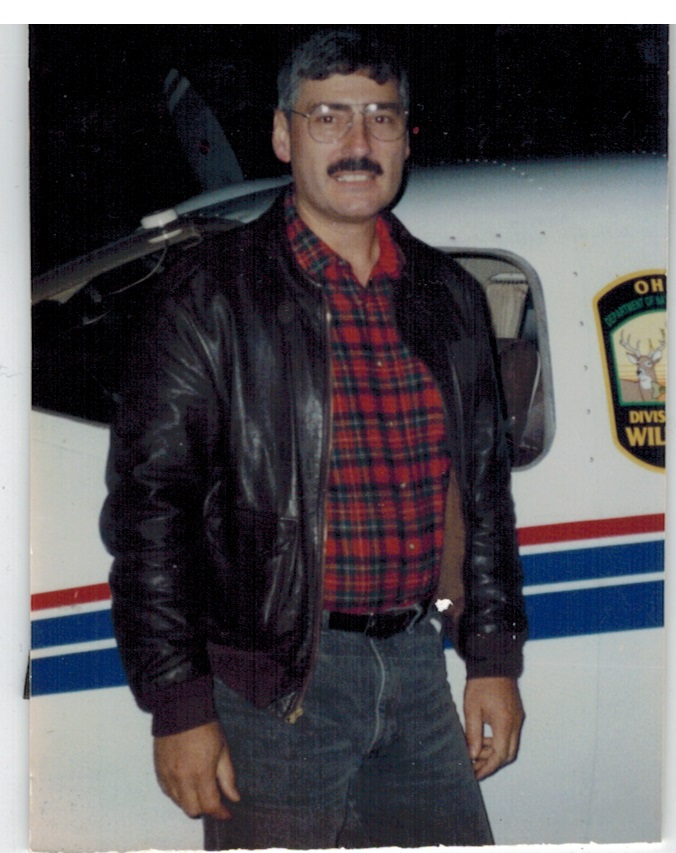
During my career with the Division of Wildlife, I flew with division pilot John Clem on more than a few occasions. He shared some of his better stories with me, giving a historic look at the role of aircraft use in wildlife conservation. Here is John Clem’s, Army aviator/DOW pilot, story:
For me, the job of flying for the Division of Wildlife was truly a dream come true.
I was raised in a family that spent all its spare time outdoors hunting, fishing and camping. I got hooked on flying at age 10, after my uncle took me up in a light aircraft. Combining the outdoor life with my love of flying made for a perfectly fitting career.
I accumulated more than 15,000 hours in the air in both fixed-wing aircraft and helicopters during the 25 years I worked for the Division of Wildlife, and almost every day was an adventure.
The missions included enforcing commercial fishing and illegal wildlife baiting laws, surveying waterfowl and deer, radio-tracking river otters and bald eagles, transporting fish eggs and ospreys and aerial spraying of noxious plants.
The division began using aircraft for law enforcement and wildlife surveys just after World War II. Veterans in the agency who had flown during the war recognized the value of an aerial observation platform for surveying wildlife and locating lawbreakers.
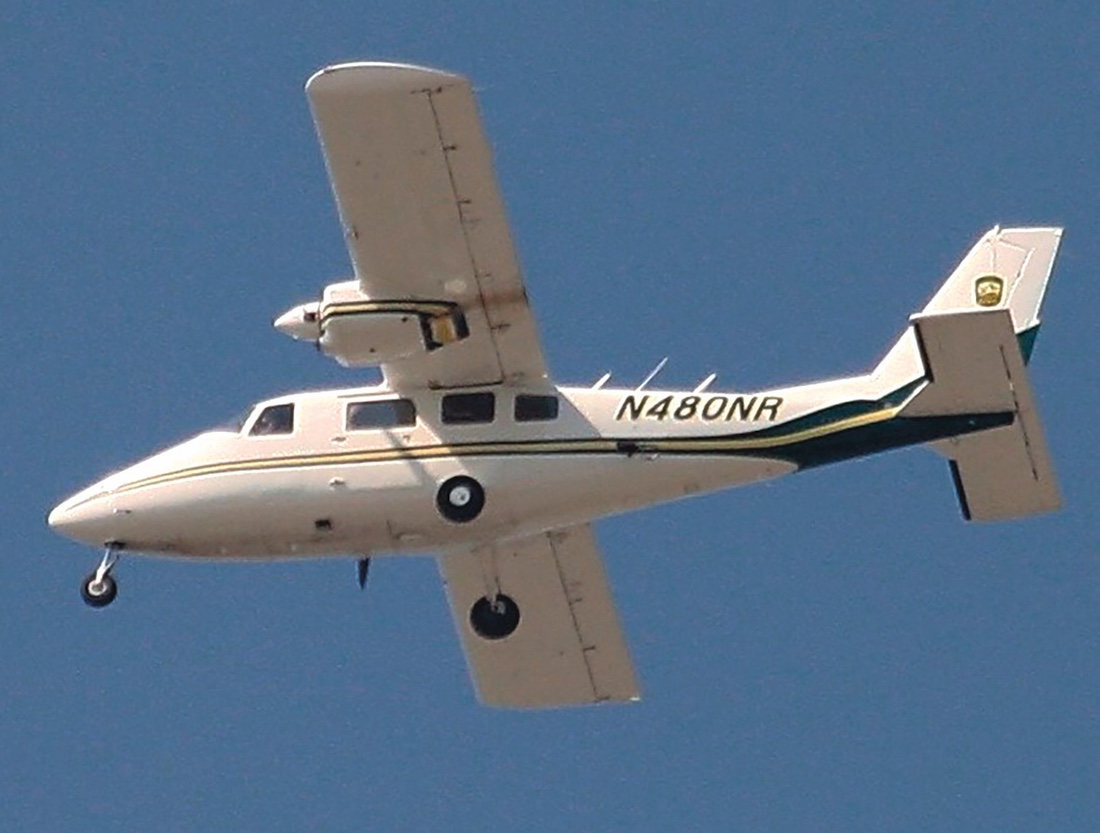
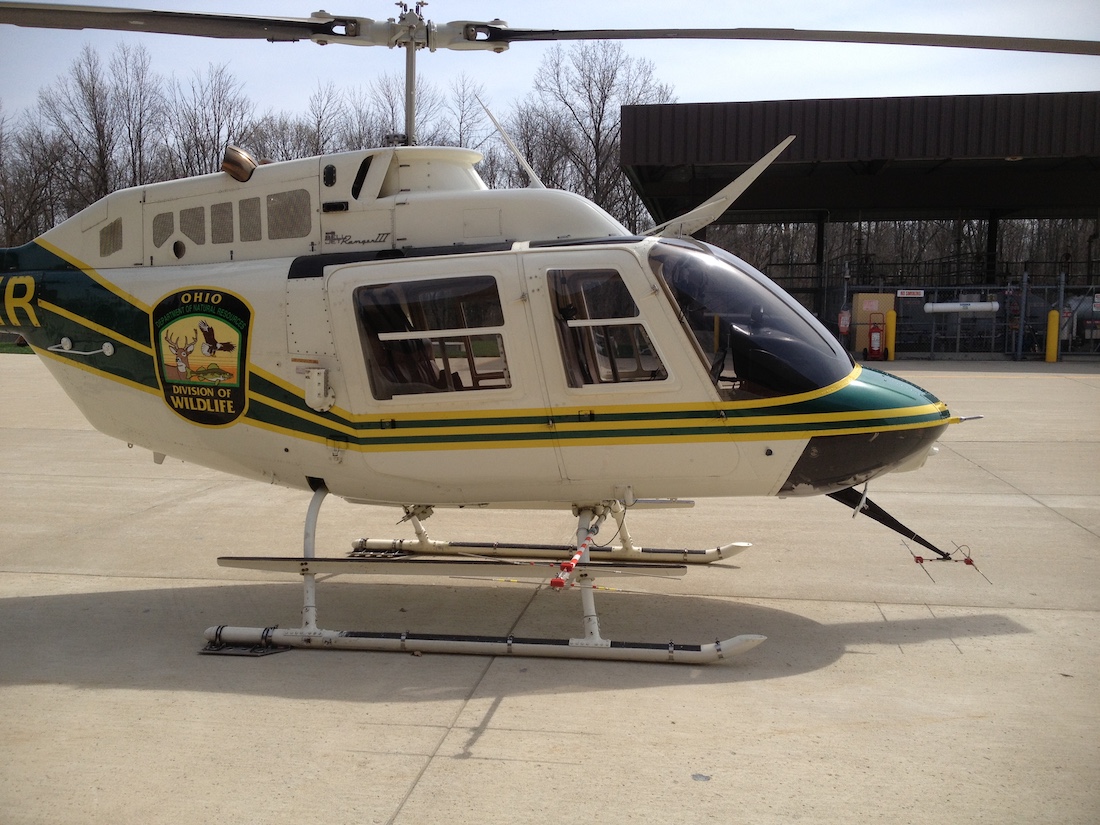
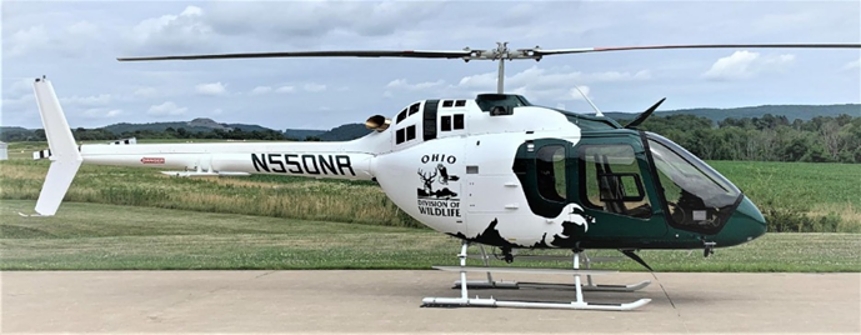
By the early 1950s, the division had its first full-time pilot and airplane. Eventually, its aircraft included a Cessna 207, a twin-engine Partenavia P.68C and a Bell Jet Ranger helicopter.
Catching bad guys
In 1992, the division was part of a task force investigating the apparent serial killings of sportsmen in southeastern Ohio. When Thomas Dillon became the prime suspect, intensive surveillance of his movements began.
The division’s twin-engine aircraft was ideally suited for the mission. With good downward visibility and long-range fuel tanks, I could follow Dillon for an entire day without landing while directing ground vehicles.
On one flight, I set a personal record of nearly 11 hours, orbiting overhead as he drove aimlessly along the backroads of southeastern Ohio. I had a seriously stiff neck after that flight.
Shortly afterward, Dillon was arrested on a firearms violation and, while in custody, confessed to the murders.
Restoration efforts
Aircraft were equally valuable in wildlife restoration. In the late 1980s, the division used them to help reestablish river otters in Ohio. Otters trapped in Louisiana were flown to Ohio, and pilots later carried biologists aloft to radio-track the released animals.
On one trip from Louisiana, I was loading live otters in wire-mesh cages when I inadvertently allowed my right thumb to get within biting distance of a particularly aggressive male. He quickly corrected my inattention with a bone-deep chomp.
I flew the remainder of the mission with a gauzed, taped and throbbing thumb.
Aircraft also helped with Ohio’s bobcat comeback. Radio-collared animals were normally tracked from the ground, but when one disappeared from its normal range, I’d get the call. I always enjoyed those missions. Locating a lost study animal gave me the same satisfying feeling that comes from solving an intricate puzzle.
One tracking project took me from Michigan’s Upper Peninsula to northern Florida. Sandhill cranes fitted with solar-powered transmitters were followed during their 1,300-mile migration south. Their navigational ability was incredible. When we plotted their route on an aeronautical chart, the line was nearly as straight as if they were using GPS.
Ospreys were another restoration success. Aircraft transported chicks from several eastern states to artificial nest sites in Ohio. Later, we used the helicopter to survey nests for eggs and chicks.
That involved a pilot and two observers. While one observer looked into the nest, the pilot and second observer watched for the aggressive — and VERY protective — parents. On more than a few occasions, I had to rapidly leave when one or both decided the helicopter had overstayed its welcome.
Aircraft also transported millions of fish eggs and fry to Ohio hatcheries, usually in sealed five-gallon bags of oxygenated water. I learned the hard way those bags did not tolerate high altitude very well.
While flying hybrid striped bass from Virginia to Ohio, I climbed above 12,000 feet to avoid severe turbulence over the Appalachians. As we climbed, expanding oxygen caused several bags to burst, spilling water and fish fry throughout the innards of the airplane.
Arctic adventure
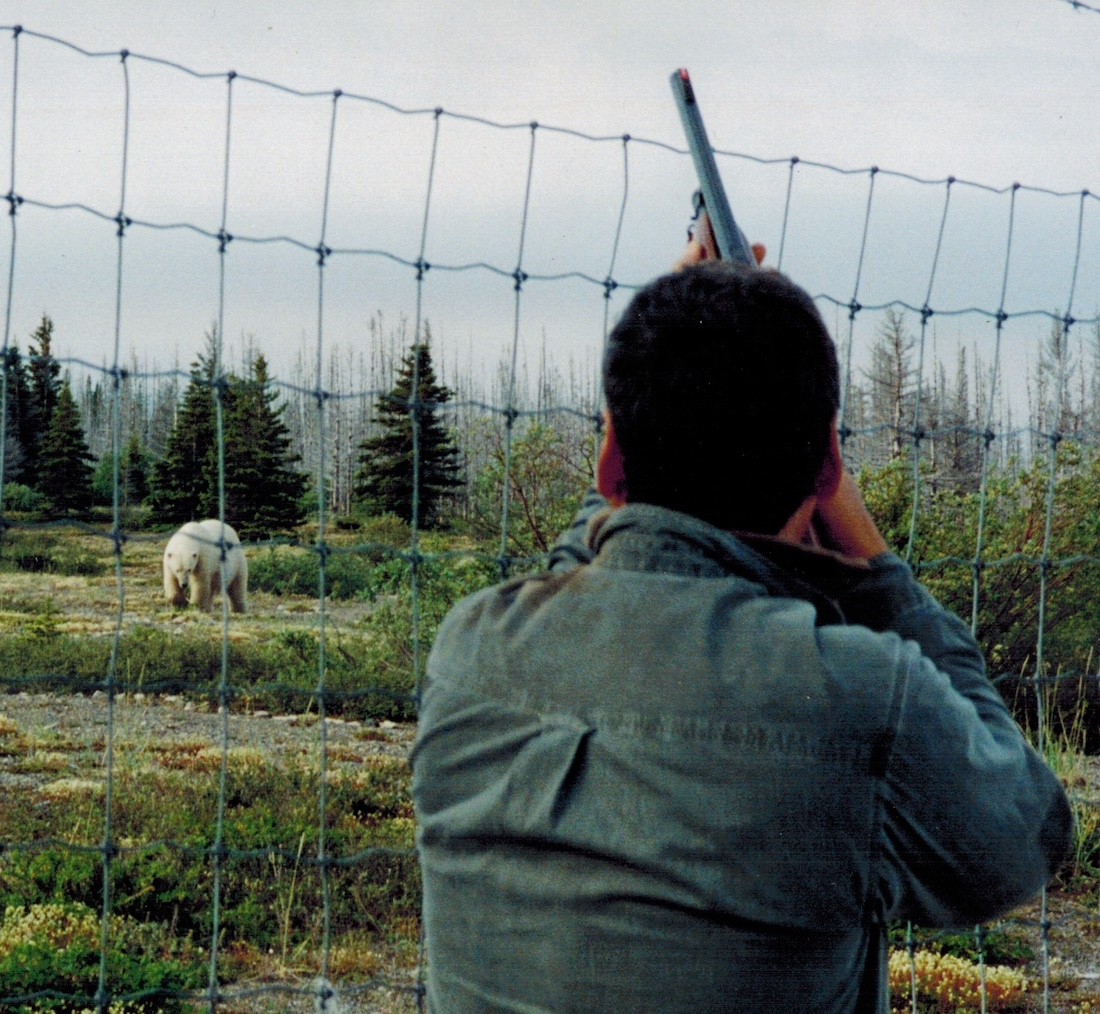
Perhaps my most memorable encounter occurred about 1,000 miles north of Ohio on Akimiski Island in James Bay, Canada, where Ohio’s helicopter assisted with a Canada goose study.
When I first participated, researchers simply pitched tents in the open. As polar bears became more numerous on the island, an 8-foot-high fortified fence was built around camp and the helicopter landing area.
Unfortunately, our one-hole wooden privy remained about 100 yards outside the fence.
Early one morning, I was answering nature’s call when the biggest polar bear I had ever seen came trotting out of the woods downwind of the privy, sniffing the air. After a good whiff, he began running directly toward me.
In about three-quarters of a second, I pulled up my pants and jacked a 12-gauge slug into my ever-present Ithaca Model 37. We had been instructed not to run from bears, but at that particular moment I decided I could beat him back to the compound.
While running the best 100-yard dash of my life, holding up my pants with one hand and a shotgun in the other, I peeked over my shoulder to see if Mr. Bear was gaining.
Well, that was a mistake. I tripped over a tundra bush and went ass over teakettle.
My GI training kicked in, and I rolled into a defensive firing position, ready to shoot a charging 1,500-pound polar bear. Fortunately for me — and the bear — he wasn’t interested in live meat. He wanted the aromatic contents beneath the privy.
As I did the Michael Jackson moonwalk the last 20 yards into the compound, I watched him knock the wooden structure aside like a toy and begin digging.
Law enforcement tool
Not every mission was quite that exciting. Aircraft were important law enforcement tools. Over Lake Erie, they helped deter illegal commercial fishing for walleye and yellow perch. On land, night flights helped locate deer poachers so ground officers could intercept them.
The helicopter also sprayed invasive plants such as purple loosestrife, phragmites, autumn olive and multiflora rose, and was used to reseed and fertilize sensitive soils. Other projects included aerial mapping, search and rescue, firefighting support and forest-health surveys.
By the time I hung up my wings for good, just after turning 72, I had been flying since age 18 and professionally for nearly 50 years. I accumulated well over 22,000 flight hours doing everything from executive transportation to attack-helicopter operations with the U.S. Army and Ohio National Guard and, finally, natural-resource flying.
But my job with the Ohio Division of Wildlife really didn’t feel like work. It was a career filled with variety, challenges, adventure and personal fulfillment. Much of that fulfillment came from working alongside wildlife biologists, law enforcement officers and other dedicated professionals who loved their work as much as I did.




