

So far, reader, we have covered most of the steps involved in flax processing, including retting, braking, scutching and several more. But there was still one last major job to be done before the flax could be spun into fine linen thread, and that job was hatcheling … or hackeling … or hetcheling. There seems to be no rhyme or reason for the various pronunciations.
The final step in flax processing was to drag the strands of flax which had been scutched free of their woody bark through a series of iron combs called (and we’ll stick with this for the balance of the column) hatchels.
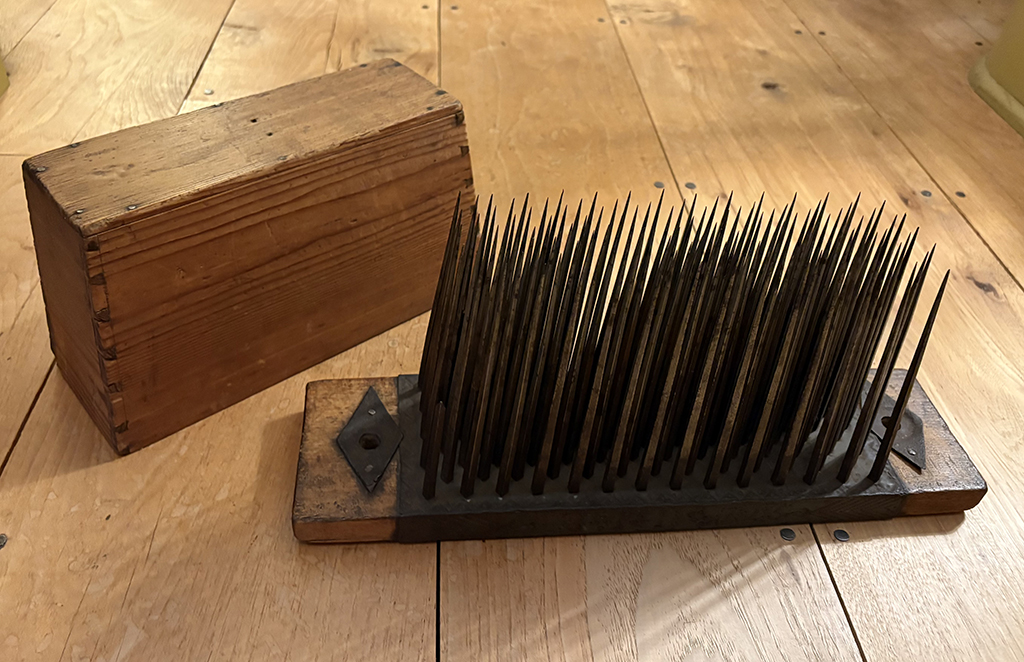
In their most basic form, hatchels were boards with wrought iron nails driven through them at various intervals. For coarser work, the nails were farther apart. As the drawing of the linen through them became finer, hatchels having teeth closer together were used. For the final step, fine hatchels with teeth set very close together were required.
Hatchelsmiths
Who made hatchels? Hatchelsmiths, of course. Hatchelsmiths were adjunct workers with blacksmiths. They were specialists who both made and repaired hatchels, setting and maintaining the sometimes hundreds of spikes.
Hatchelsmiths had the extremely tedious task of hammering out in an exacting manner square iron spikes which were about one-sixteenth-inch square at the bottom, tapering to an extremely sharp point on the opposite end. For any given hatchel, all the spikes had to be precisely the same length. It was a job that required great concentration, talent and skill.
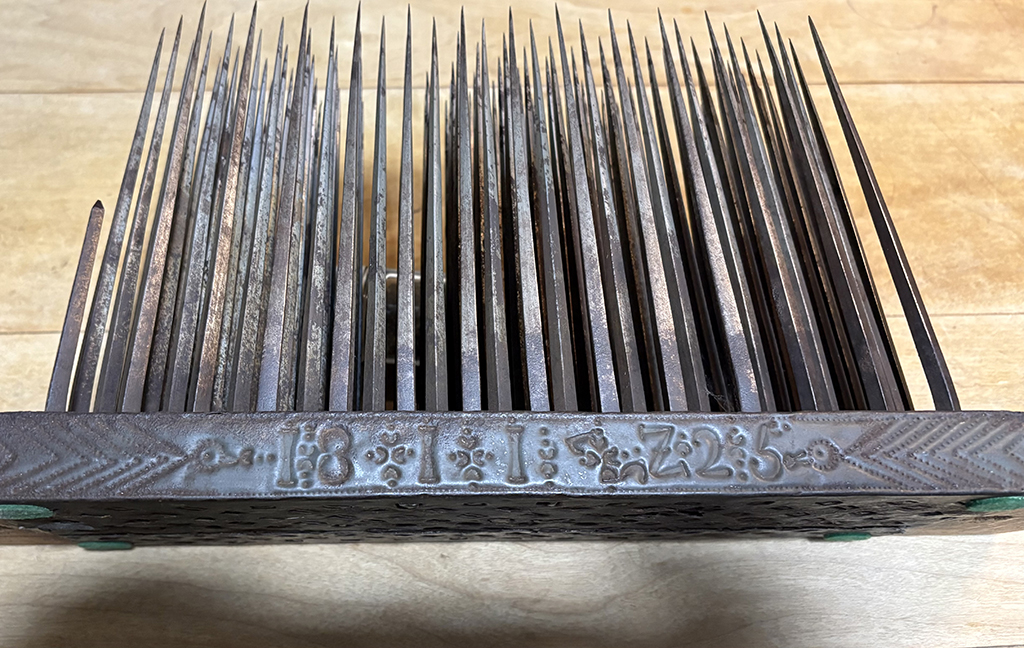
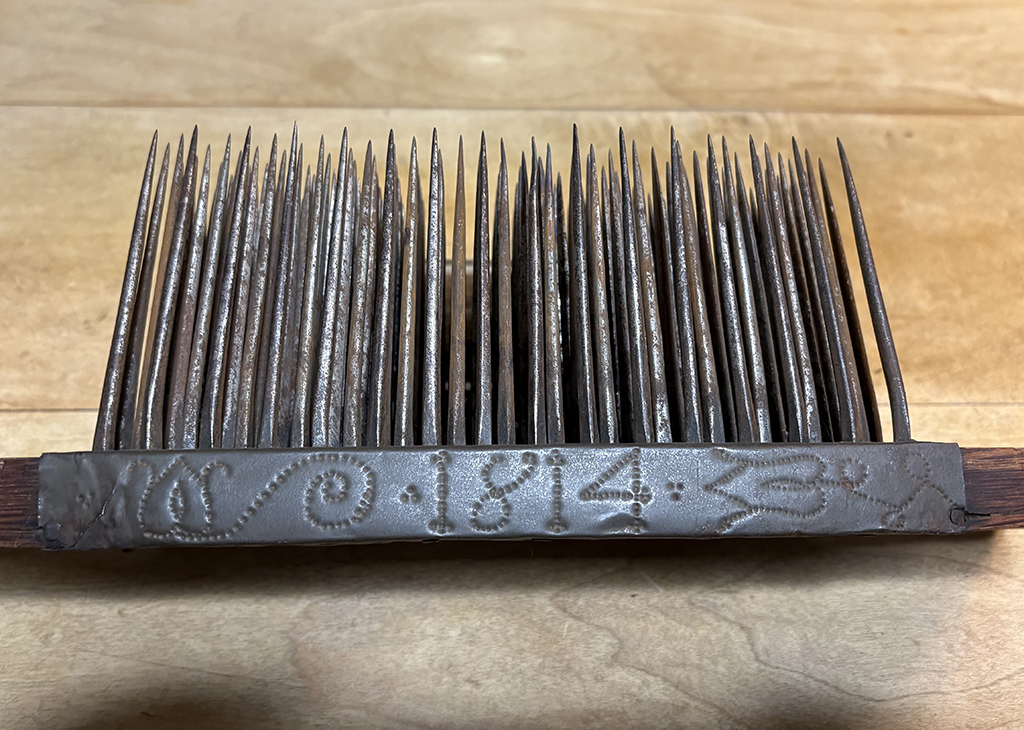
When all the spikes for a hatchel had been wrought, the next step was to pound them through a board, usually made of oak, tulip poplar or maple. In most cases, the board was almost completely wrapped with a piece of thin sheet iron to prevent it from splitting. The spikes were then driven through the metal and wood so that of all of them were exactly the same length.
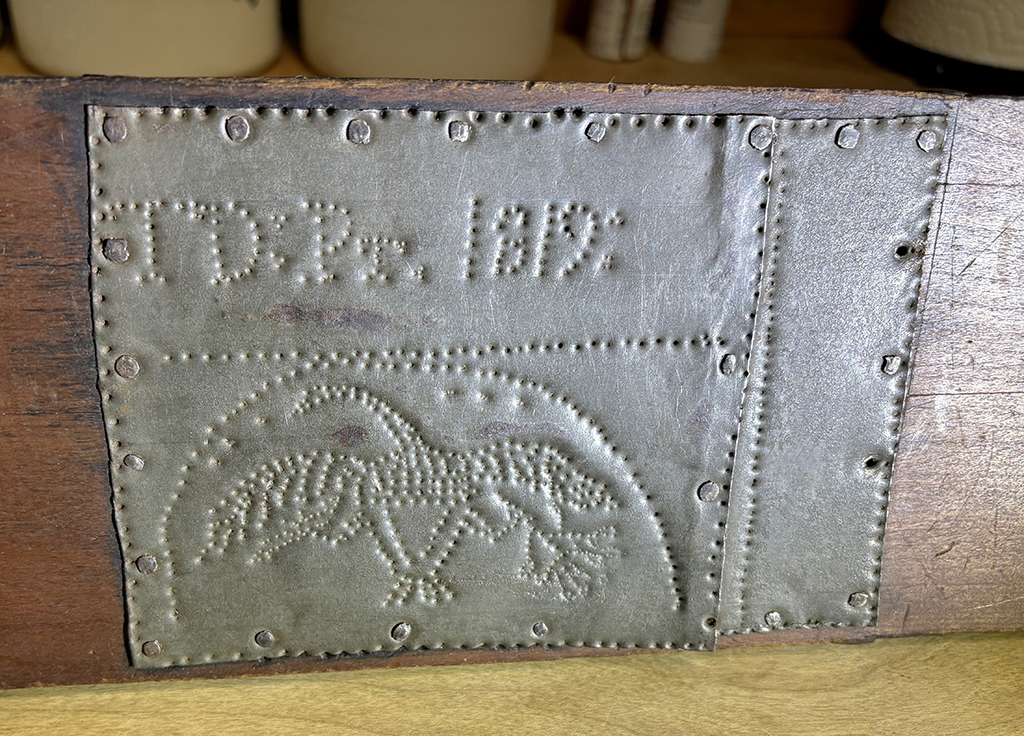
Close to each end of the board were small holes. This enabled the hatchel to be mounted on pins on a workbench to give the tool stability as the linen was pulled through it. These holes were reinforced with small wrought iron plates in a wide variety of shapes to help keep the wood from splintering during heavy use.
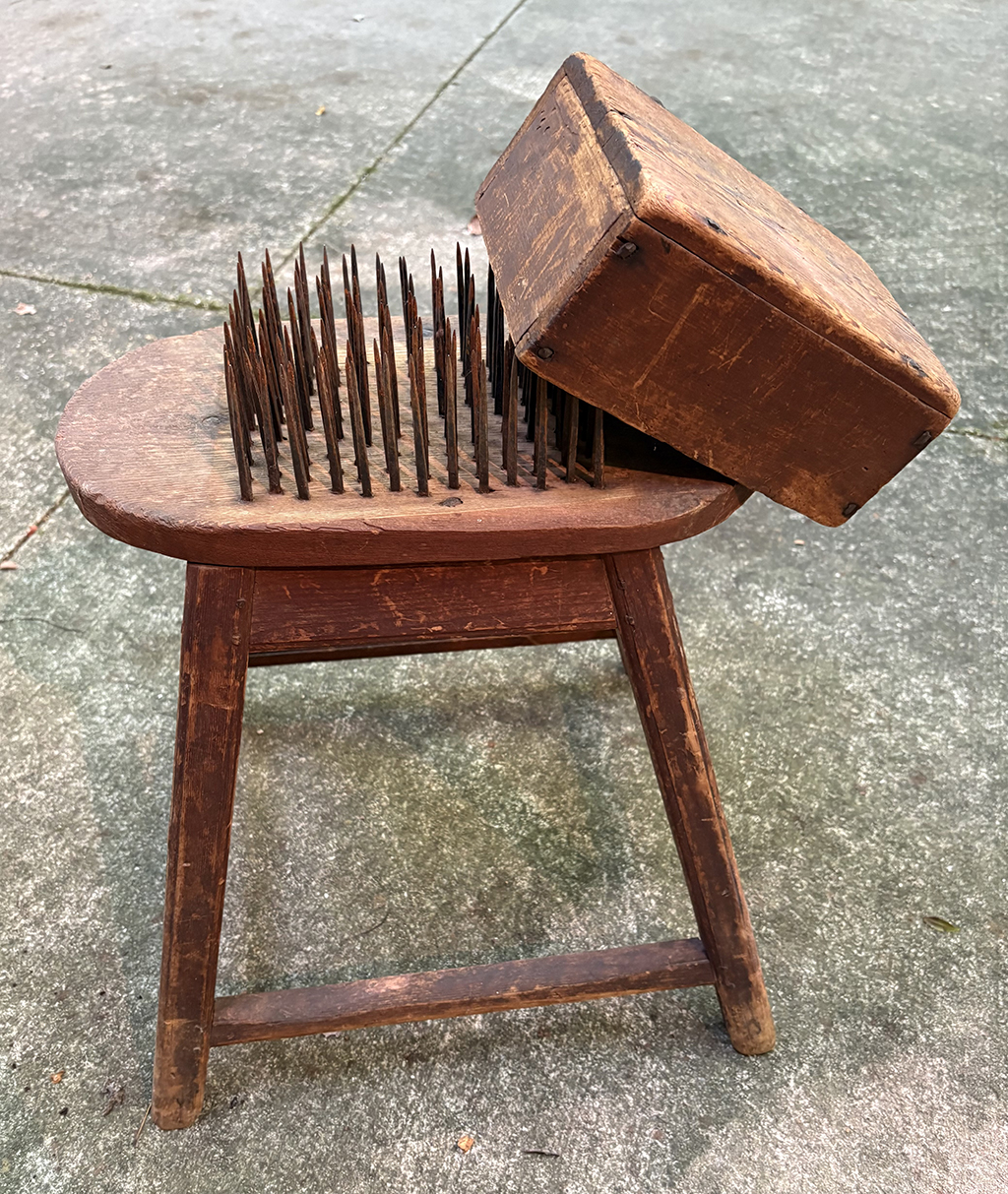
Once all the nails were driven through the board, ending up in a rectangular configuration, a wooden box was created to fit over the arrangement. The box protected the points of the spikes when not in use. Oftentimes, to provide additional protection, a thick pad of flax was inserted against the inside top of the box. In other instances, a rectangular pad of homespun fabric took the place of the flax pad.
As a final step, the hatchelsmith sometimes used his artistic talents to elaborately decorate the sheet iron wrapping of the hatchels with punchwork, turning them into works that have now come to be regarded as folk art. Because hatchels were a popular wedding gift across the Ohio country (hey, every household needed one in the early 19th century), these artistic motifs included hearts, tulips, vining foliage, bunches of grapes, patriotic themes, birds, the initials or names of the couple being united, and dates (usually just the year) of the wedding, name of a town, and sometimes the number of hatchels made by the smith up to that time. The boxes that covered the hatchel points were occasionally decorated with paint, and the ends of the hatchel boards were often finished off with chip carving.
In addition to the regular portable hatchels, some were made in the form of tables, or were permanently mounted on various kinds of benches which allowed the hatchel user to work sitting down – a real luxury for any chore of that time period.
Hatchels generally date from the early 1700s to the 1840s, when their technology became obsolete with the growing popularity of machine-made cloth. Today there are still many hatchels available on the antiques market, but most them are in rough shape, having broken or missing spikes and with the metal being rusted. The most desirable ones retain their original protective boxes, have some type of decoration and with metalwork that remains shiny and in good shape.