





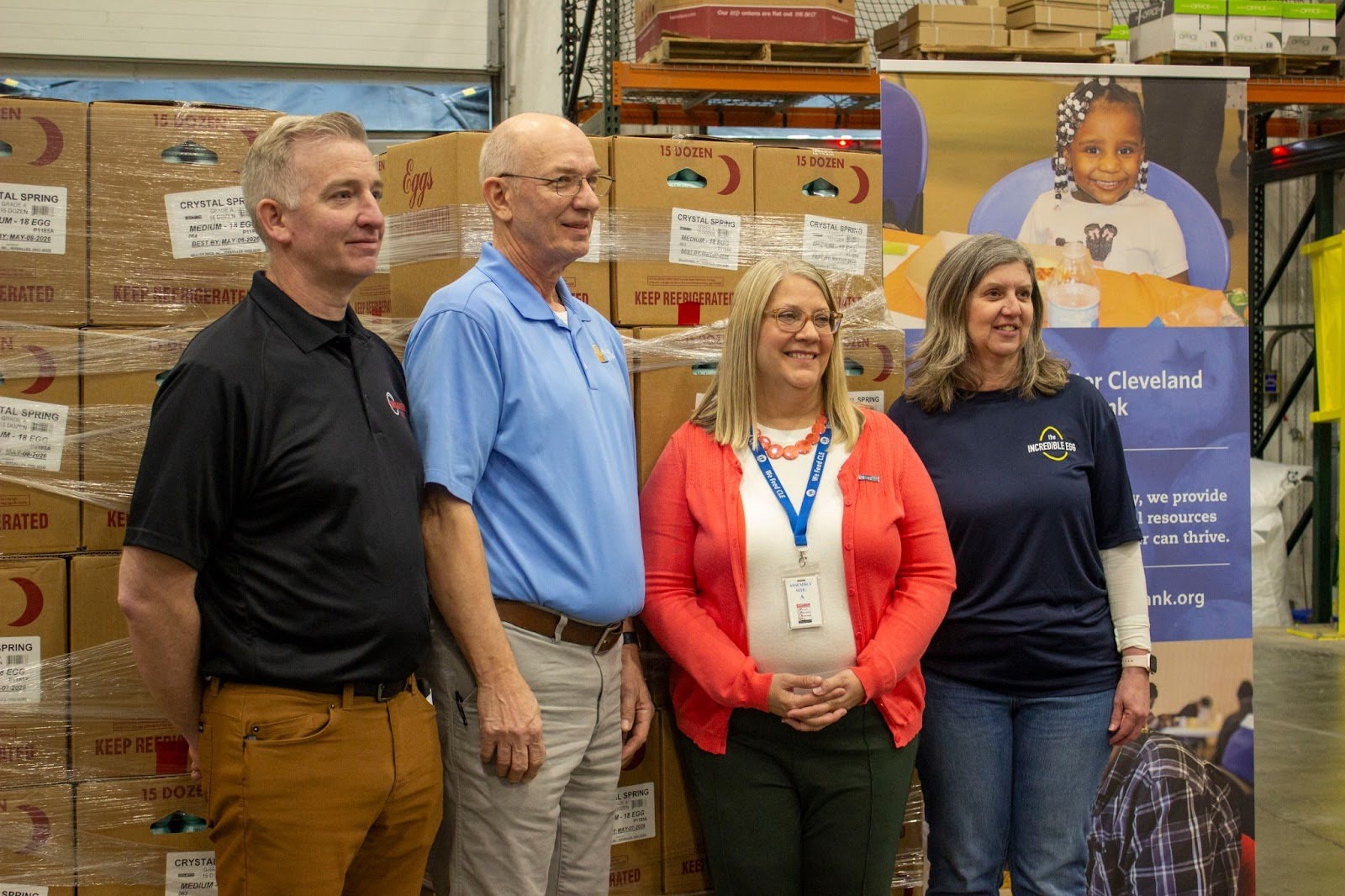
CLEVELAND— Ohio farmers and leaders of the Greater Cleveland Food Bank gathered on a bustling loading dock March 26 to highlight a major donation of eggs made in spite of both nationwide and global pressures roiling the industry.
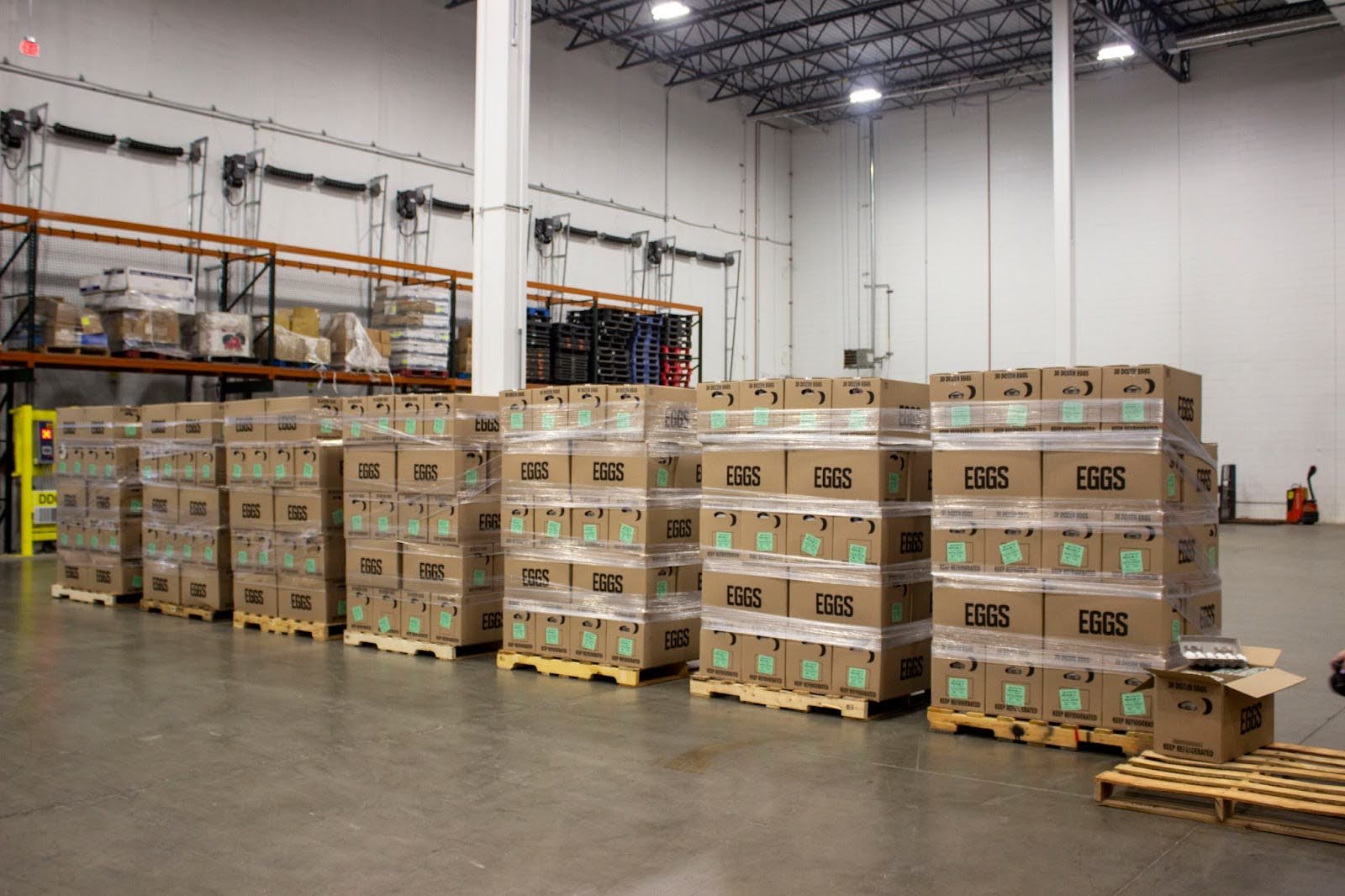
The eggs were donated as part of the Great American Egg Drive, a campaign led by the American Egg Board. As a parade of forklifts and warehouse trucks beeped and buzzed past, crews unloaded crate after crate from an 18-wheeler carrying about 218,000 eggs — that’s about 18,000 dozen — half of which came from Weaver Eggs, a family-owned farm in Versailles, Ohio. The pallets of cartons will sail through the food bank’s six-county network where, according to officials, demand for nutritious protein is rising, even while the farmers supplying those eggs continue to grapple with disease outbreaks and surging production costs.
Many in need
The donation from Weaver and Cooper Farms, said Karen Pozna, director of communications and events for the Greater Cleveland Food Bank, comes at a crucial time for families struggling with food insecurity.
“Today’s donation is really a perfect example of the community coming together and our mission in action. We are providing much-needed protein for our neighbors,” she said.
The food bank reaches hundreds of thousands of people each year. Officials said the eggs will be distributed quickly, especially given the approach of Easter and Passover.
“Last year, we served more than 404,000 neighbors right here in northeast Ohio,” Pozna said. “And what’s even more concerning is, of those neighbors that we served, nearly a quarter of them came to either the food bank or one of our partners for the first time ever. Just think about that. It just speaks to the increased need that we see here.”
Representatives from Weaver Eggs said they were proud to be part of the donation.
“Through this effort, egg farmers across the country are coming together to generate eggs to food banks, helping to feed families and enjoy a wholesome, nutritious source of protein during a time of year when the eggs are going to build such an important part of traditions and celebrations,” Matt Warner, of Weaver, said.
He pointed to a broader national push to get eggs to families in need.
“We know there are families in every community who face challenges putting food on the table,” Warner said. He cited a 2023 U.S. Department of Agriculture report that found 47 million Americans, including nearly 14 million children, live in food-insecure households. “As a member of our local communities, we are honored to be part of the effort that helps make fresh, nutritious protein more accessible.”
“It all impacts us.”
And what an effort it was. The show of generosity belies the strain producers have found themselves under as they continue to weather disease outbreaks, volatile markets and higher operating costs.
In recent years, consumers have been whipsawed by headlines about egg shortages and surpluses and price spikes tied to avian influenza amid other post-pandemic disruptions. Bob Gornichec, Weaver Eggs’ national sales manager, told Farm and Dairy the highly pathogenic avian influenza (HPAI) outbreaks have taken a serious toll on flocks nationwide.
“Since 2022 there’s probably been 150 million land hens that have been lost during that period of time,” he said.
Federal data shows the losses continue to mount: according to the latest figures from the Animal and Plant Health Inspection Service, HPAI in commercial table-egg layer flocks has resulted so far this year in the depopulation of 15.2 million birds in 23 confirmed outbreaks across five states, including Colorado, Indiana, North Carolina, Pennsylvania and Wisconsin.
Despite those losses, Gornichec added, production has largely bounced back.
“The egg business overall has recovered for the most part, and egg prices are far more reasonable right now due to normal supply.”
Though some major input costs have leveled off, he said, others continue to climb. No divination attempts are likely to bring the future into much sharper focus for the time being, as the United States’ war on Iran adds more uncertainty.
“Costs have been pretty stable the last few years. However, the cost of packaging, labor and all the other costs involved have risen significantly, and fuel,” he said. “It all impacts us.”
At the same time, farmers are trying to keep eggs accessible for consumers and food banks alike. Gornichec described eggs as “very affordable protein,” stressing their nutritional prowess despite the pressures on producers to come by them: “the yolk especially, has all the ingredients for life. It feeds an embryo. So everything in the yoke is necessary for life.”
Fresh food
Ohio is the second-largest egg‑producing state in the country, turning out about 10 billion eggs each year to feed Ohioans and consumers across the country, according to the Ohio Poultry Association, which represents Ohio’s egg, chicken and turkey farmers. The bonanza received by the food bank will tap into that abundance and go a long way toward meeting local demand.
Food bank leaders said that while they can often source canned goods and other shelf‑stable items, getting enough fresh protein remains an ongoing challenge, making egg donations like this one especially significant.
“It can be a challenge sometimes for us to source protein. Products like meat, chicken, those are a little bit harder to source fresh,” Pozna said. Shelf‑stable protein is relatively easy to keep on hand; the food bank routinely stocks canned items like tuna and chicken for partner agencies and clients. But ordering fresh items such as turkeys for the fall has to happen months in advance to lock in both supply and price, and even that kind of long‑range planning doesn’t guarantee availability. As a result, she said, the food bank often leans more heavily on canned protein because it’s more reliable than alternatives.
Leaders at the food bank described the size of the egg donation as unusual in their experience. Referring to the truckload provided by the donors, Rod McGuire, vice president of food resources, noted to Farm and Dairy that “what ultimately is a full tractor-trailer load between these two donors is pretty unique for us. That’s usually not how many we’re getting donated.” The food bank, he said, receives some egg donations from retail partners and benefits from a strong partnership with the OPA.
“But in this large amount,” Pozna said, “I’ve been here for a long time… I honestly can’t remember (something like this). So it is pretty unique.”
For food bank staff and partner agencies, they said, thousands of families across northeast Ohio will now have access to a fresh, versatile protein during one of the busiest seasons of the year.




