


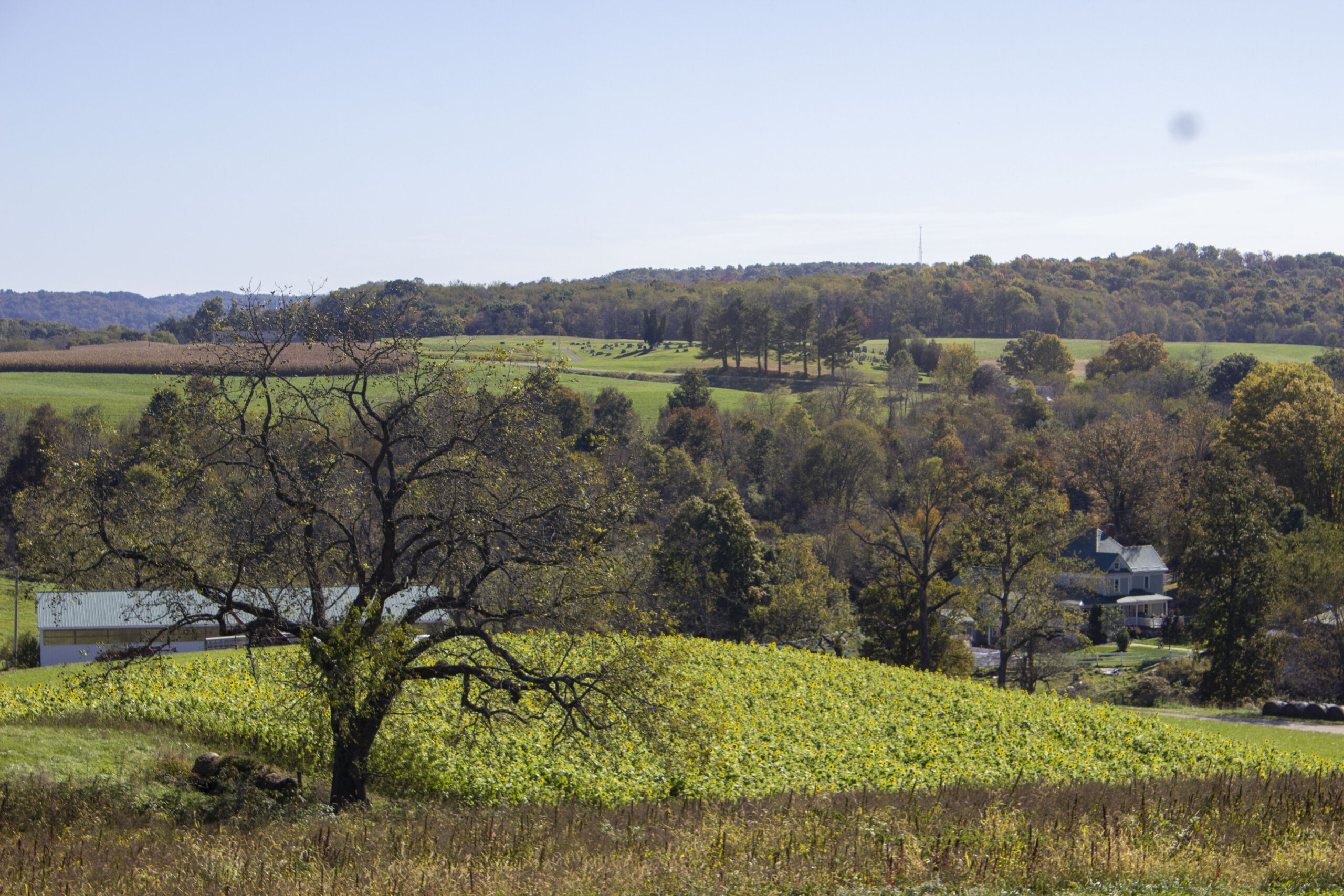
BOWERSTON, Ohio — For 200 years, life on the Fierbaugh farm has followed the seasons: tending livestock, working the fields and adapting when weather or market prices went sideways.
Mike and Karen Fierbaugh have spent their lives working the land and raising their family there. Mike, 72, taught school and coached basketball while farming in the evenings and summers.
“Farming success is measured by keeping at it when everybody else quits,” he said.
The couple still lives in the house where it all began, built in 1906 and remodeled in 2013. Inside, family photographs hang alongside paintings of locales on the property, turning the home into a gallery of the land and the generations who have cared for it.
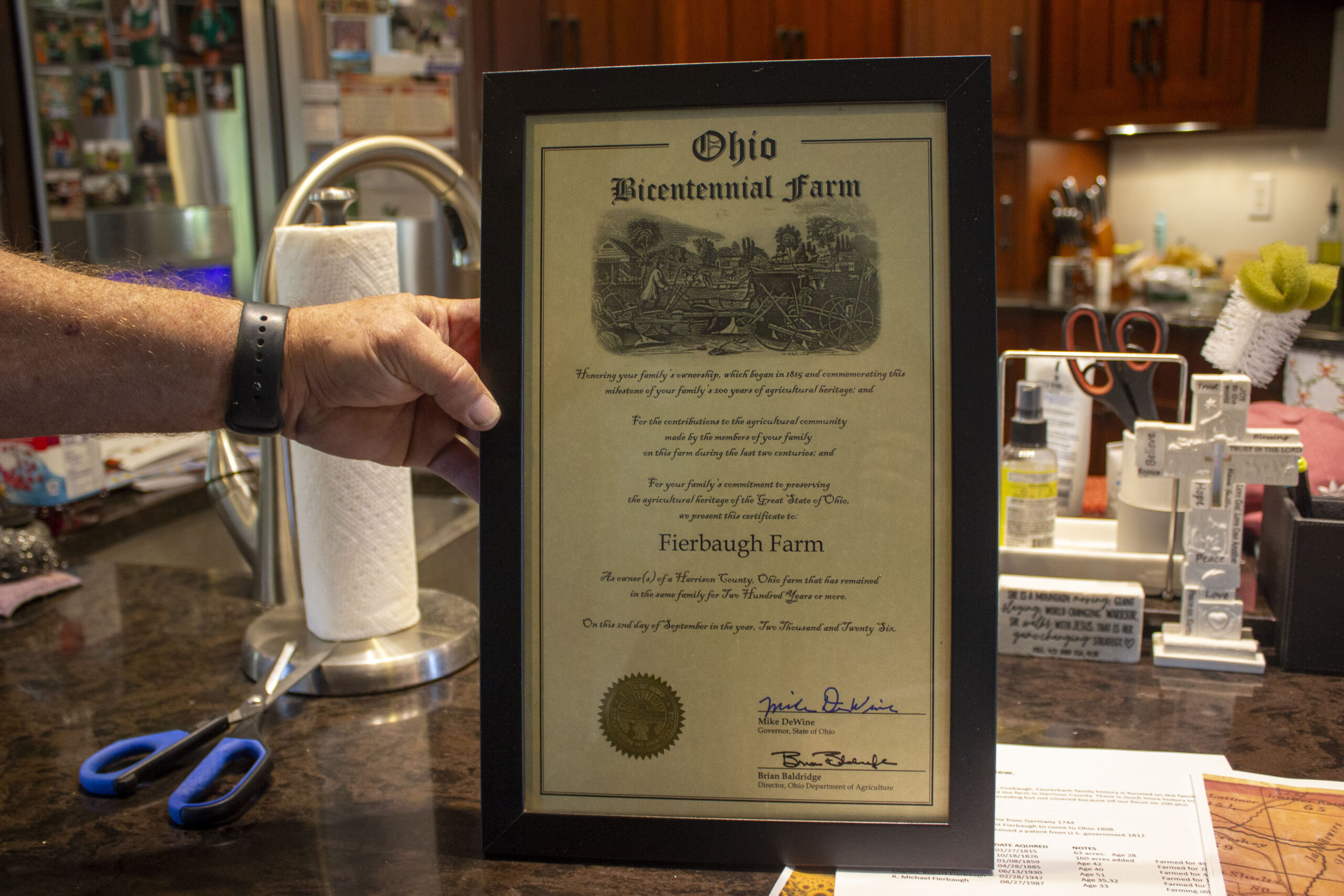
And for all that time the farm was minded by the same family, the state of Ohio has finally taken notice. In a Sept. 17 letter on behalf of Gov. Mike DeWine, the Fierbaughs were commended for preserving their family’s heritage and contributing to Ohio’s agricultural legacy by maintaining their farm for as long as they have. The letter noted that only 2,300 of the state’s 75,000 farms are recognized as bicentennial, sesquicentennial or century farms by the Ohio Department of Agriculture’s Historic Family Farms program. It called the achievement “an impressive feat,” praising the Fierbaughs for continuing their farming traditions and for their successes.
The story so far
Family records trace the Fierbaughs’ roots first to Heinrich Feuerbach, who came to America from Germany in 1744, and then to Phillip Sr., the first Fierbaugh to arrive in Ohio, in 1808. Phillip Jr. received a federal land patent in 1812. In Harrison County, David Fierbaugh — Phillip’s brother — acquired 63 acres in 1815 and added 160 acres in 1826, where the homestead remains today.
The farm passed through generations, with brothers Charles and Robert Fierbaugh taking it on together in 1947. In 1987, Robert’s son Mike acquired the farm, continuing the family operation.
Mike and Karen had already been helping on the farm for years. When Mike’s uncle Charles suffered a stroke, they stepped in to help milk the cows. Charles died in 1981, and the dairy was sold that fall. Mike, his father Robert and other family members continued farming, shifting from dairy to beef cattle, hogs and crops. As prices declined, they sold the hogs and focused on building their beef herd.
The family’s work on the land took other forms, too. Karen raised collies, and the family kept quarter horses. In the mid-1990s, Mike and Karen began breeding Belgian draft horses, raising and selling the foals and offering carriage rides at weddings. They even drove a carriage in the Pro Football Hall of Fame parade, carrying Canton’s mayor and family.
In 2005, sons Jeremiah and Luke and their wives, Mary Sue and Tabitha, wanted to try milking Jersey cows. The family sold its beef cattle and started dairying again, continuing until 2012. Today, Jeremiah operates the home farm, raising sheep and growing certified organic crops. Luke runs a neighboring cow-calf beef operation where Phillip, Jr. had once set down roots. Now retired, Mike still pitches in with repairs and other jobs but is content to leave the back-breaking work to his sons.
The property holds reminders of its past, from a hand-hewn barn dating to about 1835 to a springhouse believed to have been built around 1850. Meanwhile, Mike and Karen have continued to research courthouse records to trace the farm’s land purchases and family connections. Over the years, plenty has changed. Sunflower fields are a newer attraction, drawing visitors who come to stroll among the blooms and take photos.
“With farming, it really has to be done on faith, because the weather is the intangible. So you plant in faith and pray for a good crop,” Karen said.
The family marked the farm’s bicentennial with a community celebration on Oct. 17. The event included canvas painting, a class where participants decorated hats by burning designs into them with heated tools, and an Outlaw Worship service. Visitors also saw a beekeeping demonstration by Bosler’s Honey Bees, strolled through the sunflower field and explored displays and stories about the farm’s history.
Memories
The farm’s succession has been a gradual handoff, rather than a clean break between generations. Mike remembers working alongside his father and seeing the effort earlier generations put into making the farm productive.
“My dad worked much harder than I did,” he said. “He never worked anywhere else (than) on a farm; he made a living right here, and was a much better farmer than me.”
He remembers a summer when he was painting and repairing the house while his father and Jeremiah took apart a tractor and put it back together: the older Allis-Chalmers kind, of which Jeremiah still has a soft spot for.
“Dad, he just wanted to be here,” Mike said. “I really love the years I got to work with him.”
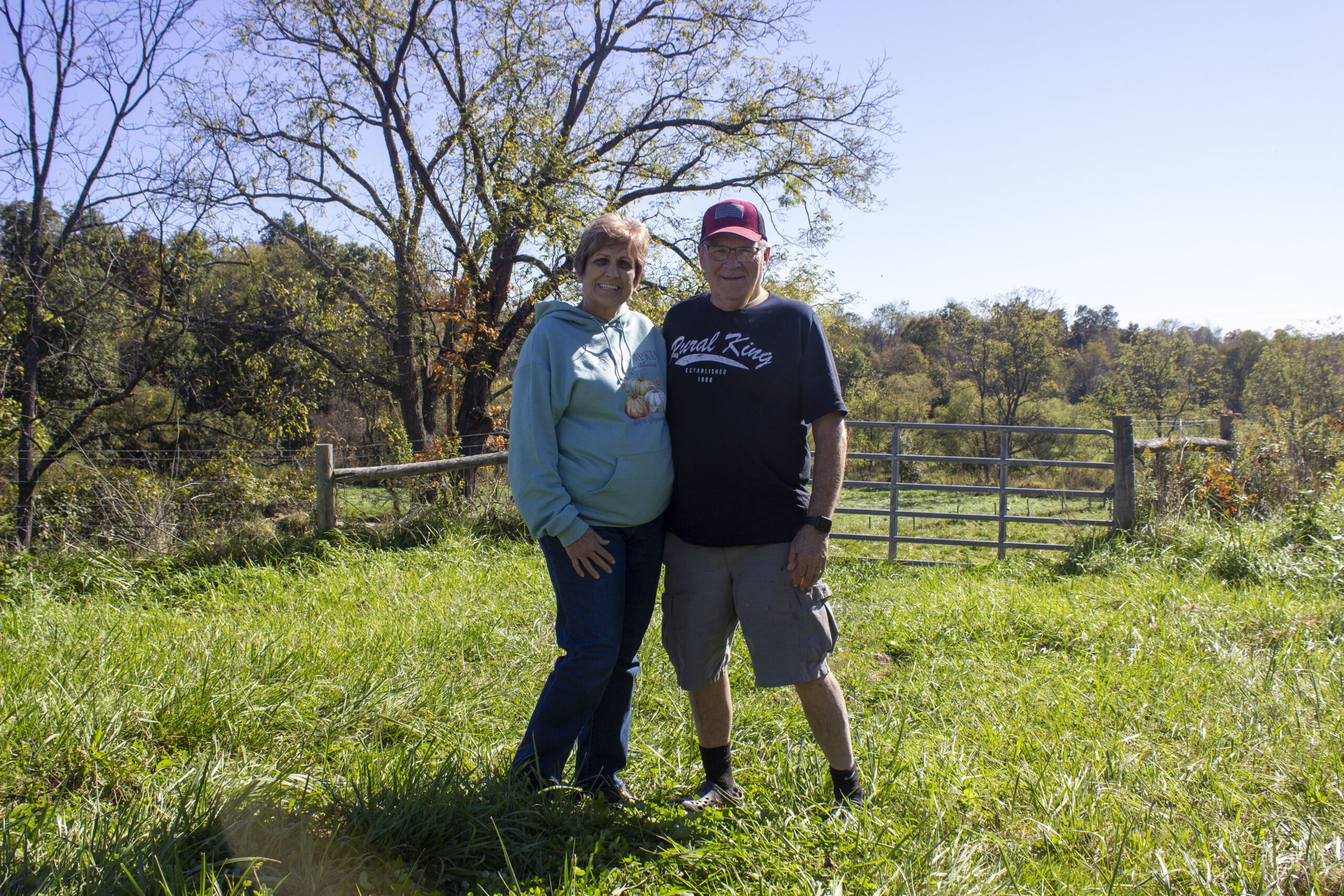
For Mike, such memories connect the family’s current work to the generations who farmed before him.
Mike’s farming life ran alongside his teaching career. He farmed in the summers and evenings, adjusting the operation around his school schedule. He and Karen tried different kinds of livestock and other ventures as they worked to make the farm fit their family’s circumstances.
“We’ve tried this and that to help. Different seasons, different things are good,” Mike said.
Some of the farm’s income also supported family experiences.
“Cows were my savings account,” Mike said. “If I wanted to do something special, I’d sell a cow.”
“We went to Hawaii. It was a 10 cow trip,” Karen added.
But weather could upend even the best-laid plans. Karen recalled tornadoes that tore off a roof and brought down five trees along the road. Mike had been helping a neighbor and had just made it into the house when the trees began falling.
Asked what advice he would pass along to the next generation, he emphasized being versatile.
“Got to be flexible. Times change. If you don’t change with them, you get stuck.”
“You need to be Gumby,” said Karen.
The farm’s buildings hold other stories of how families adapted to the land. The hand-hewn barn, estimated to date to 1835, once housed the family’s dairy operation. Mike and Karen used to milk as many as 30 cows there. Mike pointed out the marks left by the tools used to shape the barn’s logs.
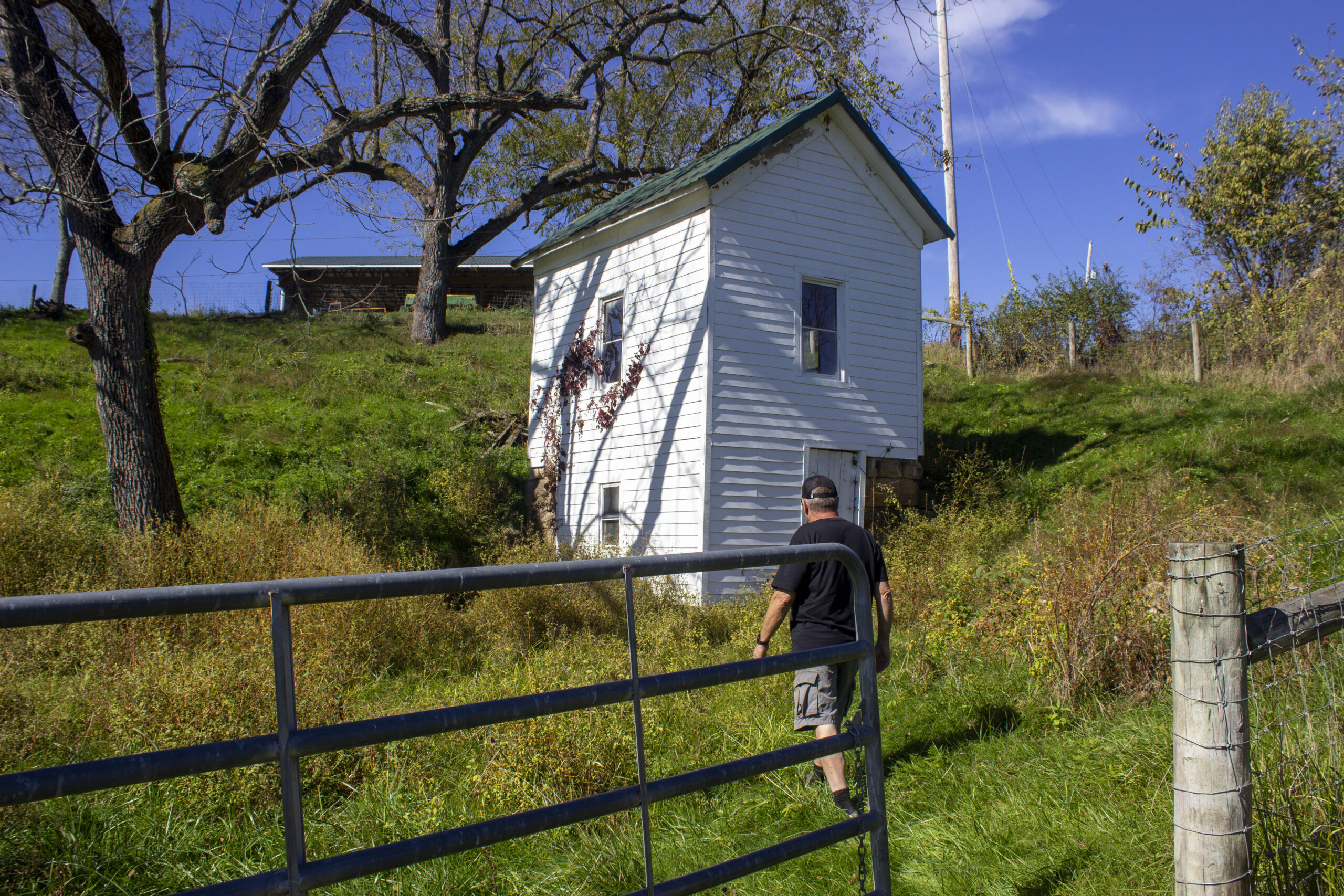
The old stone springhouse, believed to date to about 1850, sits in a picturesque spot on the farm and has caught the eye of visiting artists, who have painted it from different angles. Mike said the family built it after typhoid fever was linked to drinking water from the hand-dug well. Fed by a spring in the hillside, it stays cool year-round. Before the farm had a bulk milk tank — that’s a refrigerated tank that stores milk until pickup — the family kept their milk cans cool in the springhouse. Mike remembers carrying the cans there for the milk truck. His father later added a pump so the family could continue using the spring water, and stored apples there through the winter.
A cabin on the property has become a gathering place and a retreat. About 10 years ago, a Cleveland priest offered it to Mike after a pipeline project threatened to clear the site where it stood, about two miles away. Mike took it apart and cut it into sections small enough to move, including cutting it in two so a trailer could fit beneath it. The family hauled the pieces to the farm and spent a day getting the cabin lined up before putting it back together. Mike is still working on it, but the cabin is a special retreat. It sits high on a hill overlooking the valley, a view that has made it a favorite place for family gatherings and Mike’s men’s group. When life on the farm feels too hectic, the cabin offers a quieter place to get away together.
“Every time we get out, peace sets upon us,” Mike said.
Much to celebrate
Preparing for the bicentennial celebration took all hands. Mike and Karen were in charge of food, tables, chairs and other logistics, while Jeremiah and Mary Sue handled entertainment and activities.
The family served lunch and supper at no charge, while supplies lasted. Guests cooked hot dogs for lunch and munched on chips and cookies. Dinner included chicken, broccoli salad and applesauce. A state representative presented the family with a bicentennial plaque.
Mike, no longer responsible for every decision made on the farm, still enjoys being involved where he can.
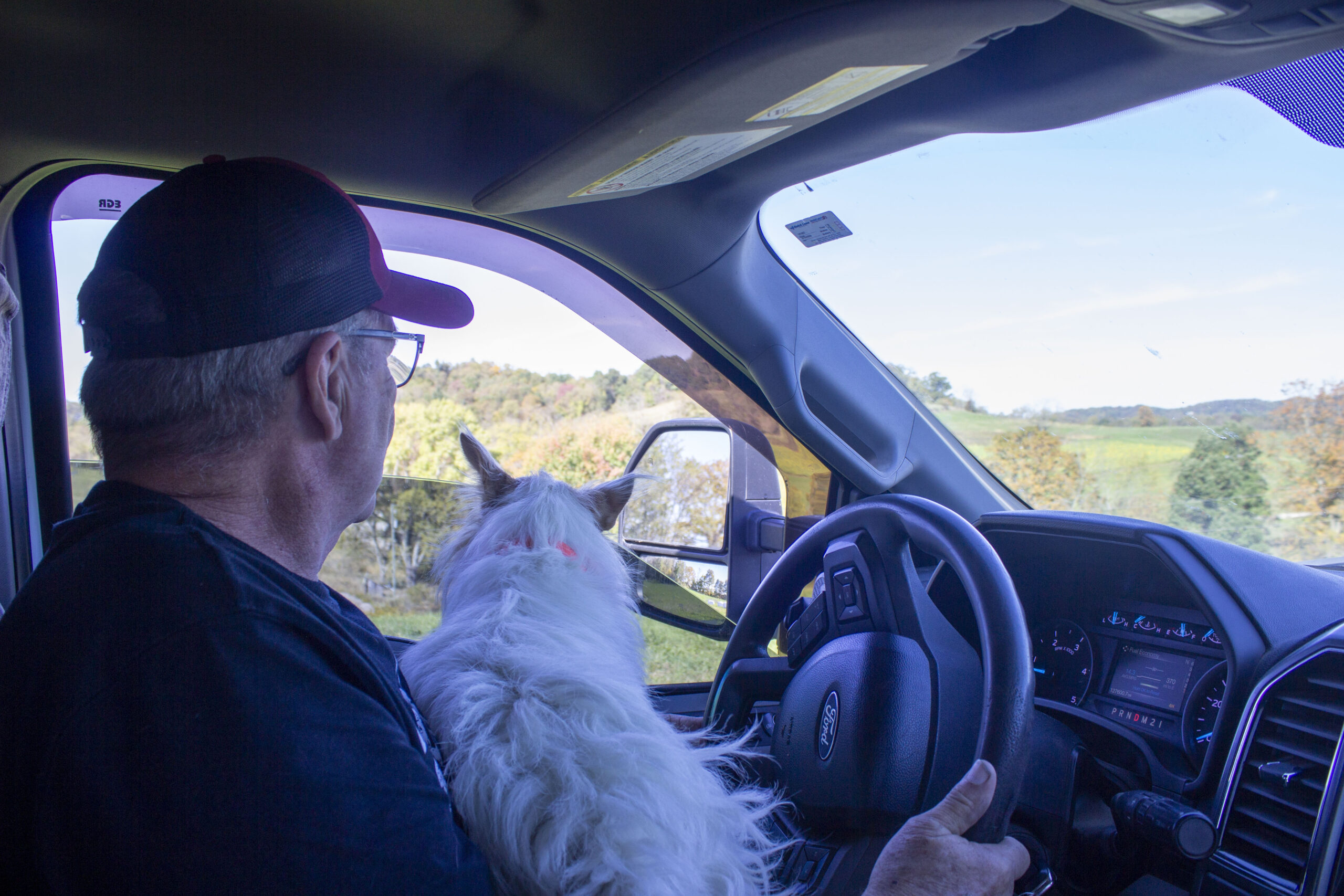
“I like being a gopher — ‘go mow this,’ ‘go bail,’ ‘can you help me do this?’ I like that,” he said. He has also taken to building and fixing things around the farm. It is a fitting role for someone who has watched the work pass to the next generation while staying close to the land he loves.
“My mom tried to talk me out of it. My dad did too. But I just really, really love the land. I love being outside.”