

SALEM, Ohio — By the time she was in eighth grade, Amelia “Mimi” Ault had spent enough time at the Jefferson County Fair to see how easy it was for her younger sister Olivia, who has developmental disabilities, to be left out.
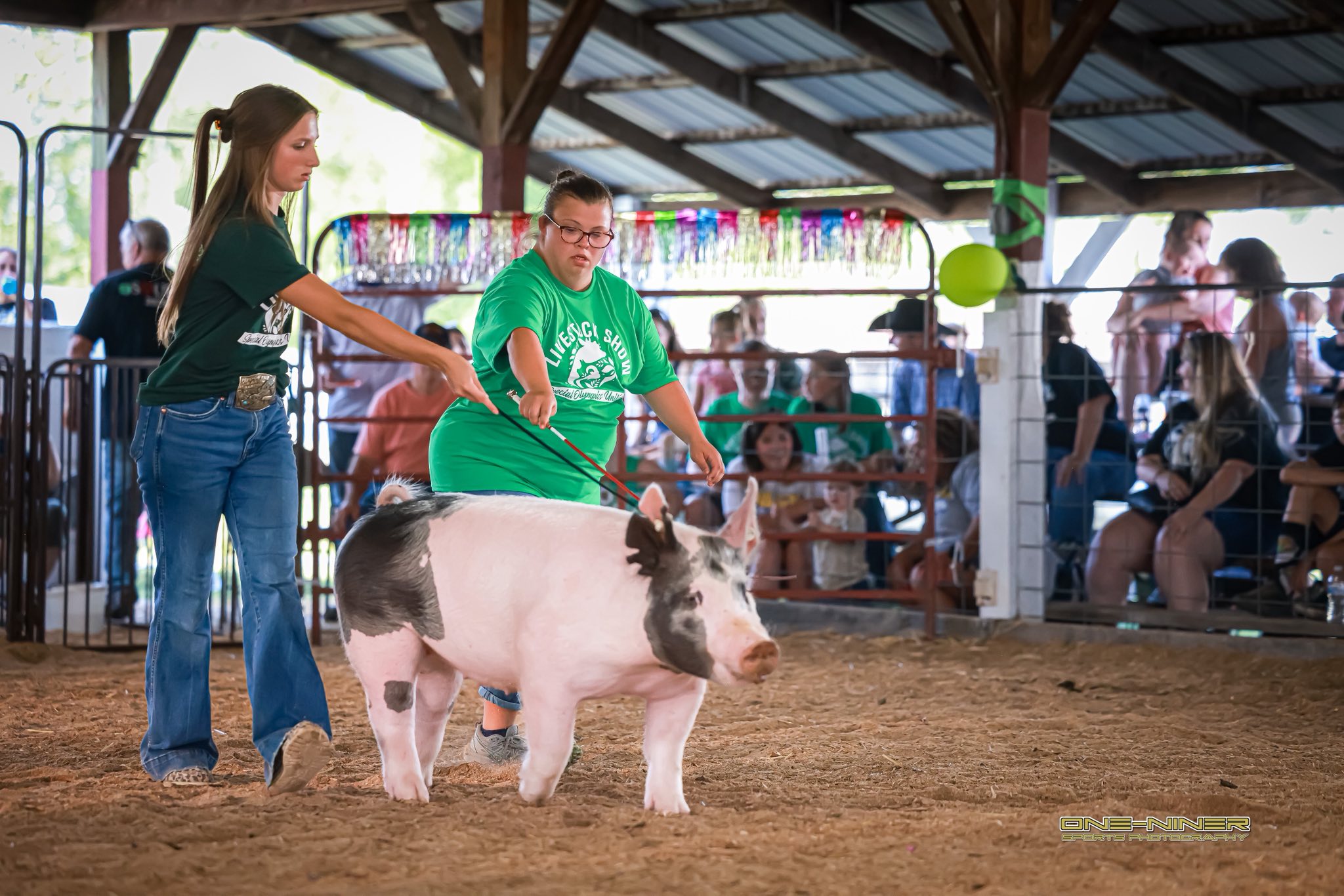
Olivia loves animals and the show ring as much as Ault does, but standard junior fair classes weren’t designed for kids who needed a helper in the ring, leaving her with few ways to participate. So, three years ago, Ault started her own livestock show designed for kids like her sister.
Ault, a high school junior, now runs the Special Olympics Unified Livestock Show (SOULS), an annual event at the fair that pairs children who have disabilities with young 4‑H mentors who bring along their pigs, goats and rabbits. The show returns Aug. 15 to the fair’s new livestock arena. Families arrive for an afternoon clinic to learn about the animals, followed by the main event that evening. It has drawn support from the fair board, local extension staff and a growing community of volunteers.
“I have a lot of families, especially the families of the kids with special needs. They are just so grateful and just say how much this impacts them,” Ault said. After each show, she sends families a link to photos and a thank-you message, and later reaches out again when sign-ups open for the next year. The replies, she said, show just how excited many are to return.
“They’re all like, ‘Oh, they haven’t stopped talking about it, they still have the ribbons hanging on their wall. They can’t wait.’ So it’s so amazing.”
In the ring, each exhibitor is paired with a mentor who walks them through basic showmanship while Ault and other volunteers keep things moving. Earlier in the day, a clinic gives kids time to meet the animals, learn how to handle them and, in some cases, interact with others they won’t be showing: ducks, a show dog, even a mini horse that came last year just to be petted and talked about. The idea, Ault said, is to give kids who aren’t in 4‑H or junior fair a chance not only to step into the ring, but to simply be around livestock in a way that’s safe and feels fun.
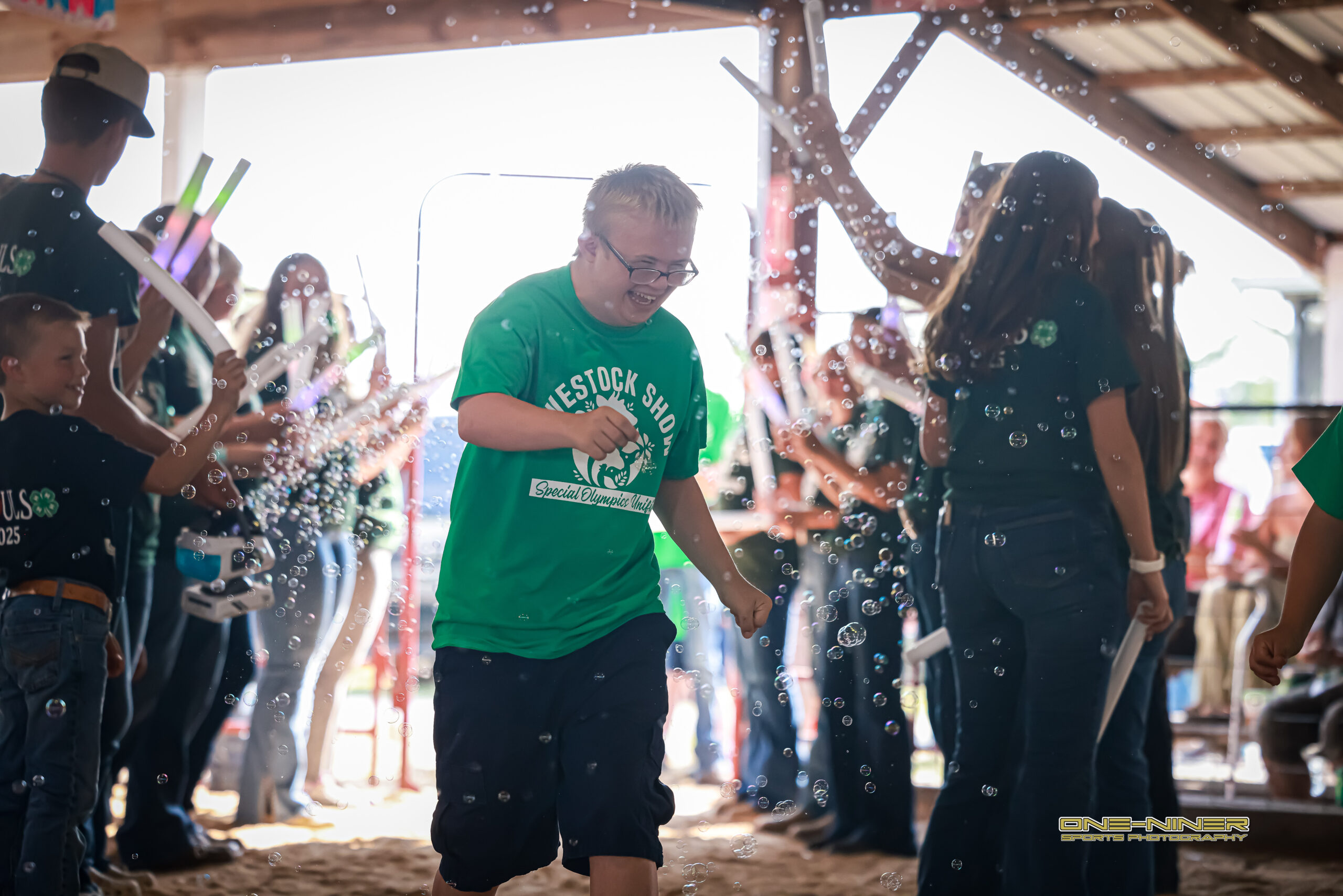
By showtime, the arena looks less like a traditional livestock class and more like a celebration. Last year, mentors formed a human tunnel and killed the lights, handing out glow sticks and blowing horns as each exhibitor’s name was called, sending them running through bubbles and noise toward the ring. Ault also started crowning a king and queen, their names plucked at random from a hat. The wide grins of the fair royalty, she said, capture exactly the kind of lifelong memories she wants the show to create.
“People know that it’s here now, and they come and support it,” she said. “We’re so united over this event.”
The news has traveled fast. Earlier this year, Ault joined a small group of organizers to present at the Ohio Fair Managers Association conference, walking fair boards and volunteers through slides on how to start a unified livestock show in their own counties. Since then, she said, fair queens and other junior fair royalty have reached out asking for her materials and advice, saying the Jefferson County show inspired them to try something similar back home.
“Once the word gets out, it’s just very powerful.”
Stars of the show
For Laura Akgerman, disability services coordinator for Ohio AgrAbility and Ohio State University Extension, shows like SOULS in Jefferson County are part of a broader shift she’s watched unfold at fairs across the Buckeye State.
Akgerman’s job gives her a bird’s-eye view of how and why these inclusive events are taking off. Her day‑to‑day work centers on supporting farmers with disabilities through Ohio AgrAbility, the state’s branch of a national project operating in about 21 states, and she also advises OSU Extension 4‑H educators on how to accommodate youth with disabilities at camps and fairs.
In practice, that means helping modify activities and rethinking how events are set up so people with disabilities can take part as fully as possible. Inclusive livestock shows, she said, fit naturally into that broader push to make fairgrounds more welcoming for people with disabilities, from farmers to 4‑H members and other exhibitors alike.
Akgerman grew up in 4‑H herself and remembers how central the fair was to her own summers.
“The highlight of the summer was going to the county fair,” she said, adding that she showed horses and sheep. “There was just nothing like getting out there, whether you win or not. It’s more fun when you win, but it’s so much fun to be part of that. Not just the show, but (when) you’re part of that backstage at the fair, and you’re working with your animals; it’s so much fun.”
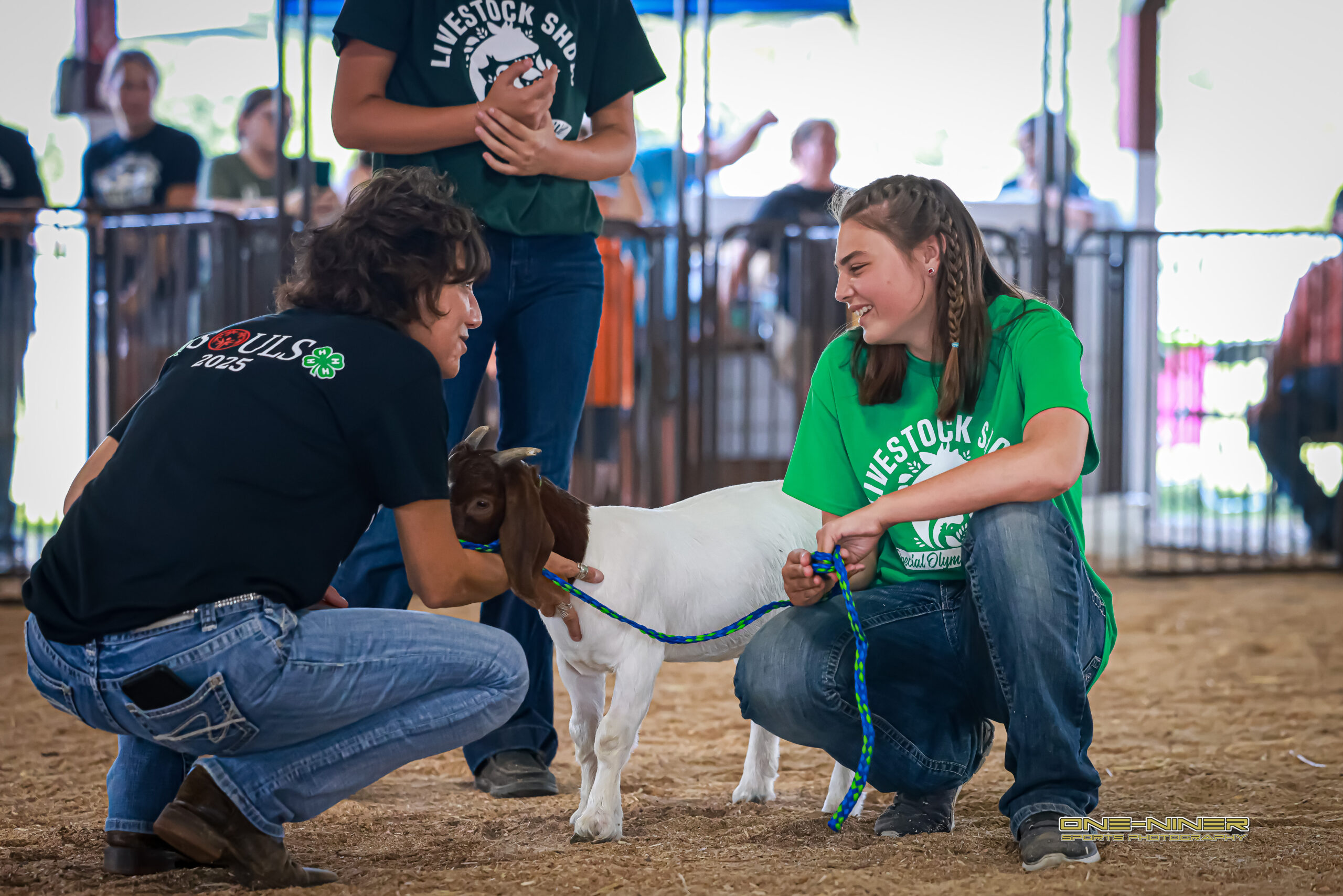
From her perspective, inclusive shows are a way to open that same experience to people who are often sidelined, exactly what Ault is trying to do in Jefferson County.
“The exhibitors are out there. They are the stars of the show. They are experts on this animal that day, so they get to go out and be just like every other kid or just every other person, and I think that can be really meaningful,” she said.
Across Ohio, Akgerman said, the crowds alone show how much appetite there is for events like SOULS. In northwest counties like Williams, Henry and Wood, she said, the barns have been so full that at one large arena, people couldn’t squeeze inside to watch.
In southwestern Warren County, the Animal and Me show has followed a similar trajectory. According to Kara Colvin, the county’s OSU Extension 4‑H educator who helps run the program, the dozen or so participants in the show’s first year have since multiplied to roughly 40 exhibitors, paired with more than 40 teen mentors. The show is backed by a volunteer committee, strong local sponsorships and a partnership with the county board of developmental disabilities.
And it’s not just parents or grandparents filling the stands. Akgerman said many in the crowds simply wander over and stay, watching people with disabilities do the same things as any other exhibitor: leading a goat, brushing a pig, waiting for the judge to stop in front of them. That kind of visibility, she said, can change what a community sees as possible.
“I feel like the show has an impact on more than just the exhibitors. It impacts the community; I’d like to believe it makes us all nicer and really excited to get involved with people that aren’t like us, that have different abilities,” she said. “They get to showcase their abilities, and that’s the best part.”
Not just one night
In northwestern Ohio, 4‑H program assistant Kaytlyn Graver has watched two sister shows — Heart of a Champion in Wyandot County and Ring of Companions in Sandusky County — become the kind of spaces she once wished existed for more kids.
Five years ago, she launched Heart of a Champion in her home county, a show she’d wanted to start for a long time. COVID delays slowed its launch, but now it’s finally off the ground.
“It is flourishing, which is wonderful,” she said.
Ring of Companions grew out of Graver’s master’s program, where she designed and tested a step‑by‑step guide for launching an inclusive livestock show while simultaneously building the Sandusky County event itself.
For Graver, the work is personal as well as professional: her 8-year-old nephew Reese Brinson, who has autism, shows in Heart of a Champion.
It was never just about one evening in the arena; Graver wanted to carve out a lasting place in the fair world where exhibitors with disabilities could step into the ring on their own terms.
The inclusive livestock shows “have just really brought a lot of awareness to those with disabilities, which has been really cool to see,” she said, noting that their growth has coincided with some fairs beginning to test out sensory‑friendly mornings and other accommodations.
She’s quick to point out that inclusion changes more than exhibitors’ lives.
“I think we need shows like this because it connects the agriculture world to those with disabilities,” Graver said. Just as important, Graver said the shows change things for the 4‑H teen mentors as well, giving them a chance to work directly with someone with a disability in a setting they might never otherwise experience.
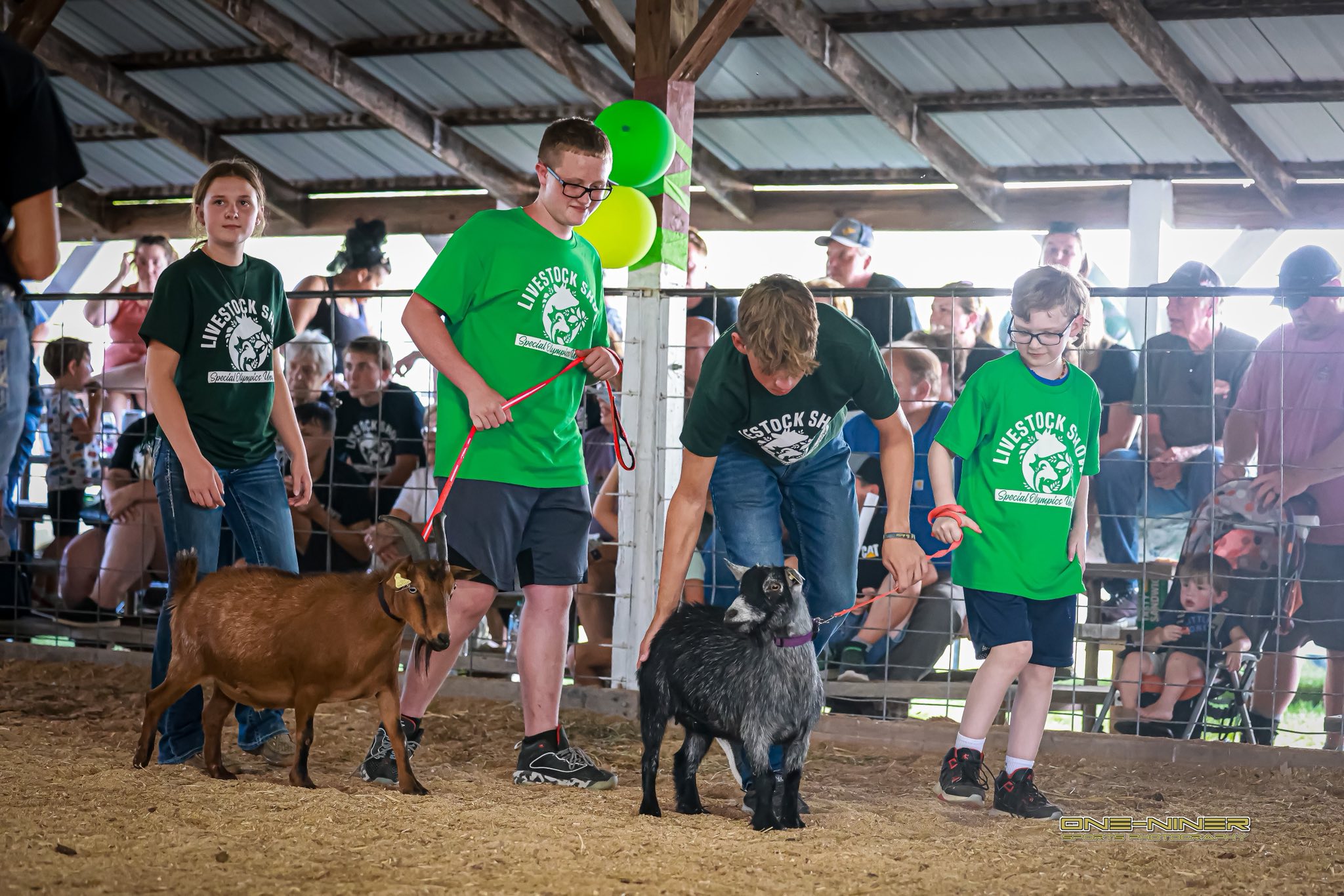
For Chase Smith, a high school junior in Wyandot County, inclusive shows are wrapped up in the everyday work of his own barn. He raises a small menagerie at home, including seven goats, two dairy beef feeders and six ducks he brings to the fair each year. For the past several years, he has shared that world with Reese, whom he mentors through Heart of a Champion. What matters most to him is the time they spend together.
“It’s just good to connect with people who can’t necessarily do that kind of stuff on a day-to-day (basis) like we can,” he said.
Being a mentor, he added, has changed him for the better.
“Now, if there’s a time where I can help somebody else out, then I will,” he said. “Everybody needs help.” Over the years, he and Reese have stayed close, and Smith still helps the Brinson family buy and show goats at the fair. Smith said he’s grateful the Wyandot County Fair offers the show, something not all fairs do, and urged anyone who’s apprehensive of taking part to give it a try. When he talks about mentoring, he comes back to what it lets him do for others.
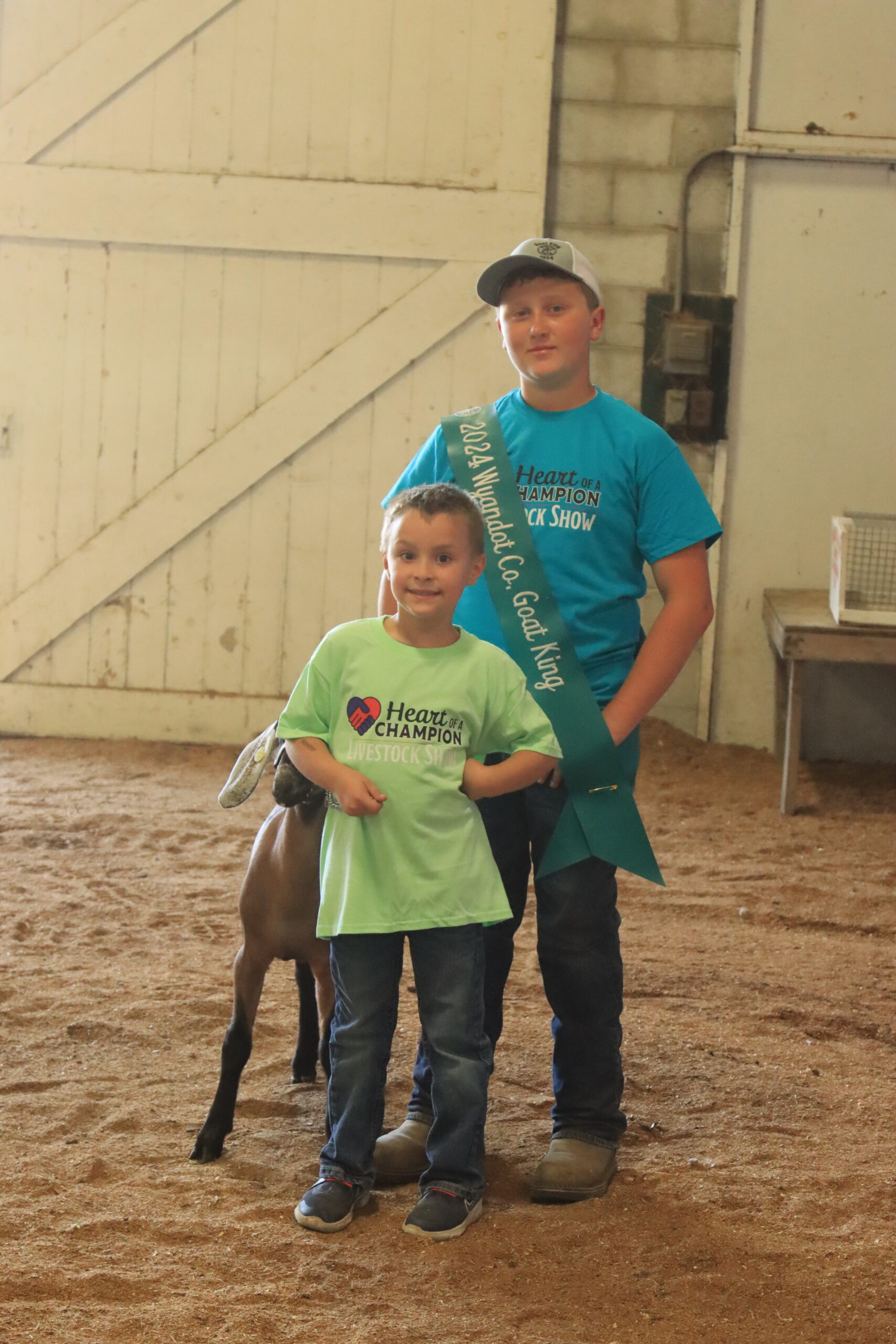
“It’s a really good thing just to get out there and be able to meet new people,” he said, “and find the ways people struggle and how to help them better.”




