



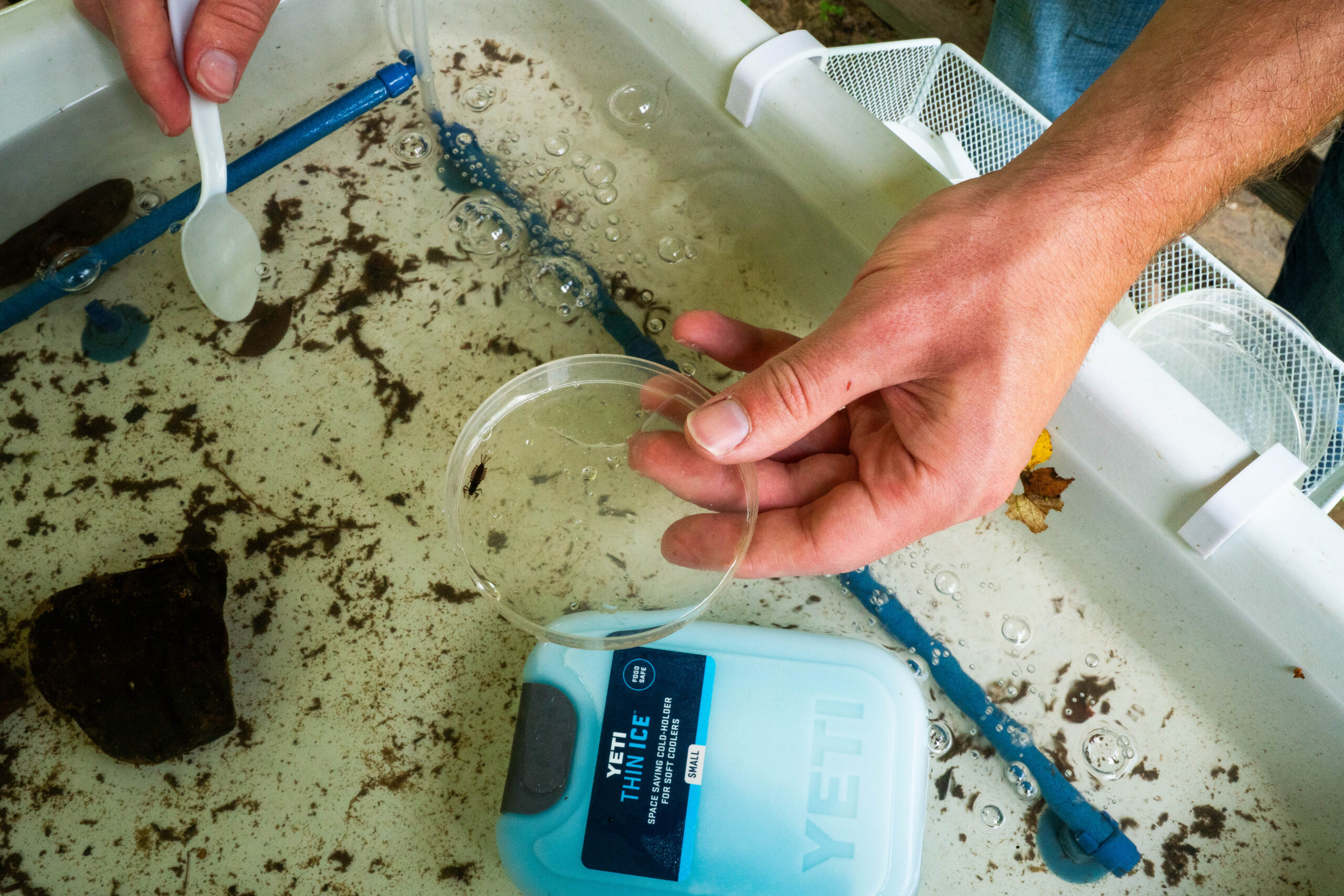
SENECA, Pa. — Lisette Lane combs through a tray of creek water, searching for macroinvertebrates.
Fishing out a mayfly nymph, Lane, the district manager at Venango County Conservation District, explains how the agency uses these aquatic insects to determine water quality.
“This exercise doesn’t cost a lot of money to do, and it’s very easy for anybody to count macroinvertebrates,” Lane said on July 18 at the Oil City Chapter of the Izaak Walton League’s Envirobash, held at Waltonian Park. “It’s fun and a good way to tell what the water quality might be.”
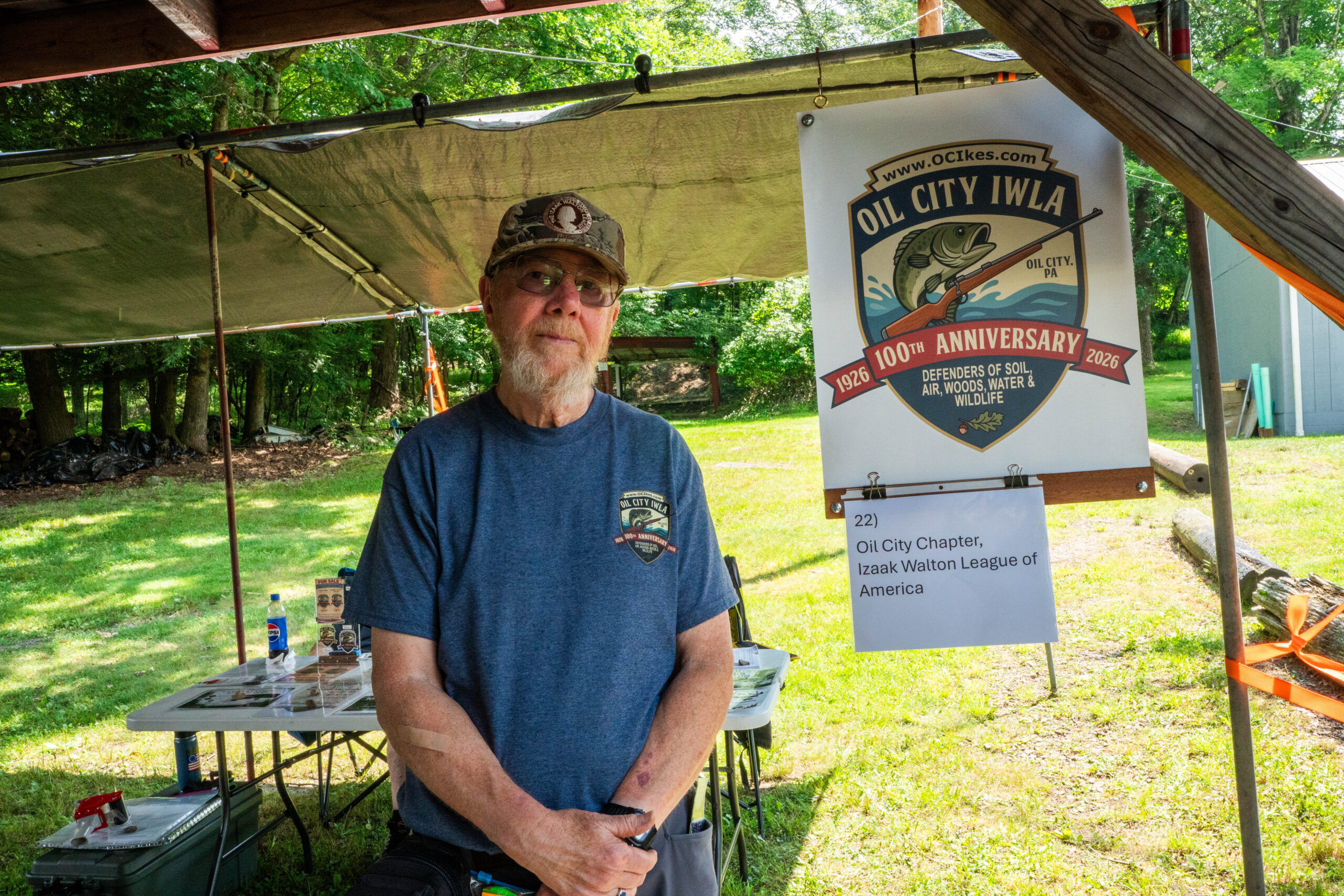
Like Venango CCD, the Oil City Chapter of the Izaak Walton League has been dedicated to protecting water quality since its inception in 1926, through supporting federal and local water legislation and implementing a volunteer science program that monitors stream health.
The chapter is the oldest Izaak Walton League in the state, focused on advocacy and conservation. That’s why it chose to celebrate 100 years with the Envirobash, featuring various conservation groups committed to wildlife education, outdoor recreation and land conservation.
Chapter history
The Izaak Walton League of America is a national conservation organization founded in 1922 by a group of concerned anglers and hunters in Illinois who wanted to stop the destruction of the country’s waterways and natural areas.
The group was named after Izaak Walton, a conservationist and author of “The Compleat Angler.” During the 1920s, industrial pollution, raw sewage and soil erosion were rampant in many of America’s rivers. In 1926, the league announced a campaign to “correct the pollution evil in America,” The next year, President Calvin Coolidge commissioned the league to conduct the first national water pollution survey.
The Oil City Chapter of the Izaak Walton League is the 32nd-oldest in the country out of over 200. Like the national league, the Oil City chapter largely focused on cleaning up and advocating for waterways.
The group drew attention to oil seepage in local area streams, called for the state to address sewage discharges and launched an anti-littering campaign.
It also championed legislation — Project 70 Land Acquisition and Borrowing Act — that allowed the state to issue bonds to buy land for public parks for conservation, recreational or historical preservation purposes and to coordinate those purchases with local governments. This led to the creation of Oil Creek State Park and the Kennerdell Tract of Clear Creek State Forest.
“We were active in pushing for more controls over oil well drilling and handling, because the birth of the oil industry was here, and we have a lot of legacy issues,” said John Bartlett, member of the chapter and Envirobash coordinator.
The group also participates in the volunteer science program, Save Our Streams, which is a nationwide program that trains volunteers to monitor stream health. By collecting data on water quality, the program informs scientists and policymakers on how to take action to protect local waterways.
Envirobash focuses on conservation
While the chapter’s official anniversary date was in January, Bartlett said the intent of the Envirobash was to “interest people in the outdoor recreation available in the area and to excite them about it.”
That’s why the Venango County Conservation District and other groups were set up at Waltonian Park on July 18 with activities to inspire children and adults alike.
The conservation district had trays of water with macroinvertebrates taken from the nearby creek; attendees could find the macroinvertebrates for themselves, while staff explained how they use these aquatic insects to determine water health.
Lane says there are three macroinvertebrate categories: sensitive, somewhat sensitive and tolerant.
“We are looking for some sensitive species to tell us we have good water quality. If we can’t find any, that’s where we might say, ‘Hey, there might be an issue here. Let’s take a closer look at what might be happening in the stream,’” Lane said.
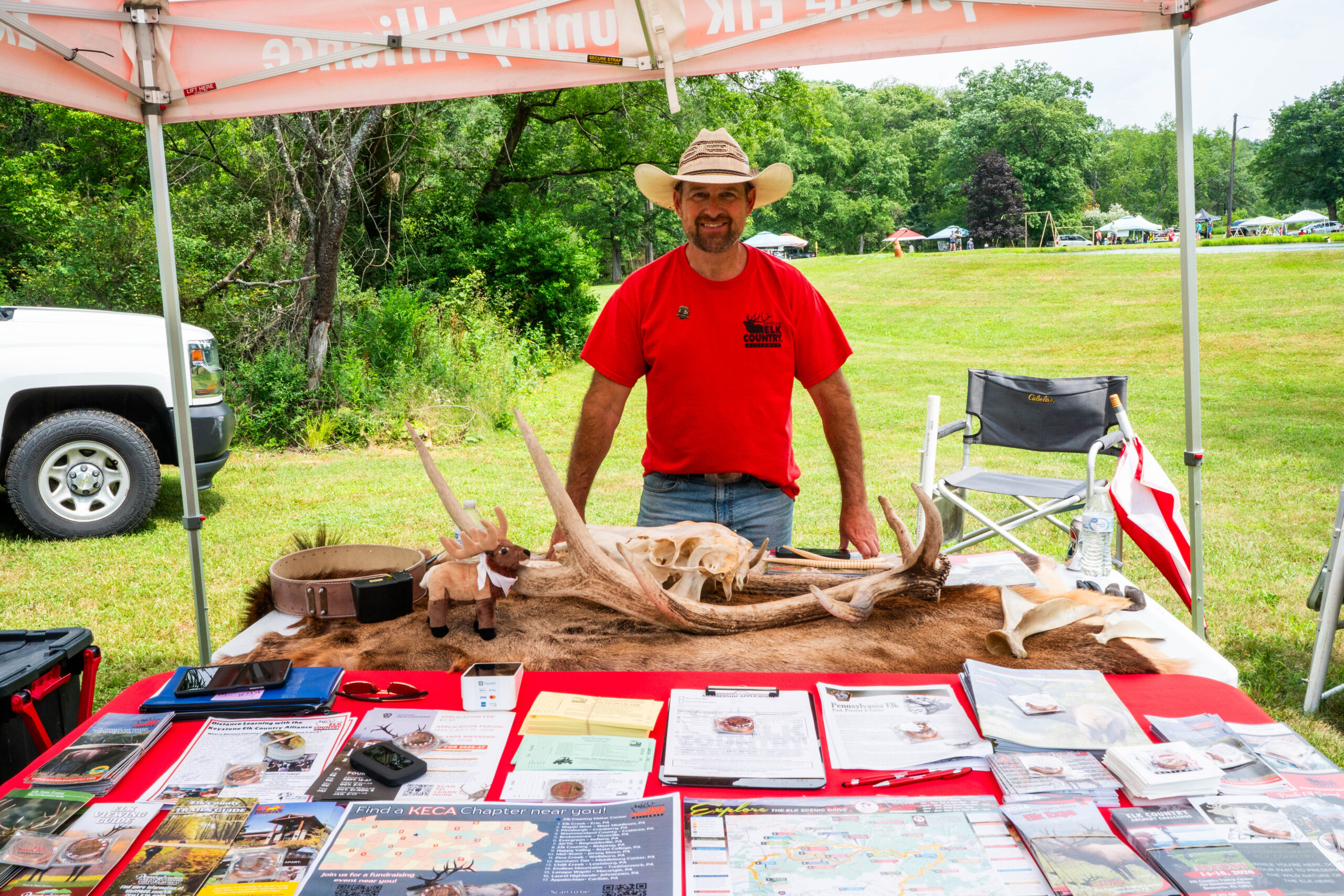
Over at the Keystone Elk Country Alliance, Ben Porkolab enthusiastically told passersby about the wild elk that roam the state, thanks only to reintroduction efforts led by the state. According to Porkolab, the last eastern elk in the world was killed in Elk County, Pennsylvania, about 150 years ago due to overhunting and habitat loss.
But that wouldn’t be the last time elk would wander these hills: about 100 years ago, the Pennsylvania Game Commission brought the animal back from western states. Today, there are roughly 1,400 to 1,800 elk in 10 counties in Pennsylvania, said Porkolab.
“Without people caring about this resource that belongs in our state, the success of the elk herd would not have taken place,” Porkolab said, conservation education coordinator for the Keystone Elk Country Alliance, which aims to conserve, educate and protect habitat for elk populations.
Other conservation and educational-centered activities included the Pennsylvania Amphibian and Reptile Survey, where attendees got to learn about and hold reptiles like snakes, and the Penn State Extension’s Venango County Master Gardeners, which hosted a program on invasive versus native species for your garden.
Local history a focal point
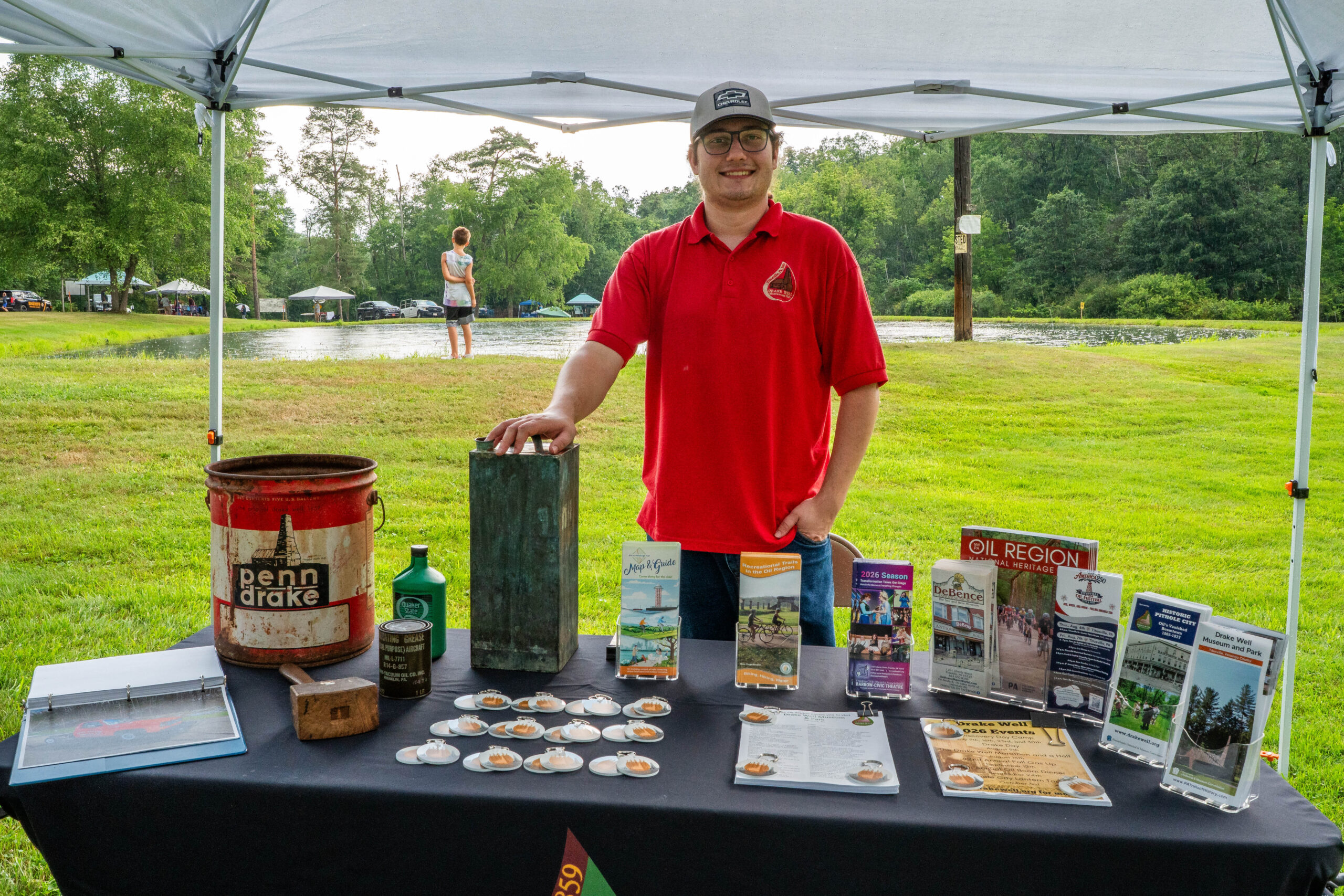
Local history and geography were also a focus at the event. The Drake Well Museum, located in Titusville, had a booth set up with oil artifacts and educational materials. John Hetrick, outreach coordinator of Friends of the Drake Well, said that not only did the oil industry bring oil field jobs, but created jobs in associated industries like coopering and blacksmithing.
“In the oil industry, coopering (making and repairing wooden barrels) itself was important because you needed some way to transport the oil,” he said.
For rock enthusiasts, Kachina Earhart’s booth was the perfect place to learn about the different rock types in Oil City and the surrounding areas. Earhart and her parents own two stores in downtown Franklin, including the recently opened Earthen Echoes. The store carries rocks, various outdoor equipment, and one day soon, visitors will be able to sign up for guided outdoor experiences.
At the event, she explained the different rock formations in western Pennsylvania via various graphics, including the shale formation. In Pennsylvania, the Marcellus and Utica Shale formations are the most notable, as they store natural gas.
According to Earhart, that’s because organic matter (like fossils) is trapped underneath this layer, i.e., creating fossil fuels.
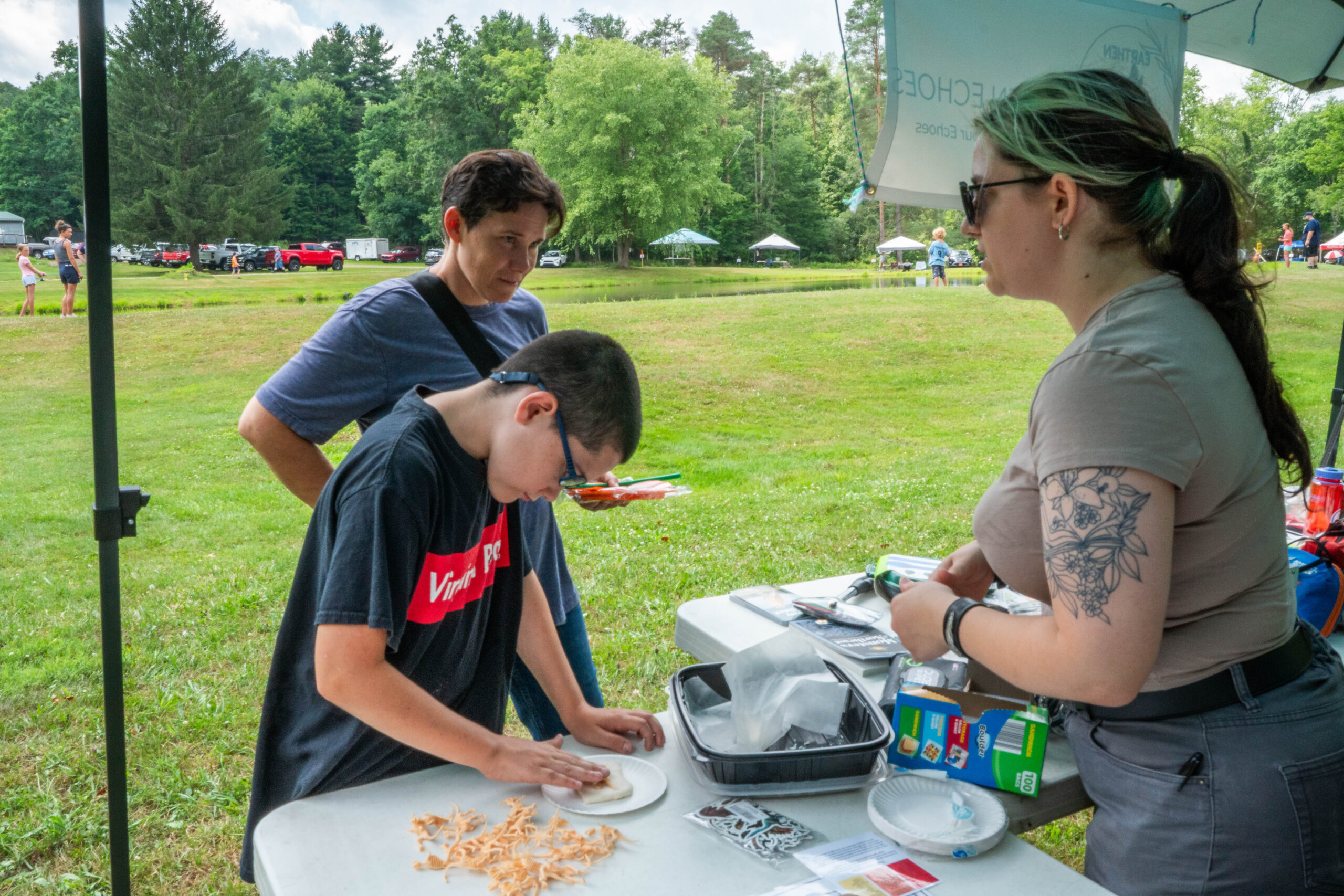
The booth also had an activity for kids where they were able to make a fossil by pressing toy dinosaurs into clay.
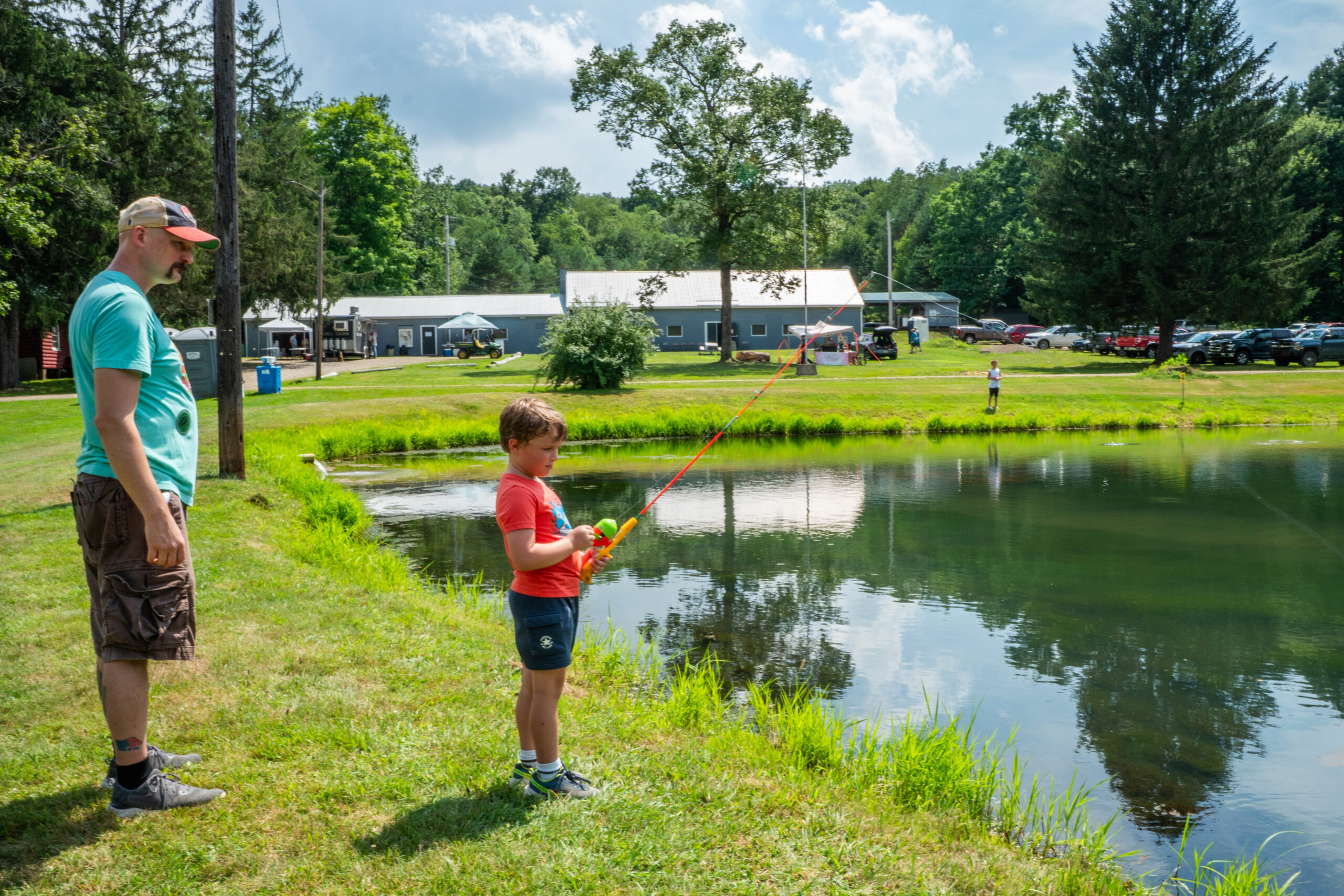
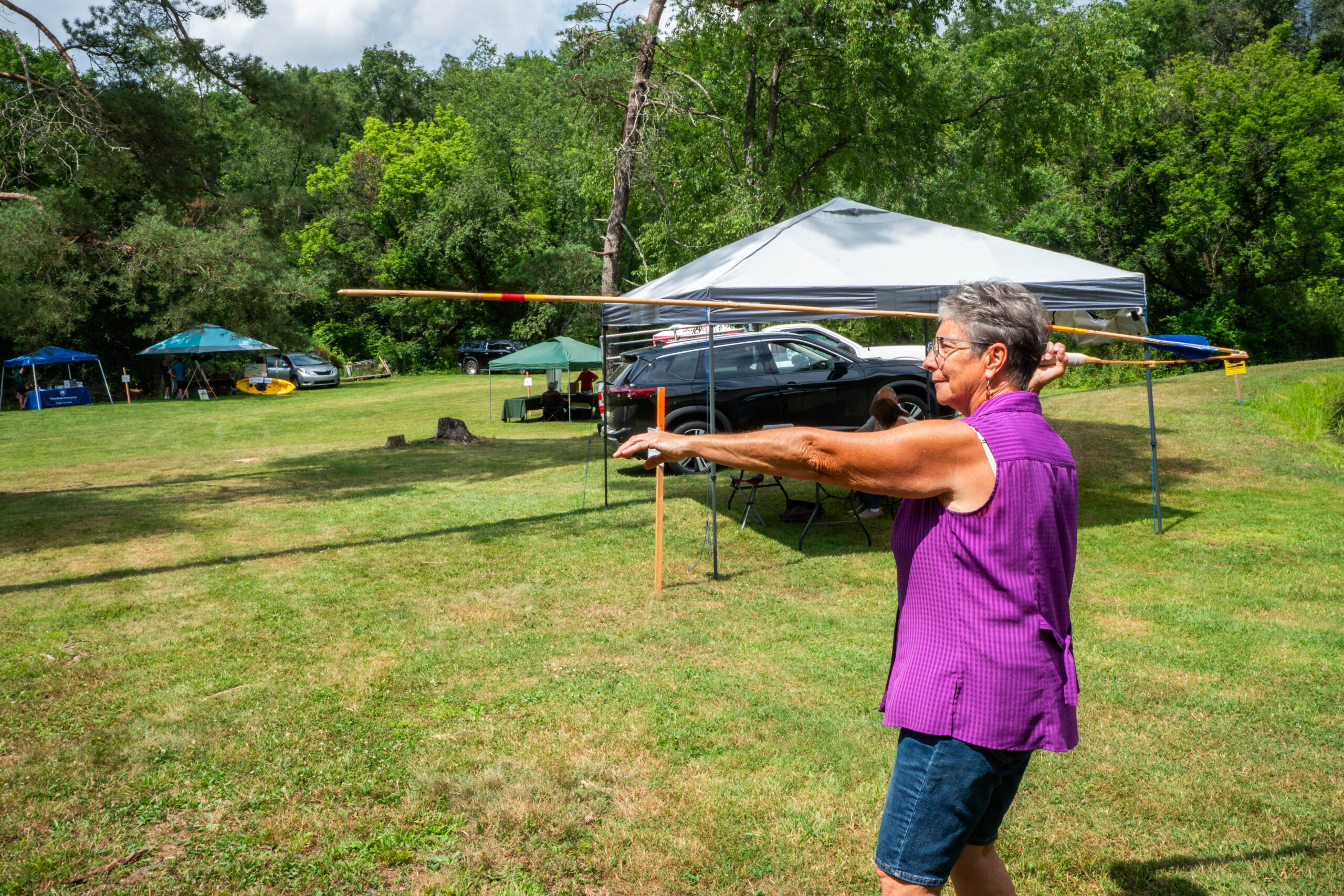
But that wasn’t the only activity available to kids (and adults alike). Attendees could try their hand at an atlatl, an ancient spear that throws darts, and could fish in the pond.
Ben Kostek and his son Luke attended the Envirobash because they enjoy the outdoors. That day, Luke got to fish in the pond and hold a snake at the reptile booth.
“’I’m an Eagle Scout, so I grew up outside, and he likes to come outside too,” he said. “I think (the Envirobash) is a good way for him to see everything, learn things and (get a new) experience.”
(Liz Partsch can be reached at epartsch@farmanddairy.com or 330-337-3419.)





Great story and great group!