





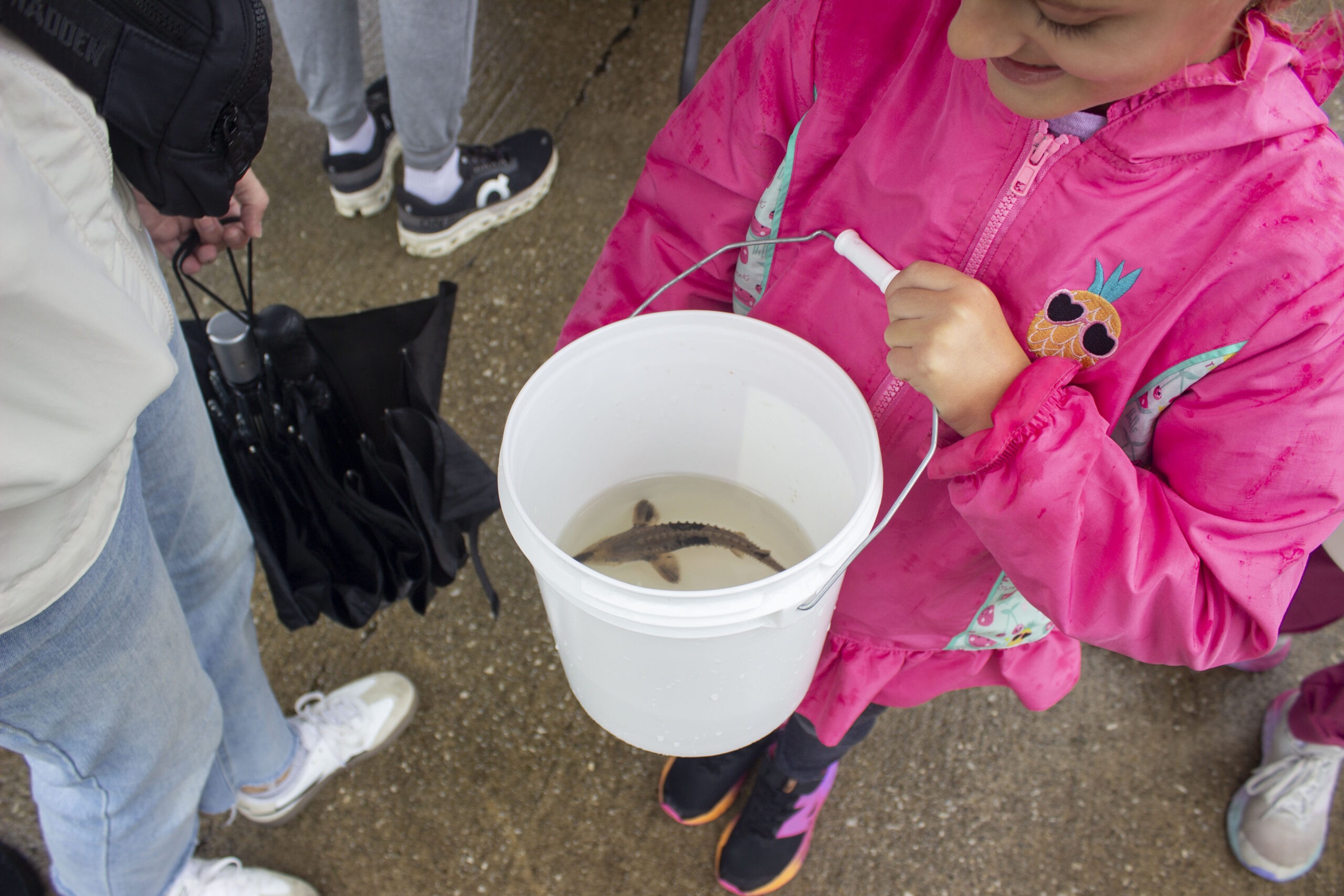
CLEVELAND, Ohio — It takes a lot to faze crews from the Alpena Fish and Wildlife Conservation Office. They crisscross the Great Lakes from Superior to Erie helping to reintroduce native fish and standing guard against invasive species in places where aquatic hitchhikers with ill intent are most likely to turn up. But on one routine mission in Cleveland Harbor last month, they found a link to a prehistoric past they weren’t expecting: three healthy juvenile lake sturgeon, all a year old.
The crews knew the fish’s ages and more, including when and where they were raised, because each had been implanted with a Passive Integrated Transponder (PIT) tag before being released the year before. The tiny tags work like the chips that identify lost cats and dogs. The fish came from a class of 2,000 reared at Genoa National Fish Hatchery in Wisconsin that had been stocked the previous fall. Two had been released into the Cuyahoga River in downtown Cleveland, and the third was from Cuyahoga Valley National Park about 20 miles south.
“To some of us, it was a bit of a surprise how fast they grew,” said Jason Fischer, a fisheries biologist with the U.S. Fish and Wildlife Service.
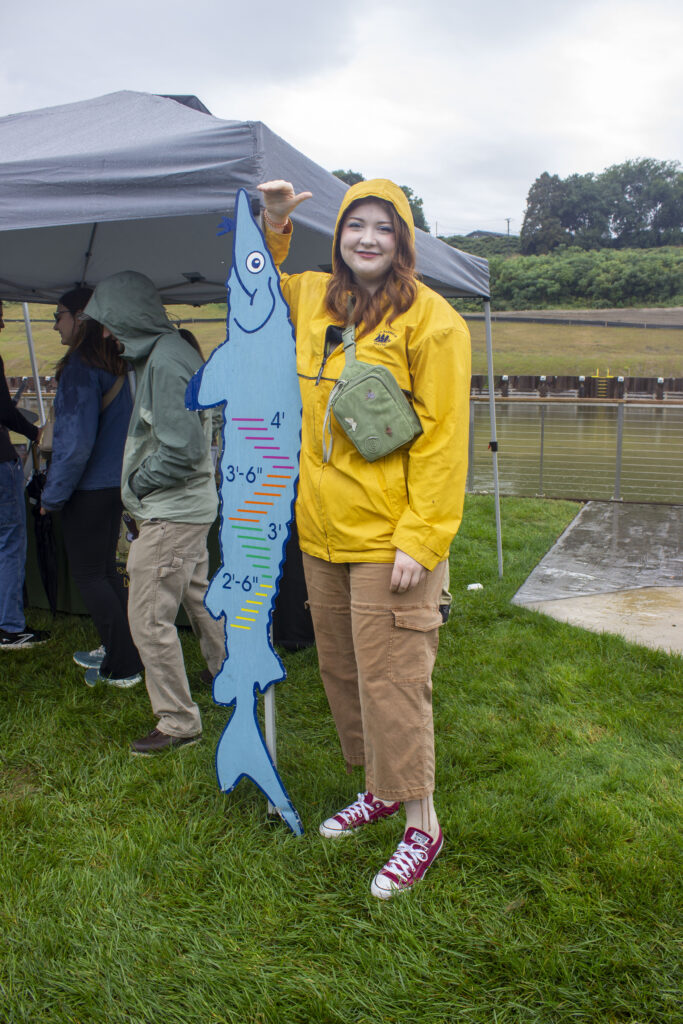
The sturgeon were about 6 inches long when stocked. When they were caught again, two measured 17 inches and the last was 16. Lake sturgeon can grow to 6 feet long; endangered in Ohio, they’ve barely changed in hundreds of millions of years. But no one really knows what typical growth looks like for young sturgeon in the wild, because they’re hard to catch in open water. And because they’ve been gone a long while.
“Either way, they’re growing a lot in Lake Erie, so that was nice to see them putting on all that size and weight,” Fischer said.
It’s a hopeful sign for the sturgeon, long absent from Ohio’s Lake Erie tributaries. Overfishing and dam construction over the last century greatly diminished water quality and habitat, which took a cumulative toll on the fish. And for a river that once couldn’t support fish at all, the news is anything but kismet. Before the Clean Water Act, the Cuyahoga was infamous for its fires and was so polluted, Fischer said, “it was considered to be devoid of life.” The state of the river helped spur the landmark environmental legislation in 1972.
But that was then. Fischer estimates that about half of the 2,000 sturgeon stocked in the Cuyahoga last year may have survived and are still living in Lake Erie. Officials hope the odds are in their favor. At 6 inches long, the young sturgeon are an easy meal for fish-eating birds such as cormorants, gulls and herons, and for bigger fish, including Lake Erie’s walleye. At this year’s release in Cleveland’s Rivergate Park, a cormorant began circling just outside the stocking area until a passing barge scared it off.
This year, 1,500 sturgeon went into the river. But rebuilding the population is a long game. Males don’t mature until around 10 years of age and females closer to 20, so biologists expect about 25 years of stocking before they’ll know whether sturgeon are returning to spawn on their own, the mark of a self-sustaining population.
“This is exciting”
The Cuyahoga isn’t where Ohio’s sturgeon restoration started.
“We started in the Maumee River in 2018, had successes there, or felt like the program was going really well, and so we kind of took a step back and looked around for other opportunities,” said Eric Weimer of the Ohio Division of Wildlife. Full-scale stocking of the Cuyahoga began in 2025, and the Sandusky River was stocked for the first time that same year.
The work in the Maumee showed that a whole population can be brought back from the brink.
“What we’re hoping is that those fish that we’re stocking in the Maumee and the Cuyahoga and the Sandusky will then return to those rivers when it’s time to spawn.”
But the Maumee’s success has also raised a new question. Sturgeon survival there has been so good that biologists are asking whether they’re stocking more fish than the river’s habitat can support. Over the next five to 10 years, they’ll ask the same thing about the fish going into the Cuyahoga each year.
“Do we need to decrease that? Do we need to increase that?” Weimer said.
For the past two years, biologists with the Division of Wildlife, the U.S. Geological Survey and the U.S. Fish and Wildlife Service have also implanted acoustic transmitters in some Cuyahoga sturgeon. Unlike PIT tags, which can only be read once a fish is caught again, these small tags give off sound signals that underwater receivers pick up, so biologists can follow where the fish go and whether they survive after stocking.
The tagged fish reached the lake within about a month, but many stayed around Cleveland Harbor instead of roaming across Lake Erie.
“That’s exciting to me because not only are they surviving, but they are sticking around and making this area their home, which I believe will improve the chances that these fish will return to the Cuyahoga River to spawn when they’re adults,” Weimer said.
For Weimer, a chance to bring a species back doesn’t come along often.
“We don’t get many opportunities to try and restore a native species, and so this is exciting because of that, especially one that’s as charismatic as lake sturgeon are,” he said.
Sensitive species
Scientists at the University of Toledo are working out whether those stocked fish can survive, where they go and what they need. William “Bill” Hintz, a professor who studies freshwater science, runs a research group that is part of the effort.
Hintz’s graduate students work on the lake sturgeon project, and their master’s theses and doctoral dissertations look at questions about sturgeon conservation and rehabilitation. Most of that research is on the Maumee River, with some work on the Cuyahoga. One of his graduate students led a study that used the network of acoustic receivers across Lake Erie’s Western Basin to follow tagged sturgeon. As a fish swims past, each receiver logs it, so researchers can ask: Did the fish survive or not? If it survived, where did it go? How long did it hang out? What habitats was it using?
Hintz said those answers are key to judging whether a reintroduction program is working.
“If we dump 3,000 fish in the river and they don’t survive well, that doesn’t really bode well for a reintroduction program,” he said.
Hintz said the fish need to return to the river they were released in. Sturgeon have “an olfactory system where they can sense water chemistry, almost smell the water,” and each river has its own chemical signature. Young fish learn that signature so that years later they can make their return.
“Kind of like we see salmon do in the Pacific Ocean,” Hintz said. “They go out in the ocean, they swim around, and they eventually find their natal stream.”
Unlike salmon, which spawn once and die, sturgeon can live for decades. That long, slow life cycle, which biologists call life history, is part of what makes them as impressive as they are vulnerable.
“They don’t spawn every single year. They’re a slow-growing fish. They’re a long-lived fish. So they’re very sensitive to environmental change,” Hintz said.
Because sturgeon are so sensitive, they can signal problems in a river that hardier fish might not. Hintz compared them to a canary in the coal mine, one with gills.
“If the sturgeon can’t come back in the Maumee River ecosystem, that’s probably not a good sign for the health of the Maumee River ecosystem,” he said.
Hintz has spent almost two decades working on sturgeon recovery, including the federally endangered pallid sturgeon in the Mississippi River system. He said sturgeon in both places face the same underlying problem.
“The larger story here is that rivers are the most modified ecosystems on the face of the planet,” Hintz said. “We put dams on rivers, we polluted rivers, we’ve modified river habitat, and this is all for power generation and the use for humans.”
Before people changed them, rivers like the Maumee spread across huge floodplains. The Maumee once flowed through the Great Black Swamp, a vast forested wetland that covered much of northwest Ohio and part of northeast Indiana until settlers drained it for farmland in the late 1800s. Back then, the Maumee River’s floodplain was “probably miles wide,” Hintz said. Draining and building levees opened up farmland, “which is good and important for humans. But we’ve also kind of modified the river [in a way] that was not probably beneficial to certain kinds of fishes, and sturgeon being one of them.”
A comeback
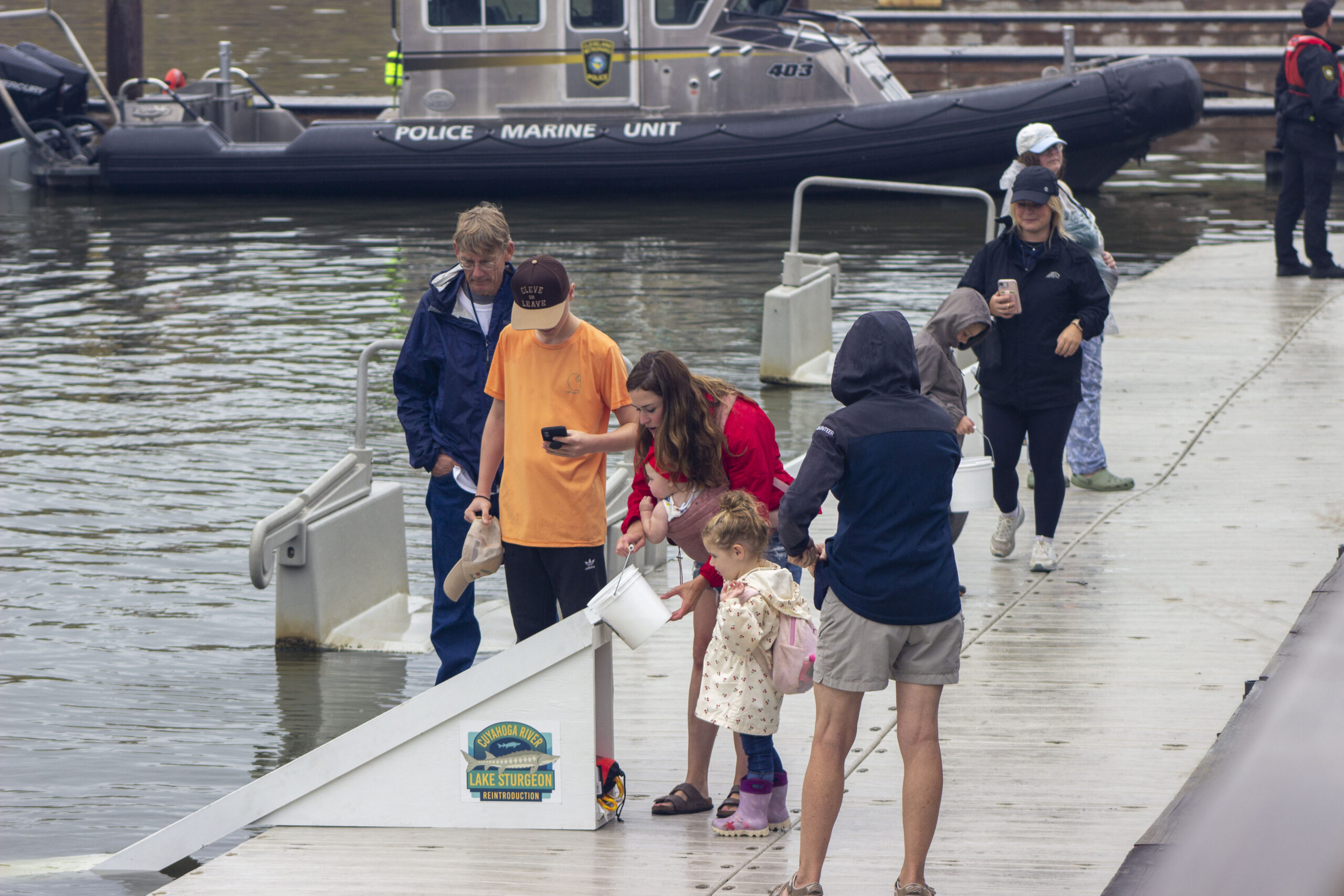
People may have changed the rivers long ago, but now, plenty of them want to help the sturgeon come back. On a rain-washed Saturday in September, families lined up along the Cuyahoga in Cleveland, each waiting to help release a young sturgeon into the water.
Cleveland Metroparks, which manages dozens of miles of land along the river, is one of the partners behind the annual release. For Michael Durkalec, an aquatic biologist with Metroparks, the best part is “just seeing these little little baby sturgeon and knowing what they have the potential to become.”
“These things could fit in your hand when we release them,” Durkalec said. “They’ve been dubbed living dinosaurs, which definitely is true.”
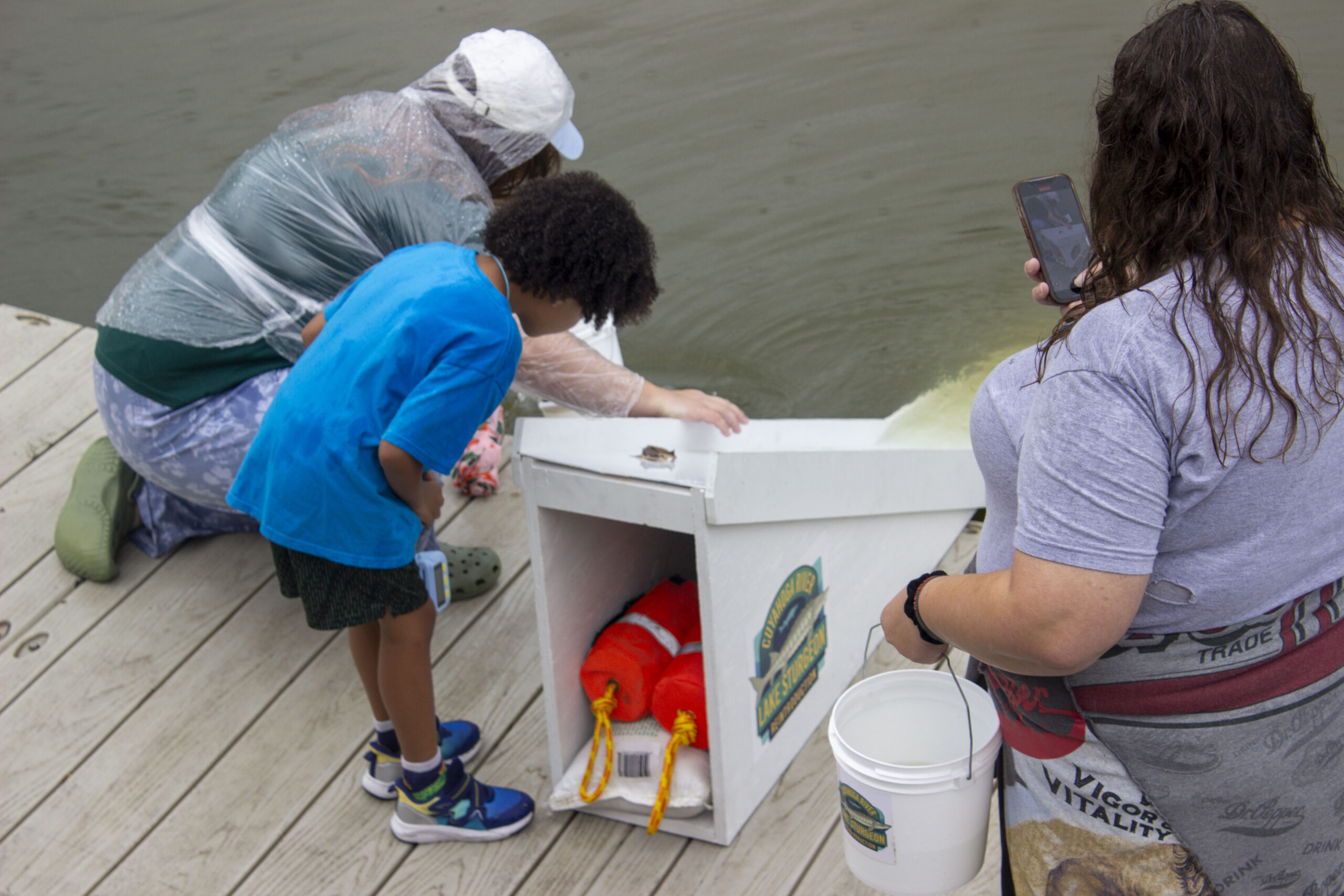
In 21 years at Metroparks, Durkalec has worked plenty of events, but he said this one resonates with people.
“It isn’t just fun. They didn’t just come out to have a good time. They really get that they’re playing a role in the recovery of the river,” he said. “A few people, adults, said they almost had a tear in their eye, just, you know, releasing that little sturgeon and seeing it on its way.”
To Durkalec, the sturgeon demonstrate how far the Cuyahoga has come since it helped spark one of the nation’s cornerstone bedrock environmental laws.
“Just because you’re at a low point doesn’t mean it can’t be turned around,” he said. “There’s a feeling of hope there that well-meaning people doing the right things can have a positive impact on the environment.”




