





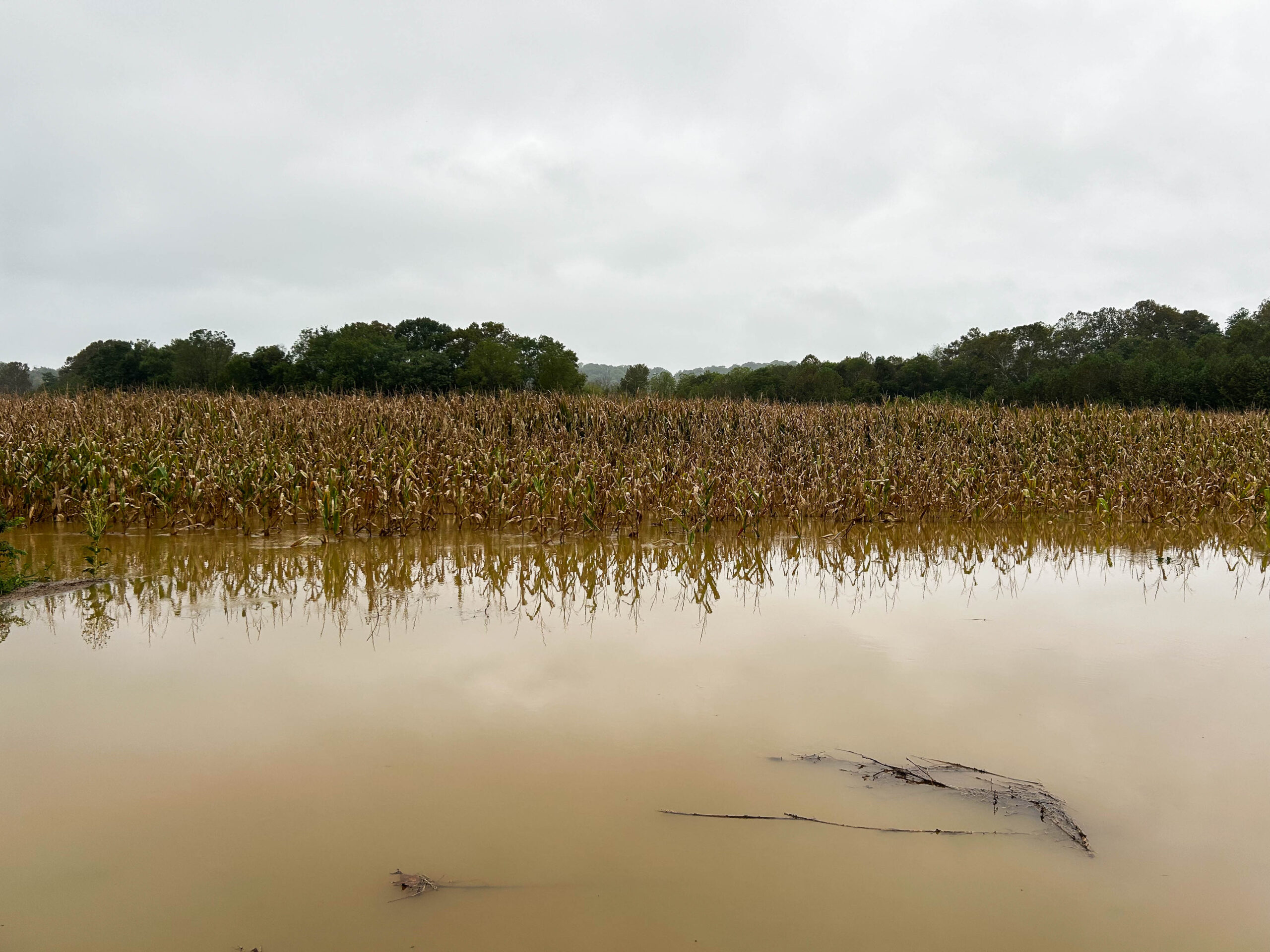
LONDON, Ohio — The excessive rain that defined the summer continued at Ohio State’s annual Farm Science Review, held Sept. 22-24, leading to the cancellation of larger field demonstrations and cars getting trapped in mud.
“The ground cannot take any more,” said Aaron Wilson, state climatologist of Ohio and assistant professor in Ohio State University’s College of Food, Agricultural and Environmental Sciences.
The annual farm show followed weeks of rain in the region — a stark contrast to the last two farm shows, where attendees experienced hot temperatures in the midst of a summer drought.
According to Wilson, Ohio had its wettest August on record this year, while a year prior, the state had its driest August on record. Wilson says these shifts from extremely wet to extremely dry are a sign of our changing climate.
At the show, he talked about the extreme weather conditions Ohio has been experiencing and how farmers can prepare. With rain expected to continue, such conditions could pose a problem for farmers as they begin harvesting their fall crops.
“At this point, now we’re dealing with, ‘has this rain been detrimental to the crop in some ways?’” said Eric Tipton, owner of Ricketts Farm LLC and board president of the Ohio Corn and Wheat Association.
Rain and drought
Ohio received up to 12.5-15 inches of rainfall in some areas in August, according to OSU’s Monthly Climate Summary for August 2026.
This contrasts with a year earlier, when the state only received 0.25 to 1.25 inches of rain. The state was also in a drought in August 2024.
Now, the rainy trend is continuing in September, with 7.08 inches as of Sept. 27, according to the National Weather Service.
Wet conditions occurred earlier this year as well. Wilson says the state had its fourth wettest spring, and that Ohio broke its all-time warmest March temperature at 86 degrees F.
A month later, the state experienced ideal spring planting temperatures but was shortly hit by a late freeze in May — both the late freeze and rain may have delayed planting, Wilson notes.
For Tipton, the freeze didn’t delay planting, but it did cause him other issues.
“2026 has been a rollercoaster,” said Tipton, who farms a few thousand acres of soybeans, corn and wheat in Jeffersonville, Ohio.
Like most farmers, Tipton planted his soybean and corn crops when the weather was right. “Things were looking really well,” he said, until a freeze in early May wiped out a quarter of his 1,000 soybean acres, forcing him to replant. The spring frost also affected his wheat, killing a portion of one of his wheat fields. “We got out kind of by the skin of our teeth a little bit on that one,” Tipton said.
Fall challenges
Now, as fall harvest nears, the weather is posing other challenges. For soybeans, these problems are less severe and, on the contrary, may have helped.
According to Taylor Dill, director of research for the Ohio Soybean Council, rainy weather has been helpful for soybeans compared to the last two years of drought conditions in August.
“We’ve dealt with really dry beans the past couple of years, when it comes to harvest moisture, so I think we might just be happy with an upswing of not harvesting soybeans (with 9% moisture),” Dill said.
Soybeans need to have a moisture content of at least 12-13% to store them properly, Dill said. The drier the beans are, the less money farmers make as they get paid by the pound: less moisture, less weight.
Dill notes, however, that soybean producers should get their crop off sooner rather than later, as excess rain can lead the pods to split or germination can occur inside the pod.
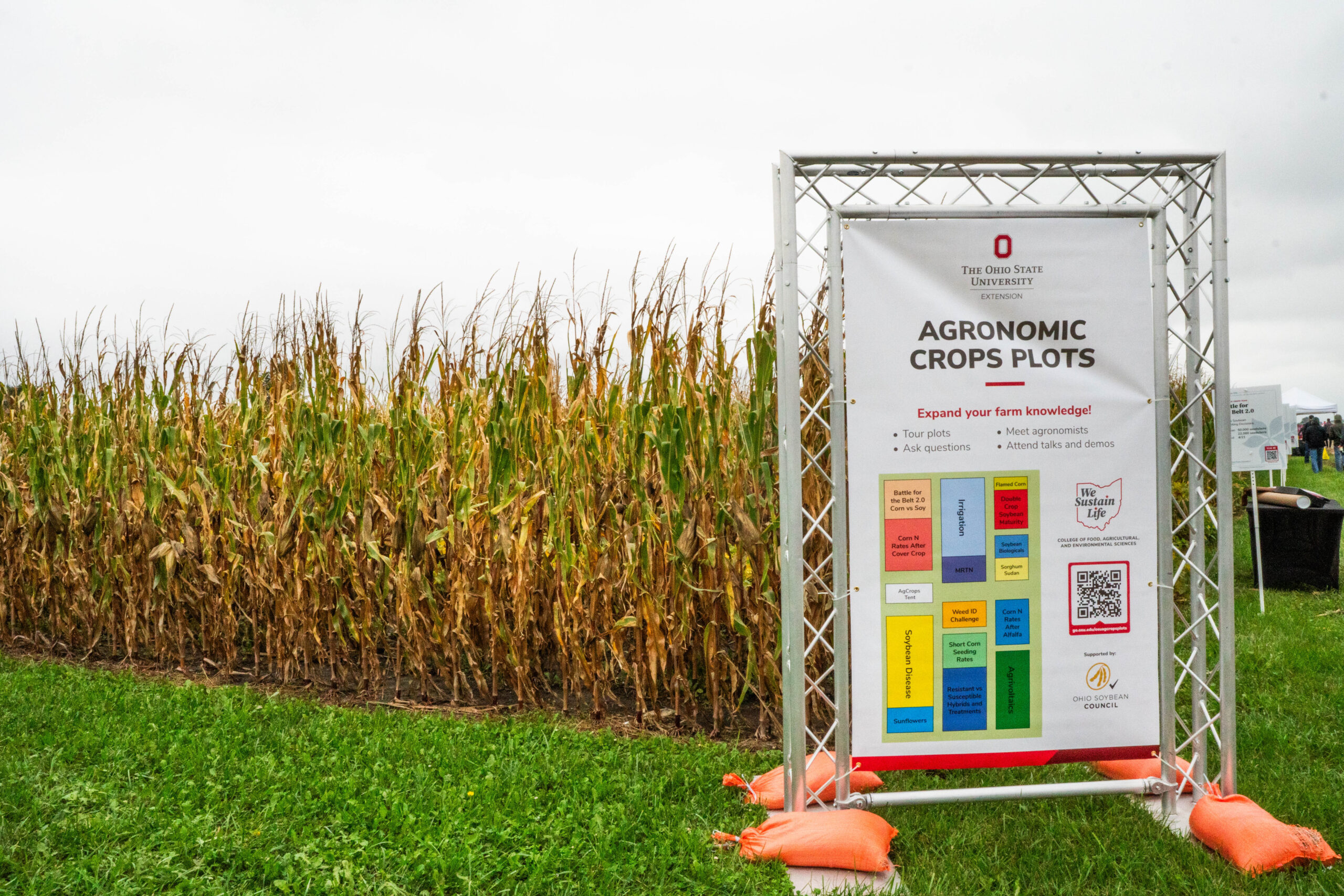
While he isn’t as concerned for his soybean crop, Tipton notes corn is a different story.
Excessive rainfall late in the season can cause stalk and ear rot disease in corn. The more time corn plants stand in water or saturated soil, the more severe disease can be, according to the University of Nebraska-Lincoln.
Tipton believes late-season disease may have entered his corn fields, which could impact their standability: “Corn’s a lot more fun to harvest when it’s still standing. When it starts to bend and twist and lay over in directions, it makes it a lot harder to harvest,” he said.
Despite this, he’s optimistic the rain during the summer will lead to higher yields than the last two summers of drought.
A new pattern
According to Wilson, these rapid changes of drought and excessive rainfall are becoming a pattern, with winter and spring rain becoming more frequent and dry summers becoming the standard — this August as an exception.
“We’re in an overall regime that’s creating conditions of rapid oscillations between extremely wet and extremely dry,” Wilson told Farm and Dairy. “We had dry conditions in Ohio even this year. In the same year, though, it’s likely to be one of the wettest years on record for Ohio.”
These drought and rainfall extremes are a byproduct of warmer overall temperatures and faster evaporation rates caused by greenhouse gases, said Wilson.
Greenhouse gases trap heat, making the planet warmer. The largest source of greenhouse gas emissions in the country is from burning fossil fuels (natural gas, coal, oil), according to the U.S. Environmental Protection Agency.
“(Greenhouse gases) change the composition of our atmosphere that have direct impacts on our weather models,” Wilson said. “It’s climate change: that’s what (these weather extremes are).”

Adapting to extreme weather
Wilson says these extreme weather shifts are here to stay, and a farmer’s best combat is to prepare. This could entail investing in better equipment that can handle wet fields or controlled drainage systems that can help with soil moisture or compaction issues.
“In the short term, it’s bearing the conditions that we’re seeing, but as far as long-term, it’s investment in water management over a longer period of time,” Wilson said.
He recommends switching over to cover crops, as they keep nutrients and soil in place during periods of drought and excessive moisture.
During periods of excessive rain and drought, cover crops prevent soil erosion as the roots stabilize the soil, reducing runoff via rain or dry wind.
Tipton implemented cover crops on his farm roughly 10 years ago, after noticing how heavy tillage was impacting the fields.
“They were pretty prone to washing, so as we get these heavy rains, it’s carrying a lot of our soil. It’s carrying probably some of our fertilizer with it,” he said. Since implementing cover crops, the soil has stayed put, particularly during the rainy winter and early spring months.
Meanwhile, Tipton and Wilson agree the best thing farmers can do in the short term is pay attention to those harvest windows, as periods of excess rain are predicted to continue.
“We need to take advantage of every window that we have. About the next time it dries out and we’re able to run, we’re going to run long hours,” Tipton said.
(Liz Partsch can be reached at epartsch@farmanddairy.com or 330-337-3419.)




