



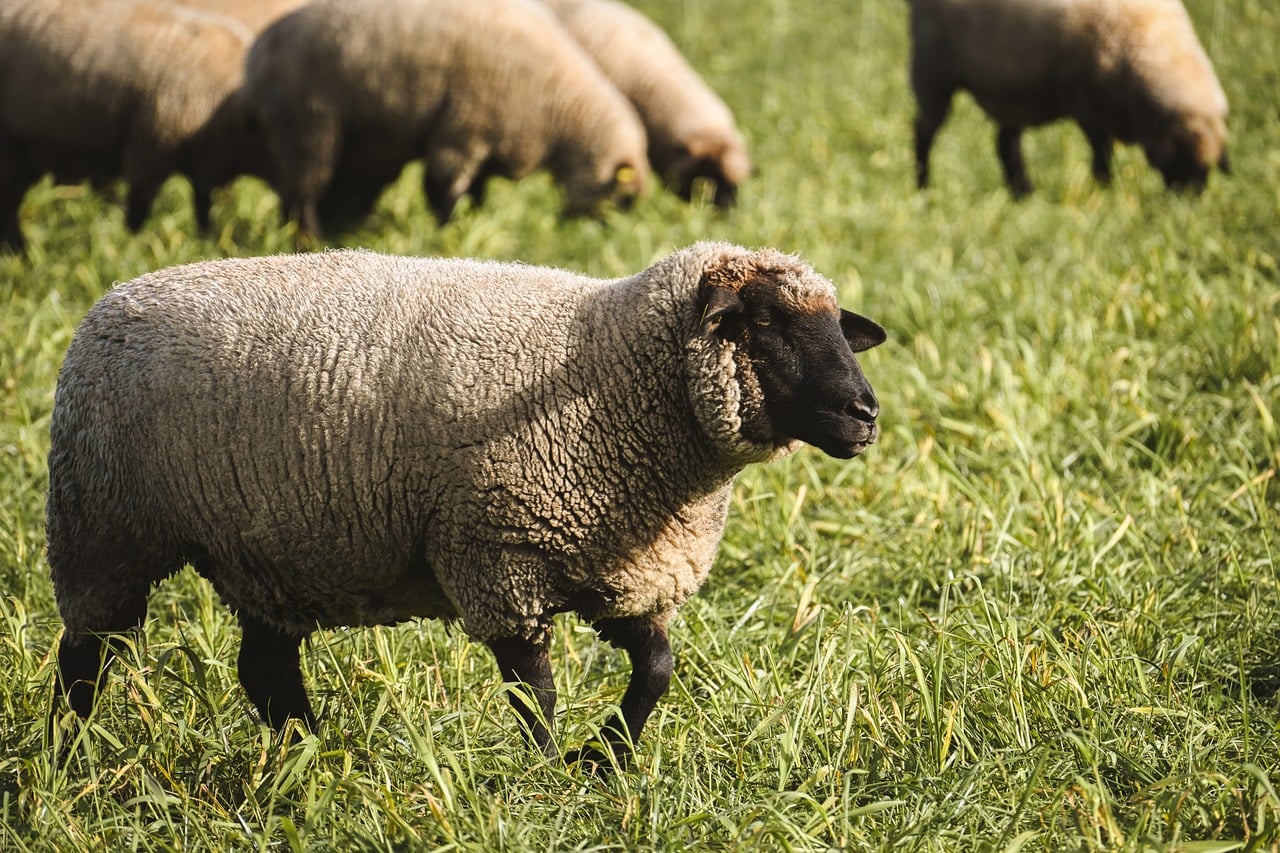
The U.S. Department of Agriculture announced Friday that a case of scrapie was detected in a sheep in Oregon. This is the first case of scrapie found in the U.S. in more than five years.
The USDA Animal and Plant Health Inspection Service confirmed classical scrapie in a sheep slaughtered at a facility in Oregon.
According to the Oregon Department of Agriculture and American Sheep Industry Association, the animal was tested as a routine part of USDA’s ongoing National Scrapie Surveillance Program called Regulatory Slaughter Surveillance, where brains from adult sheep and goat are examined.
In a July 31 press release, the USDA said final diagnostic results and genotype analysis were completed by the National Veterinary Services Laboratories, with confirmatory testing indicating classical scrapie.
Scrapie is a fatal, degenerative disease that affects the central nervous system of sheep and goats. It’s believed to be caused by an abnormal protein, or prion.
Prior to this confirmation, the last case of classical scrapie was detected in a sheep sampled at slaughter in January 2021. This sheep was from a flock in Wisconsin and was attributed the flock of origin to Arkansas; it was not completely traceable due to lack of identification to flock of origin, according to the USDA.
The United States was positioned to meet World Organization of Animal Health’s 7‑year benchmark for self‑declared scrapie freedom in January 2028. This confirmed detection could reset that timeline and may push the earliest possible date for national scrapie‑free status to approximately 2033.
Scrapie is hard to detect as its believed to be spread primarily from mother to offspring (or other lambs) via contact with afterbirth or milk/colostrum. But it can take 2 to 5 years for an animal to show signs of disease, and current diagnostic tests require brain or lymphoid tissue.
Animals typically live 1 to 6 months after they begin to show signs, but death is inevitable. There is no treatment or preventative for scrapie. The scrapie agent is also difficult to decontaminate as it’s resistant to most disinfectants as well as heat and radiation treatment.
This is why locating the flock of origin and engaging in strong animal identification practices nationwide is so important, the American Sheep Industry Association said.
APHIS and state animal health officials have initiated an epidemiological investigation to determine the flock of origin, but the affected animal in the Oregon case did not have ear tags, which may limit traceability. To support the investigation, NVSL will conduct tissue‑matching and parentage testing on the affected sheep and two additional animals that came with it.
“The importance of official scrapie tags cannot be understated,” said Cindy Wolf, DVM and American Sheep Industry Association’s Animal Health Council co-chair.
Scrapie tags are ear tags required by the National Scrapie Eradication Program on most sheep and goats if they leave their farm of origin and change ownership.
“These tags have made trace back to the flock of origin possible in order to stop further spread,” added Roselle Busch, DVM and ASI Animal Health Council co-chair.
APHIS said it expects minimal impact on trade. Most countries restrict live animal exports only from affected flocks or premises, and products such as wool remain unaffected.
More information about scrapie and APHIS’ eradication program is available at www.aphis.usda.gov.





You still didn’t mention the breed that was affected.
AND you don’t know origin even though we still have to have premise ID.
Fed Gov located one sheep with scrapie–yet unable to locate and deport 17,000,000 illegals in America.
WINNING!