





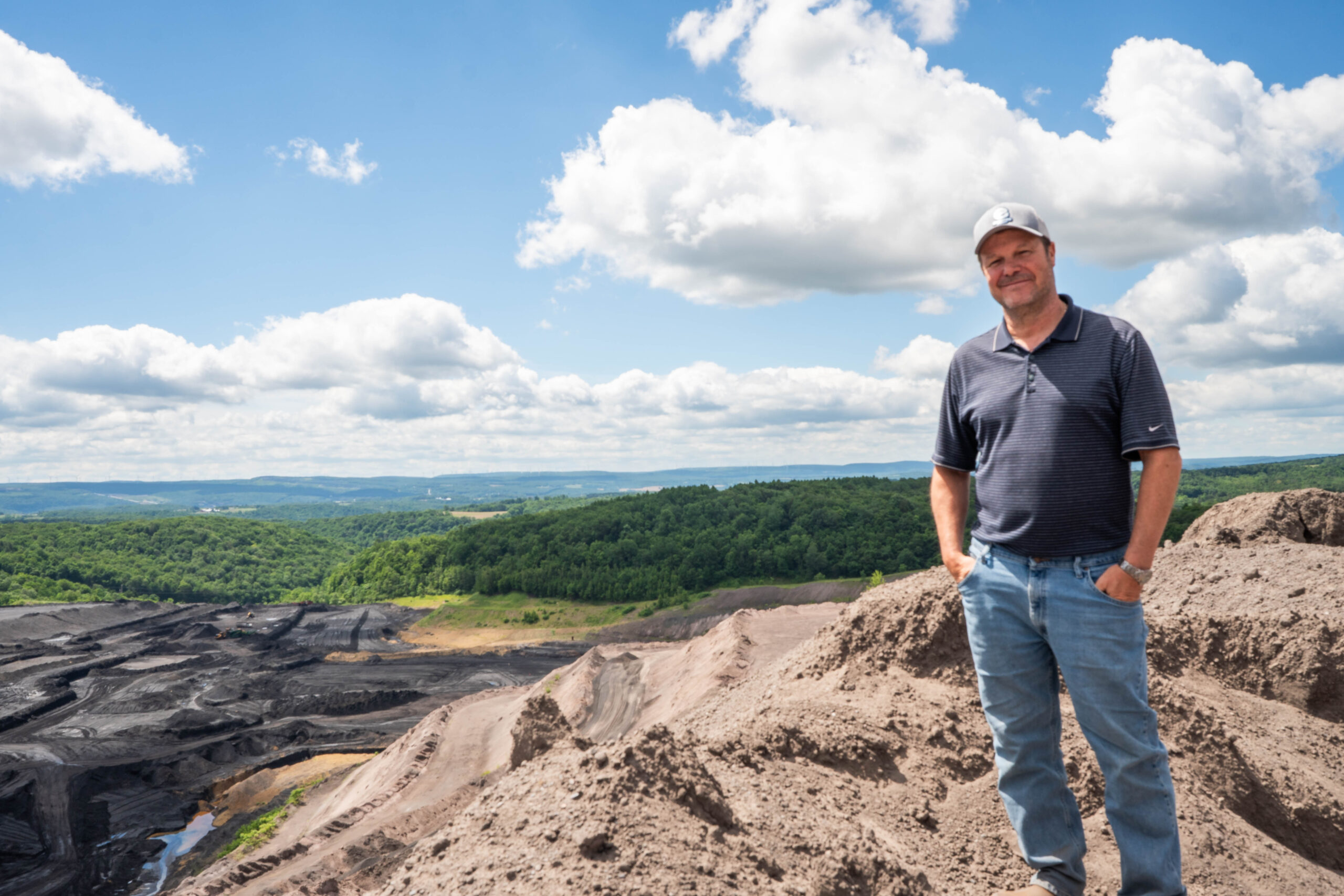
VINTONDALE, Pa. — For the first time in his life, Jim Panaro is able to fish in the Blacklick Creek in Vintondale, Pennsylvania, a stream that runs alongside the 54-mile-long Ghost Town Trail in Cambria and Indiana Counties.
“I pop my bike out, and I ride a section of the trail, ditch my bike, and I can fly fish in the South Branch (part of the Blacklick Creek) now,” said Panaro, executive vice president of Robindale Energy Services. “I never thought it was possible before.”
Growing up, Panaro had to drive out to Bedford or State College to fish. But thanks to multiple state and local efforts, coal waste removal and acid mine drainage treatment are allowing residents to enjoy a sight that many of their ancestors never got the chance to.
That’s because for over a century, this creek — like many others in Pennsylvania’s mining communities — flowed with orange-rust-colored water from acid mine drainage — a result of coal mining operations.
This highly acidic water makes it nearly impossible for most fish to survive. But that didn’t stop Panero and his childhood friends from enjoying the creek — even if it meant a scolding from mom.
“We’d play in these streams, and you’d get yelled at when you’d come home. ‘Are you playing in the stream?’ ‘No, I’d say. ‘Well, why are your underwear all orange?’ Well, yeah, we were playing it in the stream,” Panaro recalled.
Since it was founded in 2001, mining company Robindale Energy Services has removed 76 coal waste piles across Cambria and 14 other western Pennsylvania counties, restoring 1,740 acres throughout the state.
Now, a recently built Pennsylvania Department of Environmental Protection Agency acid mine drainage active treatment facility is accelerating restoration efforts in the Blacklick Creek, leading to a return of aquatic life.
These combined efforts have not only opened up local fishing, but also other recreational opportunities, including biking on the Ghost Town Trail that stretches across coal mining communities.
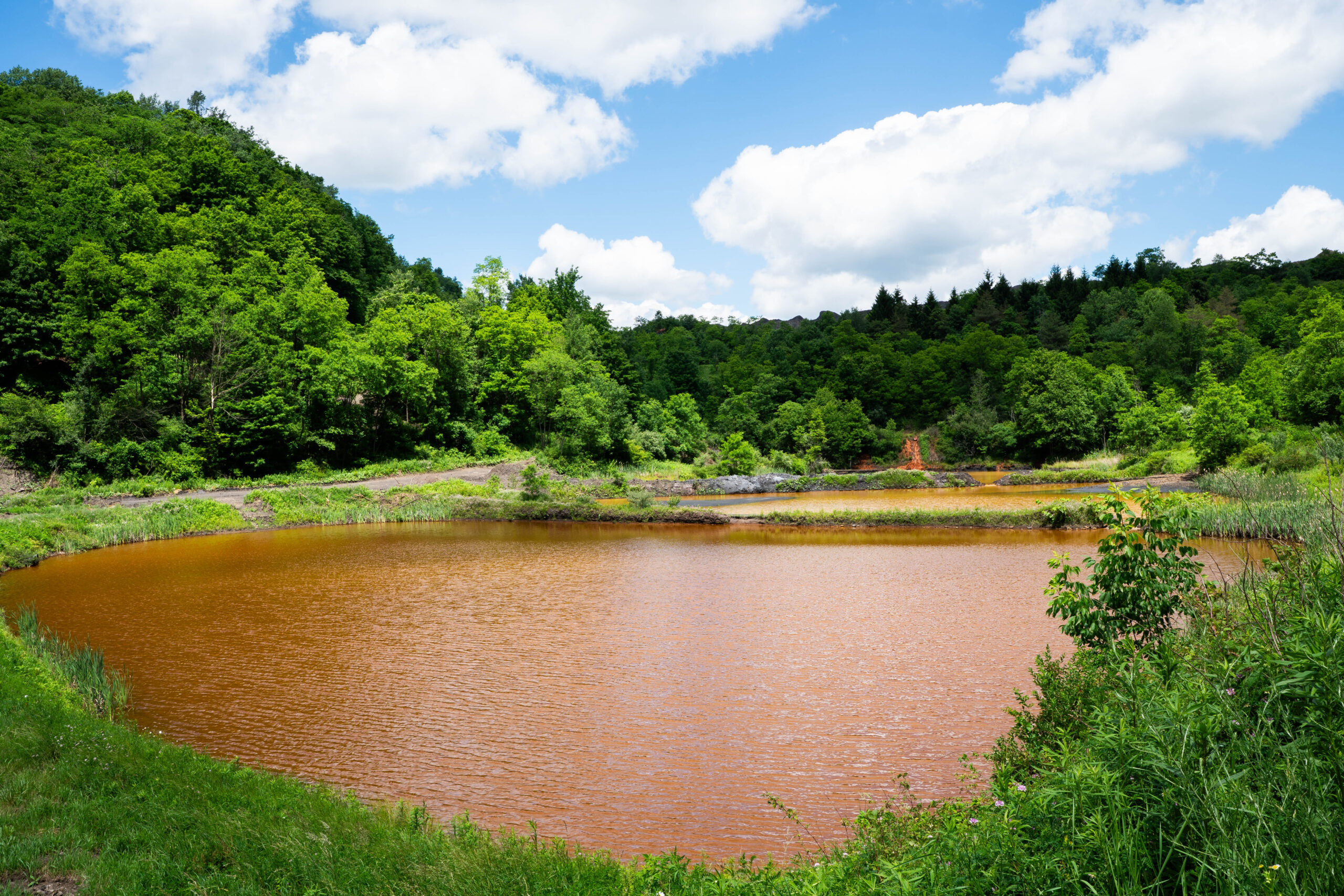
Acid mine drainage in Pennsylvania
Pennsylvania is home to over 86,000 miles of streams and rivers, second only to Alaska, according to the DEP.
More than 48,000 miles of these streams are deemed impaired — meaning they do not meet water quality standards — with one of the leading factors being acid mine drainage; this includes 5,670 miles of streams in the state, according to the DEP’s 2026 Pennsylvania Integrated Water Quality Report.
Acid mine drainage, or AMD, is water polluted by mining operations: When surface water and air come into contact with sulfur-bearing rocks, a chemical reaction occurs, resulting in sulfuric acid.
These fluids are highly toxic and may have harmful effects on humans, animals and plants, according to the U.S. Environmental Protection Agency.
The majority of acid mine drainage in Pennsylvania is caused by underground mines, according to Jon Smoyer, AMD division program manager for the DEP’s Bureau of Abandoned Mine Reclamation
“When the coal companies walked away from these mines, the water just found the first available surface location to discharge, and usually that tends to be along a stream because that’s the lowest surface elevation,” Smoyer said.
Even before these mines closed, the water was polluted with AMD. That’s because coal companies had to pump out water that would fill the mine, which was discharged into the nearest waterway.
“In the heart of our industrial revolution, our streams were the mechanism to carry their waste away,” Smoyer said. “(These companies) weren’t worried about preserving (streams) for recreation, fishing, anything else, it was: that would carry my garbage and bad water and everything else away.”
While most AMD is caused by underground mines, coal waste is also a major contributor. Smoyer says it takes a combined effort of cleaning up both to make a real difference: “You can’t just always address just this problem and ignore the others,” he said.
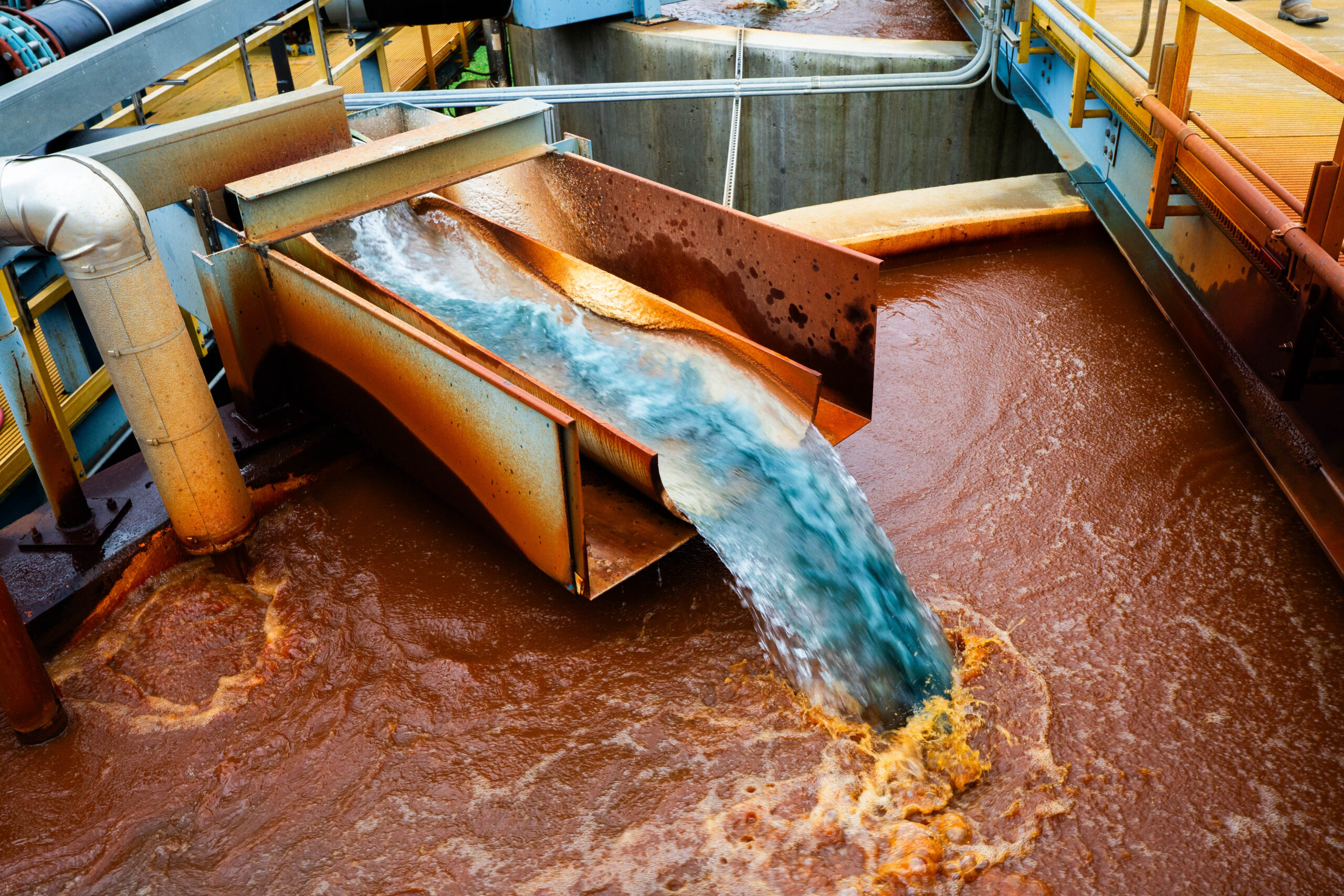
Robindale Energy Services
Known by a variety of names — boney piles, gob piles and spoil piles — coal waste is a by-product of mining operations. There are hundreds of these piles across the states, often found along streambanks, that leach metals into local waterways.
That’s because before the Surface Mining Control and Reclamation Act of 1977, coal companies were not required to reclaim mining land and remove bony piles.
The act ordered coal mining companies to maintain, remove or abandon coal waste (if the site is stabilized). It also set up the Abandoned Mine Land Reclamation Program, which charged operators per ton of coal to fund land and water reclamation efforts.
“But that doesn’t address the legacy pre-1970 problems, which are 100% on the state to treat,” Panaro said, as he stands a top a mountain of coal ash, watching a parade of trucks work around the clock to remove coal waste from a site in Ebensburg, Pennsylvania.
Below him sits one of the largest piles of coal waste in the state, known as Mine #33, which used to be 40 million tons before Robindale Energy Services began to remove it over 25 years ago.
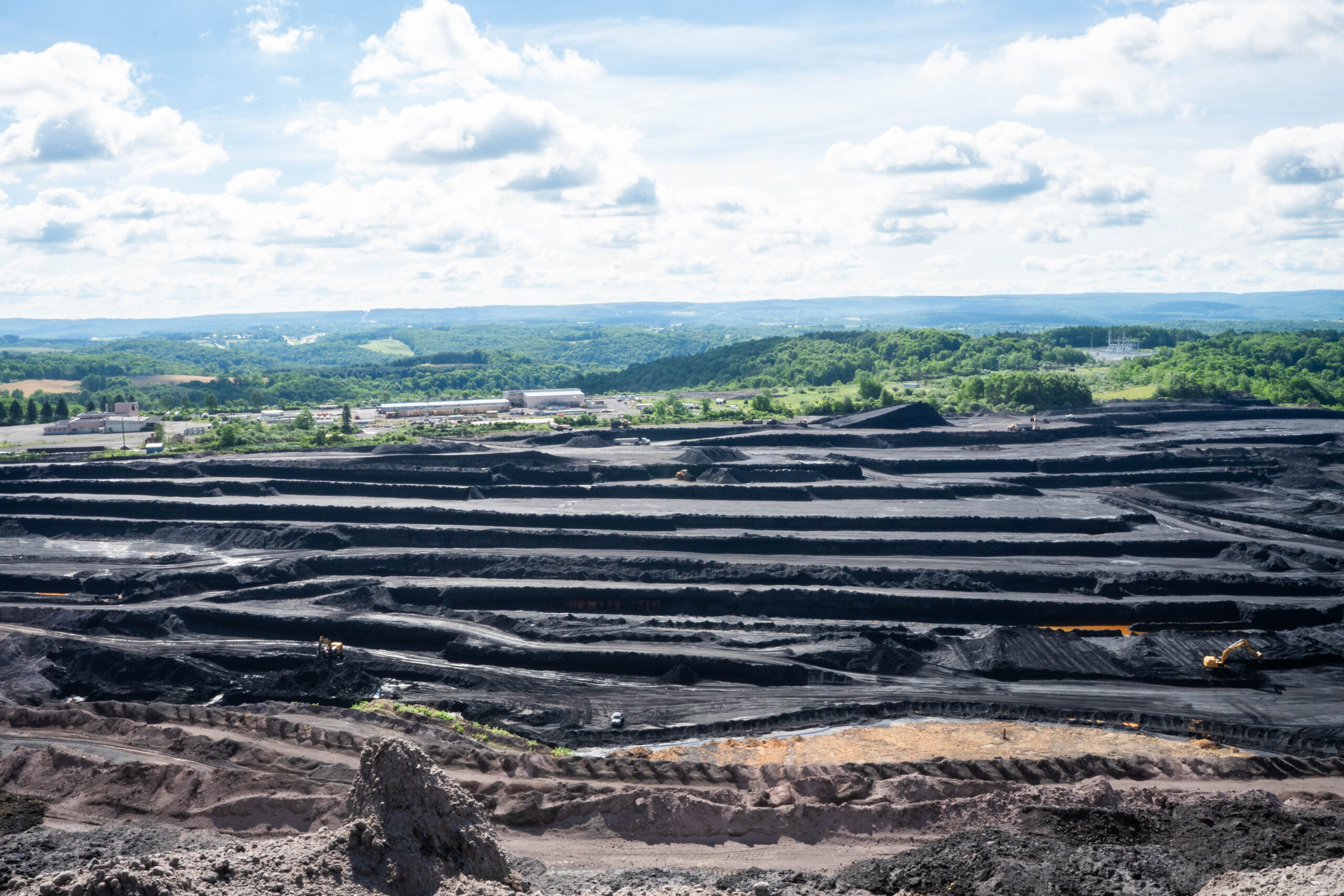
The site, home base for Robindale, used to be owned by Bethlehem Steel Corporation and closed in 1964. The company deals with piles both big and small: cleaning up a site can take anywhere from a week to years.
Robindale also buys boney piles from companies with post-1970s sites to reclaim: “We get the asset for us, of the refuse to use as a fuel supply. Those companies are ridding themselves of the environmental liability,” Panaro said.
Once the coal waste is collected, it is transported to one of three power generation plants the company owns to be burned for electricity. Robindale supplies over 26,000 tons per day of fuel and limestone to these power plants.
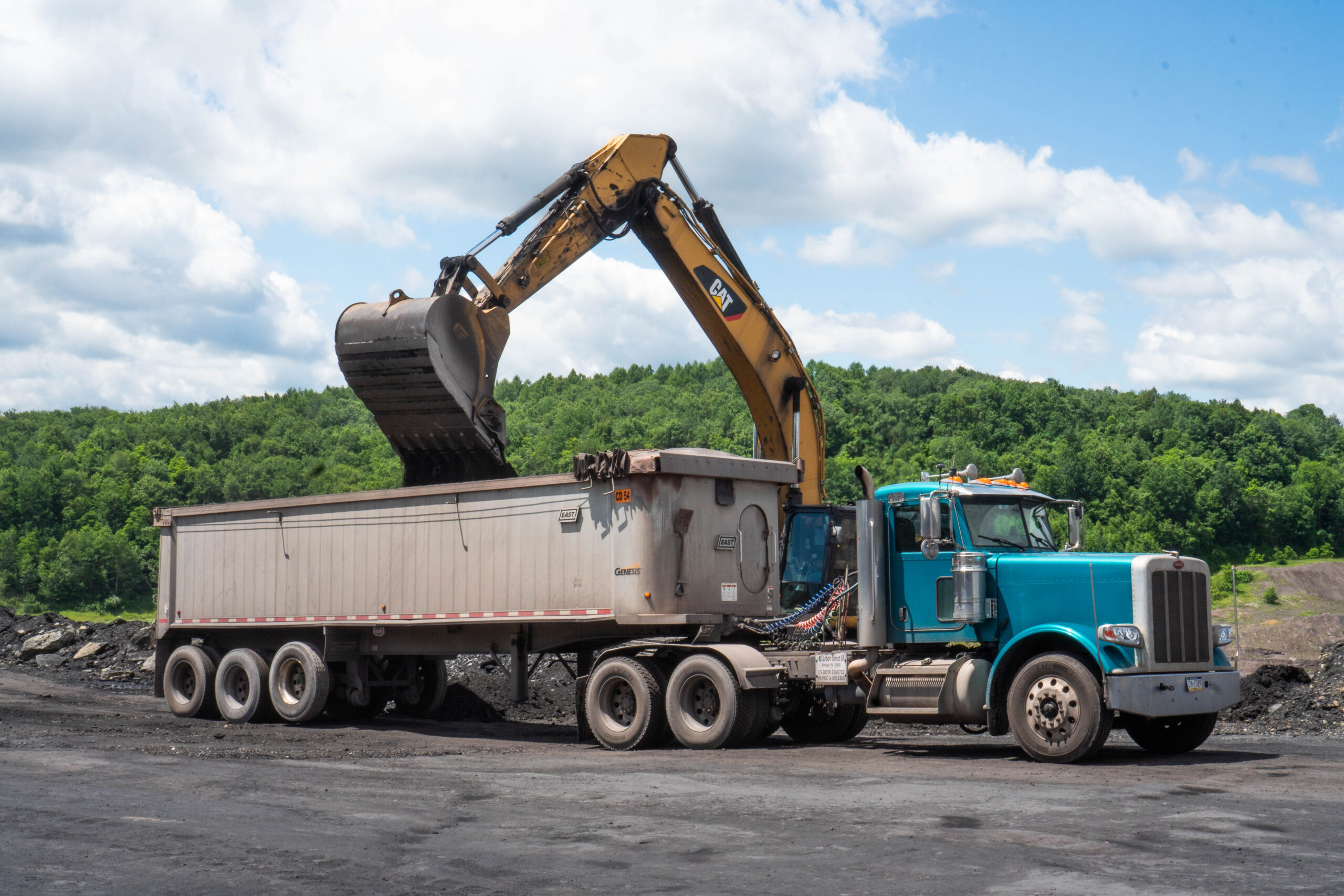
That’s how the company is able to fund most of its projects: through revenue from burning coal waste as fuel. More recently, the company has received some funding through the U.S. Department of the Interior’s Office of Surface Mining Reclamation and Enforcement’s Abandoned Mine Land Economic Revitalization program.
Reclaiming coal mining sites has also led to partnerships with local county conservation districts (and old friends).
“There’s been this local effort, the realization of what can we do to work together to try to get that out,” Panaro said.
Friends form a partnership
Mark Stockley, project manager at Cambria County Conservation District, and Panaro grew up only two miles apart in the small town of Saint Benedict. Both had a family legacy of working in the coal mines.
“We grew up in that northern Cambria part of the county where mostly everybody either had a father or uncle or grandfather working the coal mines or on the farm,” said Stockley, whose grandfathers and uncles worked in the mines.
For Panaro, cleaning up bony piles is a full-circle moment: His grandfather emigrated from Italy to Elmora, Pennsylvania to work in the coal mines.
“He was 17, and his brother was 21, and they came from Italy to work in Bakerton in the coal mines, and we’ve cleaned up every bony pile in Bakerton,” Panaro said. “Then, my dad worked in the coal mines for Bethlehem for 32 years, and I’m reclaiming coal that he mined.”
These childhood friends would eventually work together to reclaim boney piles, including one in Vintondale, Pennsylvania, that was located next to Blacklick Creek.
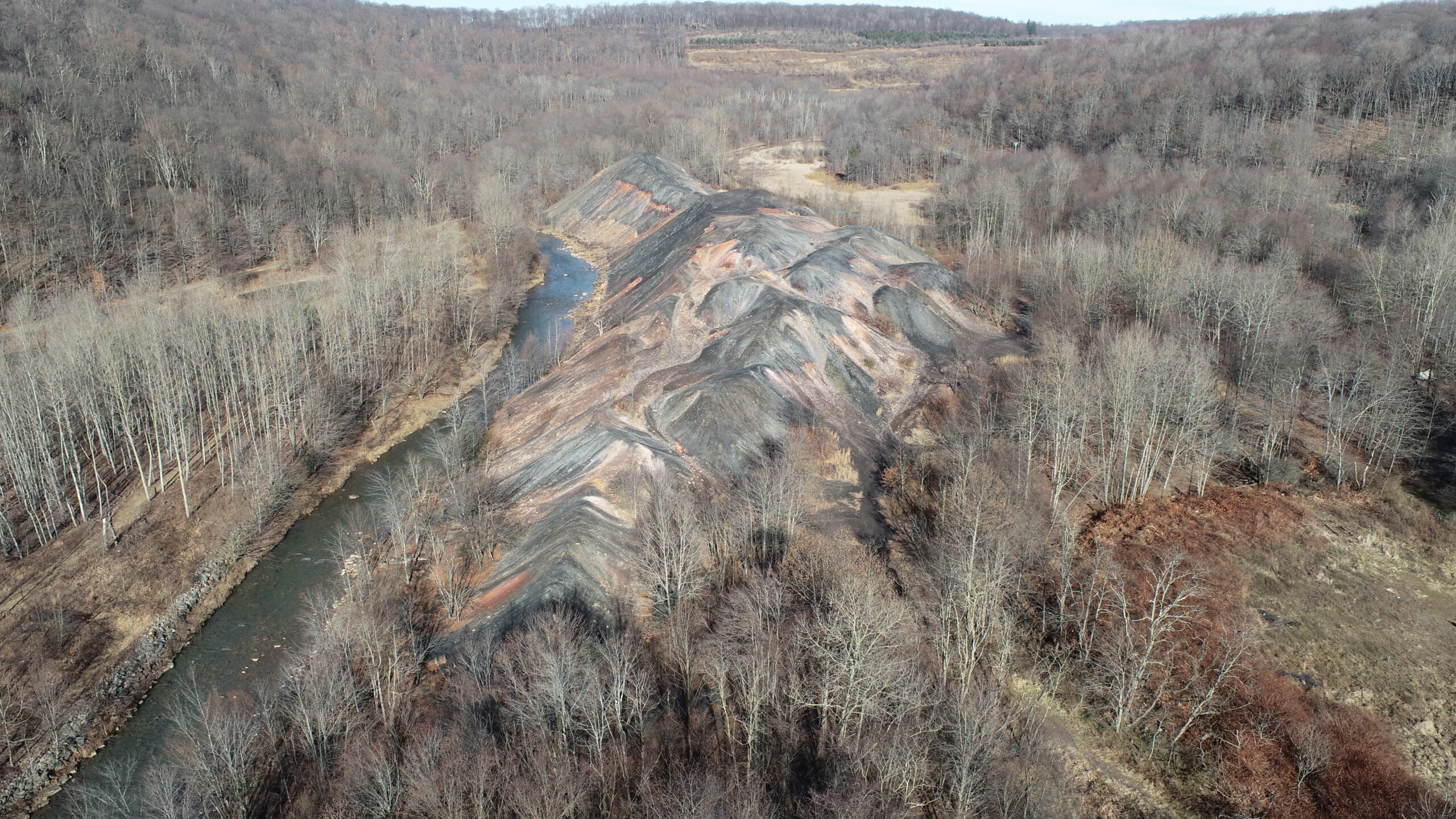
Robindale works as a contractor to remove the boney piles before the conservation district works on streambank restoration.
For these projects, the conservation district has received funding through the DEP’s Environmental Stewardship Grant program and the Growing Greener Program, said Stockley.
Between March 2022 and September 2023, Robindale removed 350,730 tons of coal waste from the Vintondale pile — 8,700 of these tons were leaching sulfur directly into the South Branch of the Blacklick Creek, contributing to AMD.
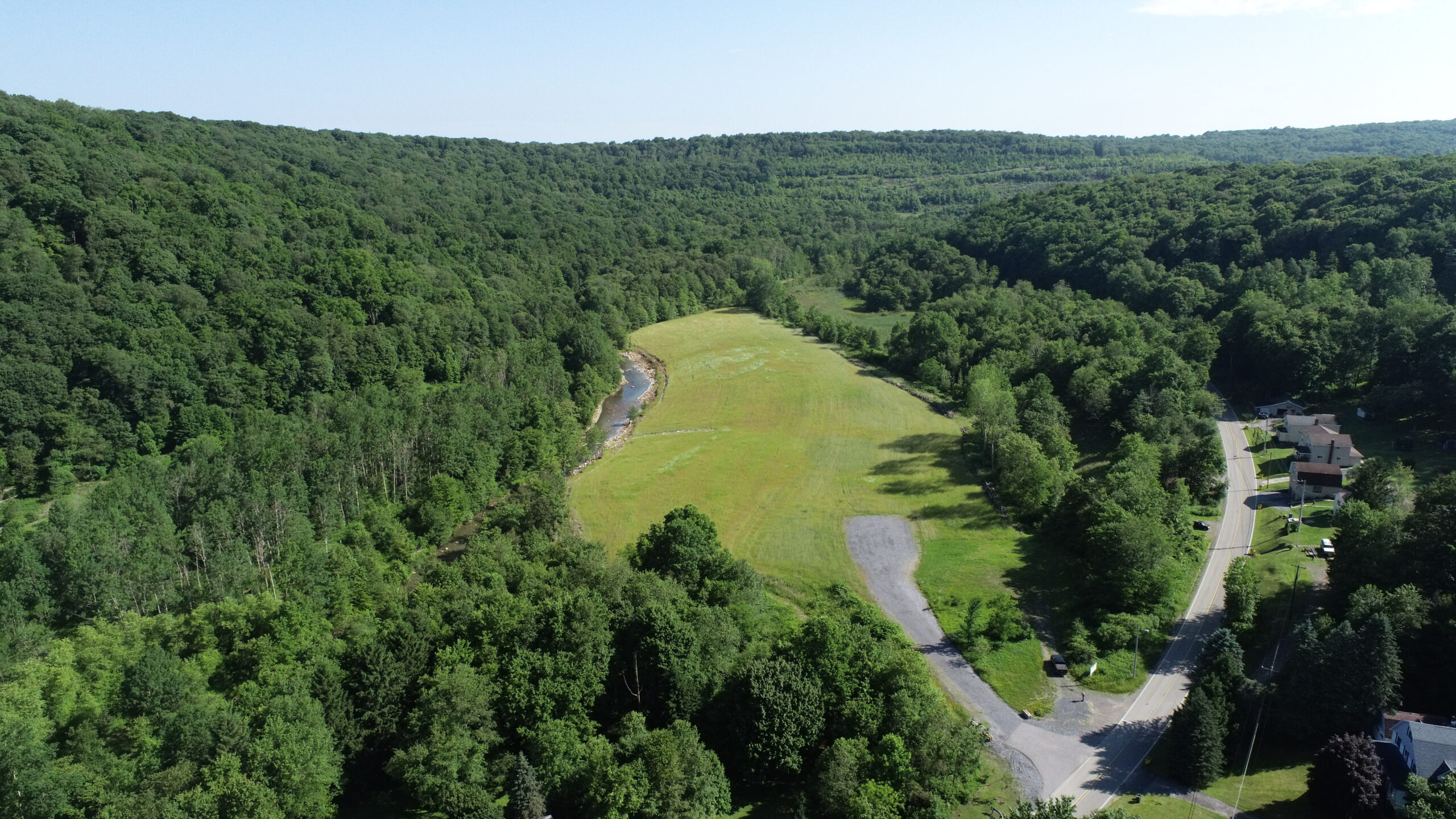
“Nature does heal itself, as we’ve seen with the South Branch (of the Blacklick Creek), once you remove these refuse piles,” Panaro said.
”Everybody was really astounded how quickly (fish and aquatic insect populations) rebounded.”
These efforts to restore the Blacklick Creek were accelerated with a recently built DEP active amd treatment facility located in Vintondale.
Restoring the Blacklick Creek
For 20 years, Smoyer has been working on plans to build an active treatment system to clean up acid mine drainage in the Blacklick Creek.
The plant, fully operational last summer, would cost over $28 million to build — possible through state budget and AMLER funding.
The treatment plant eliminates discharge from three underground coal mines in Indiana and Cambria counties: the Red Mill (Commercial 16) mine, Vinton 6 and Wehrum mine.
Combined, these mines were spewing out 2,400 gallons of discharge a minute into the Blacklick Creek, according to Ryan Farabaugh, mining engineer consultant with the DEP Bureau of Abandoned Mine Reclamation.
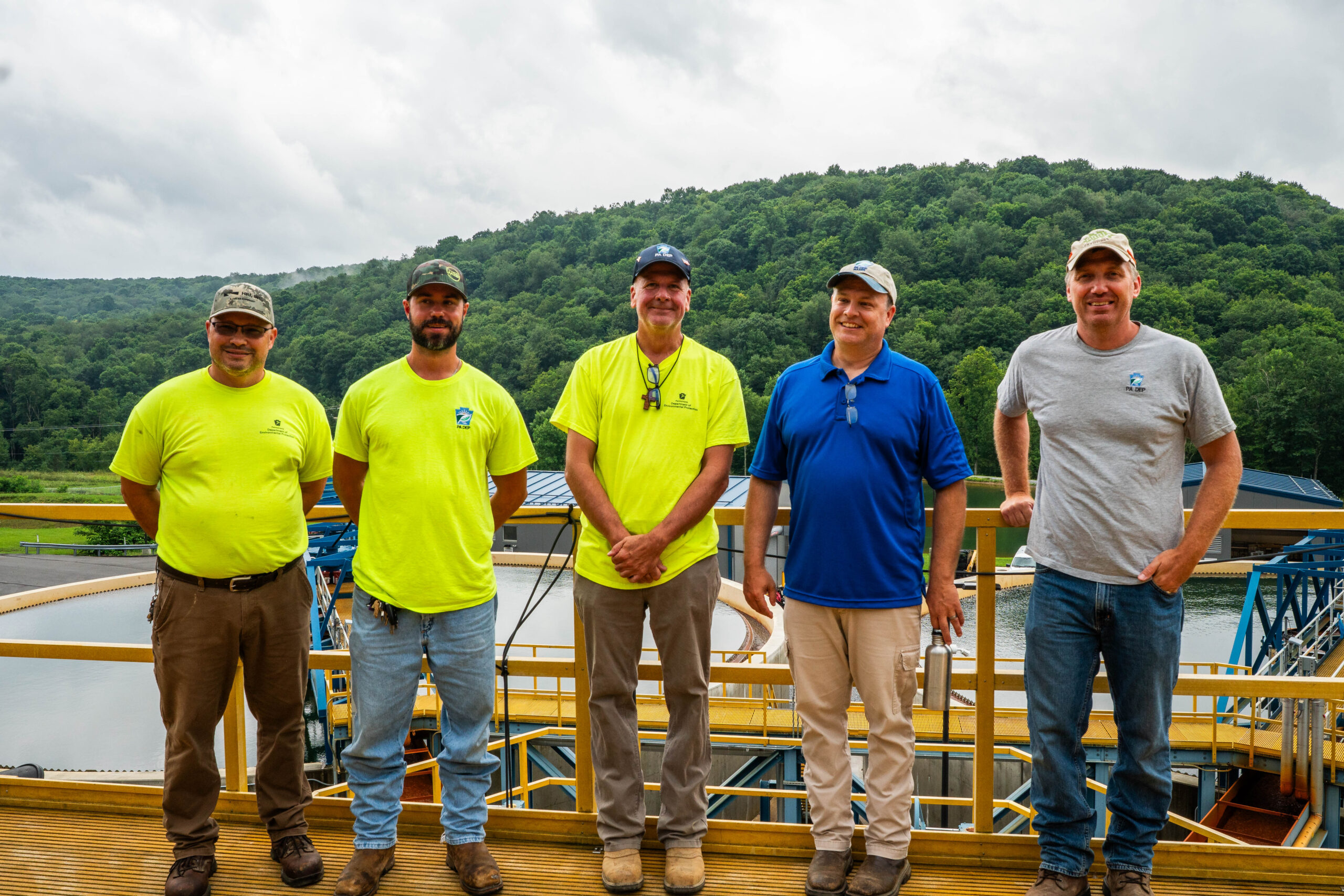
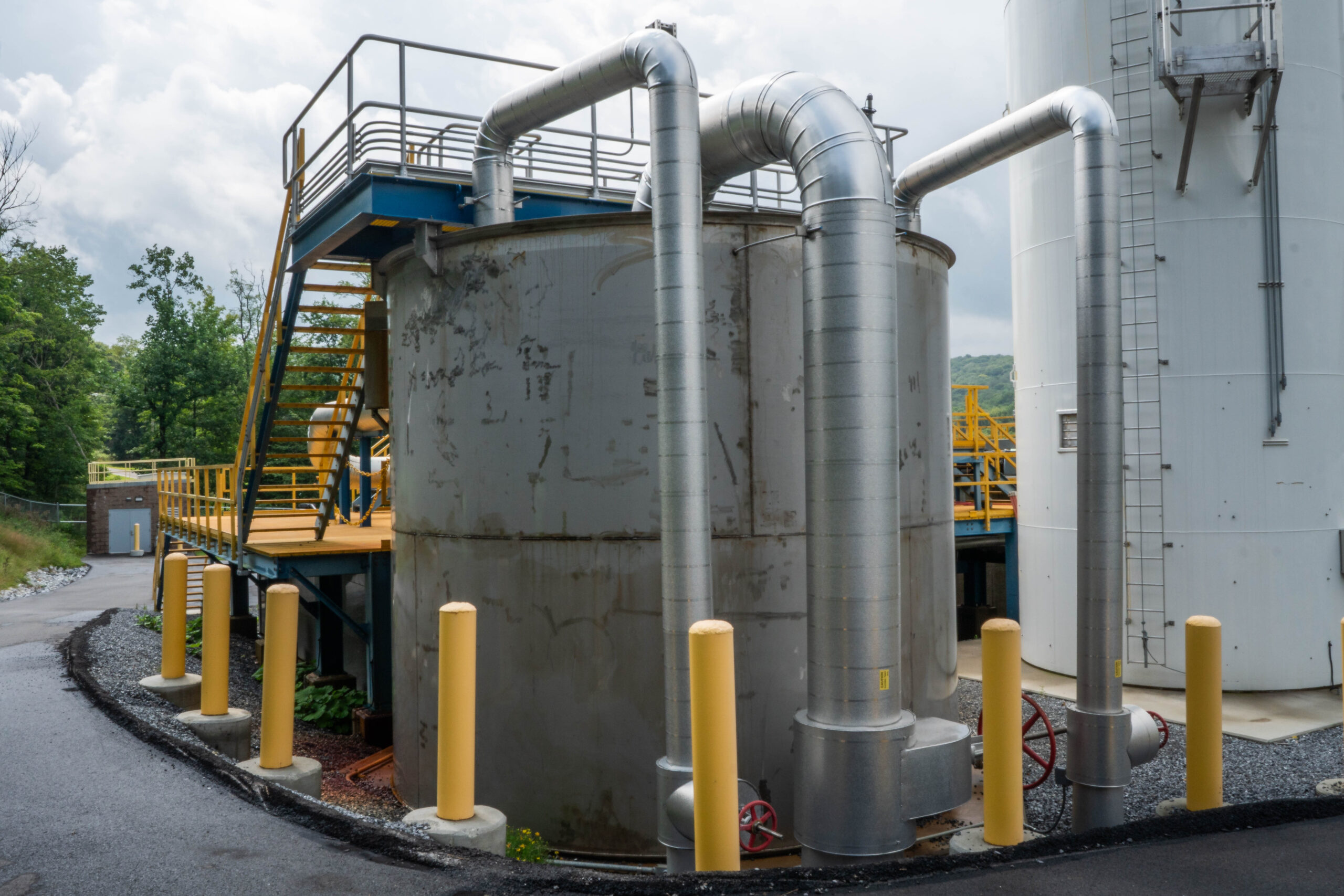
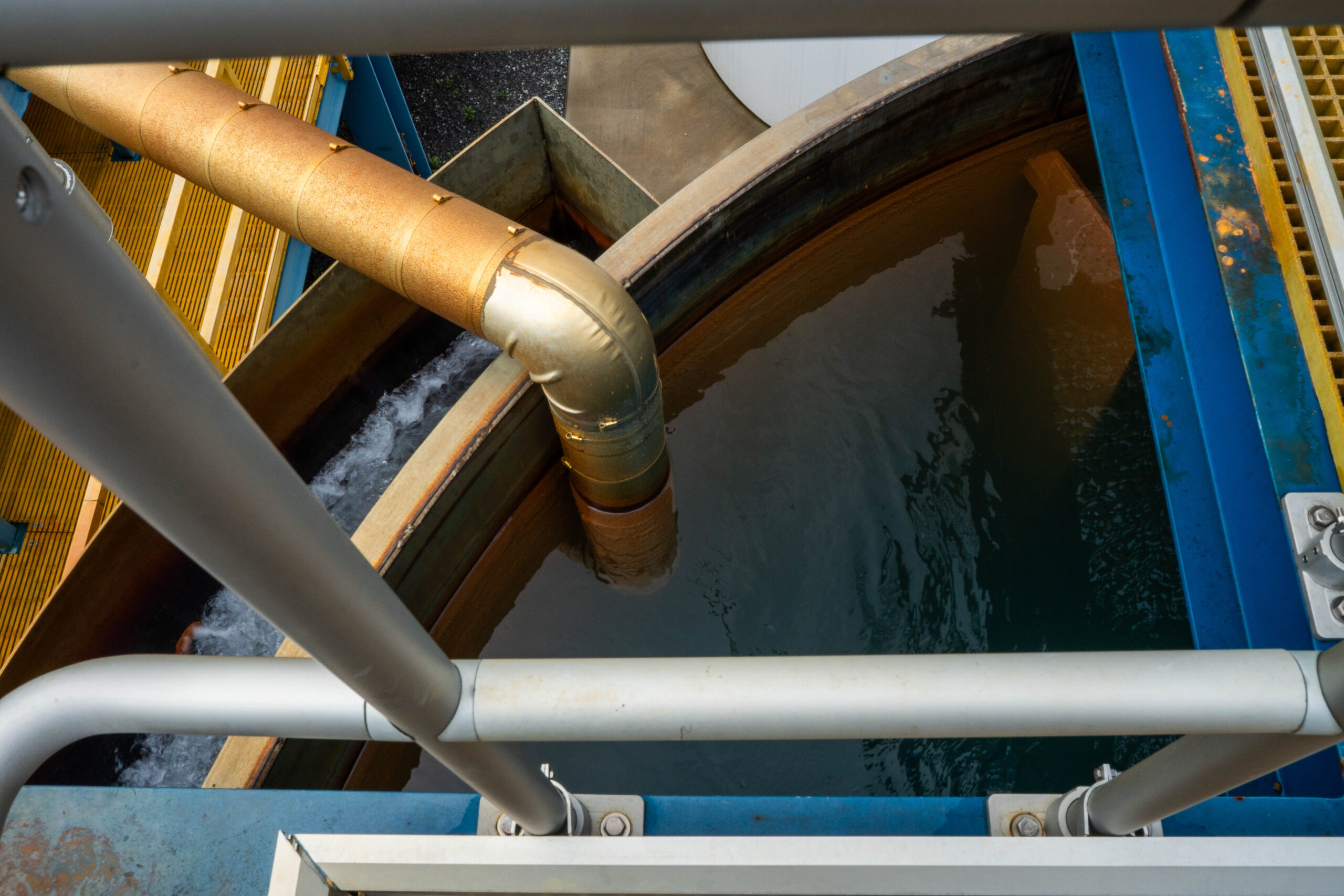
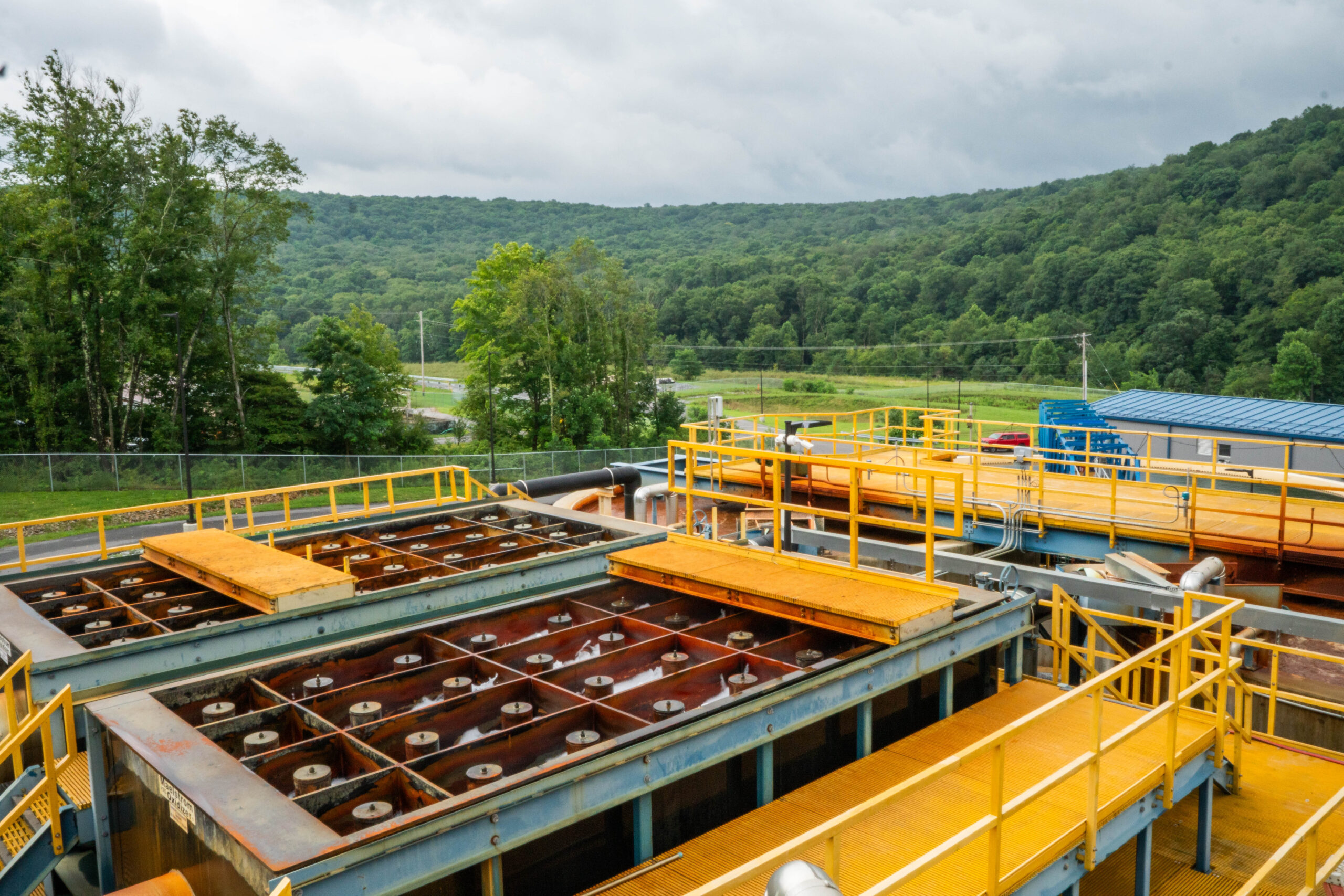
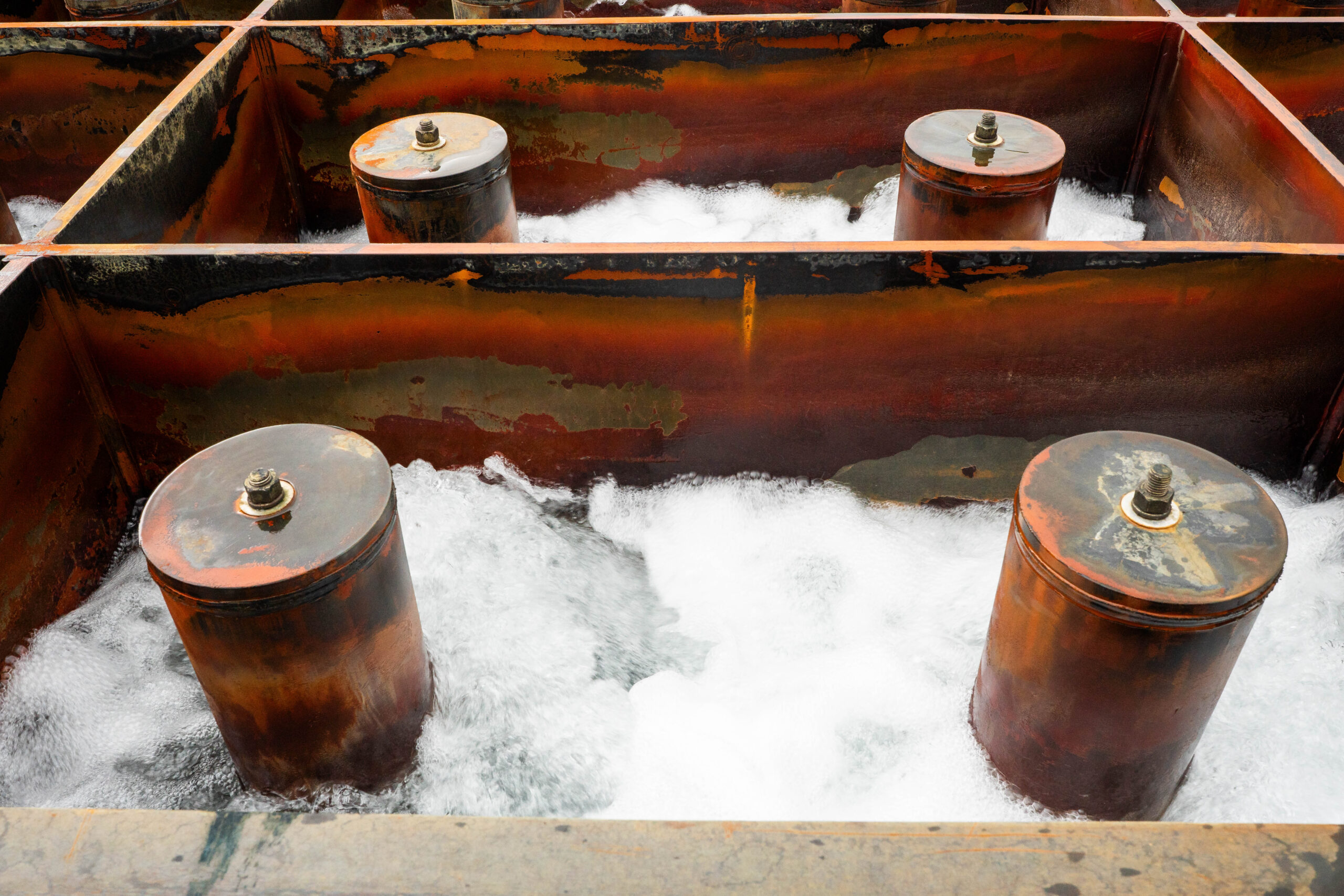
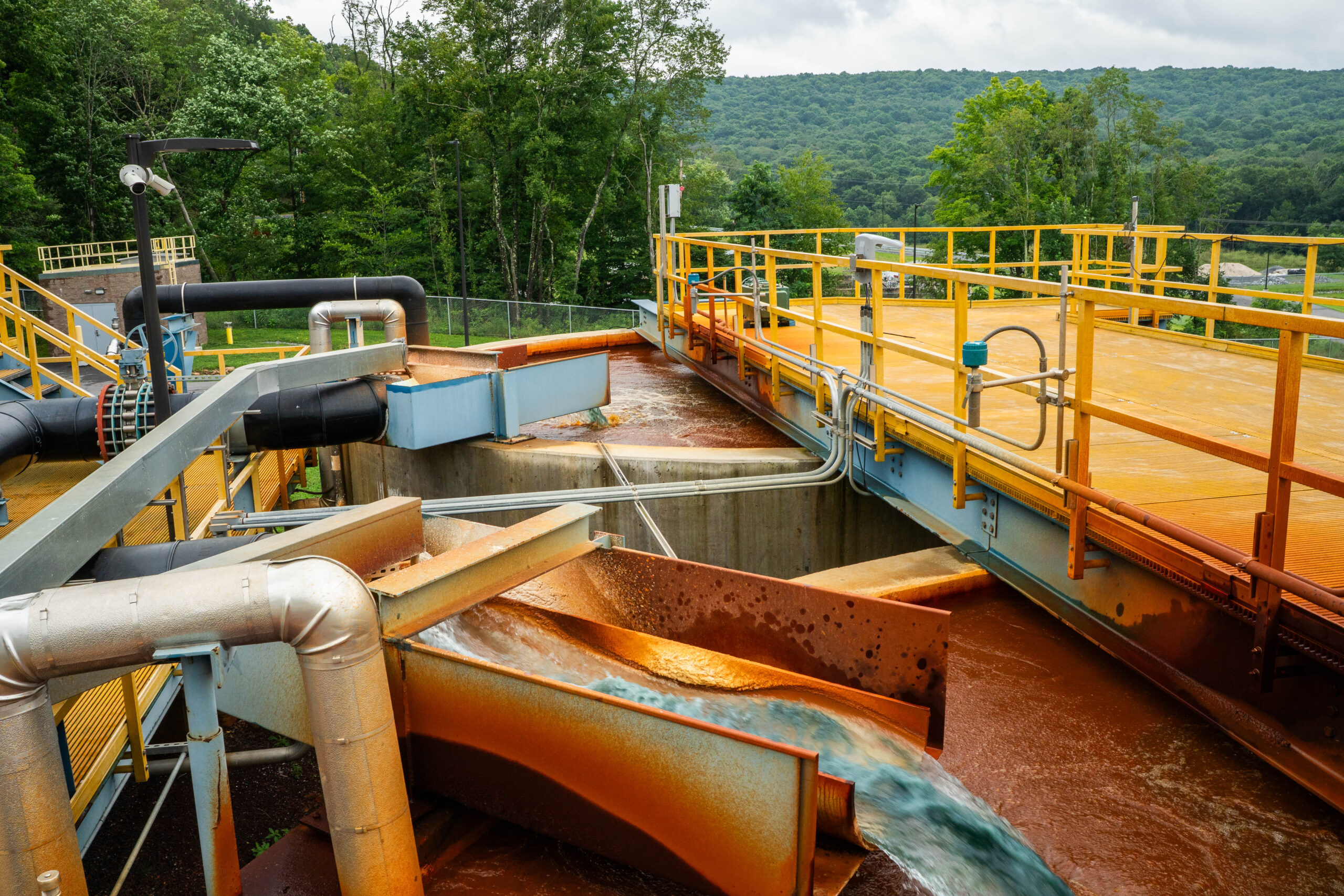
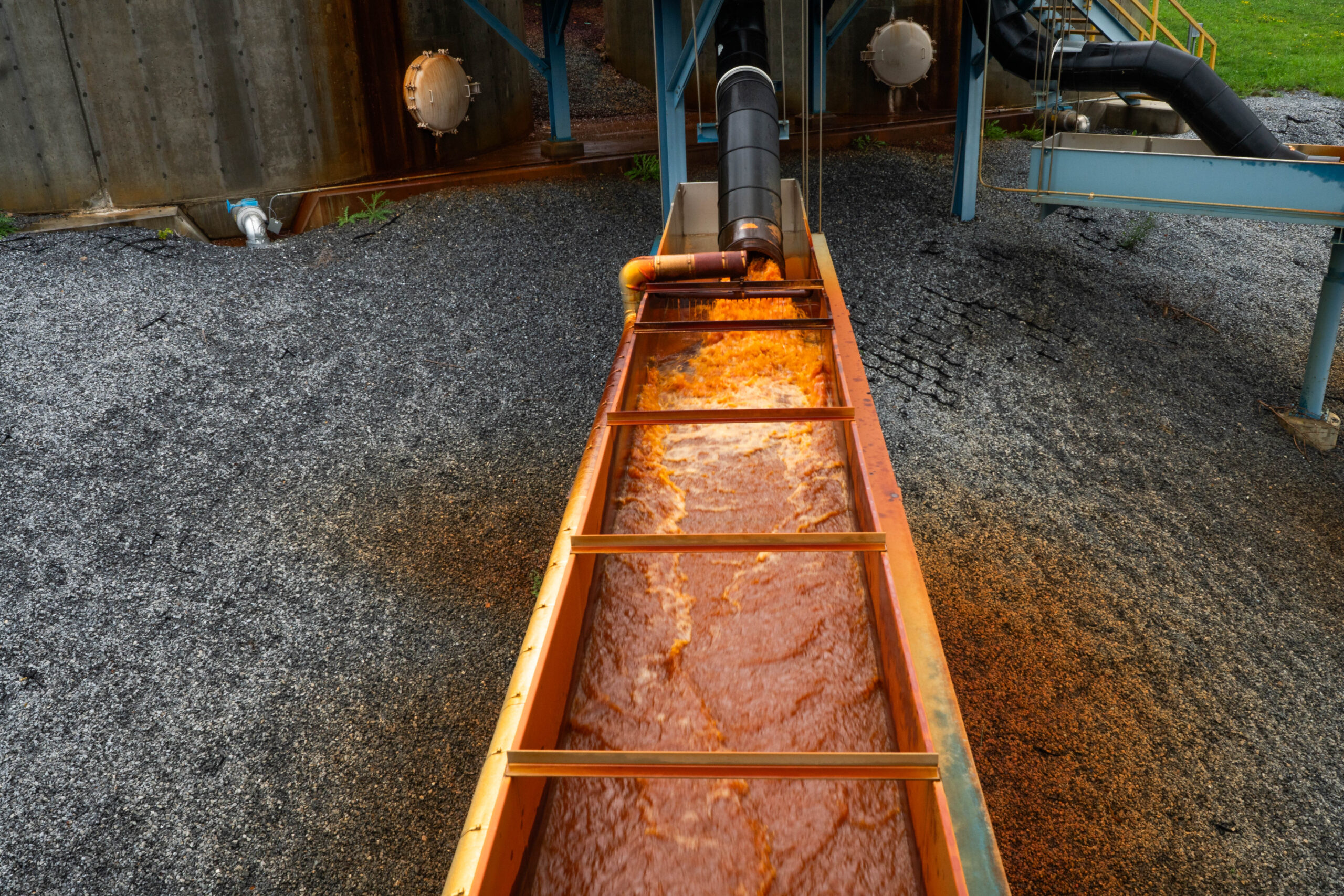
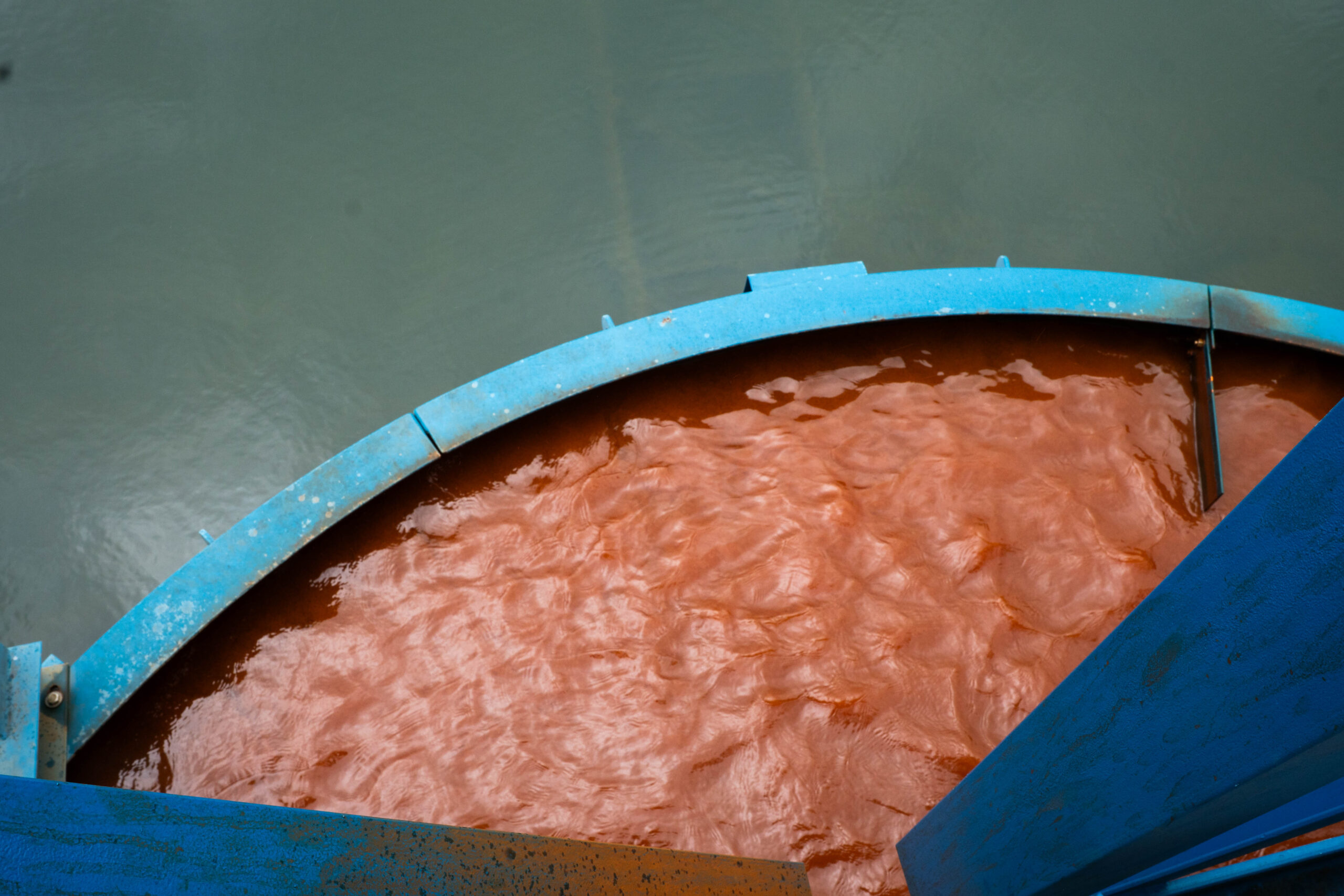
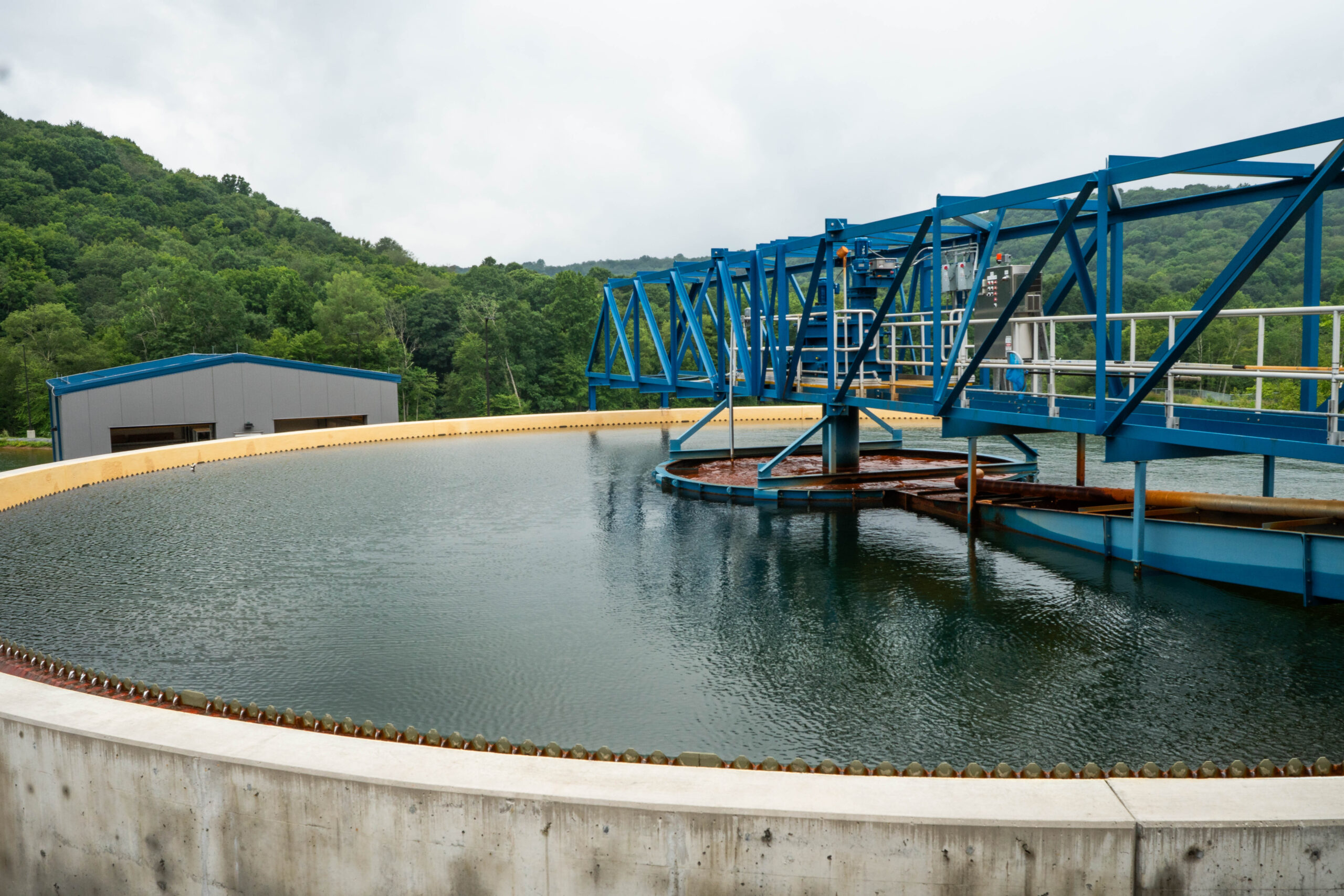
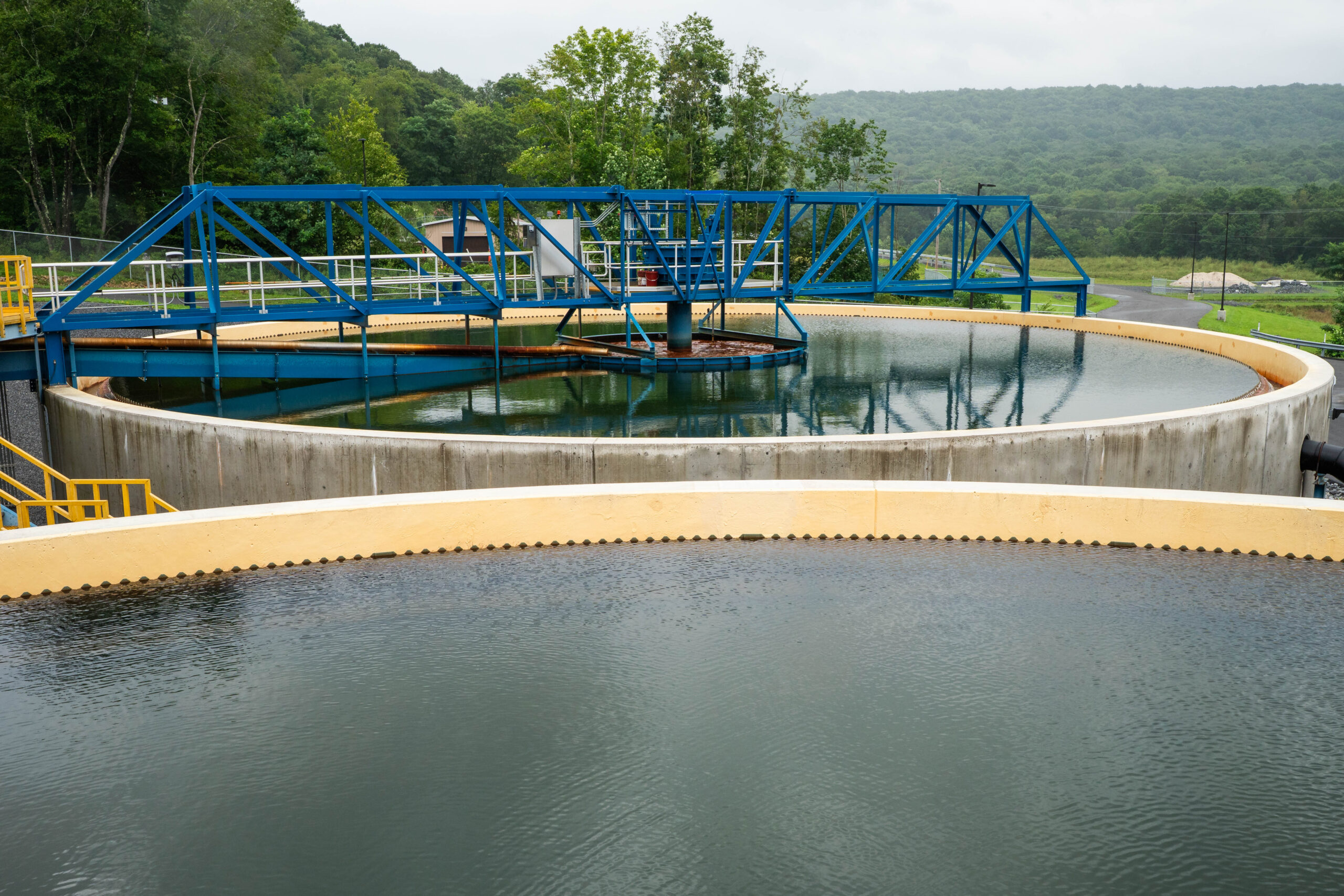
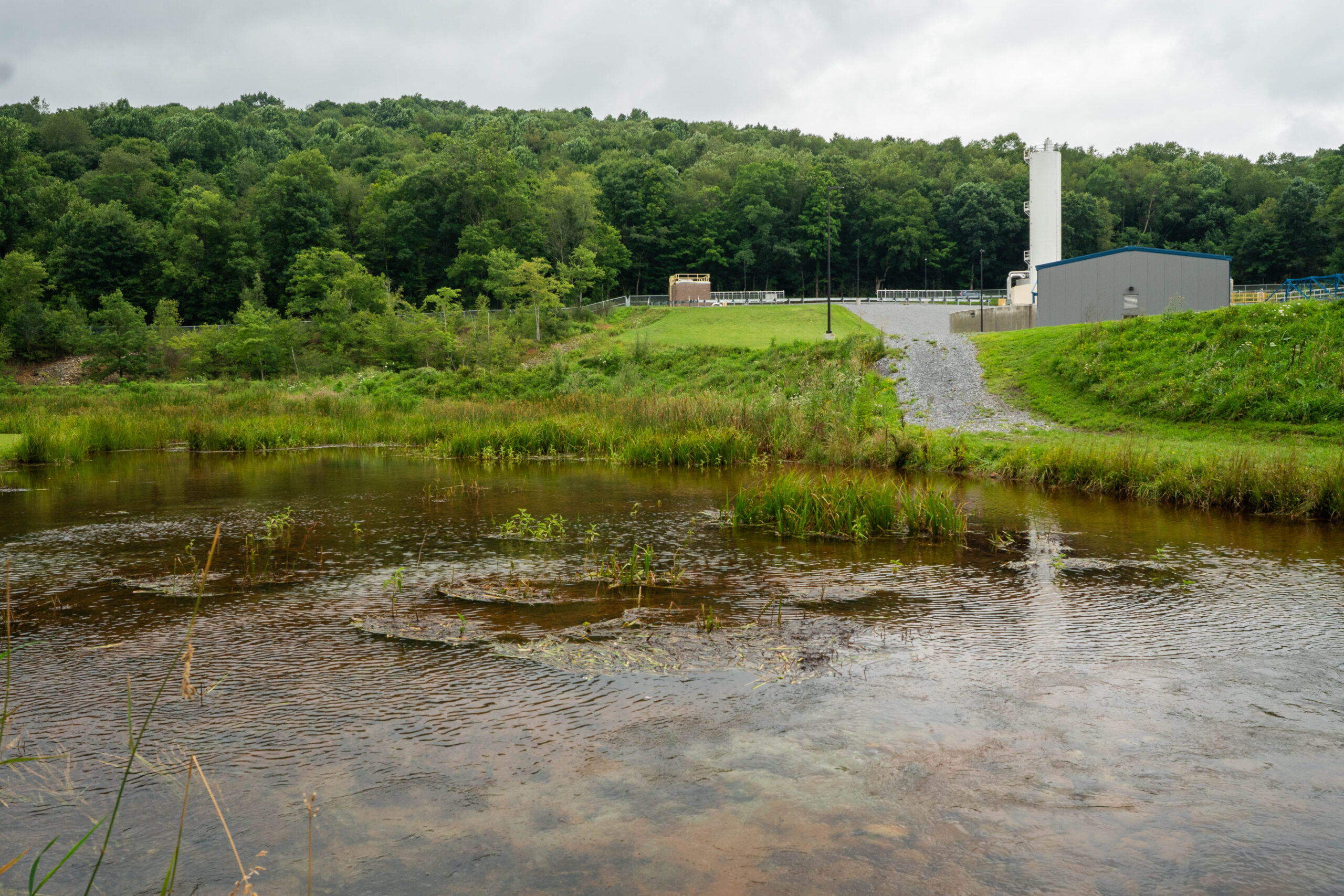
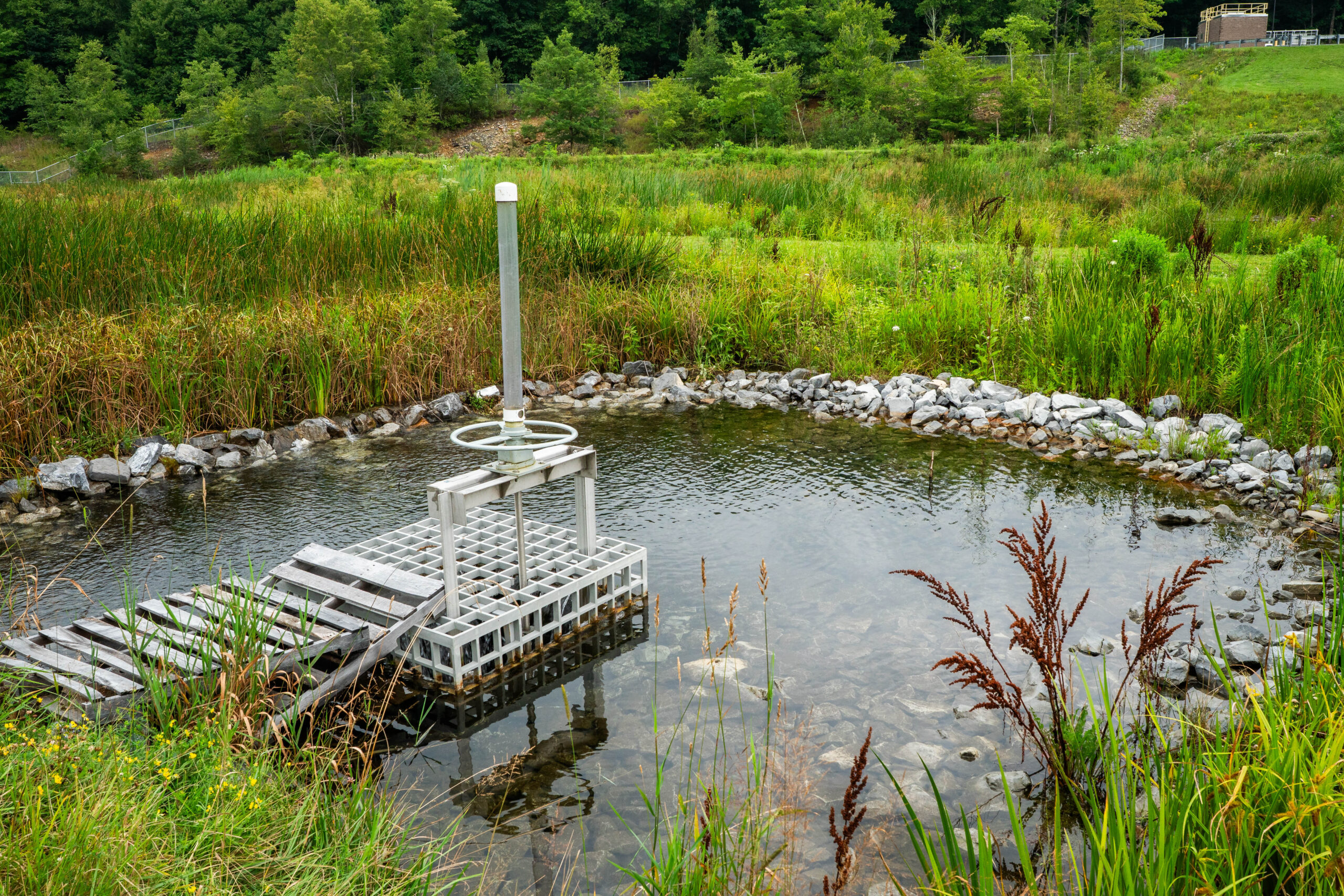
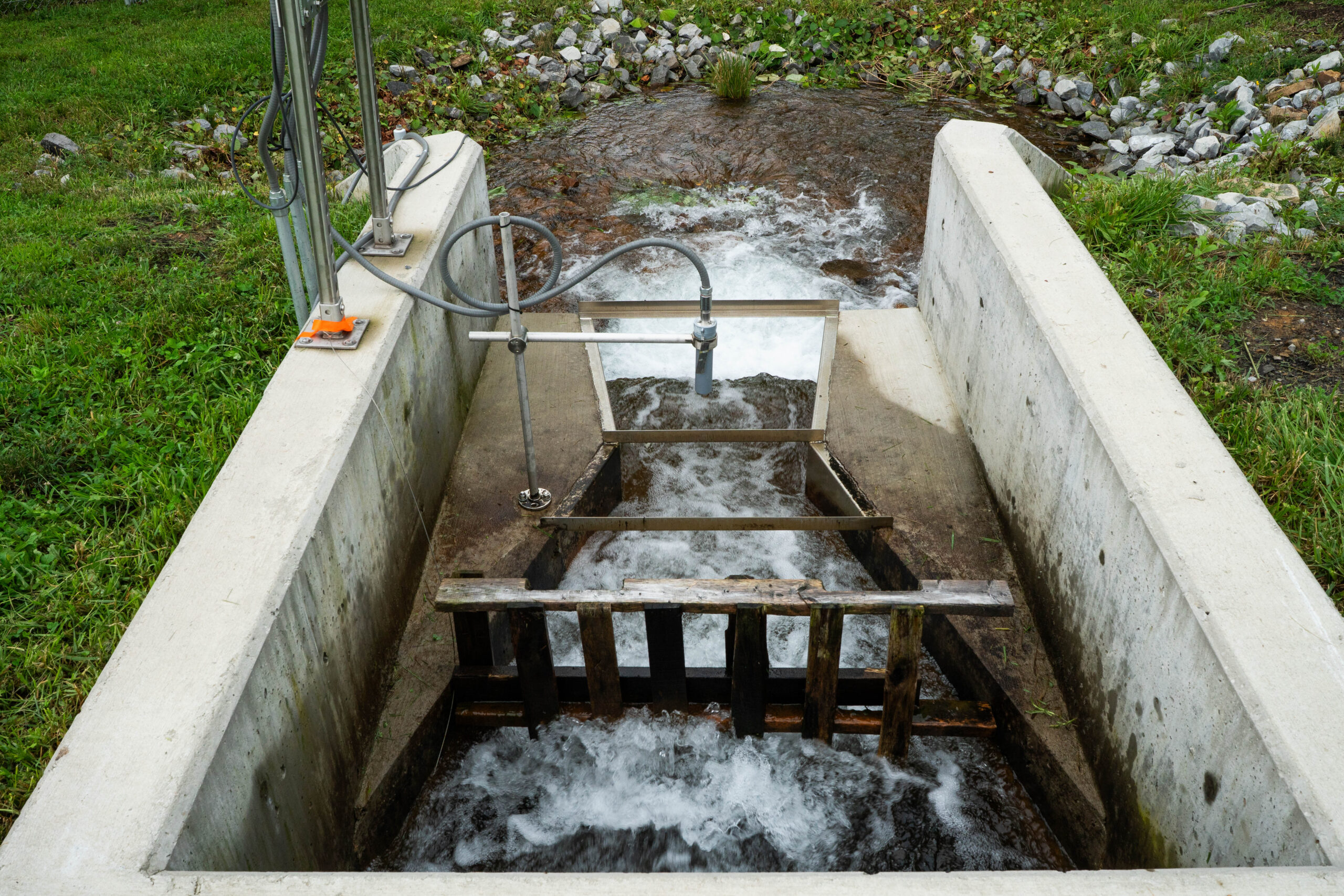
The first several years of the project would consist of planning.
That’s because, to start, the agency needs to locate the mines using “underground working maps” before figuring out how to connect the discharge from the mines together and transport it to the treatment plant.
These projects also consist of pipelines to transport this discharge, something that requires landowner permission. Construction wouldn’t begin until summer 2022.
This would include connecting the Red Mill mine discharge to the Vinton 6 mine through injection wells. From the Vinton 6 mine, two vertical turbine pumps push this water up, and, via pipelines, transport it to the active treatment site.
This same process would occur at the Wehrum, with another two turbine pumps transporting this water to the treatment site. From there, the water is collected in a big water tank before before air is added, allowing carbon dioxide to escape.
Then, lime is added to the water to bring up the pH levels and filter out metals by turning them into a solid sludge. Finally, this clean water is transported through a fleshing pond and wetland before being returned to the Blacklick Creek.
The plant operates 24/7, and will continue in perpetuity: “There’s no way to stop acid mine drainage. We’re just subject to it, and all we can try to do is manage and treat it,” Smoyer said.
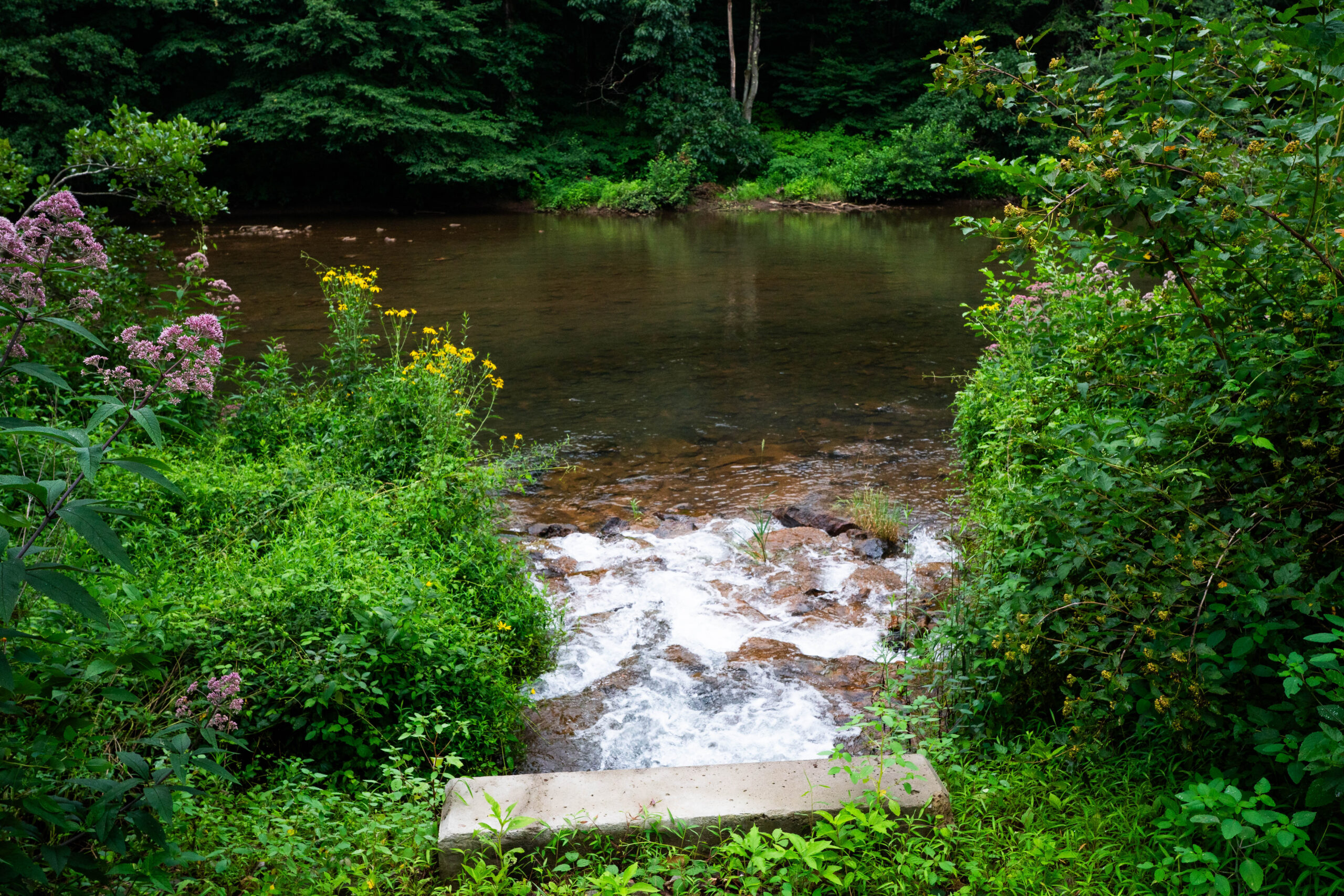
The treatment plant has restored roughly 25 miles of the Blacklick Creek.
Already, it has improved conditions in the stream, and the DEP has plans to conduct its first biological survey this month, which will assess how fish and macroinvertebrate populations have recovered.
Healing generations
Like Panaro and Stockley, most employees who work for the DEP have fond memories of growing up with orange creeks.
“We’d go to a playground and we’d have to jump across a creek. It was sulfur creek, and it was running red,” Farabaugh recalls, adding kids would ride dirt bikes up boney piles near his elementary school in Bakerton, Pennsylvania.
“When you grew up right in this area, that’s just how things are. It wasn’t until I got older that I realized that’s not how the rest of the world is,” he said.
Now that the treatment plant has been active for over a year, Smoyer says there are a lot of residents waiting and watching to see how life bounces back in the creek, something that “takes time.”
Meanwhile, Panaro and Stockley are already taking advantage of the new fishing opportunity and thinking of loved ones who didn’t get the chance to see it.
“If my father was still alive and he saw trout in the West Branch of the Susquehanna River, he would just be amazed,” Stockley said.
“A lot of the older generation thought something like that could never happen, so when you see stuff like that, you see streams coming back that (were only viable over) 100 years ago, and now they are, it’s amazing.”
(Liz Partsch can be reached at epartsch@farmanddairy.com or 330-337-3419.)





Very informative. Thanks,Liz!