





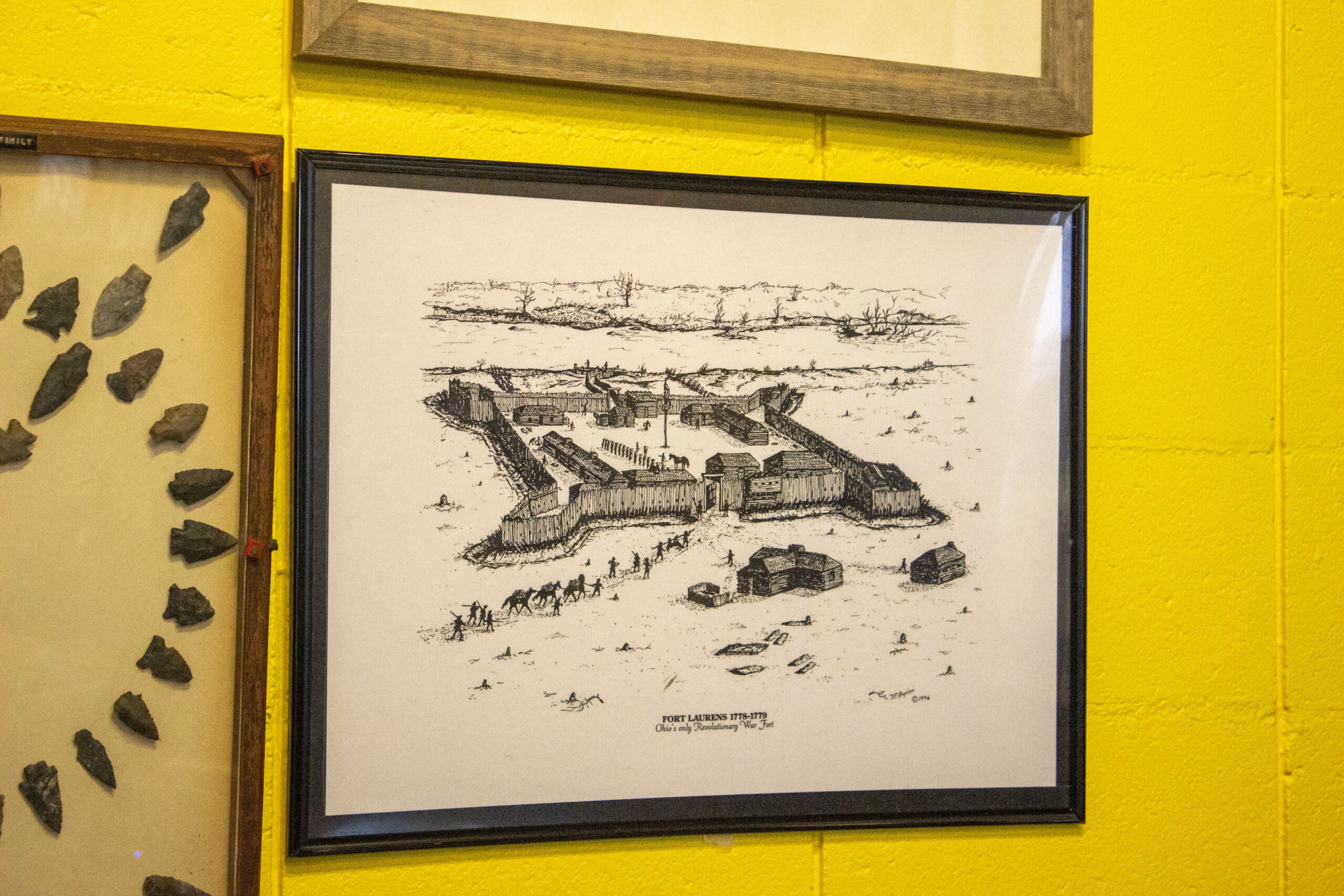
BOLIVAR, Ohio — In November 1778, over the course of 10 frantic days, about 1,300 Continental soldiers built a ramshackle but formidable stockade near a bend of the Tuscarawas River. In the midst of the American Revolution, they felled trees and muscled 300‑ to 400‑pound logs across the frozen ground, securing themselves as best they could behind rough‑hewn walls on a bluff above the water. They were safe, at least for a while.
Fort Laurens, envisioned by a French military engineer, was meant to serve as a springboard for a push west toward British strongholds and allied Native villages in the Ohio Country, a foothold from which to wrestle the farthest reaches of a fledgling nation away from the grip of a waning, bloated empire. But over the next nine brutal months of bitter cold, hunger, terror and bloodshed, the garrison of roughly 100 men left to hold the outpost was worn down so badly that Gen. George Washington ultimately ordered it abandoned by the following summer. The fort was left for nature to reclaim, its memory buried.
More than two centuries later, the fight at Fort Laurens is over, but the story of the soldiers’ doomed mission there won’t stay in the ground.
“History is for everyone,” archaeologist Sarah Leitch told a Farm and Dairy reporter Aug. 8 during a special guided public tour of the grounds. “Everyone makes history. It should be accessible to anyone and everyone, regardless of any life circumstance.”
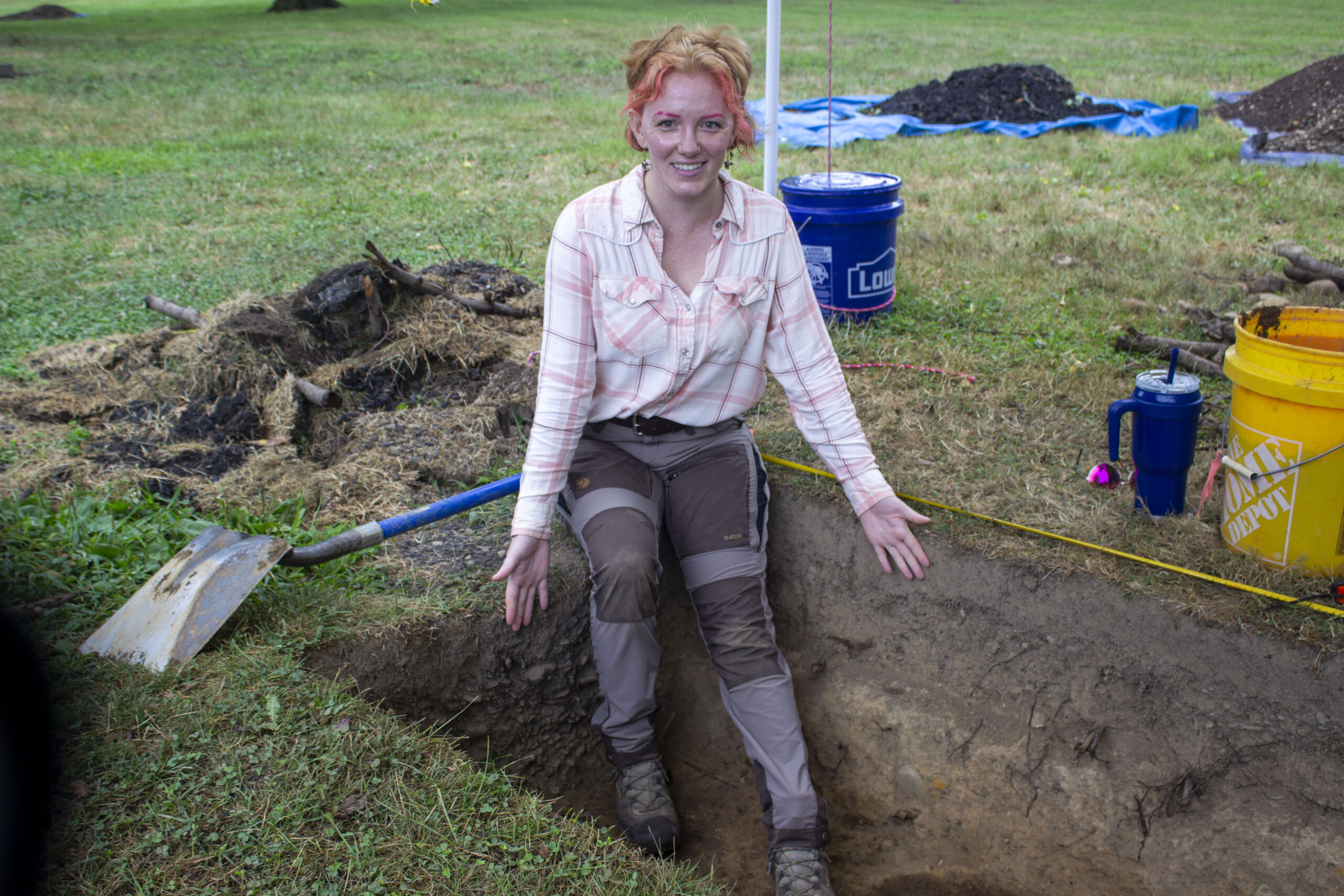
Several excavation sites — some only a few inches deep, others dropping a couple of feet below the grass — trace what would have been the western and southern walls of the fort, cutting down through dirt and old rock fill leftover from a major dig conducted in the 1970s to expose ledges of the original trench walls the soldiers dug.
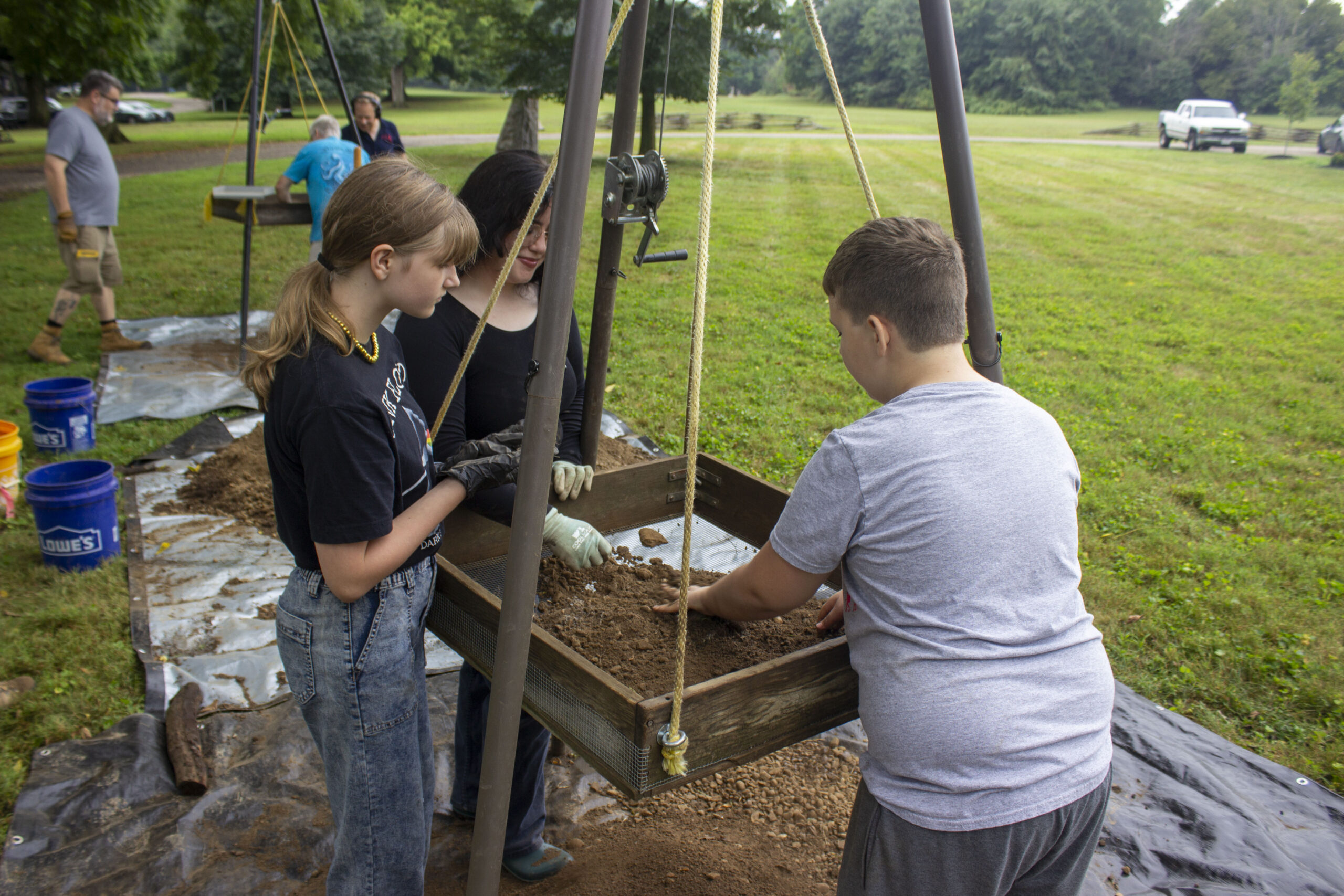
Visitors can get in on the action, too, sifting through piles of soil and stone in search of small treasures lost to history. The latest efforts, led by the Ohio History Connection, is part of an ongoing project at Fort Laurens where a small, seasonal crew is re-mapping the complex’s footprint post by post so planners can accurately rebuild key sections of Ohio’s only Revolutionary War fort. They’re hoping to have it completed by 2028.
The things they carried
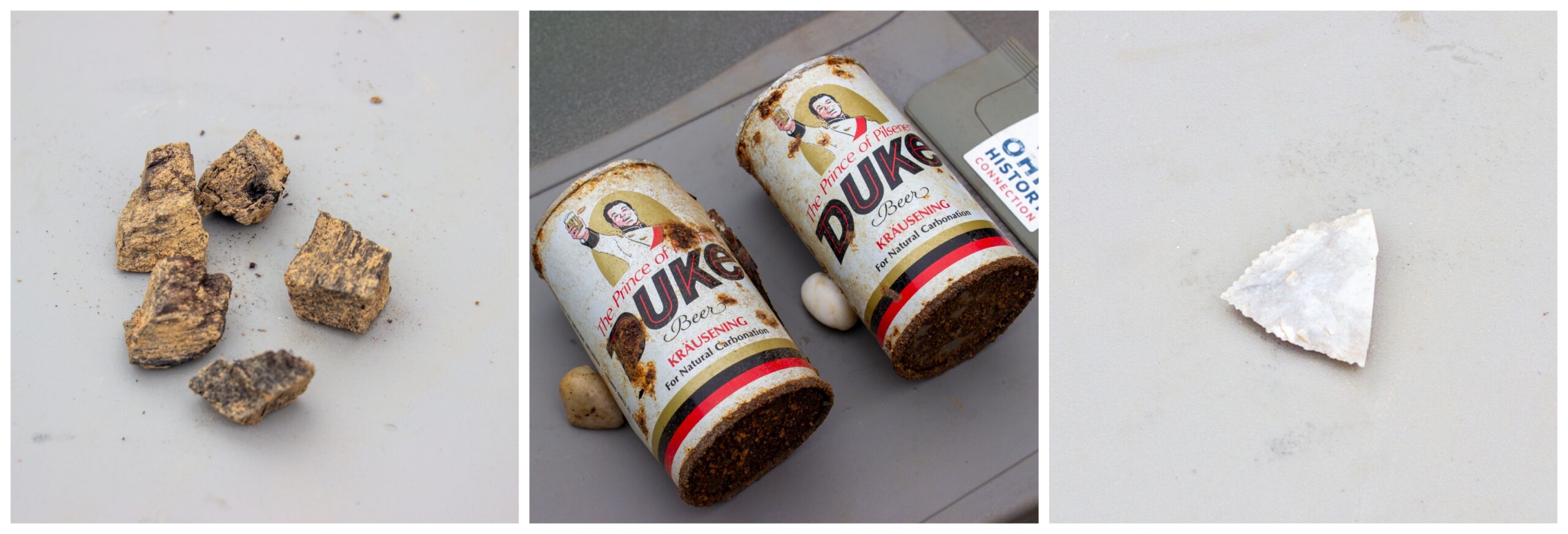
Crews and volunteers have turned up lead rifle and musket balls, one shaken loose from the soil only days ago, as well as cooked and butchered bone, a small pewter button and even fragments of the original post wood the fort was constructed with. They’ve turned up prehistoric lithics such as arrowhead flakes and a tiny serrated “bird point” sharpened by antler from Indigenous hunters who were here long before the Revolution. Left in the fill from the 1970s excavation were beer cans and other trash from the prisoners and high‑school students who helped dig there under archaeologist Richard Gramly; more recent discoveries stemming from when the site was plowed and picnicked on, include a shard from a porcelain doll face still with recognizable features, a refillable 1940s lipstick cartridge — the mold inside has kept some of its red hue — and chunks of 1800s farm brick.
“You pass around a rifle ball to a group of school kids, and it’s like something in their brain changes,” Leitch said. “I just love doing that.”
At times, the story of the men at Fort Laurens feels like something out of the Apple TV series “Widow’s Bay,” about a New England island whose first settlers are driven to the edge by much of the same forces working against the soldiers until they strike a dark covenant to stay alive. The items the soldiers left behind offer some glimpses into the hardships they endured. Throughout the winter, the men at Fort Laurens were slowly frozen, starved and scared into submission. Cut off with only thin, linen clothing on their backs, they were too afraid of British‑aligned Native war parties, wolves and bears to hunt or fish beyond the walls.
Rations ran so low that when the garrison managed to finally kill a deer, the ravenous men pulled it apart and ate it before it ever reached a cookfire. They tried boiling and eating their leather moccasins, belts and raw cow hides to survive; two died consuming poisonous wild parsnip roots. Then a wood‑cutting detail sent out from the fort was ambushed and massacred, claiming as many as 17 lives; their bodies lay so long that wolves tore them apart before anyone dared collect the remains. When help finally arrived by March 1779, the remaining garrison grabbed their muskets and fired a celebratory volley (jumpy after months of ambushes, they might have mistaken the approaching relief column for an enemy advance and fired out of fear). That spooked the pack horses so badly it sent most of the badly needed supplies bolting into the woods, never to be recovered.
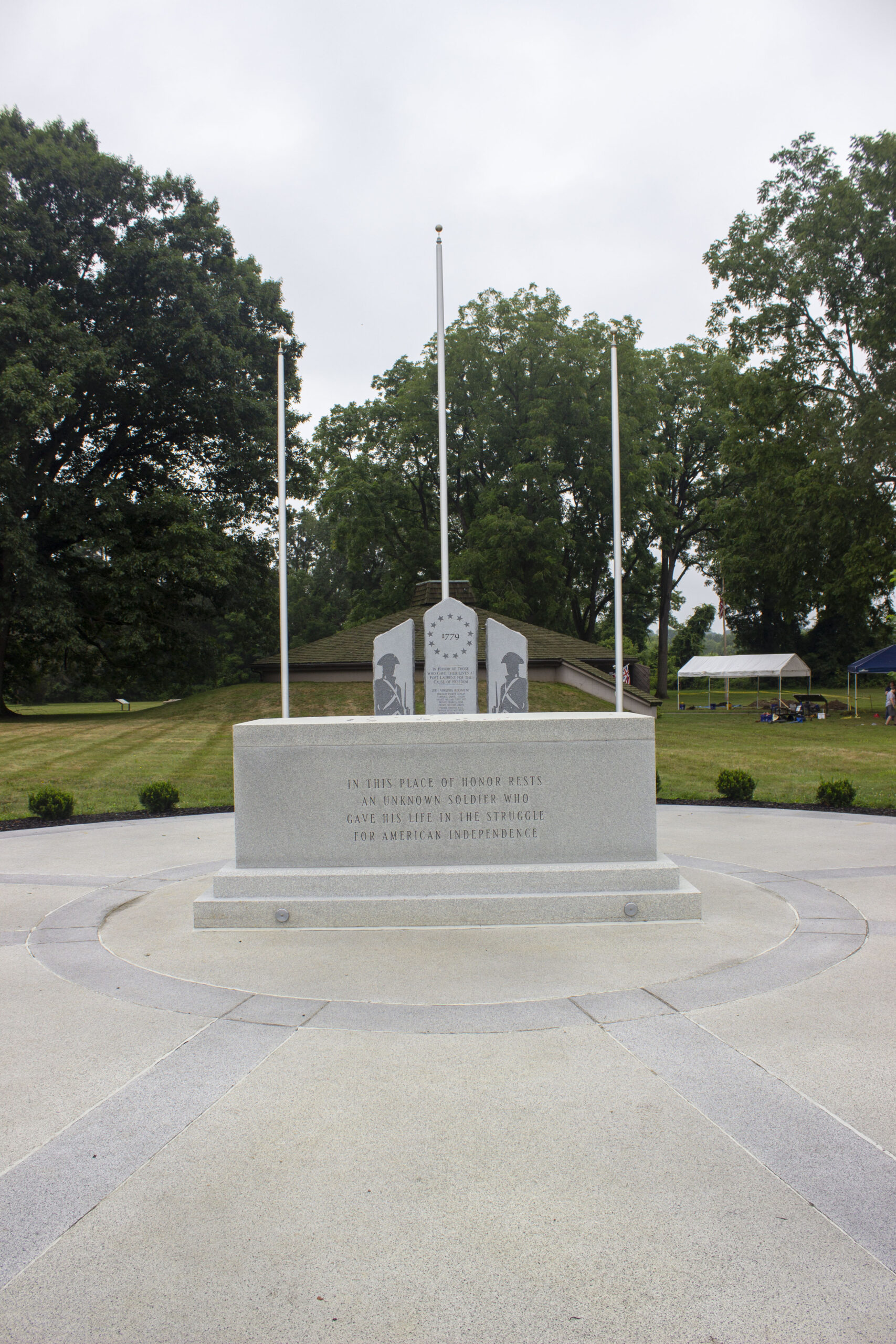
Fort Laurens’ dead are memorialized up the hill from the excavations, including a mass grave for the victims of the ambush, ringed by smaller headstones for the other men who died at the fort, at least 23 in all. They are all honored at what is formally known as Ohio’s Tomb of the Unknown Patriot of the American Revolution, a gleaming, stone structure just off the fort site. The tomb, which holds the remains of an unidentified ensign who had joined a wood‑gathering party before being killed in a raid, was recently rebuilt and rededicated. Gov. Mike DeWine attended the ceremony in June.
What’s ahead
The museum on the grounds is a time capsule in its own right. Built in 1971 by the same architectural firm that designed Ohio Turnpike rest areas a generation ago, it’s home to mannequins of Continental soldiers, some modeled on the original curators and members of the 1970s dig crew, standing in recreated barracks scenes. Glass cases hold neat lines of buttons, buckles, musket parts, pipe stems, chalk‑whitened leather fragments, a waist cartridge box and powder horns, along with everyday necessities: clay pipes, scissors, camp axes and the continental currency that once passed hand to hand here.
Site manager Tracy Britton said she urges first‑time visitors to start or end their visit at the Tomb of the Unknown Patriot and the surrounding graves, so the exhibits inside are anchored in the real people who served and died here.
“This is Ohio’s only Revolutionary War fort — it’s like our connection to the country, which I think is just so cool,” she said.
Britton likes to remind visitors that connection stretches far beyond the fort’s walls. The soldiers who first built and garrisoned Fort Laurens were part of a larger western expedition, and serving in the Continental and militia ranks tied to that campaign were ancestors of three future presidents, including Zachary Taylor, Abraham Lincoln and William McKinley.
This fall, the museum is scheduled to close so Ohio History Connection can remove every case and mannequin and start a full renovation. The plan is to open with temporary displays next season, close again, and unveil completely new, permanent exhibits by 2028, timed with the fort reconstruction outside.
At least three walls of the stockade are expected to rise again, tied directly to the lines Leitch and the crew are tracing in the dirt. The long, bare mulch beds that now sketch the western and southern walls will give way to new pickets and bastions, in as faithful a footprint as data and 18th‑century maps allow. The Friends of Fort Laurens group has been quietly raising money for years, and Britton said the museum itself plans to launch a more public fundraising push starting next year to help bolster the state funding already committed through Ohio History Connection.
Fort Laurens does not stand alone, either. It shares staff, stories and visitors with Historic Zoar Village, just up the road, and Britton splits her time between the two. Upcoming events at Fort Laurens include an edible plant class put on by the Midwest Native Skills Institute and an archaeology school day that lets students try their hand at sifting and trowel work. Visitors, she said, rarely need much persuasion.
“Great people, great history,” she said. “Anytime I have a chance to share about it, I do.”
For more information about Fort Laurens, visit fortlaurensmuseum.org.





Great article–should be ready by ALL Ohio secondary school history classes.
What tremendous hardships these patriots endured….