




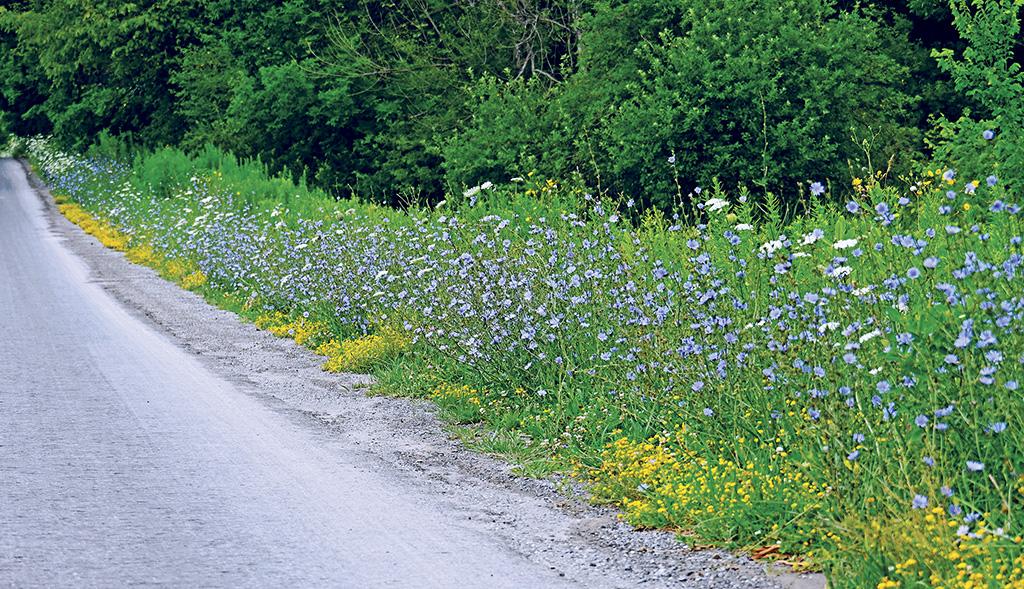
Right around mid-July, the roadsides erupt in a riot of color as a variety of wildflowers burst into bloom. Queen Anne’s lace and yellow hawkweed bend in the breeze, while the low, golden blossoms of birdsfoot trefoil creep out onto the pavement.
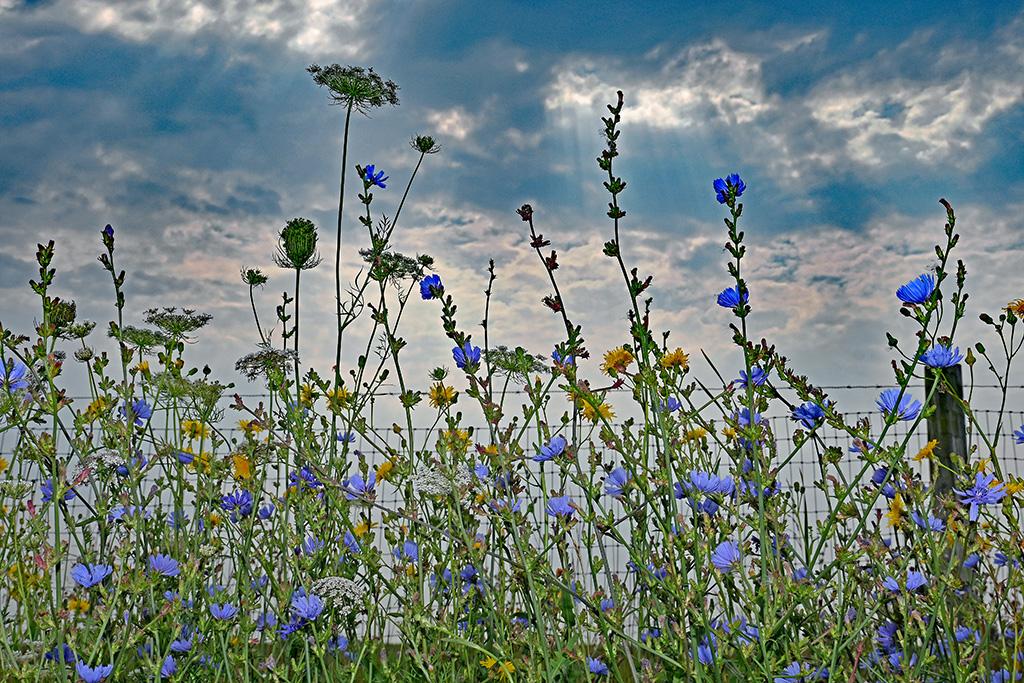
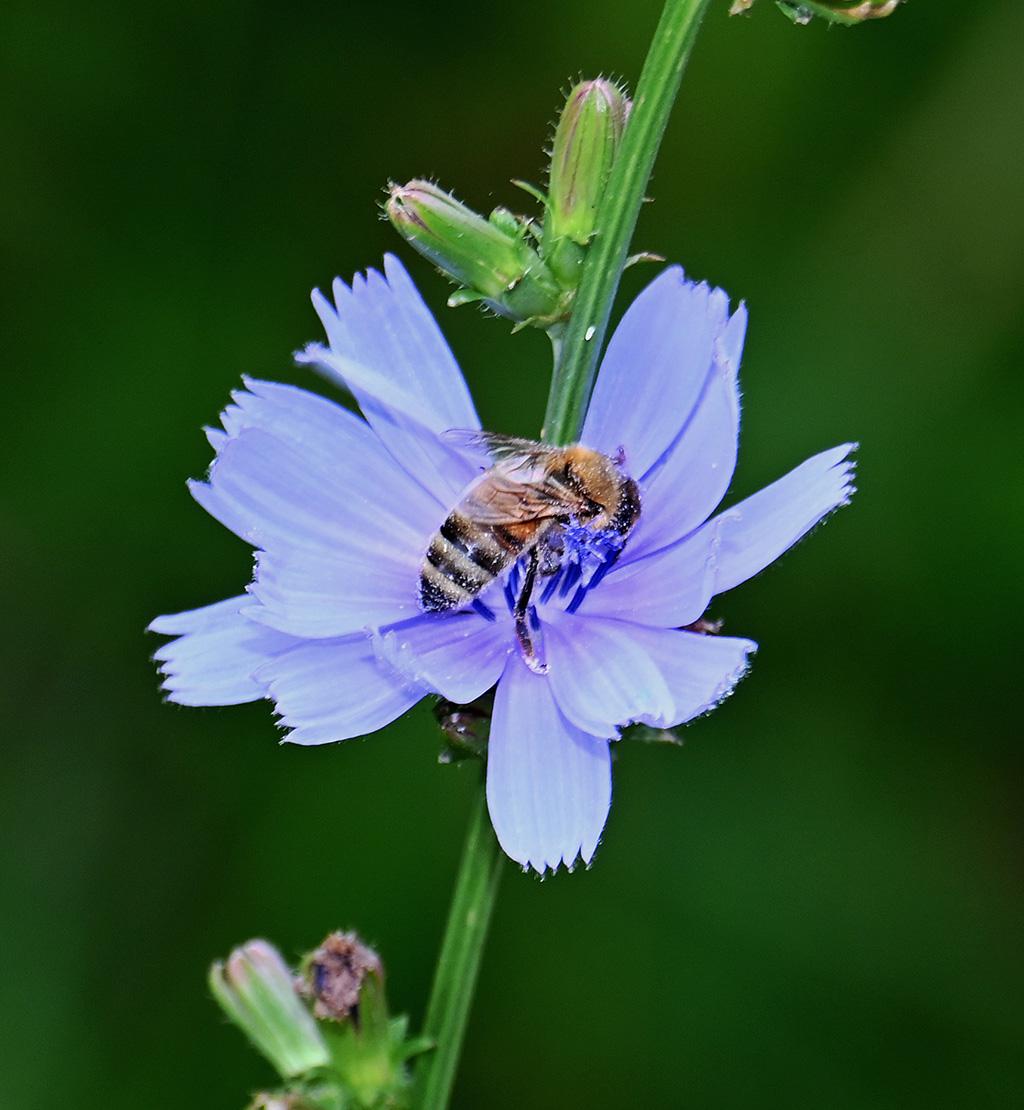
But there is one plant that steals the show, one that you just can’t help but notice and appreciate. With its dreamy blue blossoms, common chicory (Cichorium intybus) stands out above all the rest.
Growing to a height of 3 to 5 feet, chicory is an herbaceous member of the family Asteraceae, related to asters, daisies and sunflowers. Originally native to Asia, Europe and Africa, it has become naturalized worldwide, able to sustain itself without human assistance.
It has the ability to thrive in disturbed waste areas, especially roadsides, where it can survive in a variety of negative conditions, especially drought. It is self-seeding and also spreads by rhizomes.
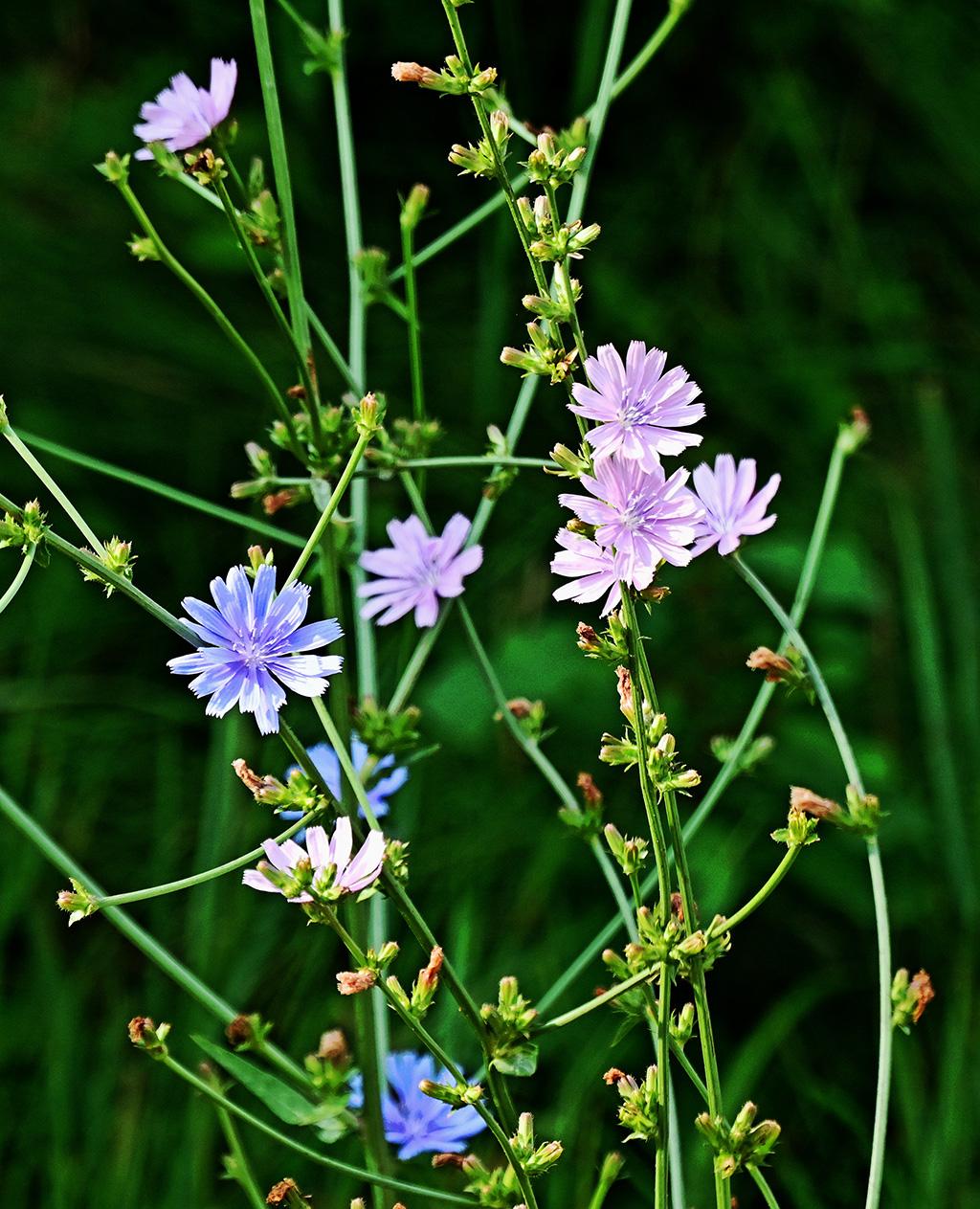
Chicory is a perennial herb with a long tap root that keeps it firmly established beneath the soil, while above ground its woody-like stems, hollow and hairy, twist skyward in a messy jumble. Along these stems, the plant develops buds which produce vibrant blossoms daily throughout the summer, earning it names such as blue dandelion, blue sailor, blue daisy or coffeeweed.
The flowers are a shock of azure, but occasionally, a lucky observer may happen across a rare plant decked out in pink or white blossoms. Make sure you take in the beauty of chicory during the morning hours, however, as each day’s flowers close shortly after the noon hour, the plant producing a new set of blossoms the following morning.
Cultivated for centuries
Chicory is more than just a roadside spectacle attractive to bees and butterflies, however. The plant has been cultivated for centuries due to its culinary and medicinal properties, as it is rich in fiber, potassium, vitamin C, vitamin K and beta-carotene.
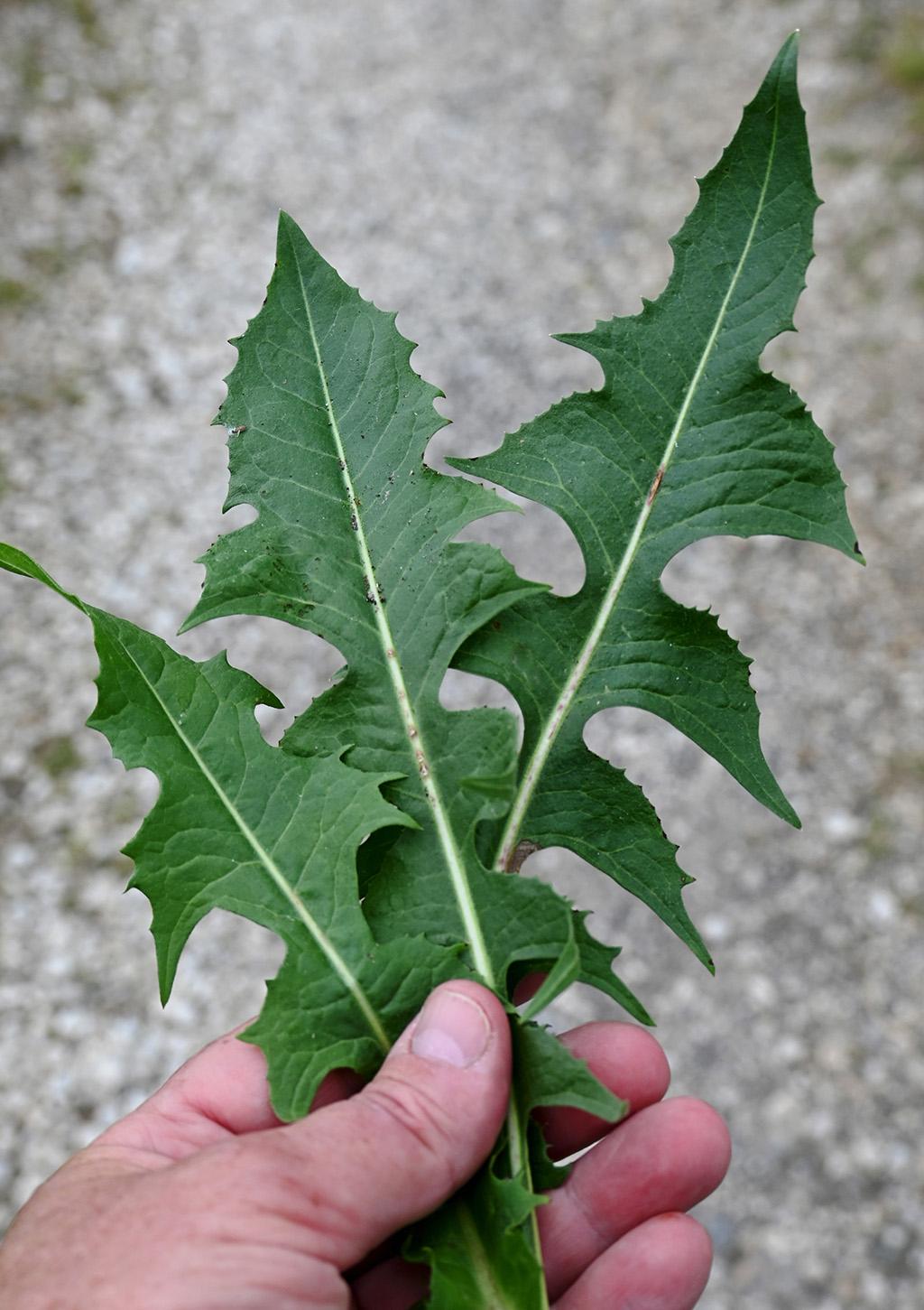
Amazingly, all parts of the plant are edible. The deeply lobed leaves grow around the base of the stem and resemble those of the dandelion. Although slightly bitter and peppery in taste, they are harvested and enjoyed raw or cooked, often added to various dishes including salads, soups and stews to enhance both the flavor and the nutritional value. Leaves are most palatable in the spring and fall, as the summer heat often increases their bitterness. The edible blossoms can be added to dishes as a decorative garnish.
Chicory root coffee
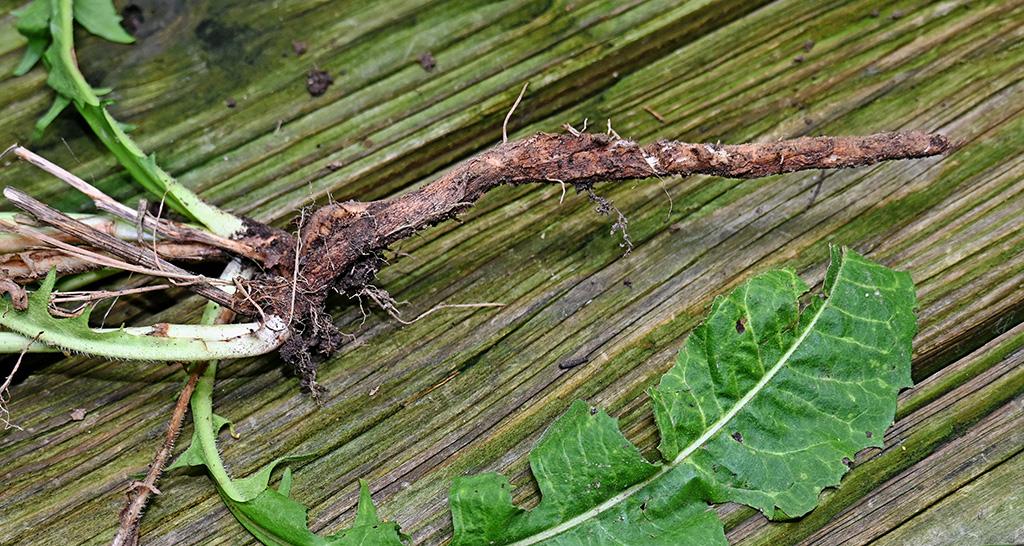
Perhaps the most popular part of a chicory plant is its long taproot, which is used to make chicory root coffee, a nutritious, caffeine-free treat. You must work hard to extract the intricate root system from the ground as it reaches and branches well below the surface.
Once free, cut off the greenery and wash it well. Then pop it in the oven at 300-350 F and roast for around 60 minutes until it turns a golden brown and emits a lovely warm aroma. Cool, and then grind to a consistency similar to regular coffee grounds and brew. Adding 1 part chicory grounds to 3 parts regular coffee will result in a nutty, earthy-flavored treat.
It is well known that chicory coffee is an established staple in New Orleans, and some brewmasters add roasted chicory root to their stouts and ales. If you aren’t a coffee drinker, the roots can also be prepared like parsnips. Chicory is commonly found in health food stores, but as with any wild herb, always consult with a doctor or dietitian before consuming!
Forage
Interestingly, some countries, especially New Zealand, grow chicory as a forage crop for livestock due to its appealing nutritional value. Providing high protein and essential minerals, it is said that the plant is highly digestible for ruminants and possesses anti-parasitic properties that appeal to sheep and goat farmers, as it naturally keeps parasites to a minimum and reduces the reliance upon chemical dewormers.
As I drive along the country roads during the height of summer, the thick stands of chicory line the sides, creating a runway of blue that ushers me along. The color “blue” is rare in nature and the stunning blossoms appear to reflect the sapphire sky above. As I contemplate their beauty, I can’t help but wonder … and I check an old box of crayons, just to see if there is one labeled “chicory.” I am disappointed to find such a color absent and can’t help but think that it may just behoove Crayola to think seriously about creating a crayon of this shade, which would undoubtedly stand out above all the rest. It would certainly be my favorite!





Thank you for this story. My wife and I love the wild flowers that color our roads.