





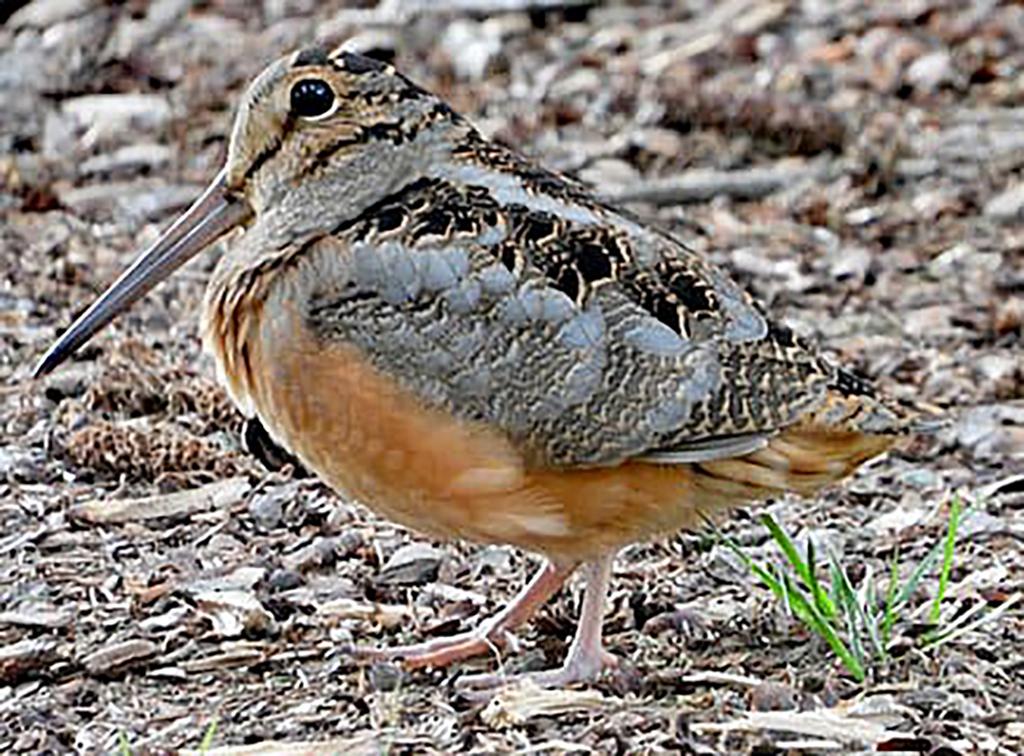
I really enjoyed this winter. It reminded me of the good old-fashioned ones we always had when I was a child here in northeast Ohio. The temperatures were bitter and a measurable snowpack stayed on the ground for weeks, recharging the water table and offering a blanket of protection to wildlife that needed it most. I reveled in it.
But now that I’ve had that first whiff of spring, I am anxious. Anxious for the first big show of the season, one of the most amazing spectacles in North America that will take your breath away and one which has been performed beneath our noses for hundreds of years. Trust me, if you’ve never witnessed the sky dance of the American woodcock (Scolopax minor), it’s time to pull up a chair and grab a front-row seat. Mark my words, once you see it, you will never want to miss it again!
The dance
The woodcock performances begin as early as late February, gaining momentum as March rolls into view and birds complete their northward migrations from the southern U.S. If you have a shrubby field, a wet meadow or a forest edge, you may just be in luck.
Settle in around sunset and get comfortable. Be patient and quiet. As the final rays of sun drop below the horizon, you suddenly hear it. A nasal “peent” punctuates the silence. Seconds later, it comes again, powerful, commanding, unmistakable: “PEENT.”
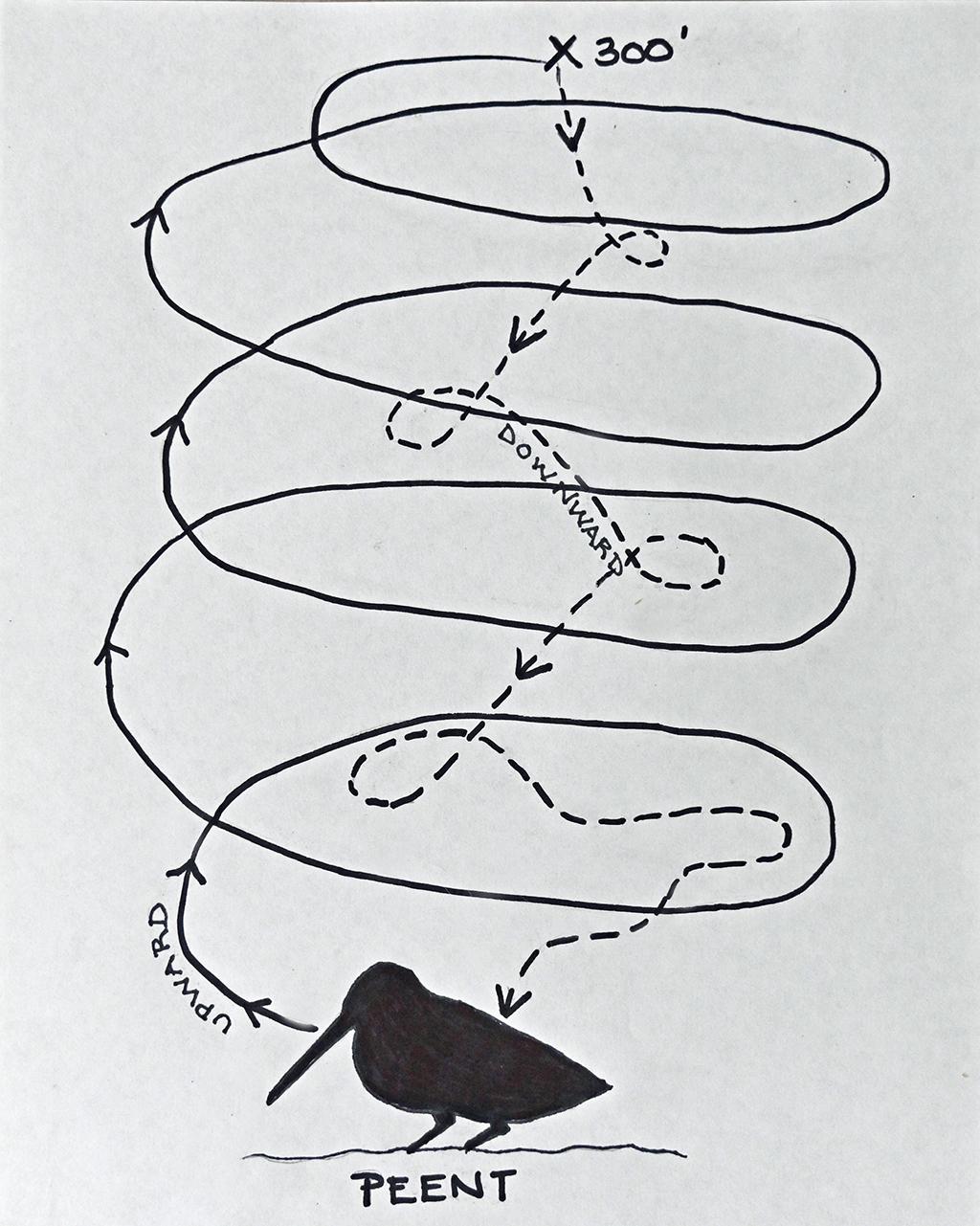
As the male bird warms up, he sits in a small open area, turning slowly in one spot as he emits his peents in every direction — which way he is facing will cause some peents to sound louder than others.
Hopefully you will be able to focus your attention on the area from where he broadcasts, because suddenly, without any warning whatsoever, he takes to the air. He begins to form large circles as he ascends into the night sky and all the while, his vibrating outer wing feathers are emitting a whistling sound.
Up, up, up he goes, and if you are careful not to take your eyes off of him, you will be amazed at the tiny speck he becomes when his spirals reach 300’ in the air! Suddenly, the whistling stops, a sign that his descent has begun. Back and forth, in a zig-zag motion, he falls, all the while emitting gurgling, bubbly chirps sounding almost exactly like the warbling water whistles of the past. Down he comes, warbling all the while, until about 30 feet from the ground, he becomes silent, swooping in to rest in nearly the exact same spot from which he rose. Within a minute, you hear it … “PEEENT” … and the sky dance begins again.
As is typical in the animal kingdom, the male is most often the one to show off, and with the American Woodcock, this display is no exception. When he reaches his highest point in the sky, any female woodcocks, whose attention he has garnered, sneak onto his peenting ground to await his return. Upon touching down, the male woodcock quickly mates with them and then immediately returns to his polygamous performance, which will last well into April. While you are listening to your woodcock, you may well hear other males performing in adjacent fields or witness males aggressively chasing each other across the breeding grounds. Woodcocks normally perform their sky dance at dawn and dusk, but on full moon nights, they are active for the duration.
During my 31-year tenure as a naturalist with Geauga Park District, I headed up dozens of “Woodcock Whoopee” programs over the years. This popular event is designed to allow a group of participants the chance to witness the American Woodcock’s sky dance up close and personal — observing the behavior from afar at first and then sneaking in ever closer to its peenting area each time the bird is up in the air. The program never failed to yield an unforgettable experience for all involved, and many of those same people are still attending the programs to this very day.
What’s in a name
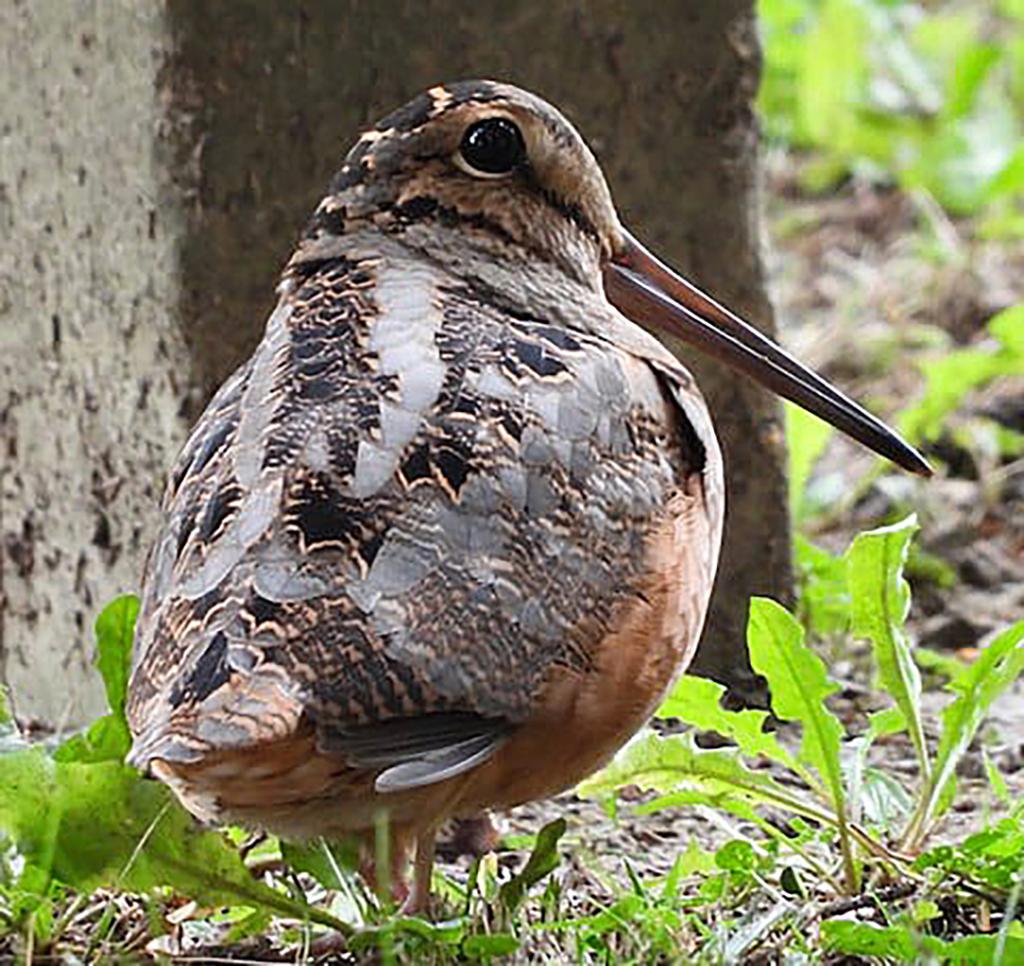
Yet, what exactly is an American woodcock, you ask? It is a bird that is visually as odd-looking as the sky dance, which it performs! Also referred to as a timberdoodle, mudsnipe, bogsucker, Labrador twister and night partridge, the American woodcock is actually a member of the shorebird family.
Yet, unlike his cousins that prefer the coast or areas containing lakes and wetlands, the woodcock is bird of woodland and thicket. His incredible plumage is cryptically colored in browns, greys, buffs and russet, allowing him to completely blend in with his surroundings. His stout legs are short, keeping him close to the ground. His beak is noticeably long and strong, allowing him to probe underground for worms, his main diet, with a flexible tip, allowing him to open it beneath the soil and grab onto his slippery prey.
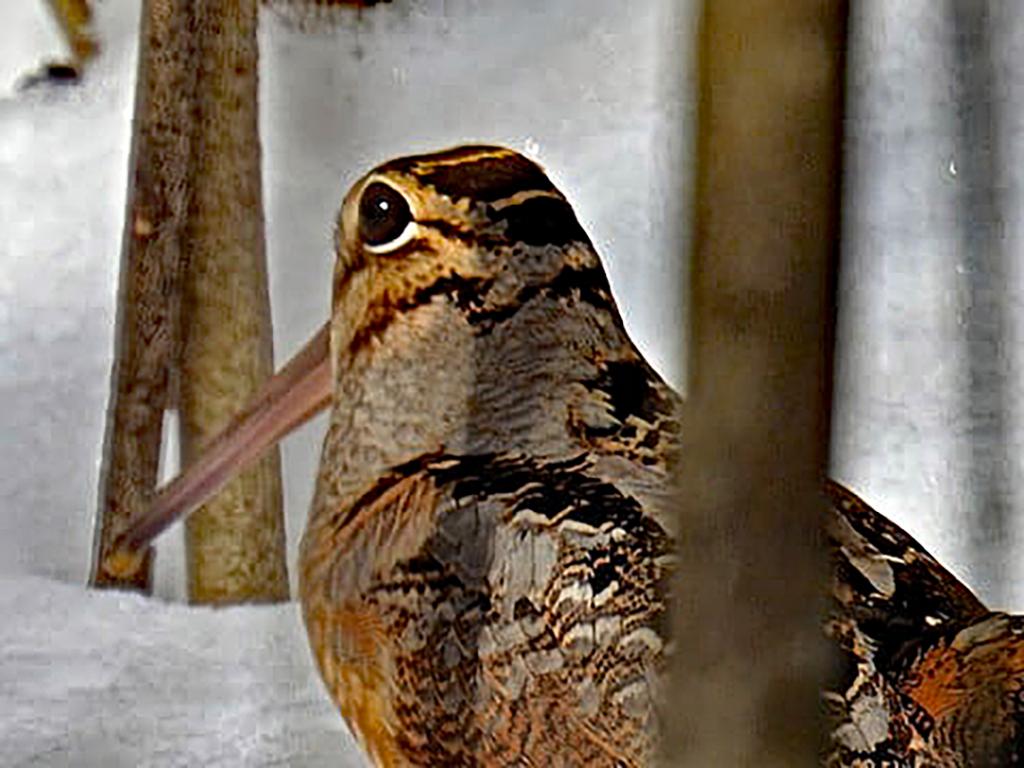
And those eyes! His large watery eyes are located near the top of his head, enabling him to have nearly 360-vision to watch for predators as he feeds on worms, invertebrates and crustaceans below. Overall, he is plump, with a large head, short neck and stumpy tail, resulting in a low profile, yet distinct silhouette.
The core breeding range of the American woodcock falls within the northeastern United States and upper Midwest. Females form a shallow scrape on the ground and deposit four brown speckled eggs. After 3 weeks of incubation, the chicks hatch, fully feathered and leave the nest within hours to forage with their mother. In only a month’s time, they are independent.
The American woodcock is one of the few shorebird species that has a hunting season associated with it, though probably more for sport than for a meal. Steady population declines are most likely due to the accumulation of pesticides, lead and heavy metals from their subterranean diet as well as loss of habitat.
Sharing with a friend
Last year, around this time, my dear friend Grace informed me that she heard a woodcock peenting in her back field. As she was unfamiliar with the bird or its amazing sky dance display, I told her, with a wink, that we were in for an adventure! About half an hour before sunset on a beautiful spring evening, we settled into some lawn chairs overlooking her meadow with a bottle of wine.
As the setting sun created a show to remember, we felt like we could sit there, sipping from our glasses and chatting for hours. Then it came: A powerful “peent.” We were up immediately, creeping along the mowed paths in search of the sound. We heard the twittering as the bird took to the air in its ascent and hustled our way to its perceived calling area.
I told Grace to lay low in the tall grass and not to move a muscle. We waited as we listened to the gurgling warble, announcing the bird’s descent. Then nothing. Suddenly, we were jolted into reality, as a “PEENT” blared out just 10 feet ahead of us. The silly little bird sat on the ground in full view, turning in circles as it opened its beak wide, uttering peents in every direction. A soft “hiccup,” known as the “tuko” call, could be heard between peents. This vocalization can only be discerned from close proximity.
Alas, the wine had taken effect, and we began to giggle. We giggled and giggled and finally, the exasperated bird took flight and moved to another clearing about 30 feet away. But we had seen the sky dance in full, and one of nature’s most amazing spectacles was ours to chalk up as another one of our memorable adventures together.





Great article, Tami! Thanks!
We had a farm in Ashland County, adjacent to Mohican Forest along Pine Run Creek. Rivulets from the creek and our springhouse formed a nice pond. One evening I was tramping through the underbrush there–when WHOOSH!
Up popped the woodcock–did his “dance” skyward. I stood there spellbound–speechless.
AHHHHHH. I love a good Woodcock story. They are such interesting birds with a complex mating ritual that bird lovers like myself can never get enough of. Thank you for sharing this lovely experience.