



SALEM, Ohio — After years of litigation, hand-wringing and debate, the federal government is preparing to finally narrow which waters are protected under the Clean Water Act, reshaping one of the nation’s most influential environmental laws to align with a Supreme Court ruling. Supporters of limiting federal oversight across agriculture, construction and business say the change is long overdue. But environmental advocates fear the rollback will imperil local communities, drinking water sources and wildlife habitat, all while making enforcement harder and shifting the burden to states less able to respond.
That’s what Autumn Crowe is afraid of happening in West Virginia’s Greenbrier River Watershed, covering about 1,600 square miles in the southeastern part of the state. The centerpiece of the watershed is the free-flowing 162-mile Greenbrier River, the state’s longest, which winds through scenic Appalachian countryside and is depended on for both public health and community life.
But it is listed as impaired for the presence of fecal coliform bacteria, an issue Crowe said is largely driven by nonpoint source pollution, including agricultural runoff, failing septic systems and aging infrastructure. Local volunteers and scientists regularly sample the river and its tributaries to pinpoint problem areas and work toward addressing them. Crowe serves on the board of a longtime association that conducts that work, and she is also the deputy director of the West Virginia Rivers Coalition. She worries that the same waters rural communities rely on for recreation and as a source of their drinking water could one day become collateral damage of the Clean Water Act’s undoing.
Crowe is most concerned about wetlands, which she described as the watershed’s natural safety net. Wetlands slow floodwaters, trap sediment and filter pollutants before they reach rivers and drinking water intakes. Without federal protections, she fears more wetlands could be filled or developed, increasing flood risks and degrading water quality for nearby communities.
“The Clean Water Act plays a huge role in ensuring our waters — (not just) across the country, but in West Virginia, where I’m focused — that they’re swimmable, fishable, drinkable,” Crowe said.
In 2023, the U.S. Supreme Court ruled in favor of Michael and Chantell Sackett, a couple who had been blocked by the Environmental Protection Agency from building a house on their property near Priest Lake, Idaho, after the EPA determined part of the land was a federally protected wetland. The ruling significantly curtailed the federal government’s authority under the law to regulate wetlands and certain other waterways as “Waters of the United States,” and now the government must revise the breadth of waters that are actually federally protected.
When it’s all said and done, the EPA says the new rule will ensure that federal jurisdiction of the Clean Water Act is sound, focusing on relatively permanent, standing or continuously flowing bodies of water such as streams, oceans, rivers and lakes, along with wetlands that are directly connected to them.
Now that the EPA’s public comment period on the proposed redefinition has closed, Crowe hopes policymakers will take a broader view of how loosening regulations in one place can affect communities downstream. After all, for the many smaller tributaries, caves and underground streams that feed the Greenbrier River, they could be put at risk, losing protections under the new WOTUS definition and potentially reversing progress made in the watershed by opening the door for more pollutants to enter the system.
If the watershed’s numerous isolated wetlands lose federal protection, Crowe said, the best safeguard they have against pollution and flood damage will be greatly reduced. And, she added, the state isn’t poised to do much more.
“West Virginia has a provision that our laws, our state laws, cannot be any more stringent than federal laws. So that does cause some concern if, you know, the federal laws are gutted, then we would also lose some protections at the state level.”
In conversations with environmental experts and industry representatives, questions remain about whether new guidelines will really amount to a “clear, simple, prescriptive rule that will stand the test of time,” as EPA Administrator Lee Zeldin has said is the goal, and about who, if anyone, ultimately benefits the most from the changes.
Wetland woes
Environmental groups say concerns about clarity should not come at the expense of protecting the nation’s waters. The Nature Conservancy told Farm and Dairy that the United States has already lost more than half of the wetlands that once existed across the Lower 48 states, making remaining protections all the more critical.
“Now is not the time to weaken the laws that protect our waters,” Sandra Svoboda, media relations manager, said in an email, urging federal regulators to strengthen, rather than scale back, safeguards for wetlands, streams and other waterways.
For environmental consultants who help developers navigate Clean Water Act permitting, the revised definition of “Waters of the United States” is already changing how projects move forward on the ground.
Since 2012, Anna Runner’s work has often begun at the earliest stages of a project, when construction could disturb streams, wetlands or other aquatic features. Her firm, AllStar Ecology in West Virginia, evaluates sites, documents the extent and characteristics of waterways and wetlands, classifies streams and determines what regulatory approvals may be required before construction can begin. A key part of that process is figuring out how or if wetlands connect to nearby streams and rivers.
Under the new rule, Runner said, wetlands are likely to become the most complicated piece of all.
The updated WOTUS definition hinges on whether a wetland has a continuous surface connection to a relatively permanent body of water — think streams, rivers and lakes. But that standard, she said, doesn’t reflect how so many wetlands actually function. In West Virginia and much of Appalachia, they’re often sustained by groundwater rather than visible surface flow.
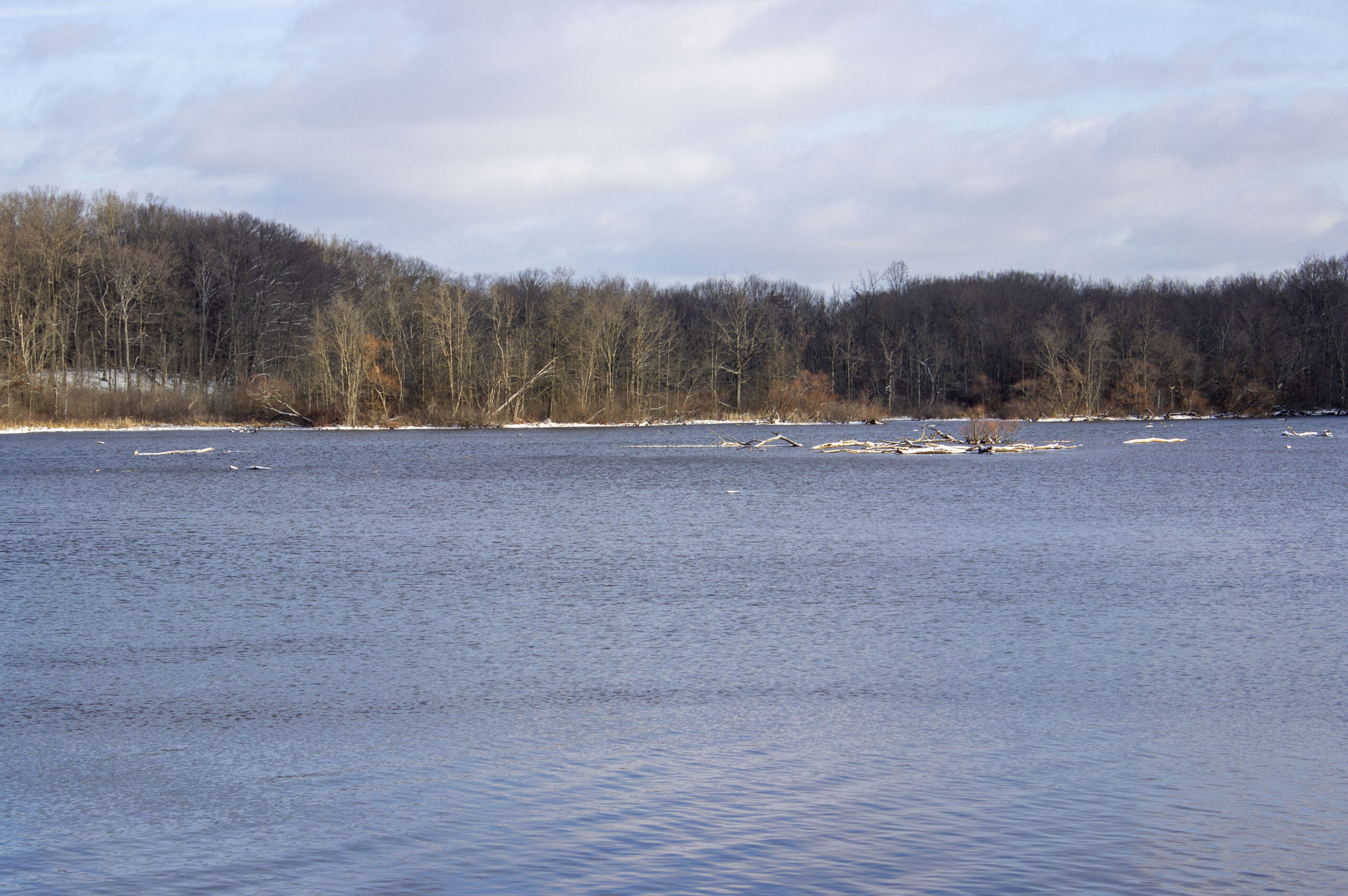
advocates warn that rolling back Clean Water Act protections for certain waterways could put drinking water sup-
plies at risk nationwide. (Paul Rowley photo)
In practice, that could mean parts of a single wetland will be treated differently under the law, with some areas federally regulated and others left solely to state oversight, or whatever’s left of it.
Runner said that kind of split jurisdiction could force projects into parallel permitting processes, adding layers of complexity rather than clarity. And that has consequences for timelines and budgets. Projects that once qualified for streamlined nationwide permits — typically reviewed within about 90 days — may now need additional state permits that require public notice and comment.
Beyond logistics, Runner said the changes raise deeper questions about consistency, environmental protection and predictability, both for communities that rely on nearby waters and for developers trying to plan projects responsibly.
“It sounds like you’re going to have … a permitting process that’s much more confusing and much more difficult to determine. It’s going to be very interesting to see how this rolls out.”
Environmental groups are not the only stakeholders weighing in on the EPA’s revised rule. Agricultural organizations say the new definition could bring long-sought clarity to farmers and ranchers who work the land every day.
In written comments, the American Farm Bureau Federation said that changing interpretations of “Waters of the United States” over the years have left landowners unsure whether ordinary features on their property, such as ditches, low spots or irrigation ponds that only hold water after rain, could suddenly be treated as federally regulated waters. Farmers and ranchers, the federation said, depend on healthy soil and groundwater, but overly broad definitions risk pulling routine activities like plowing, planting or building fences into a federal permitting process that is costly, time-consuming and backed by steep civil and criminal penalties. That uncertainty, the group contends, has fallen hardest on small operations and rural families.
Common sense
Industry groups, meanwhile, say clearer federal rules are critical for small contractors trying to balance compliance, costs and project timelines.
Mary Williamson is president of Ohio-based bridge-building company J. D. Williamson Construction Co., which employs about 75 people. She said no two days look the same when running a construction firm, but one constant is the need to keep projects moving. That becomes difficult, she said, when unclear water definitions trigger questions about permitting mid-project.
“When there’s a question about whether this regulation affects one of our projects or not, then it causes the delays, and that equates to financial burdens for the company, and then my people potentially can’t work,” she said in an interview with Farm and Dairy.
Prianka Sharma, vice president and counsel for regulatory affairs for the American Road & Transportation Builders Association, a trade group that represents about 8,000 member businesses, said contractors are often responsible for day-to-day compliance with Clean Water Act permits, even when state departments of transportation are the official permit holders. If a water feature is later deemed jurisdictional after work has begun, she said, the impacts ripple through the entire project delivery chain.
“There have been instances with some of our members where EPA has come back after the fact and said, ‘Just kidding, we made a mistake. This is actually a jurisdictional water…’ And that puts everyone behind, right?”
Both emphasized that inconsistent interpretations between regional Army Corps of Engineers offices compound the problem. Contractors, they said, can receive different answers on similar projects depending on which office reviews a permit, making it difficult to predict outcomes when bidding jobs and scheduling crews.
They argue the revised rule, shaped by the Sackett decision, will provide that predictability, particularly for man-made features like roadside ditches and stormwater controls that are common among transportation projects. Clear exclusions, they say, help ensure critical road and bridge repairs aren’t stalled unnecessarily, especially after storms or emergencies when people need to get moving again.
At the same time, both stressed that clarity does not mean a lack of concern for water quality. Contractors, they said, regularly work around streams, wetlands and ponds and follow mitigation requirements when projects affect regulated waters.
“We do care about water quality,” Williamson said. “We just want to make sure that we’re following the rules and know how to handle them properly.”
The EPA will review all feedback and publish the final rule later this year.




