




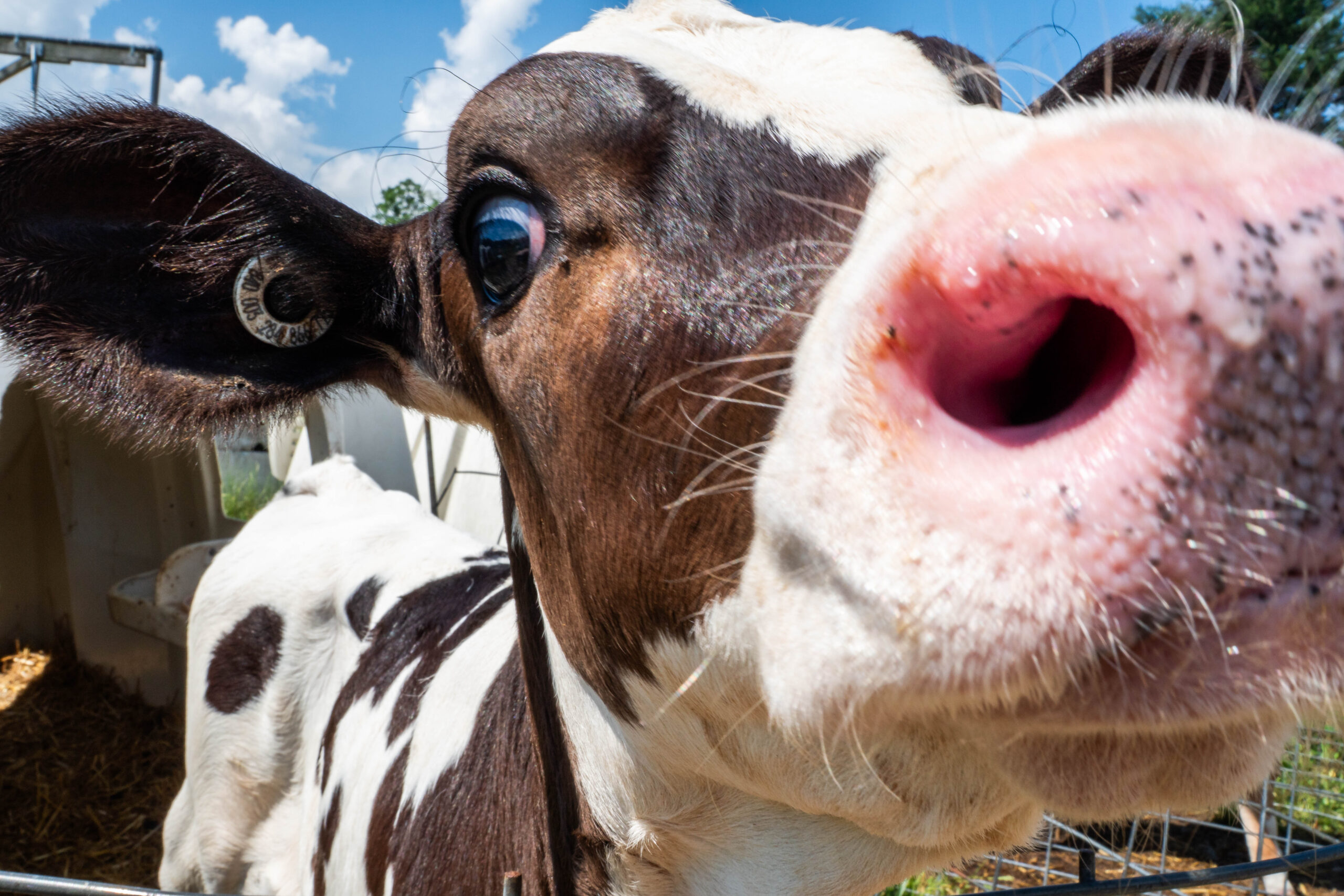
Water is one of those often forgotten nutrients. It makes up 75% of a calf’s body weight. While a calf can get water from milk, this water does not enter the rumen to assist with the digestion and fermentation of calf starter.
Free-choice water is the best strategy, since a 4:1 water-to-starter ratio is needed for digestion. A gallon of water weighs 8.34 pounds, a calf consuming 3 pounds of starter per day at weaning needs almost 1.5 gallons of water in order to digest this starter. At 4 weeks of age, a calf provided with free-choice water all day ate eight more pounds of starter that week than a calf with restricted water access.
As the rumen develops, water is used for fermentation, then to transport nutrients throughout the bod, and for all aspects of metabolism. It is also used to regulate body temperature and to eliminate waste.
Some studies show a trend towards decreased disease incidence in calves that were offered water from birth through weaning compared to those that were not.
During freezing weather, feeding water becomes frustrating. It freezes between feedings. Offering water for a short time before dumping, so it doesn’t freeze, causes burnout as you feel like you dump all the water you put out for young calves. This causes many producers to forgo the water calves need.
Winter poses a hidden dehydration risk, as lower humidity can increase water loss through respiration.
Keep it consistent. Water feeding should be routine to help calves anticipate it, the same as milk feeding. Water should be fed at least 10 minutes after a calf finishes its milk, so the esophageal groove closes, and the water enters the rumen.
Calves often get up when bedded. Pairing water with bedding and grain feeding halfway between two milk feedings can encourage water consumption.
Bottle feed. Another option that encourages water consumption is to offer water in a bottle rather than a bucket. A recent study compared offering ambient-temperature water in a bucket all day with offering 3 quarts of 102 F water in bottles at midday.
In this study, calves fed warm water in a bottle ate 10 more pounds of starter over 56 days, averaging 1.4 quarts of water per day, while bucket-fed calves averaged 0.2 quarts per day.
While this study clearly demonstrated an advantage to water feeding by bottle, it had a confounding factor of water temperature. Would bucket-fed calves drink more water if warmed to 102 F at each feeding?
Warm water. Year-round calves prefer warm water; the ideal temperature is 100-105 F so that no energy is required to raise the water to body temperature.
Any time water is provided at temperatures below body temperature, it takes about an hour for the rumen to return to normal temperature. Water at 81 F reduces rumen temperature by about 6 F, while water at 63 F reduces it by 18 F. This temperature drop not only burns calories to rewarm the water but, during early rumen development, can shock the rumen bacteria.
While no work has been done in calves, under heat-stress conditions, cows prefer warm water year round to cold water; under heat-stress conditions, cows consumed more 86 F water than 50 F water.
Keep it clean. Be sure to keep water feeding equipment clean. While bottles, nipples and buckets may not require daily cleaning as rigorously as milk feeding equipment, they should be used only for one calf, unless group or pair housing. At a minimum, water should be dumped and refreshed daily.
A study comparing daily bucket cleaning to weekly or every two-week cleaning found that when buckets were cleaned only every two weeks, the number of treated illnesses increased.
Water feeding buckets or bottles can be cleaned by scrubbing with a weak bleach solution containing ¼ cup of bleach in 1.25 gallons of water.
Providing calves with warm water from a bottle or bucket from birth through weaning can improve growth and possibly decrease disease incidence.
In the winter, it may work best to provide water by bottle at the same time at least once per day, while in the summer, water should be available all day and be warmed at a minimum once per day at the same time.
(Jason Hartschuh is an assistant professor and field specialist in dairy management and precision livestock at Ohio State University Extension. He can be reached at hartschuh.11@osu.edu.)