




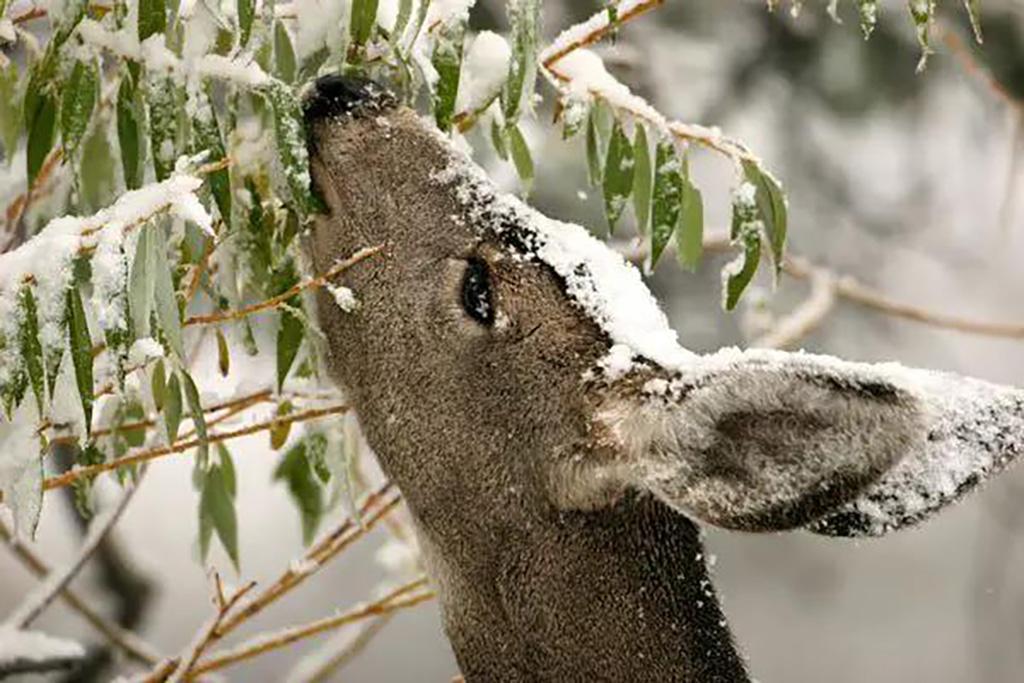
Hunting is a big part of life across the United States, and as deer season winds down and winter sets in, our focus starts to shift toward the next year. That often means thinking about corn, minerals and preparing food plots. But one of the most important things to consider is how deer naturally adapt as the seasons change.
In the summer and fall, deer rely on forages like grasses, acorns and berries. Once winter arrives, their diet shifts to woody twigs, dormant buds and the bark of trees and shrubs. So, if you see tracks leading up to your favorite decorative bush, just know that they’re hungry and doing what they must do to survive. Cut them a little slack!
Digestive system
Deer’s stomachs are incredibly adaptive, but that process takes time. Suddenly feeding high-carbohydrate corn during the cold months can disrupt their finely tuned digestive system. Their bodies aren’t built for a quick energy spike and the heavy fermentation that corn causes.
Deer are meant to follow their natural forage instincts, and that adaptive digestion is a big part of staying healthy through the winter. Feeding year-round can reduce some of those negative effects because their system becomes more accustomed to the change, but natural forage should always be the foundation.
Another way to support deer health in winter is through good land management. That includes protecting natural browse areas and mast-producing trees like oaks and hickories, along with shrubs and diverse plant species. Allowing natural forest growth and maintaining a variety of plants helps ensure a steady food supply throughout the year.
Mineral benefits
As spring approaches, many people turn to minerals, but they’re often misunderstood. Minerals aren’t a shortcut to giant antlers or instant results. Instead, they support the basic biological systems that allow deer to reach their genetic potential when habitat and nutrition are already in place. Most of a deer’s nutrition comes from native forage and food plots, but mineral levels vary widely by region and season.
Deer typically use mineral sites the most in spring and early summer for two main reasons. First, spring vegetation is high in moisture and potassium, which increases their need for sodium. Second, their nutritional demand spikes due to pregnancy, lactation, recovery from winter and the start of antler growth. Deer naturally seek out mineral sources to help keep their systems in balance.
Some of the key minerals needed by deer include the following:
• Calcium (Ca) is crucial for bone strength and antler development. Deer can store calcium in their bones and draw from it when needed.
• Magnesium (Mg) plays a role in muscle function and enzyme systems, especially during gestation and lactation.
• Sodium (Na) fuels nerve function and creates the natural salt craving that draws deer to mineral sites.
These are just a few of the minerals that support deer health and management overall. Healthy deer herds don’t happen by accident. They are the result of informed management, ethical hunting practices and a commitment to the land we share with them. From how we manage habitat to how we harvest, we shape the future of the herd for generations.
(Hannah Logston is a Agricultural/ Natural Resource Technician for the Carroll County SWCD. She can be reached at Hannah.Bardo@carrollswcd.org.)