



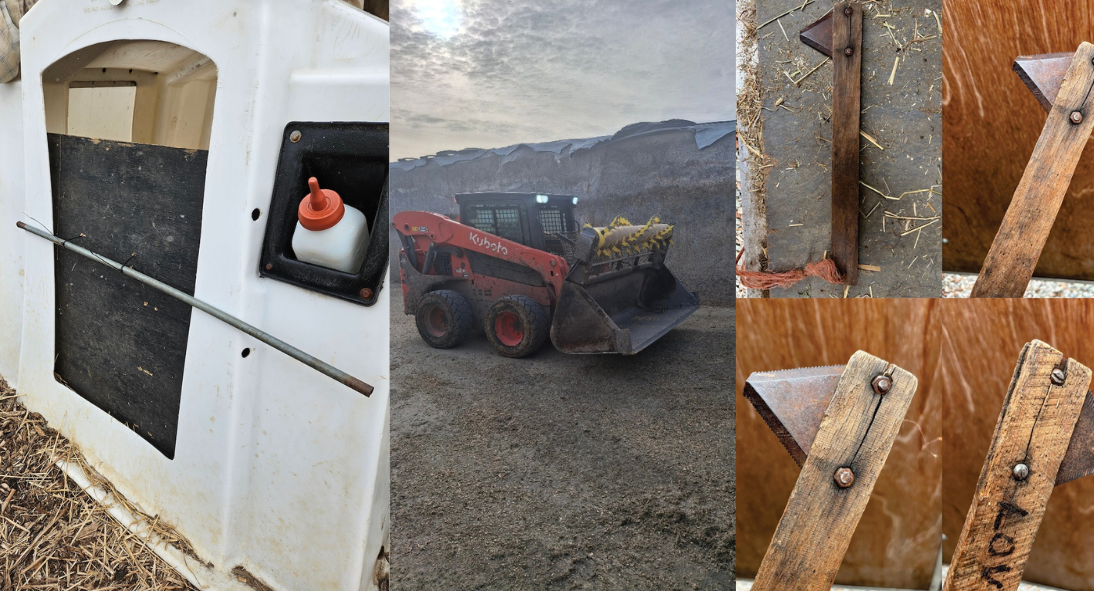
HARRISBURG, Pa. — In the Pennsylvania Center for Dairy Excellence’s first-ever “Farmer-Made Ingenuity” Contest, dairy farmers were encouraged to submit inventive solutions that may be hiding in plain sight on many dairy farms.
After collecting the submissions, individuals across the dairy industry voted for their favorite ideas. With more than 500 votes, three dairy producers were selected as the winners of the contest and will be receiving a cash prize.
“Dairy farmers are the original engineers, finding creative solutions to solving common and not-so-common problems on the farm. That was the inspiration behind this contest, and we were so impressed by the ingenuity of our dairy farmers. We’ve already heard from other producers who are saying, ‘Hey, I could do this on my farm’ when they see some of the ideas,” shared Jayne Sebright, Executive Director at the Center for Dairy Excellence. “That’s what makes this type of idea-sharing so special. We learn the most from one another, so we hope these farmer-made ideas can continue to inspire others to come up with innovative solutions on their own operations to create cost savings and improve processes.”
First Place 
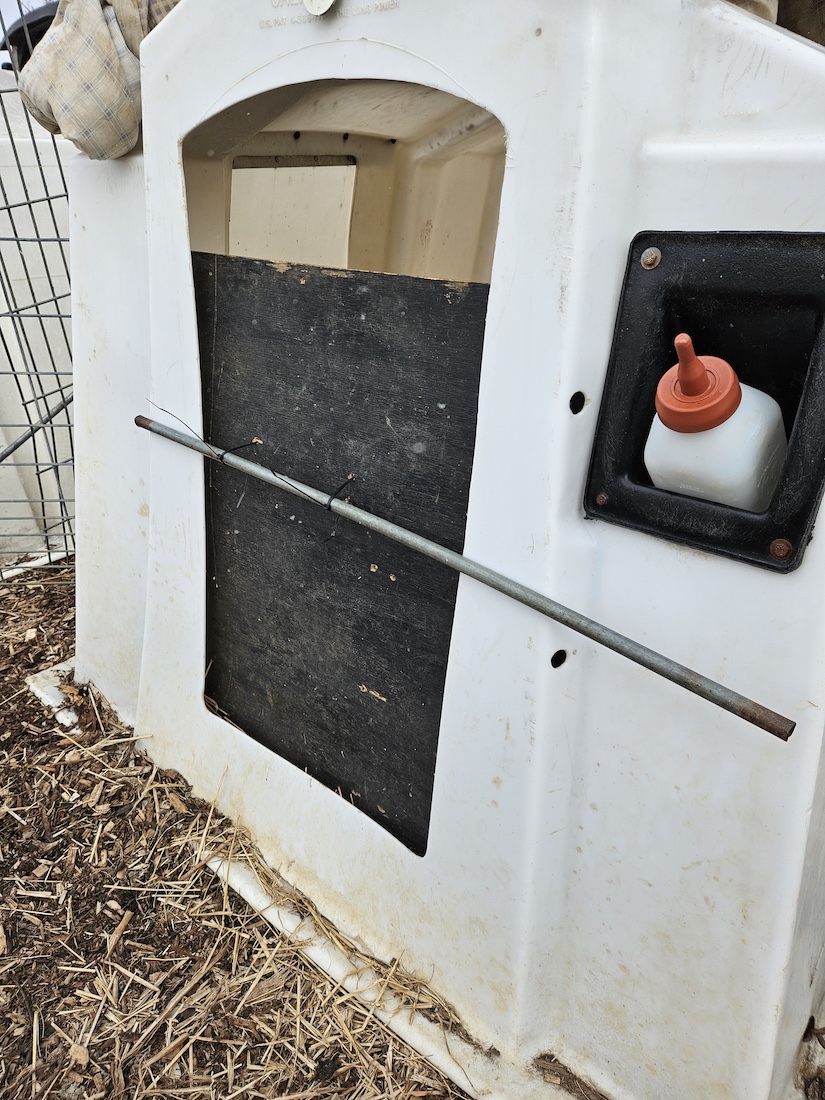
Calf Hutch Accessory to Keep Calves Warm in Winter by Mary Creek of Palmyra Farm in Hagerstown, Maryland
• What did you create?
“We created an accessory to use on our calf hutches to help protect newborn calves in winter months. We used a piece of plywood approximately 30 inches by 30 inches. We use it to cover the opening in our calf hutches to keep calves warmer until they are ready to face the winter temperatures, but allow reasonable ventilation. The sizing allows air to move through the hutch but reduces the exposure for the first few days of the calf’s life. When temperatures allow, we take it out during the day and replace it at night until the calf is ready to experience the cold. It keeps calves body temperatures up and allows them to put more nutrition toward growth,” Creek shared.
• How has it helped? “It made our challenged calves more comfortable and healthier. It keeps them warm early in their lives and promotes healthy growth so they can use more of their ration for growth and less for maintaining body heat. It is simple, easy to construct, move and store. It has saved calves,” Creek added.
Second Place
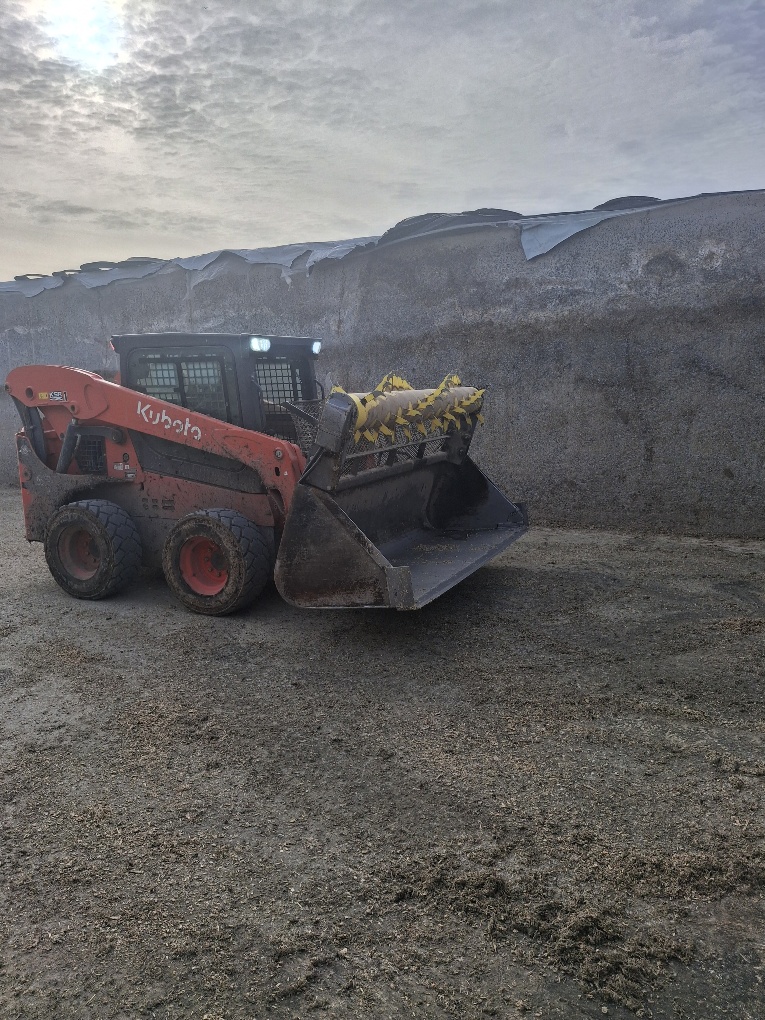
Silage Bucket and Defacer Built Into One by Donny Bartch of Merrimart Farms in Loysville, Pennsylvania
• What did you create? “We combined two pieces of equipment into one. We took a silage bucket and mounted a silage defacer on top of it. We wanted to maintain the quality of the silage face with the defacer without having to hook and unhook hydraulic hoses and buckets all the time. This made both jobs of defacing the silage and loading the feeder wagon easier and more efficient,” Bartch said.
• How has it helped? “It created a way to not have an excuse to deface the silage face no matter how much or little you needed. No more bucking into face with a bucket for 500 more pounds or having 500 extra pounds laying on the concrete until the next feeding. No matter if it’s raining, snowing or even extremely hot, you can stay in the cab to deface and load all the silage needed. It makes feeding the cows easier and helps make sure the job is done right,” Bartch added.
Third Place
Homemade Bale Opener by Susan Spadaro of Love Haven Farm in Scottdale, Pennsylvania.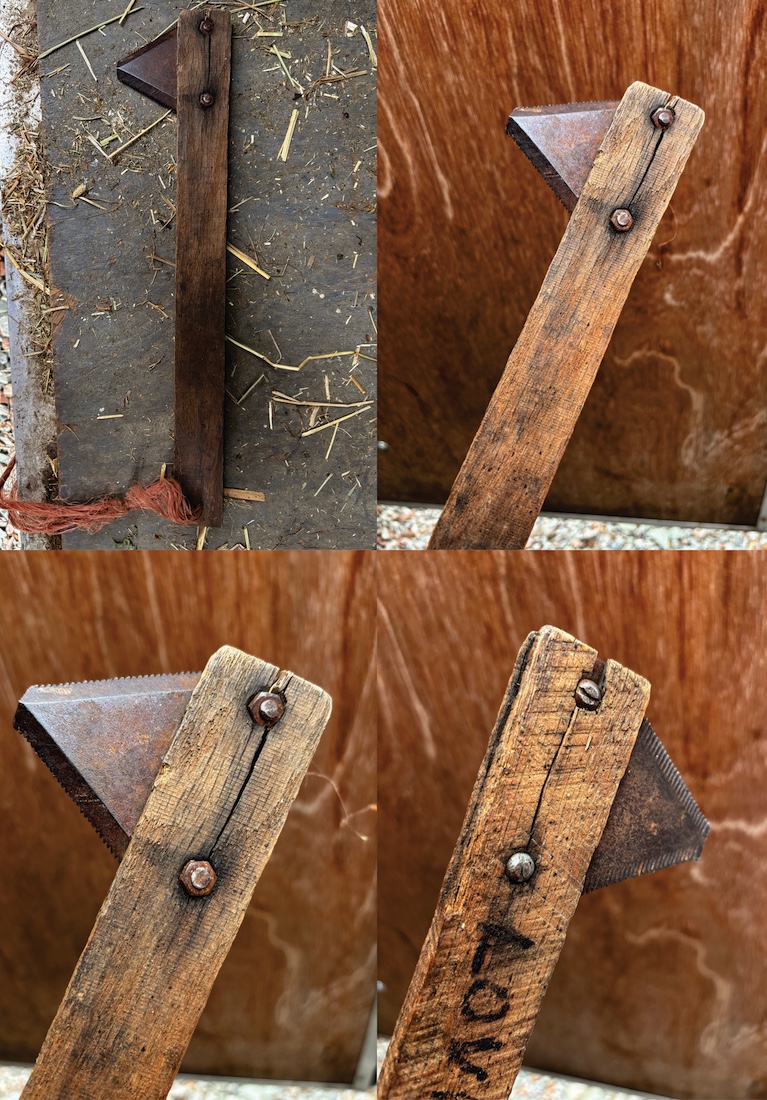
• What did you create? “I created a simple bale opener that makes cutting baler twine quick and easy. The tool is made from a small wooden handle with an old haybine section screwed to it. This design allows you to strike the baler twine, and the sharp edge slices it cleanly without needing a knife,” Spadaro shared.
• How has it helped? “This simple bale opener has saved time and frustration for years. It eliminated the need for young kids to carry knives, making the process safer and easier. When I was showing cattle, it gave me independence. Later, my children used the same tool throughout their 4-H careers, and it became a go-to item for other kids as well. It has become more than just a practical fix —i t’s a piece of family history that connects generations through hard work, creativity, and tradition,” Spadaro added.
To view the full list of farmer-made ideas, the Center has created a digital library. Visit www.centerfordairyexcellence.org/farmer-made-library to view these homemade remedies and innovative solutions.
In November, the Center will once again open the “Farmer-Made Ingenuity Contest” for new submissions. If you have questions about the contest, email Emily Barge at ebarge@centerfordairyexcellence.org or call 717-346-0849.