




I learned about the fun of the spring sucker run along the Little Beaver Creek in Columbiana County. I would grab my rod and reel, a few redworms, and head to the local streams to catch the feisty bottom feeders. Occasionally, oversized bull chubs would join the game, their horny heads giving them an almost alien appearance.
I started out by using the old Zebco rod and reel combo I’d grown up with, but as my skills improved and my desire for better equipment developed, I began relying on more light and ultra-light spinning rods. Eventually, I even learned how to use the fly rod effectively.
One of the biggest draws to fishing the sucker run was that it didn’t draw crowds like the flashier fish, like the walleye. Most of the time, I was the only one along the stream. It was great!
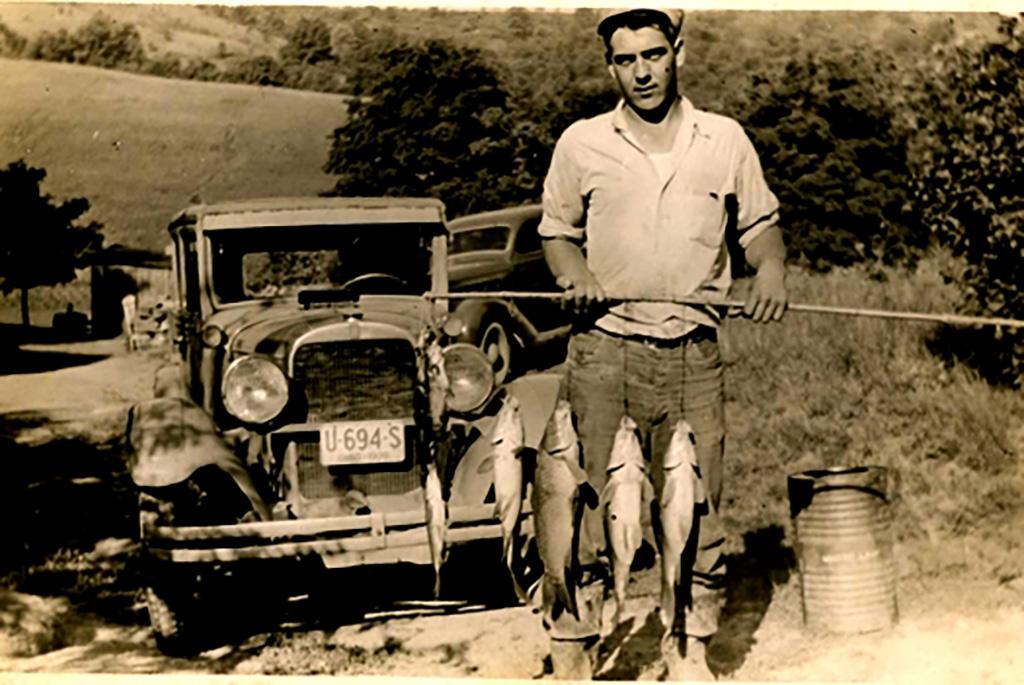
The two most common species of suckers swimming in Ohio’s streams are the common white sucker and the redhorse sucker. They likely make up the bulk of the suckers I’d ever been able to coax onto a hook. Not being much of a fish-eater myself, I usually returned them promptly to the water. My dad had different ideas. He’d been born in 1915 near Mount Pleasant, Ohio. The youngest of 11, the family relied on the coal mines for work and the gardens, streams and woodlands for many of their meals. Both suckers and carp were welcome at the dinner table.
Today, many anglers scoff when someone mentions eating those two species, considering them “rough fish” that aren’t worth the trouble. Most write them off as too bony with questionable flavor. It’s funny how our palate becomes less finicky when we’re truly hungry. Thankfully, most Americans no longer suffer from that issue. But were those folks back then desperate, or did they know something that we’ve since forgotten? First, let’s talk about Ohio’s suckers — starting with the common white sucker.
White sucker
The white sucker has a long, slender body with light brown sides and a white belly. The mouth is small, and it has smaller scales than all other suckers except the longnose. The dorsal and tail fins are slate-gray, while its other fins are white, yellow or light brown. They’re found in nearly every lake, reservoir, river and stream, with the largest population found in Lake Erie and are tolerant of pollution, turbidity and low oxygen levels. In early spring, large numbers migrate up tributary streams to spawn. They average around 10 to 20 inches long and about a pound, though they’ve been known to reach 25 inches and 5 pounds.
Redhorse varieties
The redhorse sucker is where things get a little dicey — there is more than one that carries that name. The golden redhorse is considered common, as is the smallmouth redhorse.
The golden redhorse is found throughout Ohio and occurs in all but the smallest streams and rivers. They’re also found in Lake Erie and larger reservoirs that have a stream or river feeding them. It’s the most common and least sensitive to poor environmental conditions of Ohio’s seven species of redhorse — yes, seven. The golden has an olive-colored back and white belly with gold to bronze sides and a slate-gray tail. The rear edge of the lips forms a slight “V” shape.
The black redhorse is slenderer, with the back edge of the lips forming a straight line. The silver redhorse is very deep-bodied, the rear edge of the lower lips form a deep “V” and they have a convex dorsal fin. Ohio’s other four species of redhorse have red tails. Redhorse suckers average about 12 to 18 inches and around 1 to 2 pounds, though they’ve been known to get 26 inches long and 4.5 pounds.
The river redhorse is considered a species of concern in Ohio, which means it could become threatened if continued stress is placed upon the species. River redhorse are found only in the largest rivers of the Ohio River and Lake Erie drainage systems, most often in deep pools with moderate current over bedrock or gravel substrate. Unlike other suckers, they’re intolerant of pollution and turbid water, which makes them a good indicator of water quality.
The river redhorse averages 18 to 26 inches and 3 to 7 pounds, though they can reach 32 inches and 12 pounds. It has a relatively large head and eyes and a bright red tail. The rear edge of the dorsal fin is nearly straight to slightly concave. The similar greater redhorse has a more rounded head, smaller eye and a slightly convex rear edge to the dorsal fin. Shorthead and smallmouth redhorse have smaller heads, more slender bodies and concave dorsal fins. Ohio’s other three redhorse species have slate gray tails.
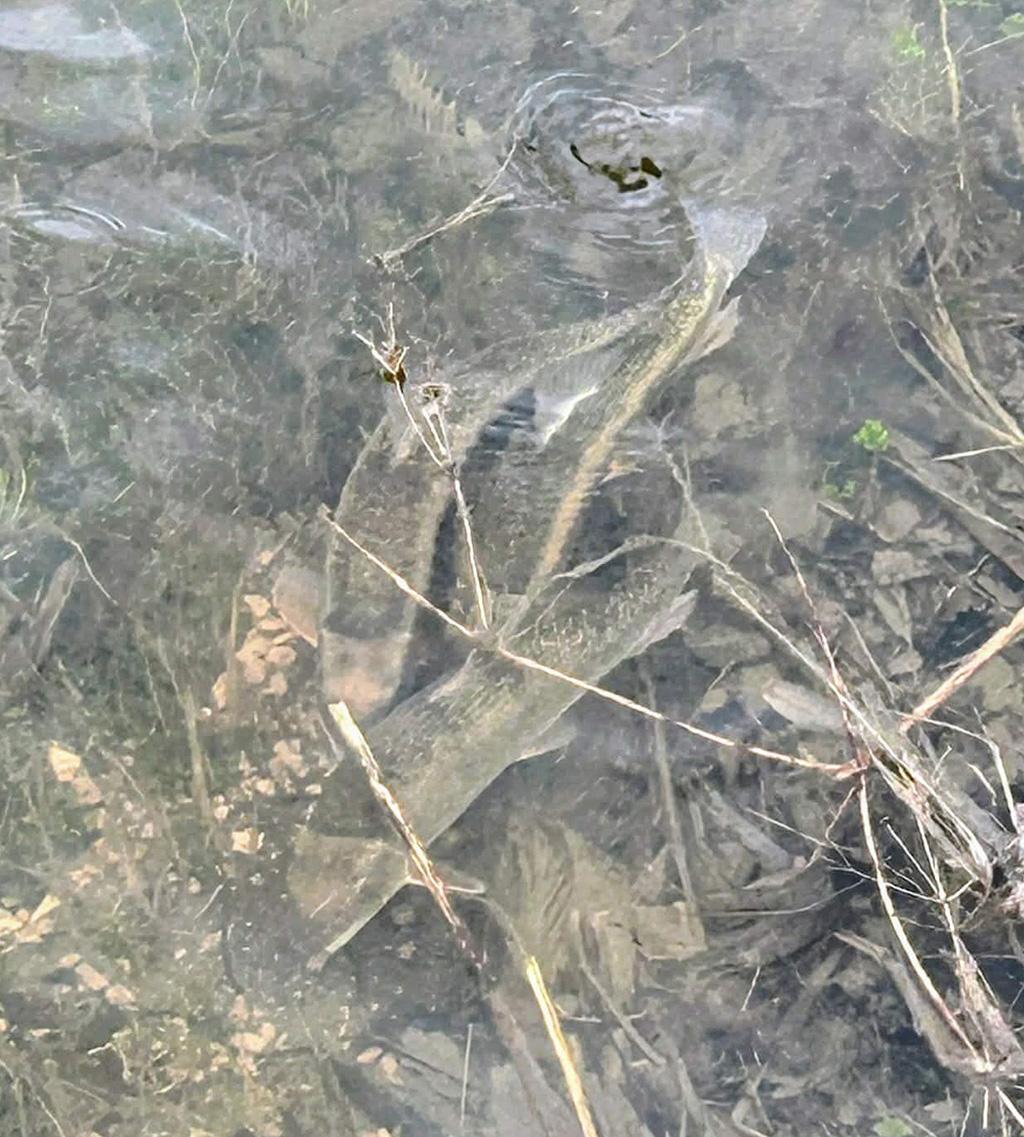
Besides the common white and all of those redhorses swimming around, I’ll give honorable mention to three others: the northern hog sucker, the quillback carpsucker and the bigmouth buffalo. The hog sucker is unmistakable. It has a bony-looking head with a pronounced mouth that looks a lot like a pig’s snout. They’re the most colorful of the suckers — mottled reddish brown with four to six dark saddles or bands across their back. They prefer silt-free, clear streams with clean substrates and enjoy living in the fast riffle areas most of the year, where they spend their time using that snout to roll over small rocks and stir up sediment as they seek aquatic insects and other invertebrates.
The quillback averages 15 to 20 inches and 1 to 4 pounds, but they’ve been known to tip the scale at a respectable 10 pounds. The northern quillback carp suckers are found only in Lake Erie and the first mile or two of some of its larger tributaries. They can be found throughout the lake, but are most common in depths of 15 to 25 feet. There is another quillback swimming around. The central quillback carpsucker is found throughout inland Ohio in most streams and 36 rivers. They’re most common in low-gradient streams of northwestern and southeastern Ohio. They can also be common in some of Ohio’s larger reservoirs.
Finally, there’s the buffalo suckers, specifically the bigmouth buffalo. It’s the largest North American species in the sucker family. It’s typically found in the drainage of both the Ohio River and Lake Erie, including the Ohio River and others such as the Scioto, Muskingum, Maumee and Sandusky Rivers. In Lake Erie, you’ll find them in the marshes of Sandusky Bay and similar backwater areas of the Western basin. Adults reach 15 to 30 inches long and 3 to 30 pounds. However, some have been recorded at lengths up to 40 inches and weighing 60 pounds. Buffalo suckers don’t inhabit smaller streams except during their spawning period, spending most of their time in larger bodies of water.
All of the suckers make their spawning runs during April and May, most finning their way up smaller streams and tributaries to lay their eggs — many traveling after the sun goes down. The quillbacks are the only real exception, preferring to deposit their eggs randomly over a sand or mud bottom in quiet water.
Potential issues
Now, if you decide to have some fun on the run, you can do like me and turn any hooked suckers loose to swim another day, or you can explore the possibilities of discovering a new table fare. Don’t believe anyone who tries to tell you that suckers and carp eat mud. They’re hunters looking for edible delectables hiding along the bottom.
Since they don’t eat much in the way of other fish, they tend to be lower in mercury and other heavy metal contaminants when compared to more predatory fish. That said, there are some regions where the fish have been identified as carrying some health issues.
Wisconsin DNR warns that in that state, “Suckers had elevated levels of dioxin-like compounds relative to other fish family groups…In addition to dioxins, sucker fish may contain high levels of methylmercury.”
It’s true that many fish absorb chemicals from their environment. The Ohio Department of Health has advised that even the vaunted Lake Erie walleye should only be served for one meal per week. Most fish are safe to eat in Lake Erie, but ODNR’s Division of Wildlife biologist Travis Hartman said there are certain categories of fish that are better for consumption.
“Younger fish have less time to build contaminants up, so they’re generically healthier than older fish and fish that aren’t bottom feeders. If you think about fish like common carp that are bottom feeders interacting with the sediment, they’re generically a little higher risk than fish that are higher up the food chain,” Hartman said.
RECIPES
So, what about sucker recipes? Here we are a few:
Preparation: Fillet and skin the fish as soon as possible after catching. Discard the fatty belly flaps. Soak fillets in cold saltwater or milk for 20 minutes. Remove the dark red lateral line along each fillet. Season simply with salt, pepper and lemon. Avoid strong seasonings that will overpower the delicate flavor.
Your cooking options include the following:
- Bread and pan-fry fillets to a golden brown until they flake easily, about 3 to 4 minutes per side — the traditional favorite.
- Bake at 400 F for 10 to 15 minutes on a greased baking sheet until cooked through.
- Grill over medium-high heat for 2 to 3 minutes per side, basting with butter or oil to prevent sticking.
Baked Parmesan Sucker Fish
- Coat fillets with panko breadcrumbs, parmesan cheese, paprika and dried parsley
- Bake at 400 F for 12 to 15 minutes until browned and flaky
- Serve with roasted potatoes and lemon wedges.
Sucker Chowder
- Simmer chunks of sucker fish, potatoes, onion, celery, garlic and spices in broth
- Finish with milk or cream and ladle into bowls
- Garnish with oyster crackers
So, there you have the story of Ohio’s suckers, at least enough of a story to get you out there to give the fish a try. Whether you plate it or return it to its stream to swim off, that’s your decision. One thing is sure: You won’t likely regret the time you spent learning the river.
“If people concentrated on the really important things in life, there’d be a shortage of fishing poles.”
— Doug Larson