




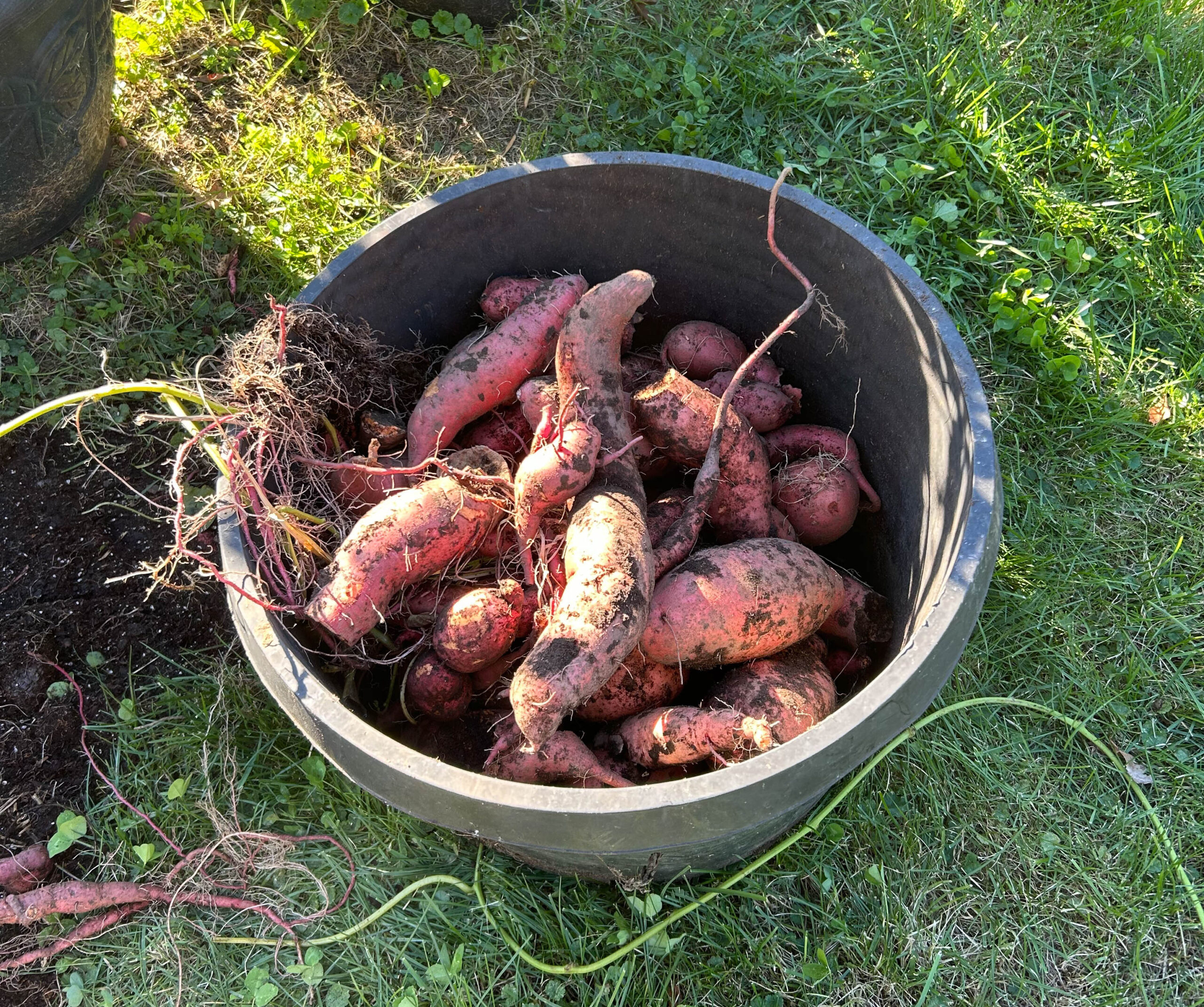
SALEM, Ohio — It was a warm autumn day on Oct. 16, 2025, and there were only two vegetables left to harvest in the garden as the growing season came to a close: pumpkins and sweet potatoes.
It was our first year growing the two crops, and it was a success. We had eight pumpkins to pick from the vine, which spread across our yard and into our neighbor’s.
But, being a vegetable that grows underground, we were unsure how many sweet potatoes we would yield. As my neighbor put it that day, while my dad and I dug up sweet potatoes: “I would’ve thought it was Christmas morning when I walked over here.”
I replied, “No, it’s even better than Christmas morning.”
We had been waiting months to find out what was underneath the dirt, and it did not disappoint; we harvested roughly a bushel of sweet potatoes.
This “superfood” is not only incredibly nutritious and delicious, but easy to grow and store to be eaten all winter long.
Not a potato
The name sweet potato may be misleading because it isn’t considered a potato. While both are grown underground, the main difference between the two is their biological structure: a sweet potato is a root tuber, and potatoes are stem tubers.
Root tubers are vegetables where the root is the meat of the crop, as opposed to stem tubers, where the stem is the crop.
Sweet potatoes are also part of the morning glory family, with the heart-shaped leaves and sprawling vines providing ground cover, choking out weeds, according to Penn State Extension.
Originating from Central and South America, sweet potatoes are the seventh most produced crop in the world today, behind wheat, rice, maize, potato, barley and cassava.
The sweet potato thrives in summer heat and is not prone to pests; however, those who do decide to pursue a sweet potato patch should watch out for those chipmunks (coming from personal experience).
Benefits of sweet potatoes
Why should you grow sweet potatoes? Growing sweet potatoes is fairly easy, requiring little maintenance while producing high yields.
Mice, voles, deer and chipmunks can pose problems; however, you can protect your sweet potatoes by growing them in large pots and raised beds or putting up a garden fence.
Sweet potatoes can also be used as a cover crop, as their vines shade the soil, preventing weed growth.
Aside from the planting benefits, the vegetable is considered a superfood, containing a plethora of vitamins and being high in fiber.
Orange-fleshed sweet potatoes contain vitamin A, which is vital for childhood development and also supports the immune system and vision. Purple sweet potatoes contain anthocyanins, which produce antioxidant and anti-inflammatory effects.
Slips and soil
Sweet potatoes are not grown from seeds, but slips (sprouts) from mature sweet potatoes. These slips can be bought via mail order, nurseries or farm markets — I bought mine from Janoksi’s Farm Market in Clinton, Pennsylvania — or can be grown from last year’s crop.
To learn how to grow your own slips, visit extension.psu.edu/sweet-potatoes-a-winning-vine-for-your-garden.
Sweet potatoes require loose, well-drained soil. Compacted and waterlogged soil will cause root rot. Nitrogen-rich soil will produce many leaves, but few, small potatoes.
Instead, sweet potatoes like sandy loam, a soil made up of less than 7% clay, less than 50% silt and between 43%-50% sand. Sandy loam can be found at local garden centers or landscape stores.
Soil rich in potassium is also beneficial for growing sweet potatoes; this can be accomplished by adding wood ash (in moderation, as it will raise the soil pH).
If you are unsure about your soil, you can take a soil test through Penn State Extension, Ohio State Extension, local soil and water conservation districts and some garden centers.
Planting sweet potatoes
Sweet potatoes shouldn’t be planted until the end of May in the tri-state area (Pennsylvania, Ohio and West Virginia) — soil should be at least 65 F — as they are particularly sensitive to cold soil; cold weather (below 50 F) can cause root rot, says Penn State.
The slips should be planted at least three to four weeks after the last frost-free date.
We placed plastic mulch around our sweet potatoes to attract heat, keeping the soil warm. This is especially beneficial for colder, northern climates where the weather can vary.
Adding a little compost to the soil will help break up the soil. When ready, plant the slips in a garden bed at least 8 to 12 inches high, with slips at least 12 inches apart and planted 6 inches deep; keep at least two leaves above ground.
Newly planted slips should be watered every day for the first two weeks; after this, they will need 0.5 inches of water per week.
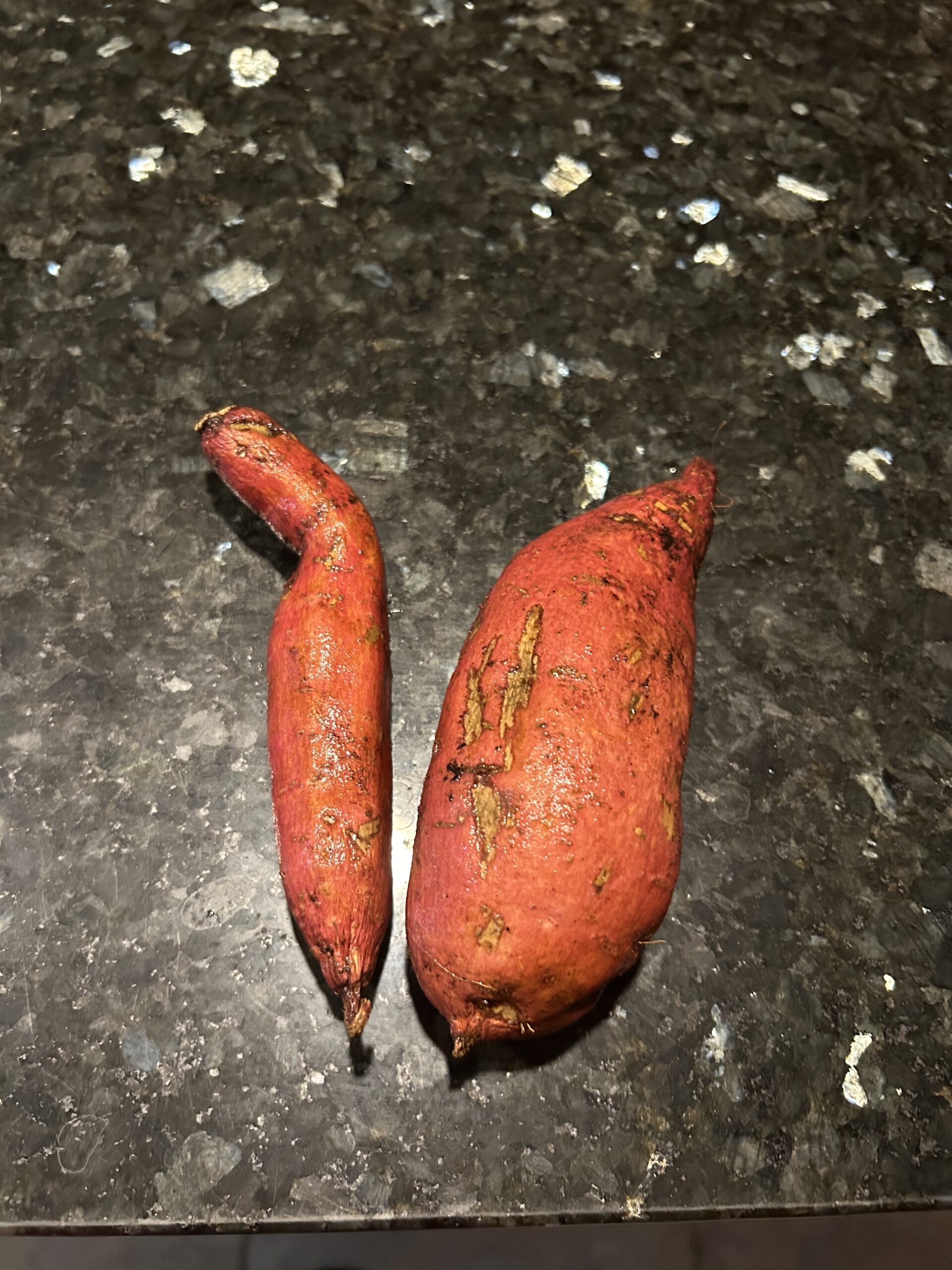
Sweet potatoes can also be grown in large pots. Last year, I grew sweet potatoes in both a garden bed and a large pot. While both produced potatoes, I would recommend growing them in the garden, as the sweet potatoes in the pot grew vertically, looking like long fingers, instead of wide, thick potatoes.
I think this is because the potatoes didn’t have enough room to grow horizontally; however, this problem can likely be solved by choosing a specific variety of sweet potatoes.
Sweet potato varieties
There are three types of sweet potato varieties: orange, white and purple. The varieties best suited for a Pennsylvania-like climate include orange-fleshed beauregard, Covington, Orleans and averre varieties; the white-fleshed murasaki and the purple-fleshed purple splendor.
Beauregard provides a high yield and stores well; however, it can crack and develop root rot in poorly drained soils. Covington is disease-resistant to soil rot but takes slightly longer to grow than most orange-fleshed sweet potatoes.
Orleans sweet potatoes are similar to the beauregard variety, but sweeter and averre is high-yielding but can be vulnerable to wireworms.
Murasaki produces a lower yield than most orange sweet potatoes and is harvested later in the season, but it is a good source of vitamin C and fiber. Purple splendor is also harvested later and is commonly used in organic production.
Porto Rico and vardaman are the sweet potato varieties best grown in containers, as they do not spread as wide, about 2 feet per plant, according to Penn State Extension.
Harvest
Sweet potatoes should be harvested 90 to 120 days after planting, depending on the variety, and before the first frost, as frost damages the roots.
When the leaves start to turn yellow, dig out the sweet potatoes by hand and be patient (something I wish I had kept in mind), as broken or bruised sweet potatoes won’t store as well. The roots will be in the top 8 to 10 inches.
Let the sweet potatoes dry and store them in a cool place for long-term storage. We stored ours in the garage.
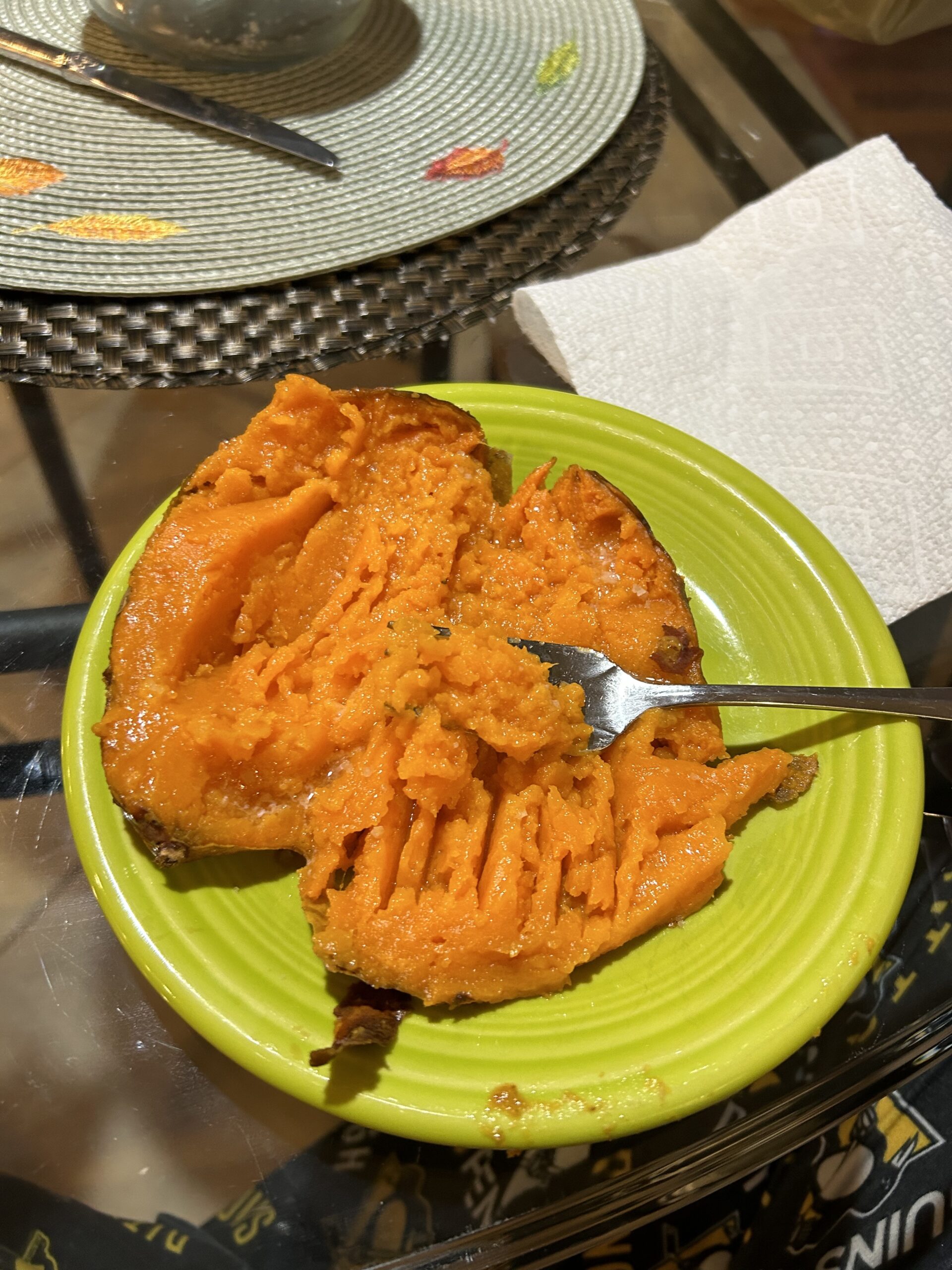
Sweet potatoes can be cooked in a variety of ways: as a casserole with cinnamon and brown sugar (marshmallows optional), made into fries, cooked in a skillet with butter and spices and — my personal favorite — baked and eaten with butter.
If I learned anything from growing sweet potatoes that first year is that the surprise, come fall, is worth the wait.
Growing sweet potatoes is like Christmas morning (but for garden-loving adults!)
(Liz Partsch can be reached at epartsch@farmanddairy.com or 330-337-3419.)