

As long as we’re on the subject of bread, let’s focus a bit on exactly how the early Ohio country settlers made their bread prior to toasting it.
Because pioneer families tended to be large, sizable quantities of bread had to be baked at a time. Of course, this required lots to bread dough to be prepared for baking, which was usually done once a week, with Mondays often earmarked for the chore.
And it was a chore.
Bread dough was typically kneaded in a long wooden trough known, perhaps not surprisingly, as a dough box, dough tray or kneading trough. This was a kitchen tool almost every family had, and the larger the family the larger the dough box. While the typical dough box for a sizable family would be close to three feet in length, I have seen one just shy of 10 feet. That one had been used in an orphanage in my hometown to prepare bread dough for scores of children.
Distinct design
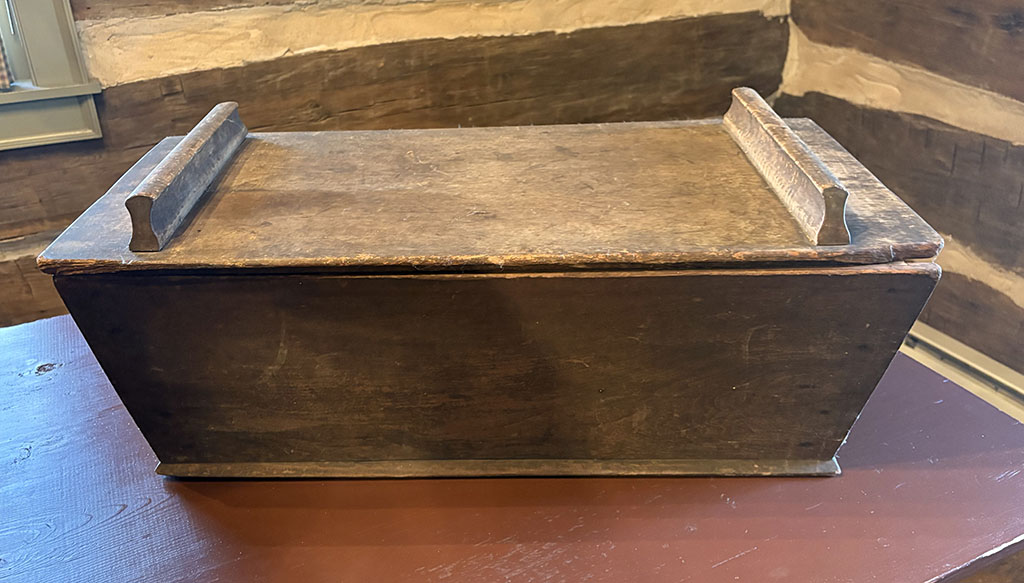
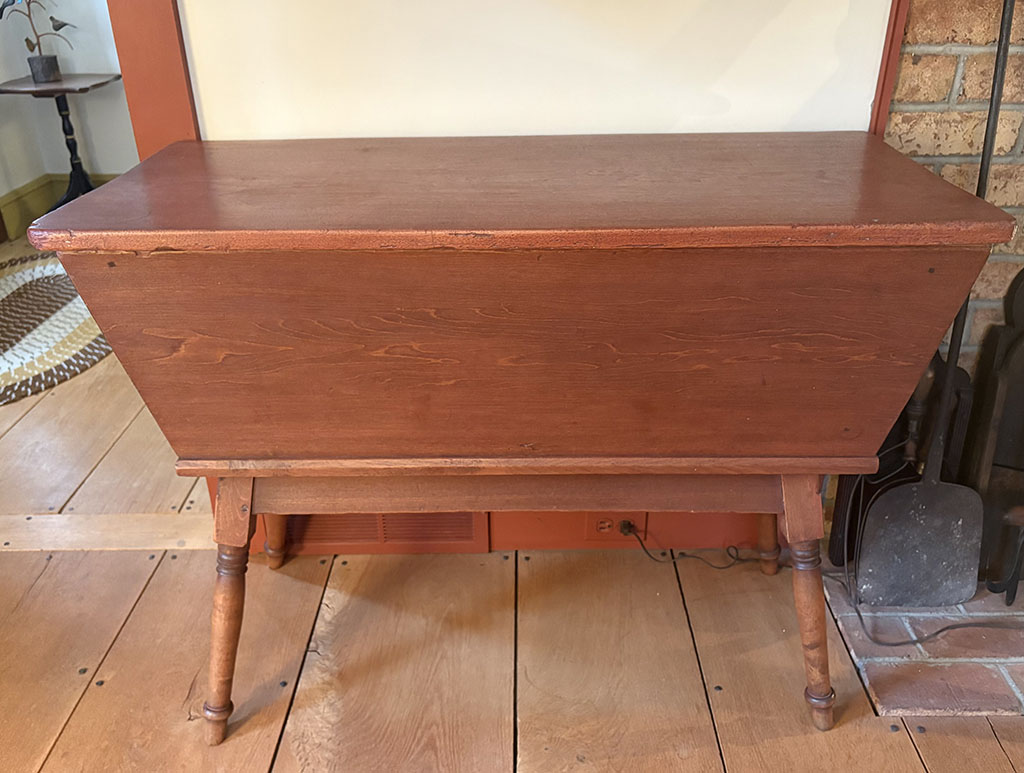
The design of the dough box is very distinctive and can’t be confused with any other form of early furniture. First, it is almost always crafted of maple or tulip poplar because, unlike other woods, these two species do not impart any type of smell or flavor to the food with which they come in contact. The form is a rectangular box with all four sides being slanted, or canted, slightly inwards from the top to the bottom. In every case they have a close-fitting lid, usually fitted with cleats either on the interior or exterior to prevent warping when the box is set in front of the fire to allow the damp dough to rise in a warm environment.
There are two distinct styles of dough boxes, those being the floor-standing type and the tabletop type. The floor-standing type of box was set atop a frame having four legs, all of which were splayed outward to give it more stability. In the best examples, the sides of the trough were dovetailed together like fine cabinetry, rather than nailed. They have handles attached to both ends, allowing them to be carried to and from the fireplace.
In some instances, the lids of floor-standing dough boxes are made to substantially overhang the box all around. This allowed the box to double as a family’s dining table when not involved in their weekly baking use. These are commonly known as dough tables, and they are not nearly as common as floor-standing dough boxes with regular lids.
In rare instances, floor-standing dough boxes are found that incorporate a drawer into the frame, allowing the user immediate access to a rolling pin or other kitchen utensils.
Tabletop dough boxes are similar to the floor-standing types but are made without legs. They are usually considerably smaller than their legged counterparts. Occasionally, child-sized dough boxes turn up. These were made to allow children to participate in the bread-baking process, helping to prepare them for the work they would face as an adult.
Scraper
Now, kneading bread dough in a rectangular-shaped trough worked well, except for the fact that during the process bread dough invariably became lodged in the seams of the box and was difficult to get out. While the early settlers lacked an understanding of germs that could be associated with moldering dough, they did get the message that the green buildup of old dough in the box was probably not a good thing.
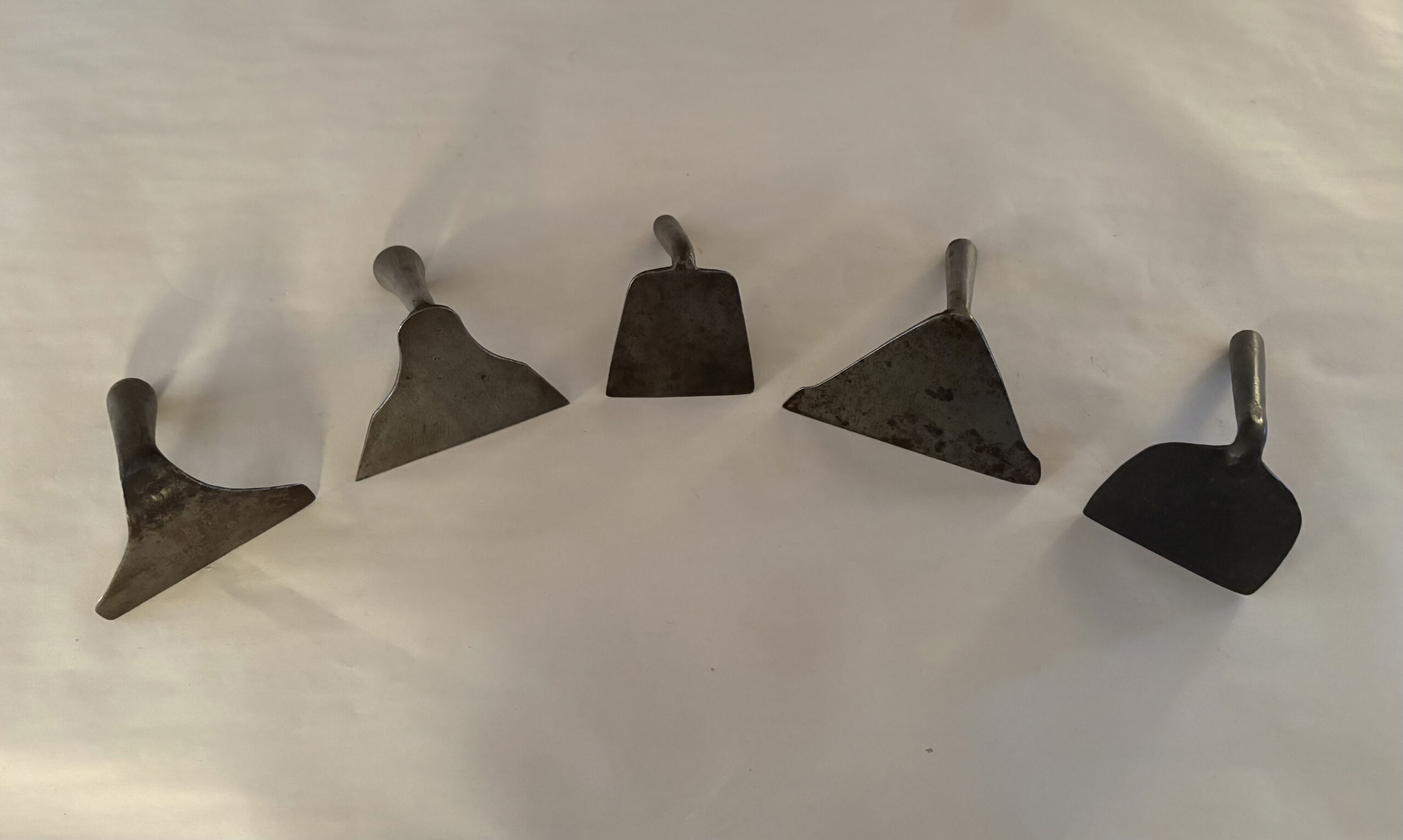
To eliminate this problem, they invented the dough box scraper. The product of the local blacksmith or whitesmith, an iron dough box scraper resembled a small hoe, with a straight blade that terminated on both ends with sharp corners. The dough box scraper was used to scrape the interior of the box clean after every use, and its sharp corners were perfect for digging out dough that remained where the corners of the box were joined.
While all dough box scrapers share a basic common shape, their profiles are as different as the smiths who crafted them. Although the vast majority are all iron, some examples have turned wooden handles.
Despite the fact that dough scrapers were very utilitarian, some craftsmen decorated them with incised or punched designs, cutouts and stamped decoration. A rare few have the names of the blacksmith stamped on them, and fewer still have the year of manufacture.
Dough box scrapers have survived the test of time remarkably well and unadorned examples can readily be found on today’s antiques market at very reasonable prices. Embellished scrapers, however, command considerably higher prices.