

In the early kitchens of the Ohio country, fires were kept going nonstop, not only for cooking, but for general heating as well. One of the many small calamities that could befall a frontier family was to have their fire go completely out, necessitating a trip to the nearest neighbor to collect some hot coals in a metal pan so that the home fire could be rekindled.
With all this endless burning, wood ash in the fireplace accumulated quickly. After a week or two of constant burning, ashes piled up at the rear and sides of the fireplace in eye-popping volume. Cleaning out the ashes for future use in making lye soap wasn’t considered a high priority on the vast list of jobs that needed to be done around the developing farmstead.
Many were the jokes about the types of beings that might possibly live within the small mountains of accumulated ashes.
Cooking equipment
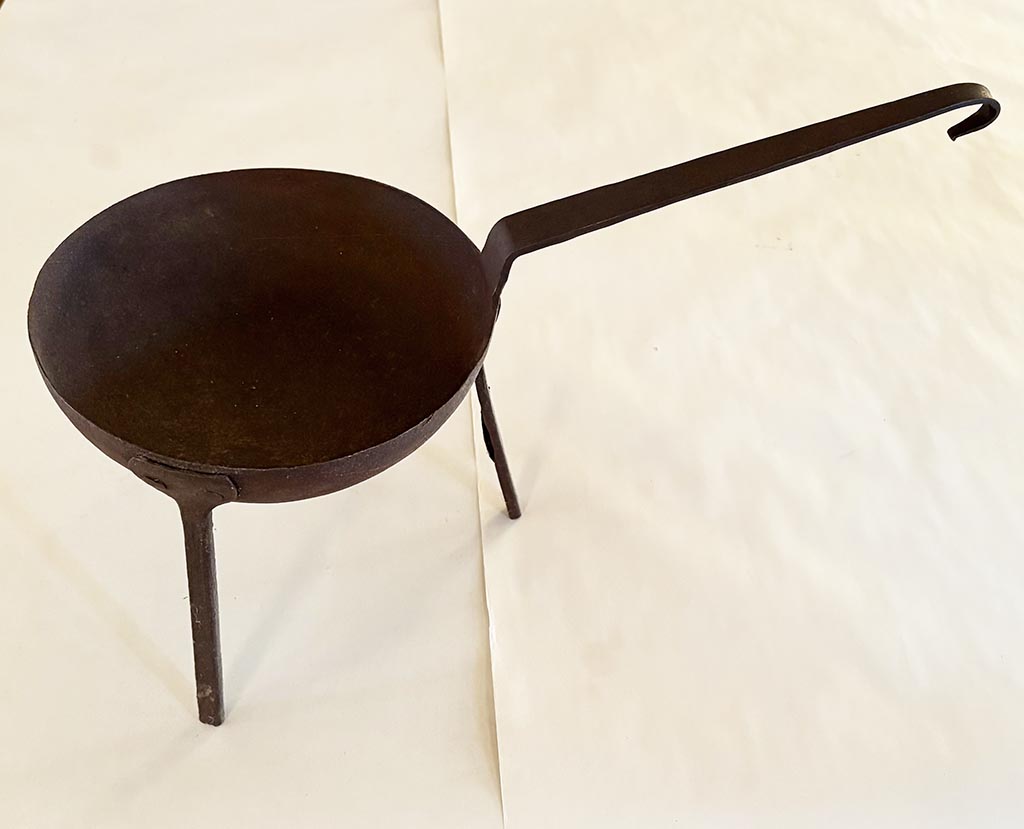
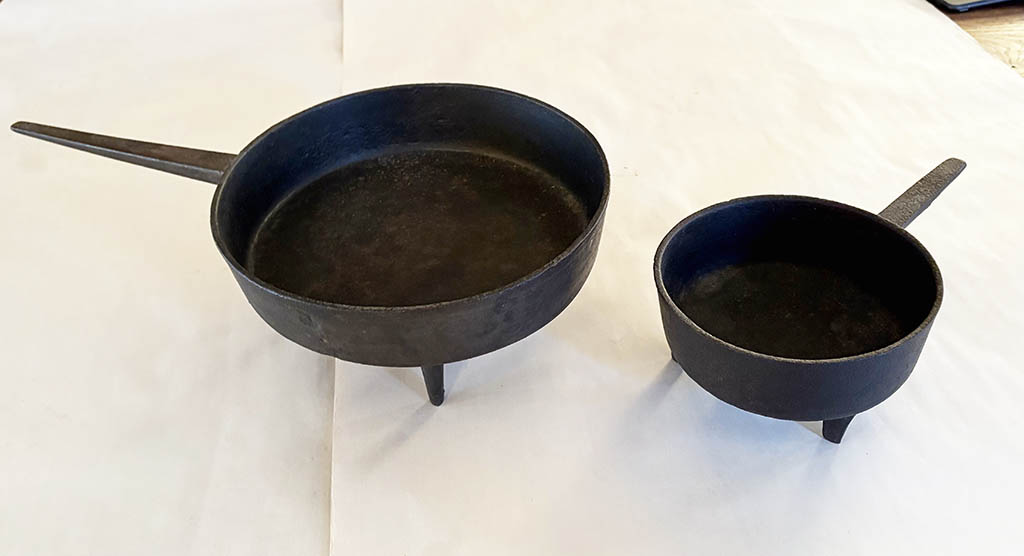
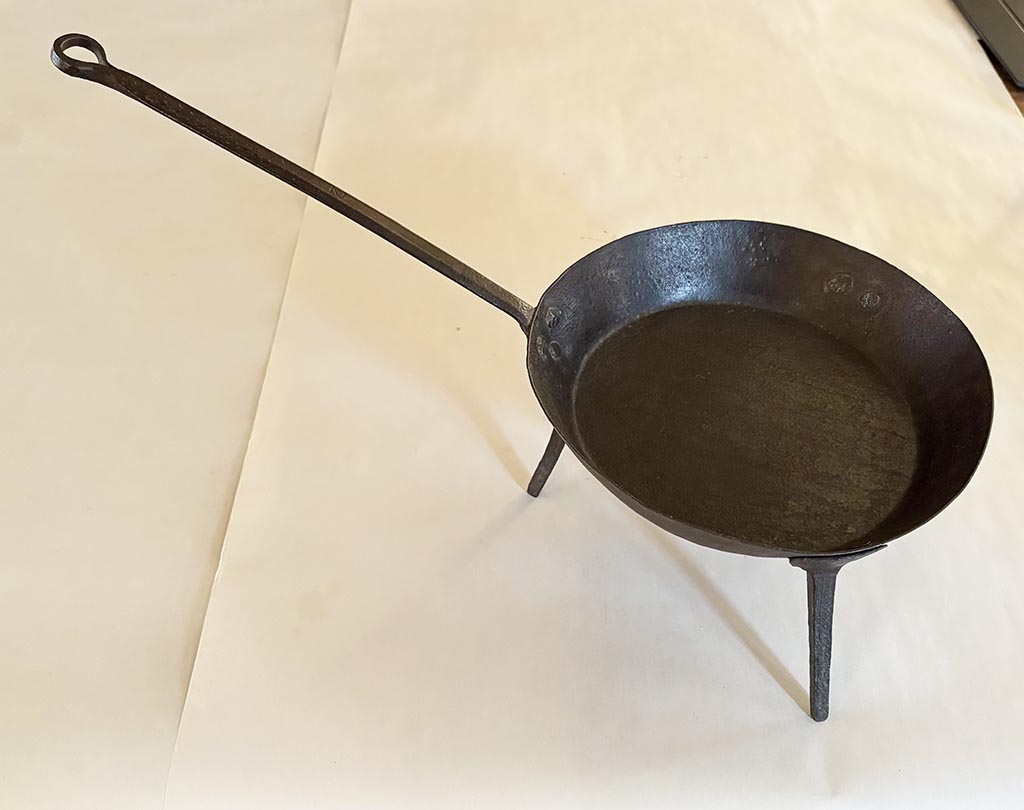
Two types of things that were found in the environment of the early fireplace were spiders and salamanders. OK, OK … not real spiders and salamanders, but iron ones. Spiders and salamanders were the names of two distinct kinds of cooking vessels commonly used by the pioneers.
Spiders were cooking pans that stood on long, thin legs so that they could straddle piles of hot coals on the hearth. Spiders were typically made of wrought iron and had long handles that allowed them to be maneuvered easily around the hearth. They were lighter in weight than cast-iron cooking vessels and were crafted in a variety of sizes. Oftentimes, the handles of spiders were decorated with punchwork and displayed a heart or other folk motif at the end.
Spiders were of two distinct genres that relate directly to their period of manufacture. The earliest type, used throughout the 18th century and into the very early 19th century, was in the style of a ladle, but with legs. The blacksmith would take a bar of iron and heat it until part of it could be drawn into a bowl shape with the use of a swage block. The part that was not the bowl would be hammered into an integral handle, usually having a loop for hanging by the hearth. To the bowl were riveted three iron legs.
After the first quarter of the 19th century, the shape of the spider became more like a frying pan, although the leg arrangement changed slightly. In these examples, the handle and the rear leg were crafted as a single piece before being attached to the pan.
Salamanders were completely different from spiders. They were made of cast iron, and like their namesakes had short stubby legs and a long, straight handle, or tail. Popular throughout the 18th and the first half of the 19th century, most salamanders retain a so-called “gate mark” or “sprue” on the bottom that attests to the early casting methods that created them.
While the basic shape remained the same, salamanders came in graduated sizes from quite small for heating sauces, to large examples that cooked main courses. Some of the larger salamanders also had iron lids, enabling them to function similarly to Dutch ovens.
While early spiders are fairly rare in today’s antiques market, salamanders are more readily found, doubtlessly due to the durability of the cast iron. Nevertheless, salamanders are notoriously brittle due to repeated heating and cooling and often have hairline fractures in the metal.