

If you were an early 19th-century cook in the Ohio country looking to celebrate Christmas or New Year’s Day with a goose or turkey dinner, you would likely be cooking that delicious fowl in the kitchen — a tin kitchen, to be exact.
Back in those pioneer days, tin kitchens, the joint product of the tinsmith and blacksmith, were the last word in modern fireplace cooking, as revolutionary then as the convection oven or microwave was two centuries later.
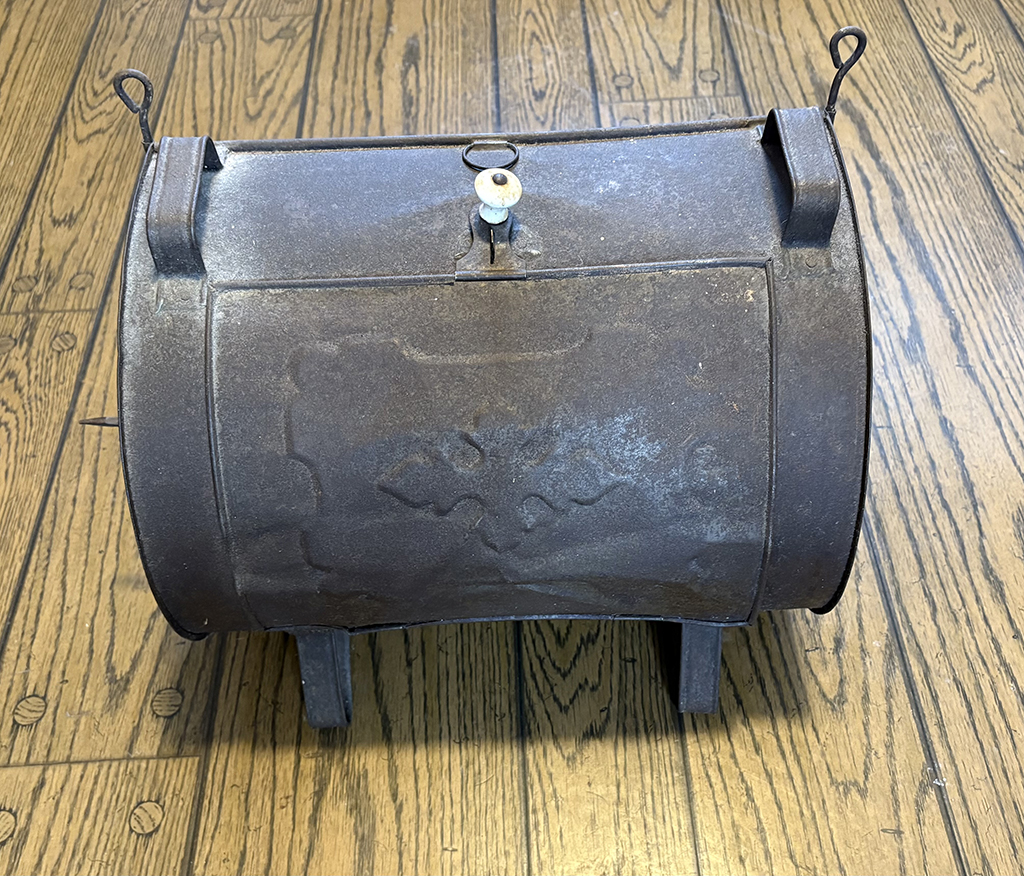
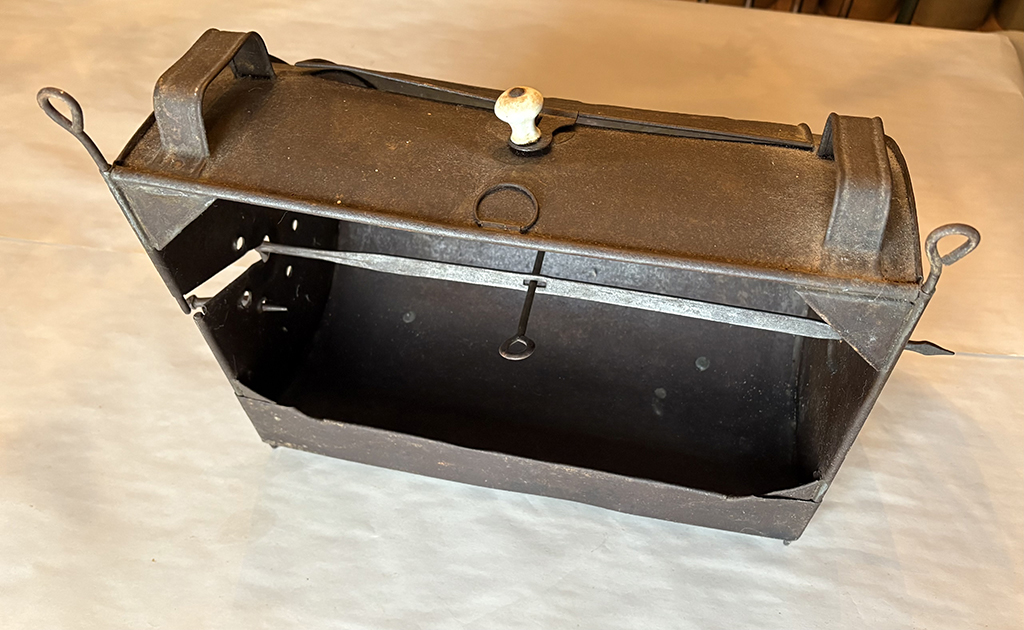
The tin kitchen, also known as a reflector oven, had a demi-barreled shape with three sides, the remaining space being open to the fire. While the main body of the oven was made of tin, highly polished on the interior surfaces to better reflect heat, the rectangular framework that gave it structural strength was made by a blacksmith.
Exactly when the tin kitchen appeared on the culinary scene is unclear, but evidence suggests it was in use in Europe by the mid-1600s. A painting titled “The Cook” by Dutch painter Gabriel Metsu (1629-1667), done sometime between 1657 and 1662, plainly shows a tin reflector oven in use within the scene.
One of the first mentions found in print for the use of the tin kitchen was in London-born Hannah Glasse’s recipe book “The Art of Cookery Made Plain and Easy,” published in 1747. In it, Glasse (1708-1770) provides definitions and illustrations of the “tin oven.”
She also gives advice on how to use it to cook goose, turkey and slabs of beef. Hers was one of the most popular recipe books at that time and remained a best-seller for more than a century, going through 40 editions.
By the early 19th century, tin kitchens had caught the imagination of frontier cooks, who saw them as being more efficient than just placing meat on an iron spit over an open fire.
In terms of detail, the half-round oven was supported in front — the side facing away from the fire — by two small feet crafted from bent straps of tin. The rear of the oven was supported just above the hearth by short legs which were made as an integral part of the frame. Those legs extended upward above the top surface of the oven, terminating in a loop. The two loops enabled the cook to snare them with the hook on a poker in order to maneuver the hot kitchen as needed.
In the center of the front of the oven was a hinged door which could be opened for basting purposes, or simply to check the progress of the cooking. This door was flanked on either side by a handle which enabled the user to carry it. On one side of the oven, located at the very bottom, was a 2-inch spout that was used in pouring off the juices collected during the cooking, which were then made into gravy.
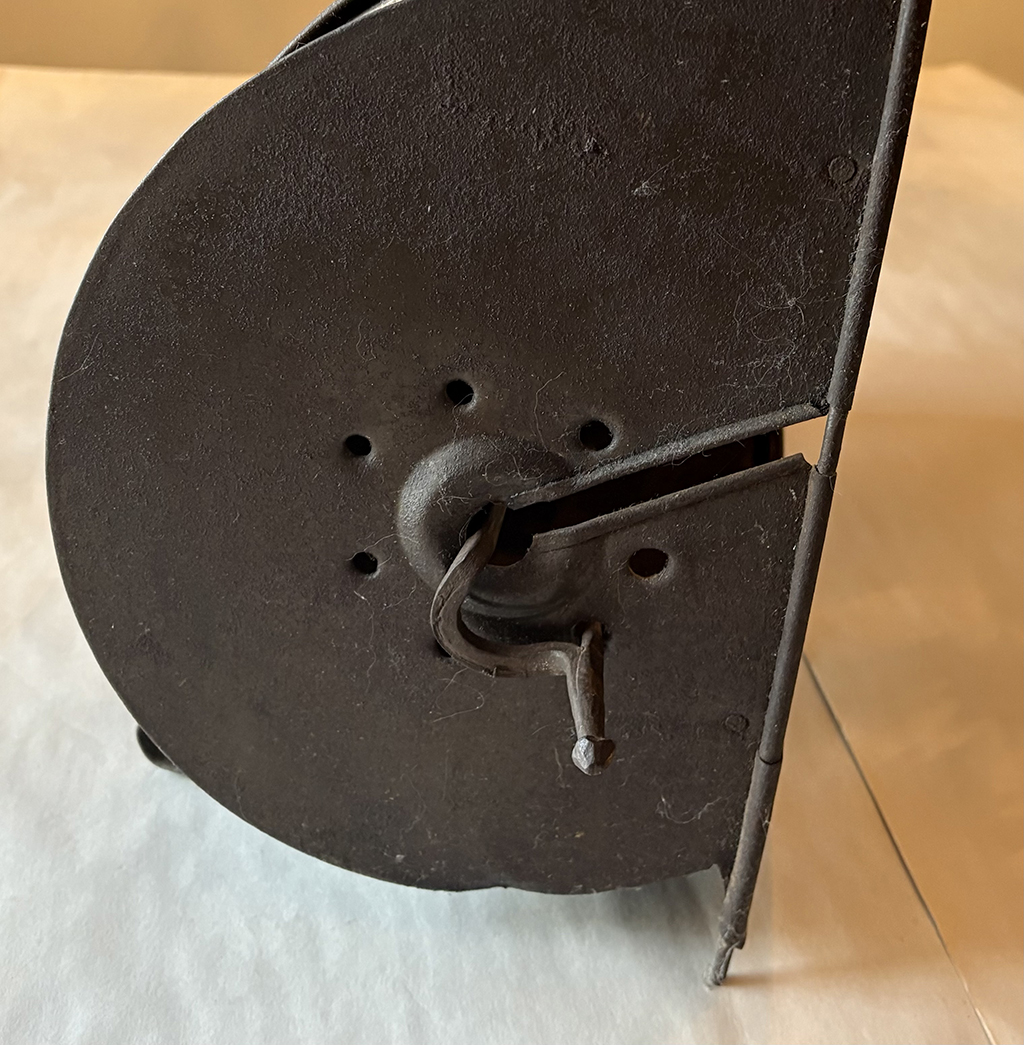
Through the center of the oven passed a spit, made of wrought iron by the blacksmith. These flattened spits typically had a number of rectangular holes punched in them. The holes accommodated wrought iron skewers which were used to anchor the meat being cooked to the spit, although many cooks still preferred to additionally tie on the meat as well.
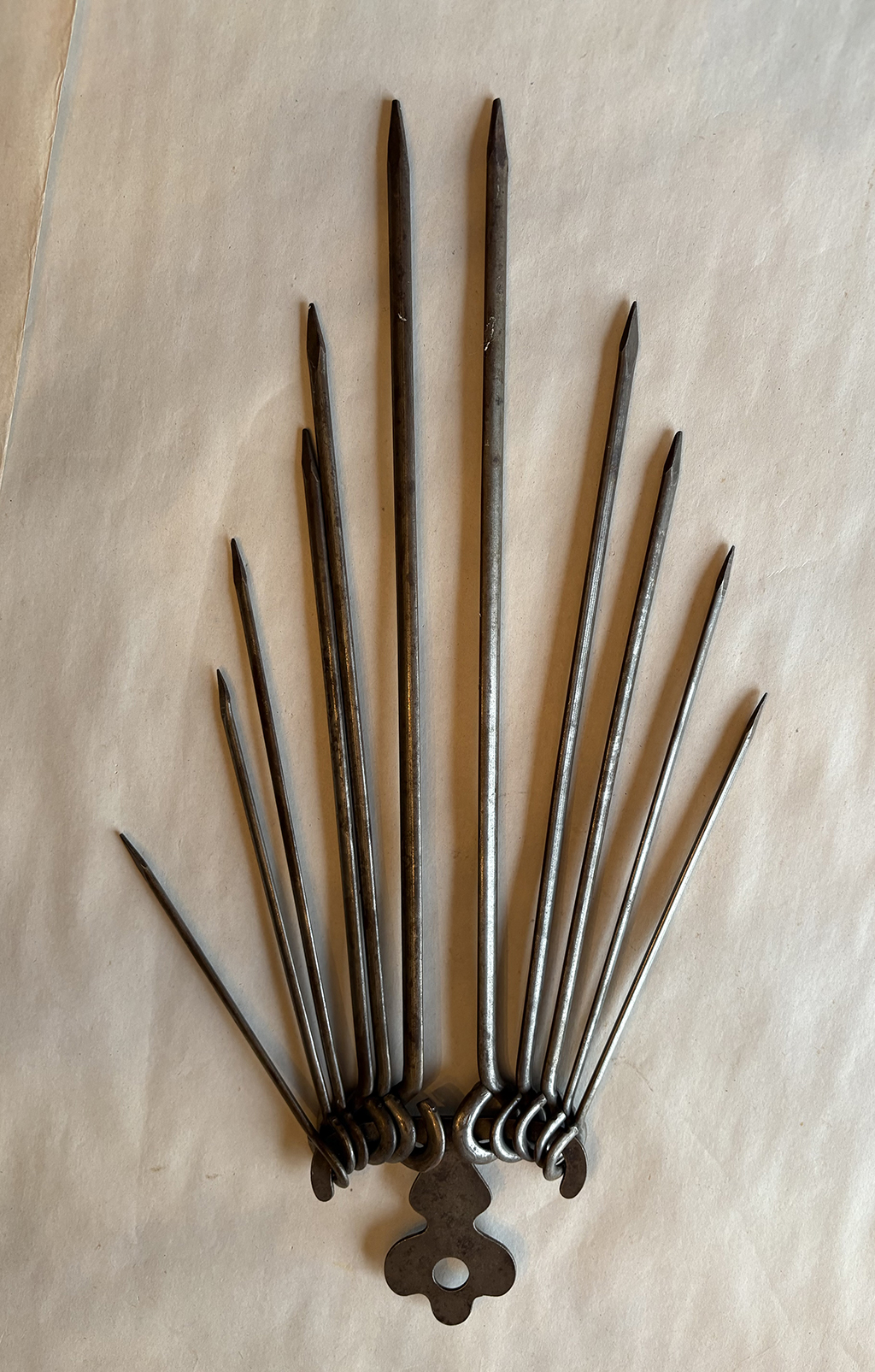
The wrought iron skewers were made in varying sizes and were hung on an iron skewer rack for convenience. The skewer rack was another fireplace accoutrement where the blacksmith could demonstrate his artistry, imagination and skill. Skewer racks are found in a wide variety of shapes. While hearts and diamonds were popular motifs, blacksmiths created many other designs as well, additionally embellishing them with punchwork, pierced work, decorative filing and more. The one thing all these skewer racks had in common were upward curved pins on which to hang the looped-end skewers. Also, when a blacksmith created a set of skewers, he usually made an especially fancy one, with decorative twists in the shaft. This special skewer would be placed in the meat when it was proudly served at the table.
On one end the spit terminated in a handle, which was located outside the body of the oven. Incorporated into this handle was an iron point or spur. This spur plugged into a circular arrangement of holes in one side of the oven. As the handle was gradually rotated during the cooking process, the spur could be plugged into the holes in the side to hold the meat on the spit in the desired position.
The meat was cooked by radiant heat. The heat from the fire reflected off the polished interior to provide a more uniform cooking environment.
Tin kitchens were made in a wide variety of sizes which could be used to cook meat, ranging from small poultry to larger turkeys and geese, to large slabs of beef. While the sizes changed, the overall design remained essentially the same for each.
Unfortunately, the survival rate for pioneer-era tin kitchens has not been good. Rust, corrosion and general abuse over the centuries have taken their toll, and they are elusive on the antiques market for anyone wishing to acquire one. Prices for them vary widely. Even when they turn up, antiques dealers themselves are often not knowledgeable about what they are or how they were used.
The last one I purchased was sold to me as being “an Amish bread box.” How the dealer arrived at that idea is something I’m still scratching my head over.