




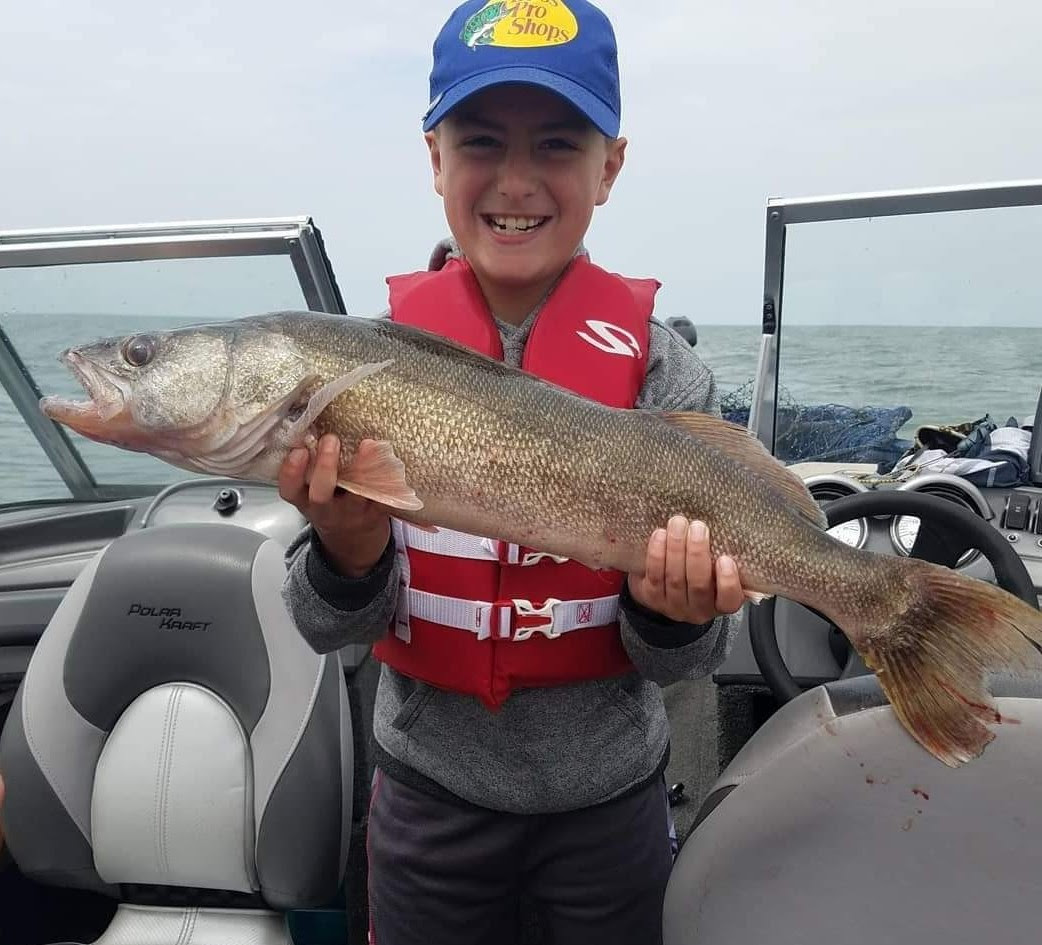
COLUMBUS — The walleye hatch was the sixth largest of the past 38 years, according to results from the 2025 annual Lake Erie trawl surveys by the Ohio Department of Natural Resources Division of Wildlife. The west zone yellow perch hatch was classified as the seventh largest in the past 38 years, while hatches in the central and east zones were below average.
The data reveal spawning success and survival of young walleye and yellow perch. These survey results allow biologists to estimate how many fish will enter the catchable population as 2-year-olds in 2027, key information used by the inter-agency Lake Erie Committee of the Great Lakes Fishery Commission to decide annual levels of safe harvest for walleye and yellow perch.
Walleye
Lake Erie continues to be the walleye capital of the world due to its world-class walleye fishing, fueled by above-average hatches in eight of the past 11 years.
The 2025 western basin walleye hatch index, which consists of trawl sites in Ohio and Ontario waters, was 128 fish per hectare; one hectare is equal to roughly 2.5 acres. This hatch is well above the average of 57 fish per hectare. Walleye production in the central basin continues to be strong, with a 2025 survey index of 26 walleye per hectare — above the long-term average of 8 per hectare.
Central basin walleye hatches are likely a small part of the lake-wide population, but tagging studies propose that fish hatched in the central basin spend more time there as adults compared to migratory walleye from the western basin. Above-average central basin walleye hatches may provide seasonal local fishing opportunities when schools of migratory walleye are not present.
Walleye from the 2025 hatches should reach catchable size, above the 15-inch minimum length requirement, as soon as spring 2027. Walleye fishing is anticipated to remain great for many years.
Yellow perch
Lake Erie yellow perch are surveyed and monitored as regional populations within discrete management zones. The division of wildlife uses these zones to oversee yellow perch hatch success and compares results to previous years to determine safe harvest levels.
The west zone yellow perch hatch, from Toledo to Huron, was above average in 2025 and should make a noticeable contribution to the catchable adult population in 2027, as identified by Ohio and Ontario trawl surveys. The survey index was 733 young-of-year yellow perch per hectare, above the average 467 fish per hectare, falling seventh of the surveys last 38 years.
Surveys in the last decade have identified a trend of more consistent hatch success in the west zone. This year’s strong hatch, and years previous, will support the trend of good yellow perch fishing in 2026 and beyond across the west zone.
The central basin is divided into two management zones for yellow perch: the central zone from Huron to Fairport Harbor and the east zone from Fairport Harbor to the Ohio-Pennsylvania border. Survey catches were below average in these zones, with indices of 10 and 5 year young-of-year perch per hectare.
This year, frequent, strong winds limited survey days in the central basin and, as a result, less trawls than typical were conducted. Many anglers caught limits of large yellow perch near the central basin harbors in late fall 2025, near Lorain and Cleveland in particular, suggesting that good seasonal opportunities still exist despite lower population sizes.
Variability in regional yellow perch hatch success is anticipated on Lake Erie due to the size of the lake, differences among basins and zones and weather conditions. Hatch success is a result of timing and availability of favorable conditions for both spawning and survival of newly hatched yellow perch in the spring and summer. Strong lake-wide yellow perch hatches are not common.
For more information, visit wildohio.gov.