




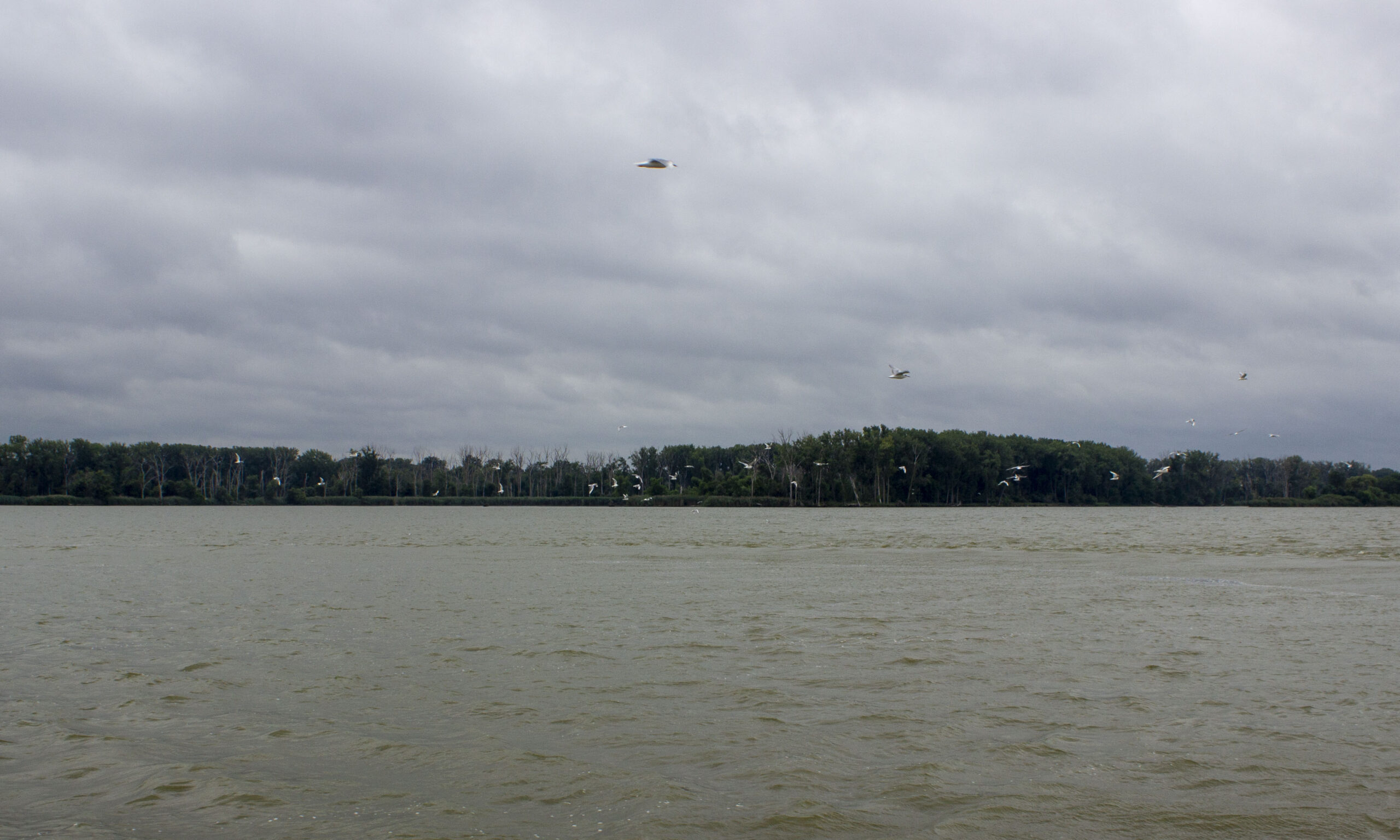
TOLEDO, Ohio — Under the watch of bald eagles soaring overhead, it was hard to miss what 20 years of the Western Lake Erie Basin Partnership has done for the Maumee River. Here, everyday recreation and a century of shipping and industry converge in the heart of one of the Great Lakes’ most troubled watersheds.
The partnership, formed in the mid‑2000s, is a collaborative effort that brings together agencies, universities, farm groups and conservation organizations. It pools money and research to carry out projects that reduce phosphorus pollution and restore wetlands and wildlife habitat in the Maumee River watershed and western Lake Erie.
The Aug. 12 river tour capped a day‑long gathering at Toledo Metroparks’ Glass City Pavilion, drawing the partnership out onto the Maumee, a waterway they’ve spent decades trying to fix.
Cruising past landmasses now ringed with rock berms, young wetlands and native plants, they were looking at one of the largest habitat‑restoration projects to date on the river.
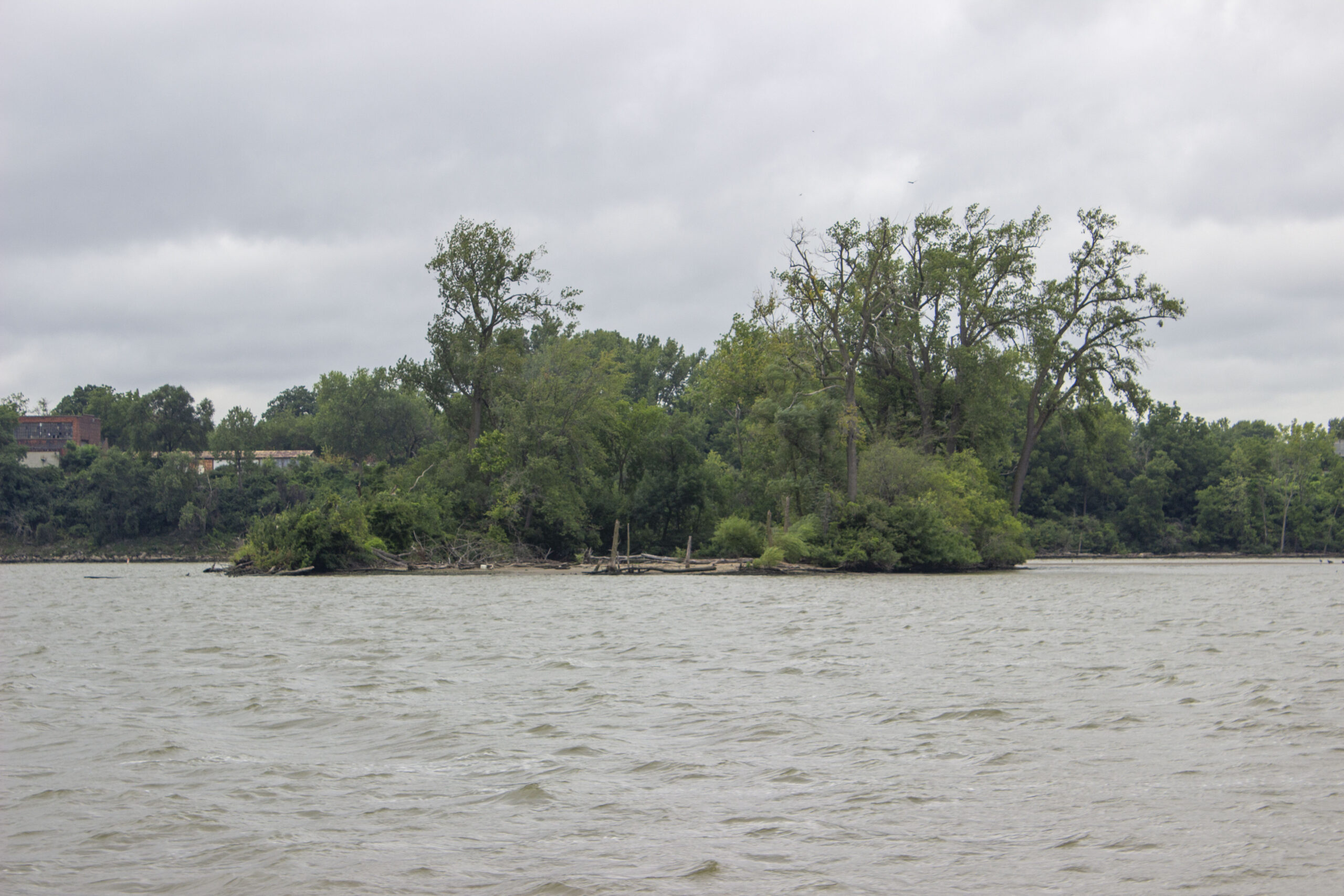
Altogether, the work to rebuild and improve more than 83 acres at Clark and Delaware/Horseshoe islands cost roughly $13 million. The effort was led by the Toledo‑Lucas County Port Authority and the city, with design and construction money from H2Ohio and the Great Lakes Restoration Initiative. The islands had lost a significant amount of their mass over the years — Clark had been almost entirely erased by the time work started — due to erosion and dredging. Toledo Public Services Director Joe Fausnaugh said the work to save them happened because the city, the port, U.S. EPA and Ohio EPA came to the table and worked together.
“There were so many opportunities for people to puff up their chests and try to put up roadblocks. But to everyone’s credit, nobody did that,” he said.
With native plants now well established and maintenance covered for a few years using leftover project contingency money, Fausnaugh told Farm and Dairy there’s plenty of work ahead. But at least the city has “a fighting chance to keep up” with invasive species on the islands, he said, so the native plant and animal life taking hold there has room to thrive. As they flourish, the islands’ wetlands and root‑bound shorelines will be better able to blunt waves and trap some sediment and nutrients before they reach Lake Erie, as well as giving fish and birds somewhere to call home.
Yet despite millions of acres under conservation statewide, the basin, which drains parts of Ohio, Michigan and Indiana into the western end of the lake, is still haunted by toxic runoff and algal blooms.
Missed deadline
Starting with the elephant in the room: the U.S. and Canada agreed a decade ago to cut phosphorus loads to the WLEB by 40% and rein in western Lake Erie’s algal blooms by 2025. Across most every measure, the watershed is nowhere near that.
“The work that’s happening on the ground has to be sustained, and we have to continue to do more,” said Teresa Seidel, director of EPA’s Great Lakes National Program Office and one of the partnership’s tri‑chairs.
It’s certainly not for lack of trying. Under the U.S. domestic action plan for Lake Erie, officials estimate that between 2013 and 2025, farmers across the Western Lake Erie Basin have implemented nearly 13,000 federally funded conservation practices on roughly 1.9 million acres, about 35% of the region’s cultivated cropland. Mark Smith, WLEB coordinator of the USDA’s Ohio NRCS office, said those changes have kept more than 4.3 million pounds of phosphorus from washing off farm fields.
Meanwhile, major upgrades made around the same time to Detroit’s wastewater treatment plant have since sharply reduced how much phosphorus that city sends downstream into western Lake Erie.
But the picture is more complicated for the Maumee River, which supplies about half the phosphorus reaching western Lake Erie.
In the past four or five years, the total amount of phosphorus measured at the mouth of the river has come in under the binational target, but EPA scientists say that’s mostly because the years have been relatively dry. Lower river flows mean less runoff and therefore less polluted water headed downstream, even if conditions on the land haven’t changed much.
Scientists estimate that in an average year, the Maumee is actually carrying more phosphorus overall than it used to, though a somewhat smaller share of it is in the dissolved form, which in the past has supercharged algal blooms.
“We know that observable response in water quality will require significant and sustained reductions in our phosphorus loads,” Seidel said.
“What happens in Defiance”
Far upstream from Toledo, perched where the Maumee and Auglaize rivers meet, another story of river restoration is underway. Residents of Defiance, Ohio, can watch the water turn muddy after big storms or green with late‑summer algae. And, after years of work by the city and its partners, many now see that what’s flowing past them carries the imprint of hundreds of thousands of acres of fields upstream.
Jennifer English, the city’s urban stormwater coordinator and project coordinator for the Defiance Research Alliance, told the group she spends a lot of her time thinking about what that water means for the people who drink it. Defiance has only one source of drinking water: the Maumee River. English said she likes to remind visitors that the city is effectively the front door to Lake Erie.
“What happens in Defiance doesn’t really stay in Defiance,” she said.
Now, they’re experimenting with how to keep pollution out of the river in the first place. The U.S. Army Corps of Engineers, U.S. Geological Survey and the city have carved a phosphorus‑removing wetland “treatment train” into a low, wet corner of former cropland on the edge of Defiance. Instead of letting tile drains and surface runoff shoot straight into a ditch, water is slowed and dissipated through a series of shallow cells planted with wetland vegetation. As it flows through, the sediment it carries settles, while plants and microbes take up nutrients; any phosphorus has a chance to bind to soils rather than continue racing on toward Lake Erie.
After the first five‑year study phase, monitoring by USGS and the Corps’ research arm showed that water leaving the site carried at least 50% less total and dissolved reactive phosphorus than the water coming in. The partners are now seeking another five years of funding. Conversations have begun with state agencies about how to replicate the approach at other wetland and conservation projects in the region, using the Defiance site as a field‑scale proof of concept.
Meanwhile, working with the Council of the Great Lakes Region and a local board of farm and conservation representatives, Defiance became the first U.S. pilot for ALUS, the Alternative Land Use Services model, an incentive-based program that pays producers to restore and maintain nature‑based solutions on their land so they lead to cleaner water, wildlife habitat and other ecological benefits.
The idea is simple: pay farmers to take their least-productive ground out of full‑tilt production and manage it for water quality instead. English explained that the program encourages farmers to flag the least profitable parts of their fields like shaded strips along woods, soggy corners or awkward field edges and convert them into features like native grass, pollinator habitat, buffers or small wetlands.
Using seed money from H2Ohio, the city and its conservation partners help pay for the first implementation of those practices and then provide yearly payments so they stay in place over time.
“We’re not asking folks to choose between the business model and the watershed,” English said.
Whether Ohio’s budget will let her keep that promise is another question. H2Ohio, the state program that helps pay for many of the conservation practices highlighted across northwest Ohio, had its requested $270 million two‑year budget for fiscal 2026–2027 whittled down to $165 million. The final deal left more than $100 million on the cutting‑room floor compared with what Gov. Mike DeWine’s administration proposed, after legislators initially floated even steeper cuts of more than $120 million.
The strength of relationships
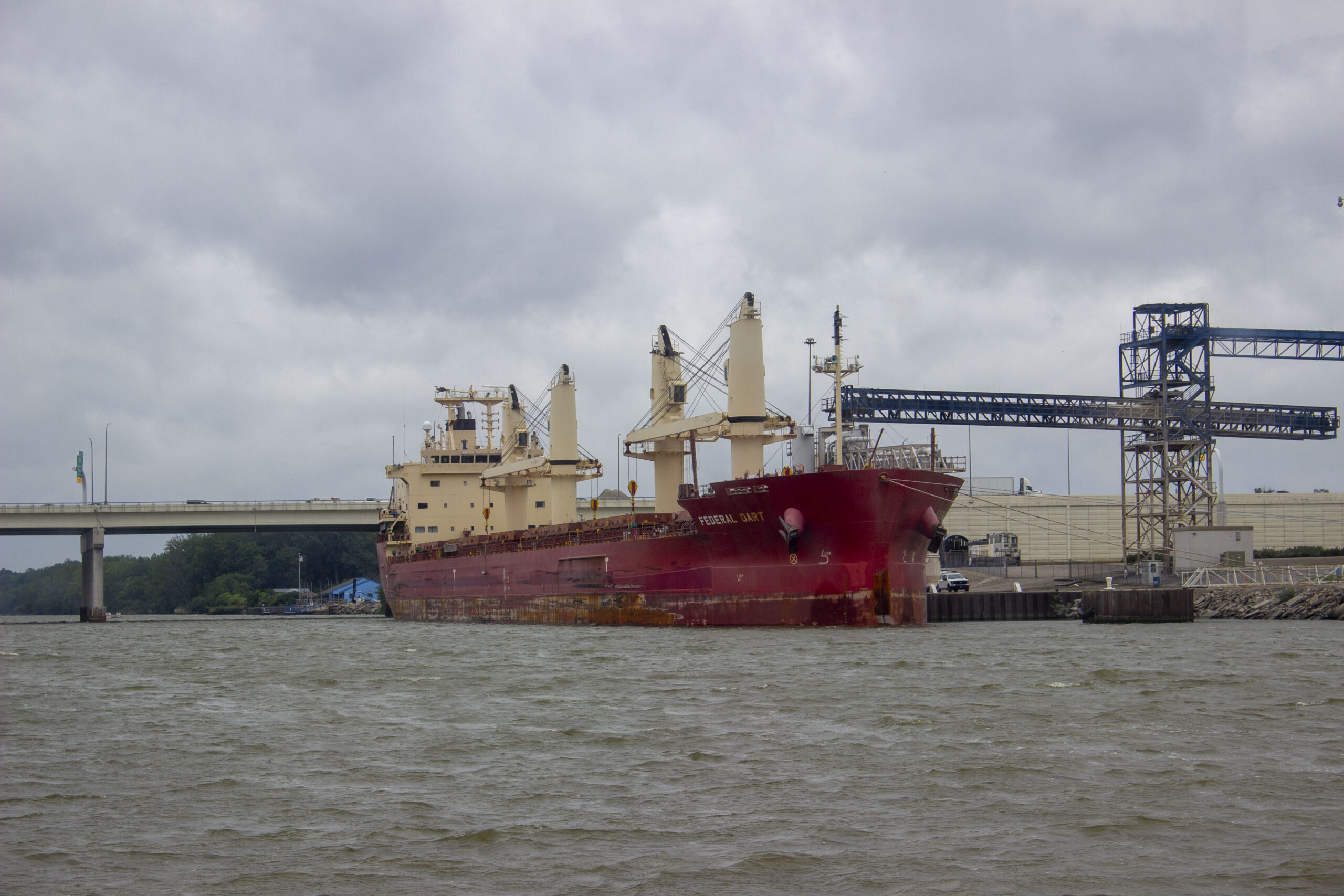
Back out on the Maumee, as the boat traced the edge of the rebuilt islands and slipped past Great Lakes freighters and grain silos, Fausnaugh, Toledo’s public services director, pointed to another set of beneficiaries. The boating clubs along that shore, he said, have become some of the restoration work’s strongest champions. Without the islands, wave energy on windy days would have pounded their docks and hulls to pieces. By rebuilding and enlarging the island chain, the partners not only protected fragile habitat but also preserved the basic conditions that make recreational boating on the Maumee possible.
“It was really nice to have a broad base of advocates out in the community talking about the benefits of the program,” he said.
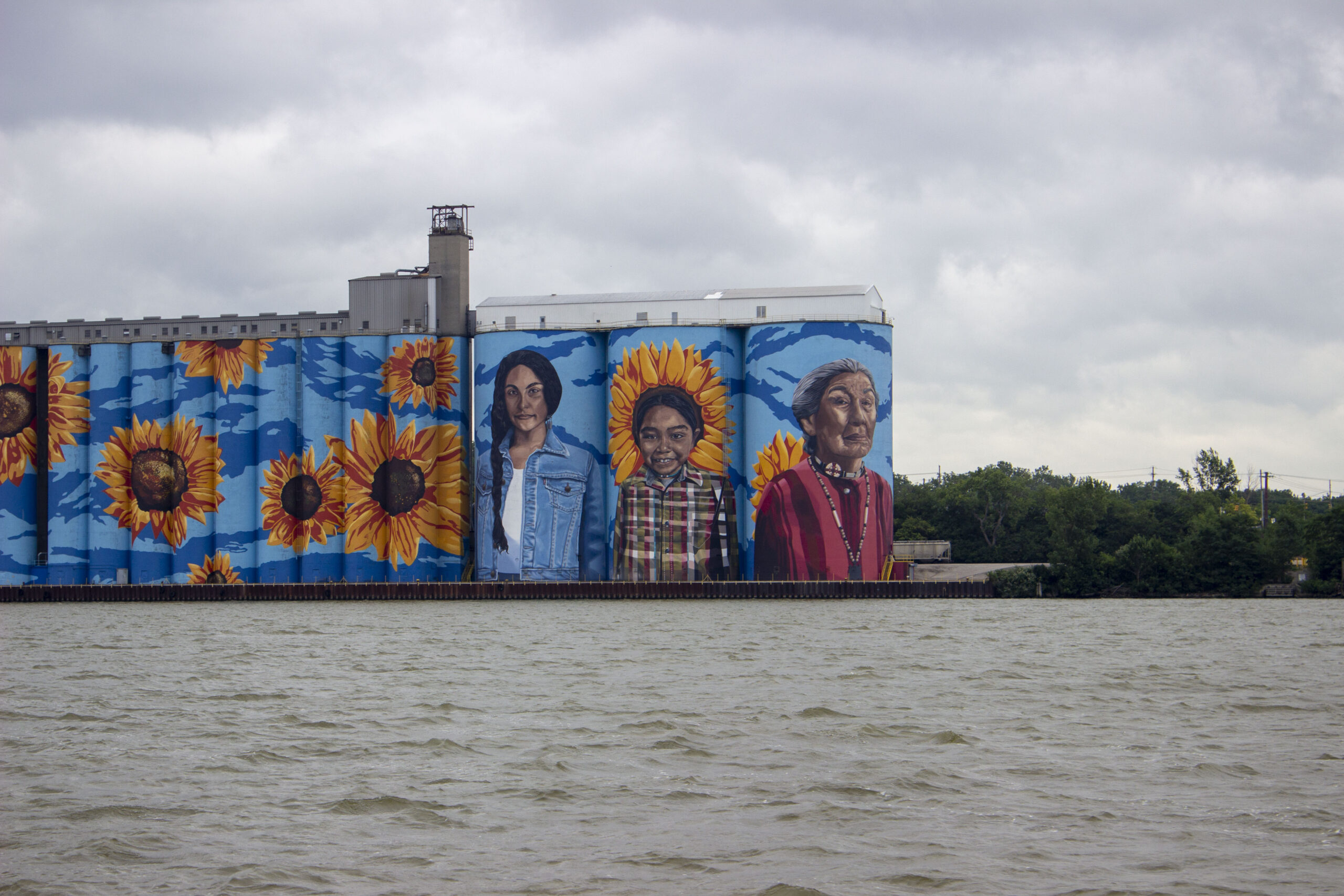
Later in the ride, as people leaned on the rail and watched the eagles circle above the river, Ohio Sea Grant Director Christopher Winslow boiled the day’s message down to relationships. You could hear it, he said, in the way the founders of the Western Lake Erie Partnership talked about their work.
“It’s all about being friends with these people, getting along, building trust,” he said. “It does not surprise me that we continue to make progress when everybody that’s at the table really enjoys being at the table with each other,” he said.




