



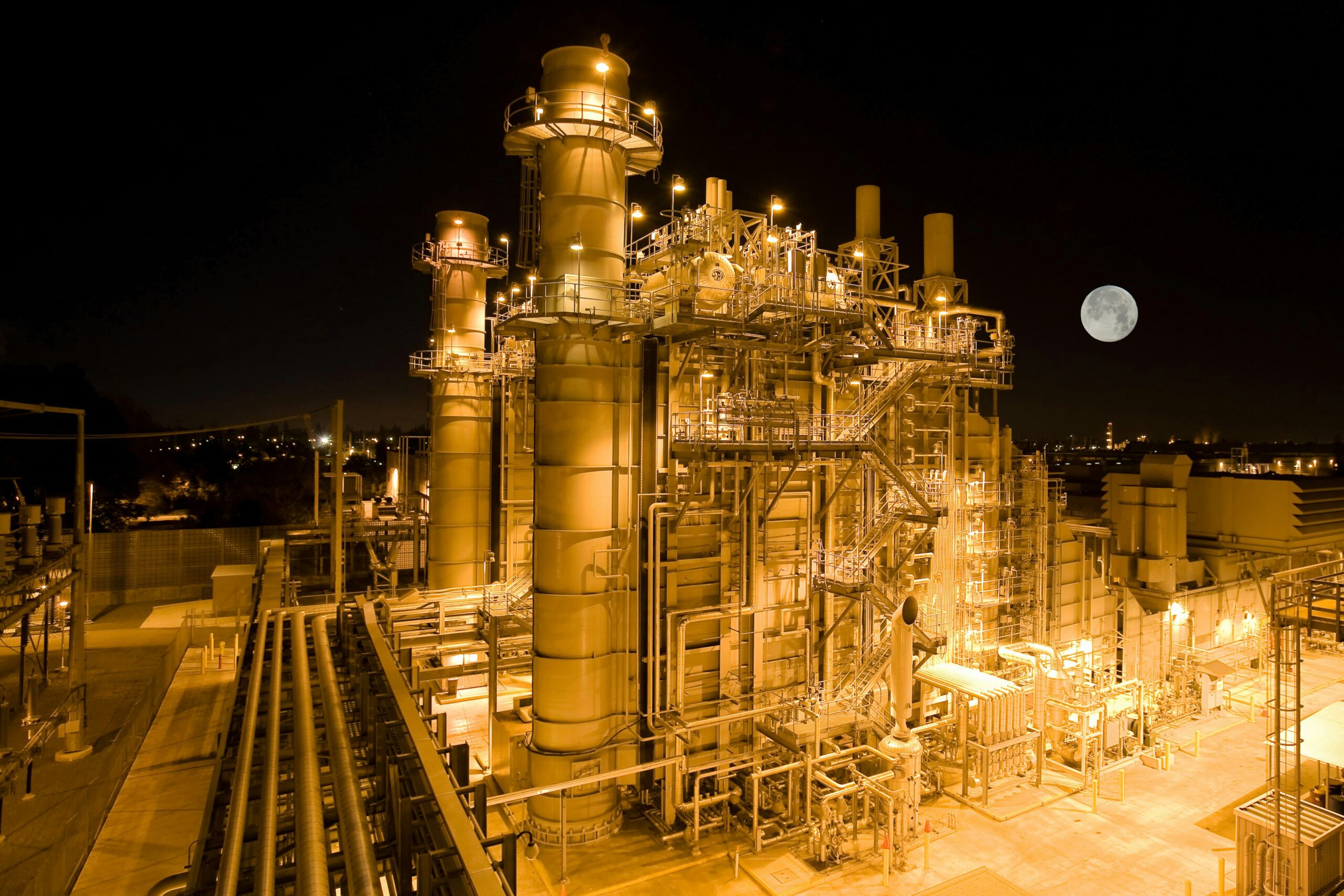
Some of the largest natural gas plants in the country are being built in Appalachia to fuel artificial intelligence data centers.
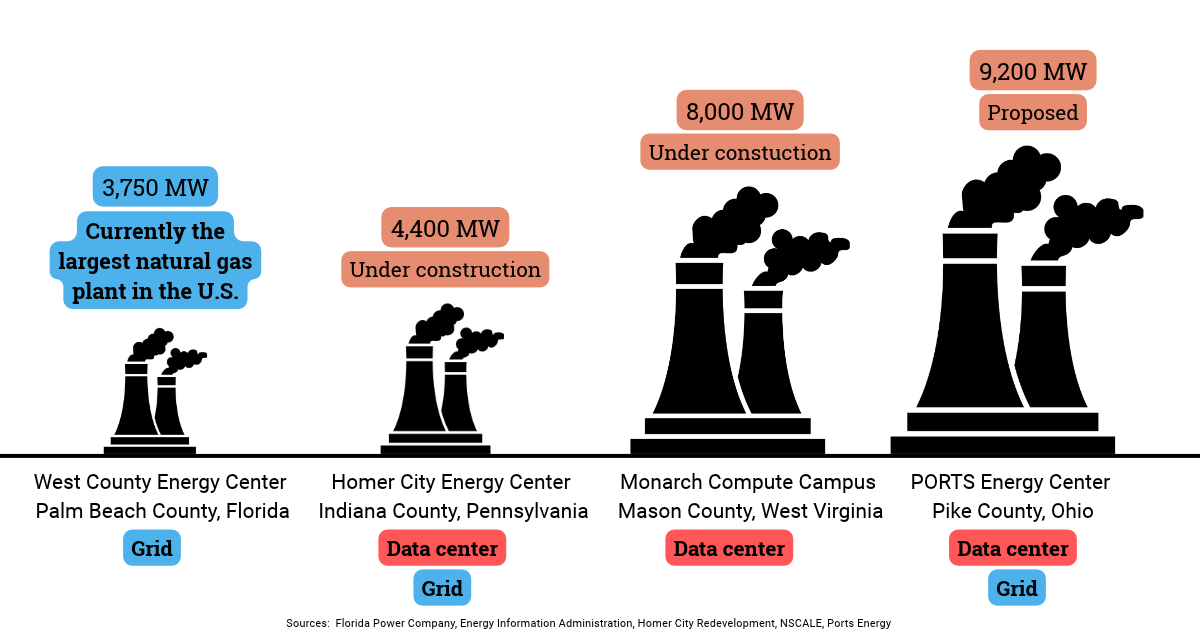
The 4,400-megawatt Homer City Energy Campus being built on the site of a former coal plant is already under construction in western Pennsylvania.
In West Virginia, the Monarch Compute Campus, operated and developed by Nscale, will produce up to 8,000 megawatts for Microsoft and Anthropic artificial intelligence data centers.
And in southern Ohio, the proposed PORTS Energy Center is being touted by the Trump administration as becoming the largest in the country, generating up to 9,200 megawatts of electricity.
These projects reflect a growing opportunity for the Appalachian natural gas industry as technology companies look for reliable electricity to power energy-hungry data centers.
But this expansion will also mean more natural gas infrastructure and emissions in a region already familiar with the consequences of industrial air pollution.
“We’re already looking at needing to ramp up, and so that does mean more permits, more drilling, more production, more pipeline, more compression,” said Mike Chadsey, director of external affairs at the Ohio Oil and Gas Association.
Why natural gas?
Natural gas is the most popular electricity supply for data centers because it is “abundant, affordable and reliable,” Chadsey said.
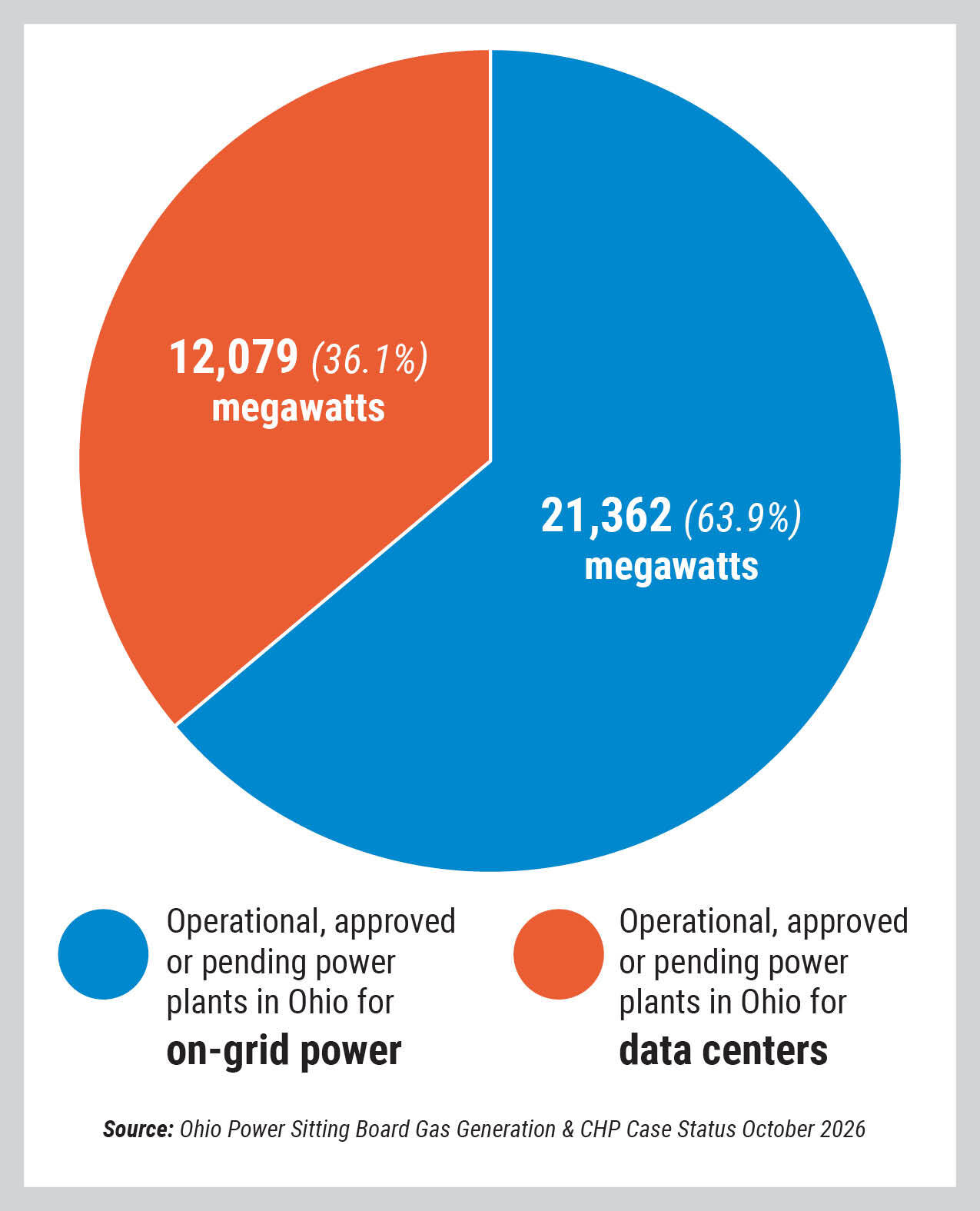
In Ohio, natural gas power plants are already fueling data centers. As of October, operational, approved or pending natural gas power plants will produce 12,079 megawatts of electricity for data centers, compared to 21,362 megawatts of electricity that supply the grid.
According to Chadsey, the PORTS Energy power plants alone will require roughly 25% of the gas the association produces, depending on the final size and scale of the facilities.
Smaller, behind-the-meter power plants are also popping up in clusters near Columbus to power data centers, including ones owned by Meta.
A similar picture is happening across the nation, too. More than half of data centers in the United States are powered by fossil fuels, according to a recent Harvard study.
Between May 2024 and April 2025, researchers found that of the 403 data centers studied, 38% used natural gas and 15% used coal; a quarter of them were powered by renewable energy.
“What we have in natural gas is this: it’s dispatchable, right? We can get it from point A to point B fairly quickly, fairly inexpensively,” Chadsey said. He added that there’s a role for renewables in data centers, but it’s hard to beat natural gas.
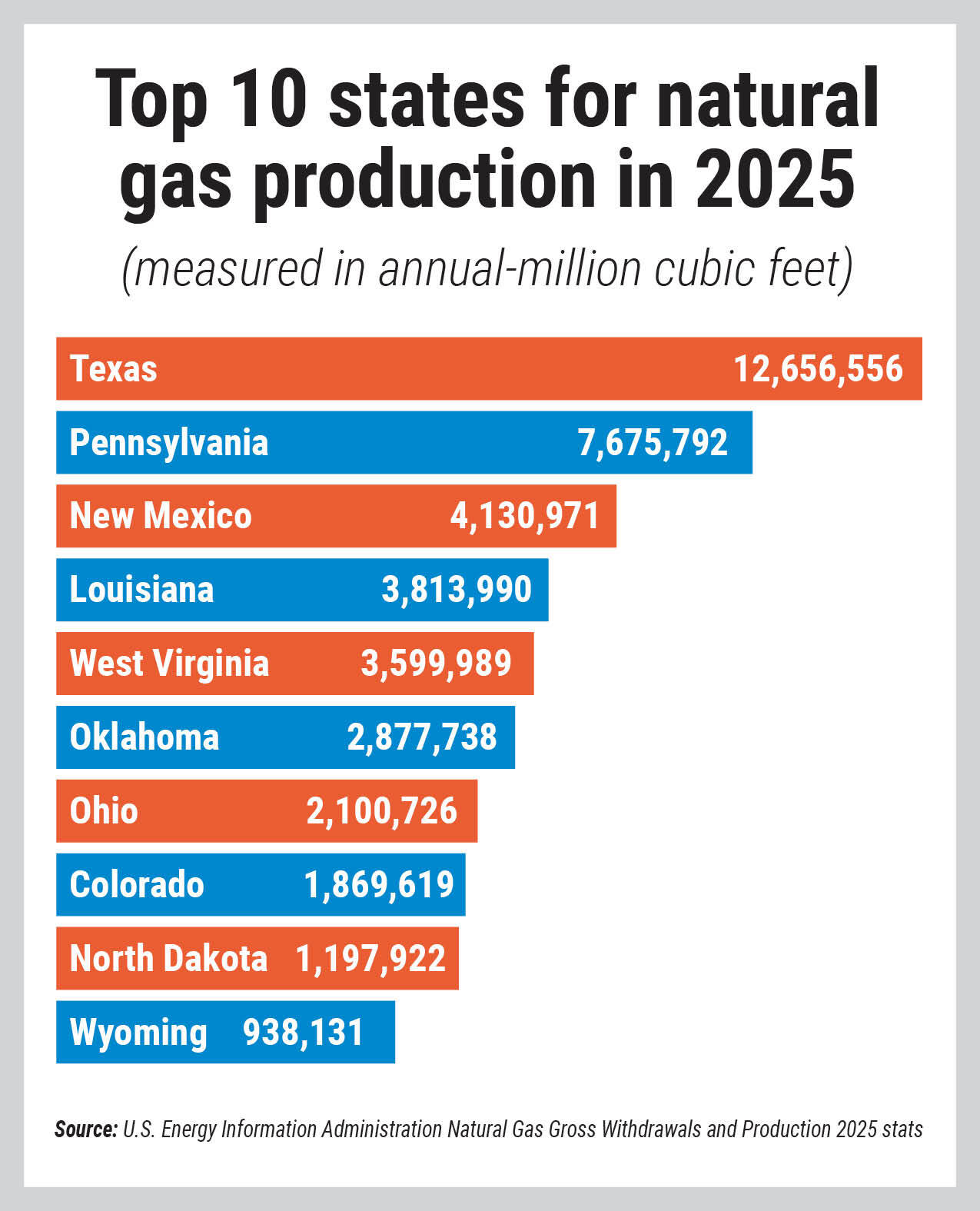
Pennsylvania and West Virginia both rank in the top five for natural gas production by state, with Ohio close behind in the top 10. With strong natural gas reserves, the region will play a significant part in powering this next-generation technology.
Where is this taking place?
Natural gas is also likely to become the fuel of choice for data centers in Appalachia as states incentivize these power-hungry facilities to bring their own energy. Pennsylvania Gov. Josh Shapiro’s GRID standards require these facilities to bring, build or buy from new power sources to ensure the cost of increased electricity generation is not thrust upon consumers. The state also has clean energy requirements.
Similarly, West Virginia’s House Bill 2014 establishes the optional Ratepayer Protection Pledge, which encourages data center developers to build, bring or procure their own energy sources and fully fund their own infrastructure.
“Data centers are an industry that I think there’s a lot of excitement about the possibility of expanding in Appalachia,” said Patrick Henderson, vice president of government affairs and communication at the Marcellus Shale Coalition.
According to Henderson, data center developers should take into account where natural gas is available when siting these facilities to reduce infrastructure build-out.
Air emissions
An increase in burning natural gas will also mean more air pollution in a region historically plagued by poor air quality. Researchers at Penn State are already considering what the costs of more natural gas power plants could mean for the region.
Compared with coal-fired power plants, which fueled much of the region until the last decade, natural gas-fired power plants emit far fewer emissions, but they are not perfectly clean.
Burning natural gas releases nitrogen oxides and particulate matter into the air, which, in the short term, lead to health impacts like increased asthma and, in the longer term, cause cardiovascular problems like heart attacks and strokes, a variety of cancers and affect pregnancy and birth outcomes
“Some people can be exposed to more and still not develop consequences, and other people are more sensitive, and it can happen at a lower level of exposure. But the more you’re exposed over your lifetime, the higher your risk is,” said Jeremy Gernand, associate professor of environmental health and safety engineering at Penn State University.
He added that a lot of data centers are seeking behind-the-meter power plants to reduce the demand on the electric grid. While this may be good for consumers’ wallets, Gernand noted these smaller power plants are often less efficient than larger power plants.
“They don’t always have all the same pollution controls that the larger installations have,” Gernand said.
Penn State researchers are currently working on placing air quality monitors near data centers that are operational in Pennsylvania, according to Gernand.
“People want to know, for better or worse, what the impact is. We don’t have a lot of independent data on it right now, and there’s a lot of promises being made by the regulators and the businesses,” Gernand said. “People deserve to have good information on what the actual impact is.”
(Liz Partsch can be reached at epartsch@farmanddairy.com or 330-337-3419.)